Centaurus A
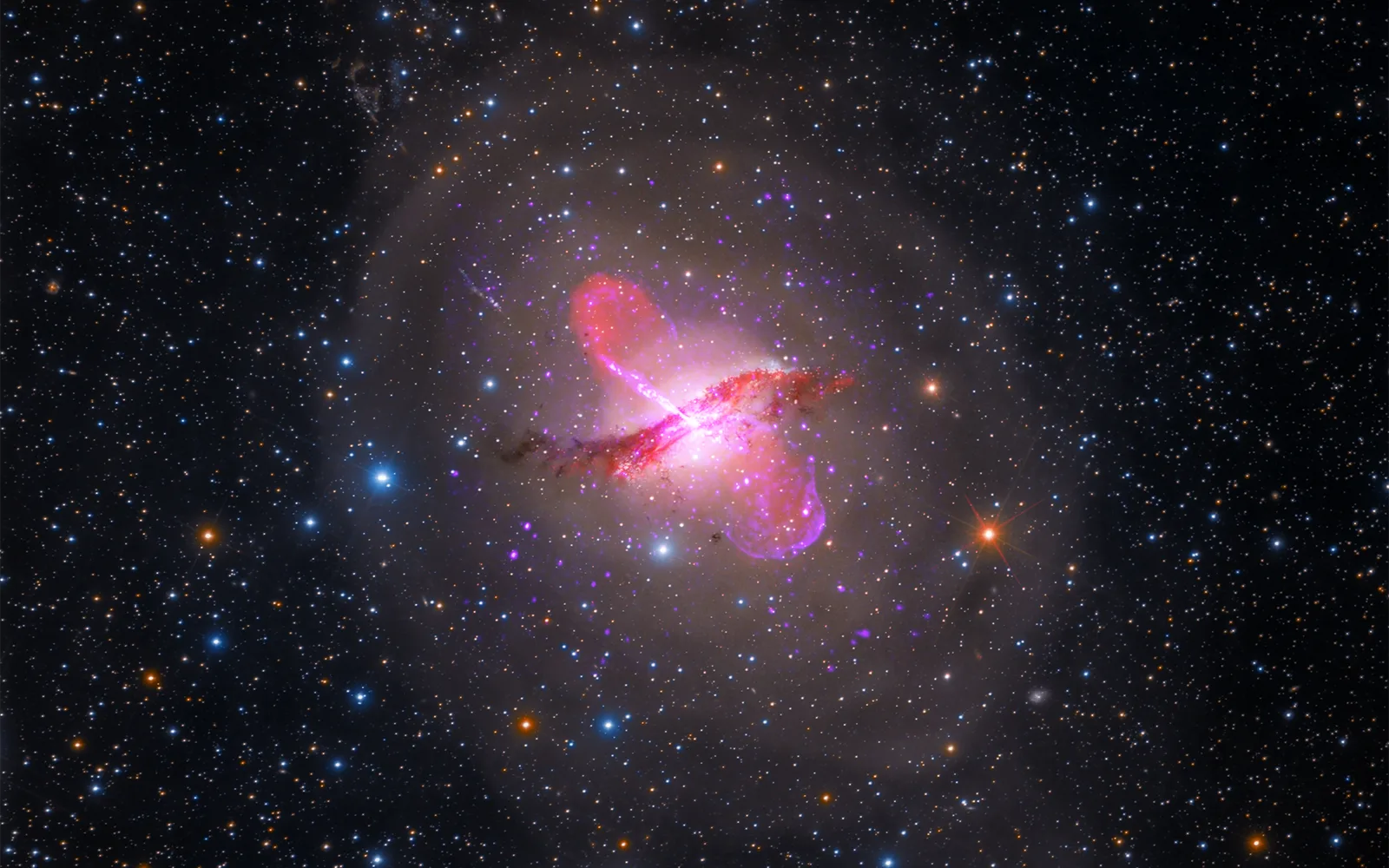
The nearest giant active galaxy — an elliptical that swallowed a spiral, crossed by a dark dust lane while a supermassive black hole fires jets across the spectrum.
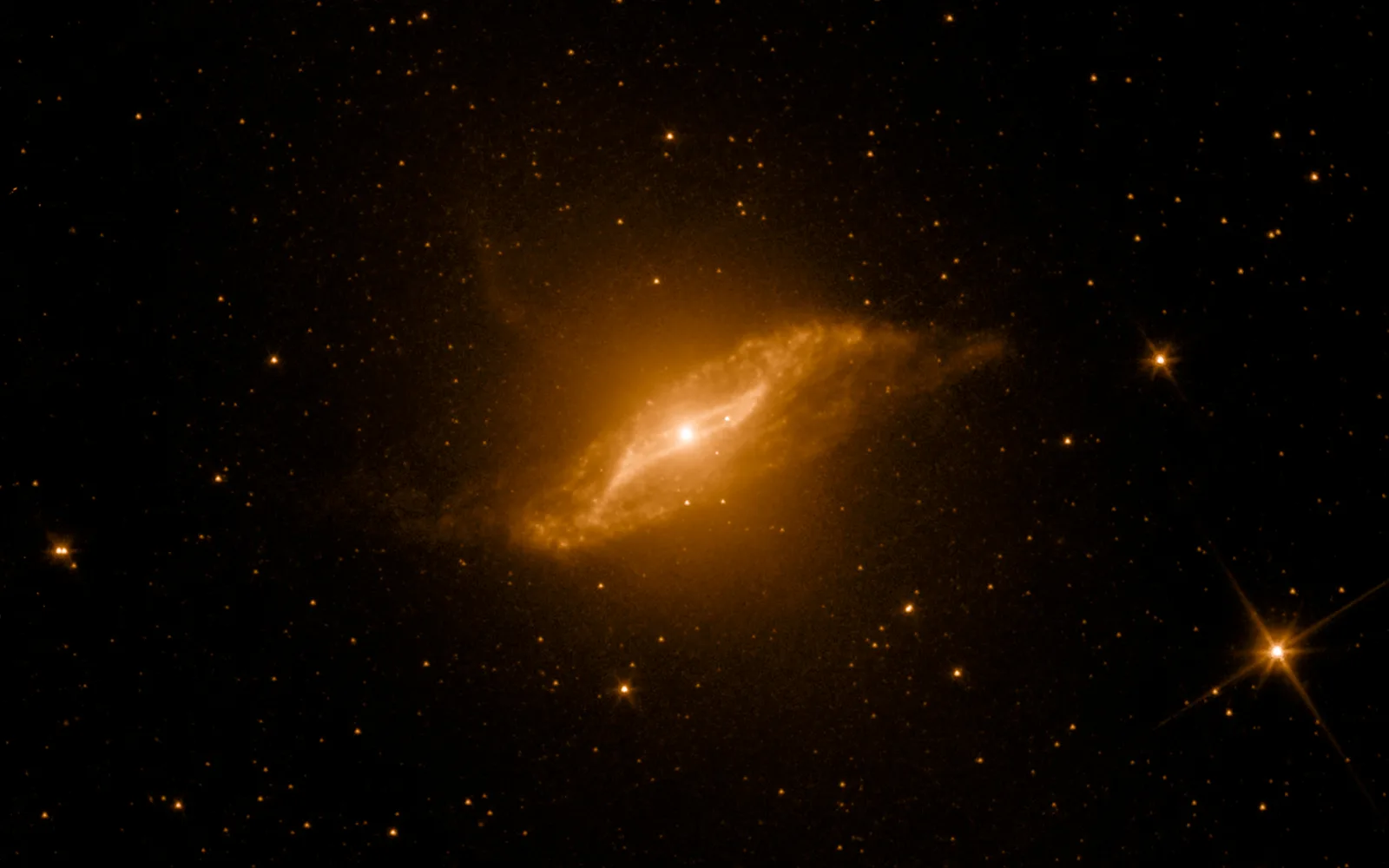
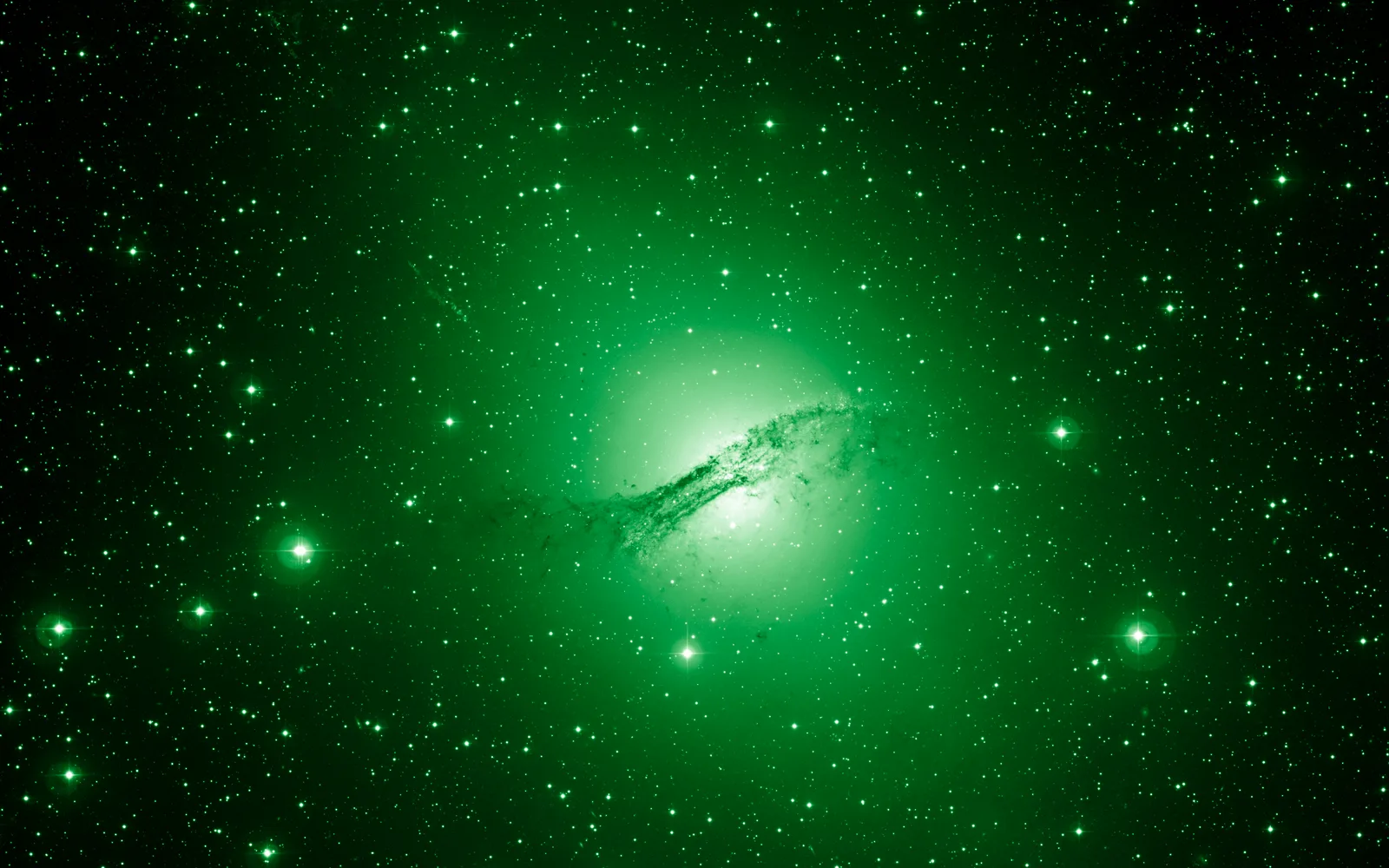
Centaurus A is the closest galaxy with a powerful active nucleus, just
12 million light-years away in the southern constellation Centaurus. It is a
giant elliptical that long ago collided with and swallowed a smaller spiral; the
spiral's gas and dust survive as the dark, warped lane slashing across the bright
stellar bulge. At its heart, a supermassive black hole of some 55 million solar
masses launches relativistic jets that punch out of the galaxy and inflate
enormous lobes — structures that only fully reveal themselves across the
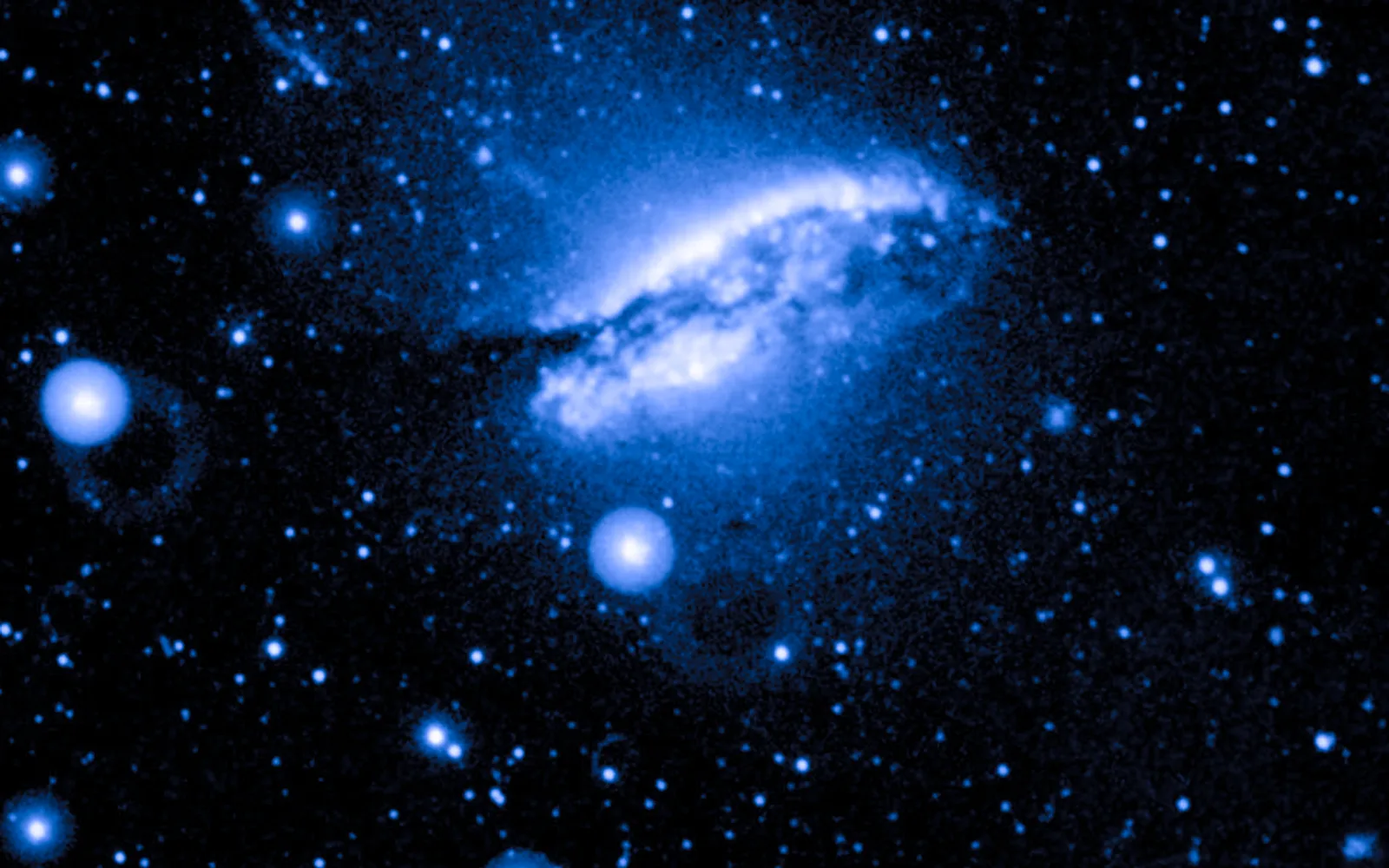
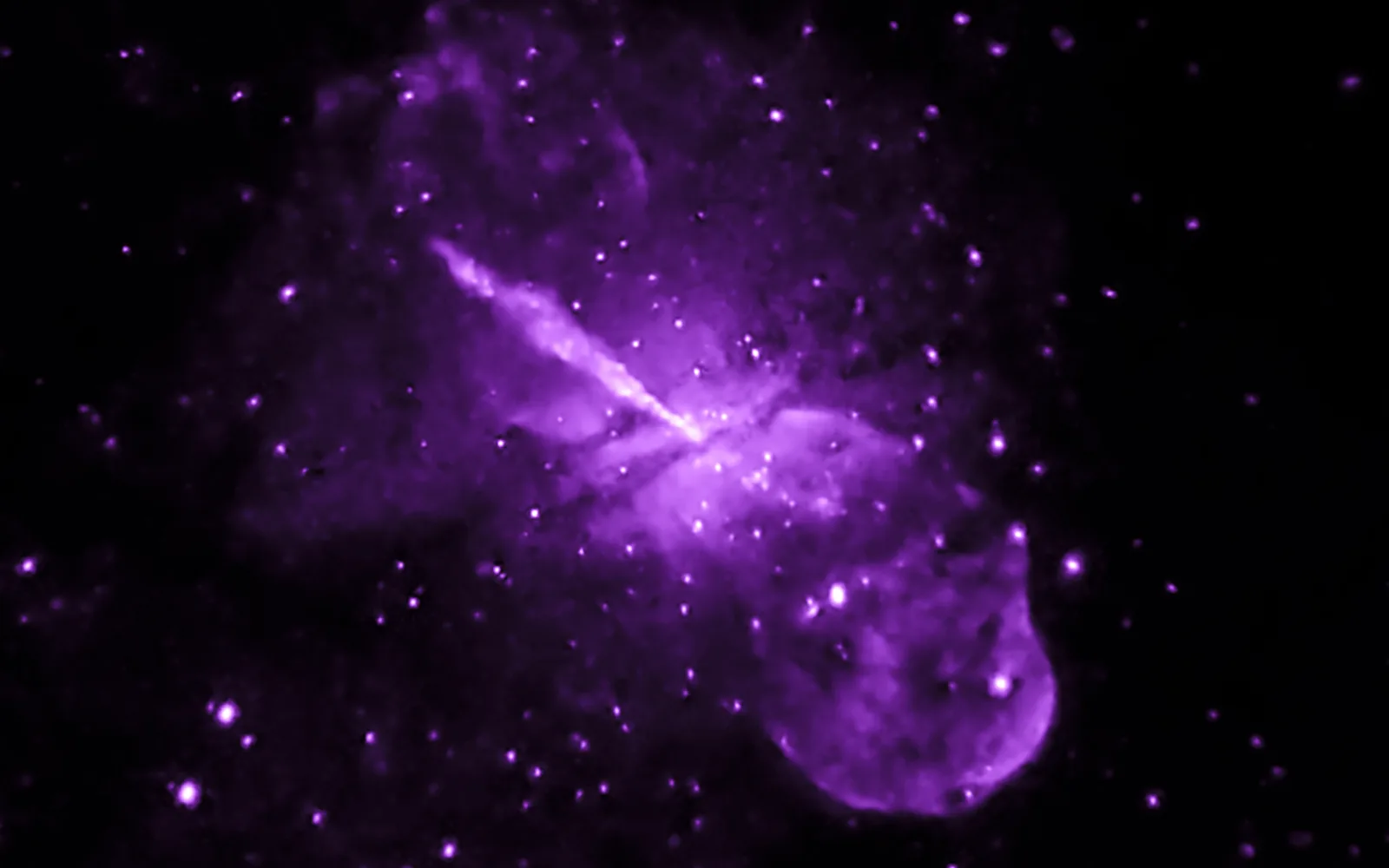
electromagnetic spectrum. Chandra traces the X-ray jet and its knots; Spitzer
sees the warped infrared dust disk; GALEX catches ultraviolet bursts of star
formation triggered along the jet's path; and the composite folds in the radio
lobes that dwarf the visible galaxy. Because it is so near and so active, Cen A
is the textbook laboratory for how a feeding black hole reshapes its host.