β Orionis
Rigel
Orion's Foot · Blue supergiant (semi-regular variable)
At a glance
- Distance
- 862.8 ly
- Constellation
- Orion
- Type
- B8Ia
- Apparent magnitude
- 0.18
- Absolute magnitude
- -7.84
- Mass
- 21 M☉
- Radius
- 74.1 R☉
- Luminosity
- 120,000 L☉
- Surface temp
- 12,100 K
- Age
- 0.008 billion yrs
The story
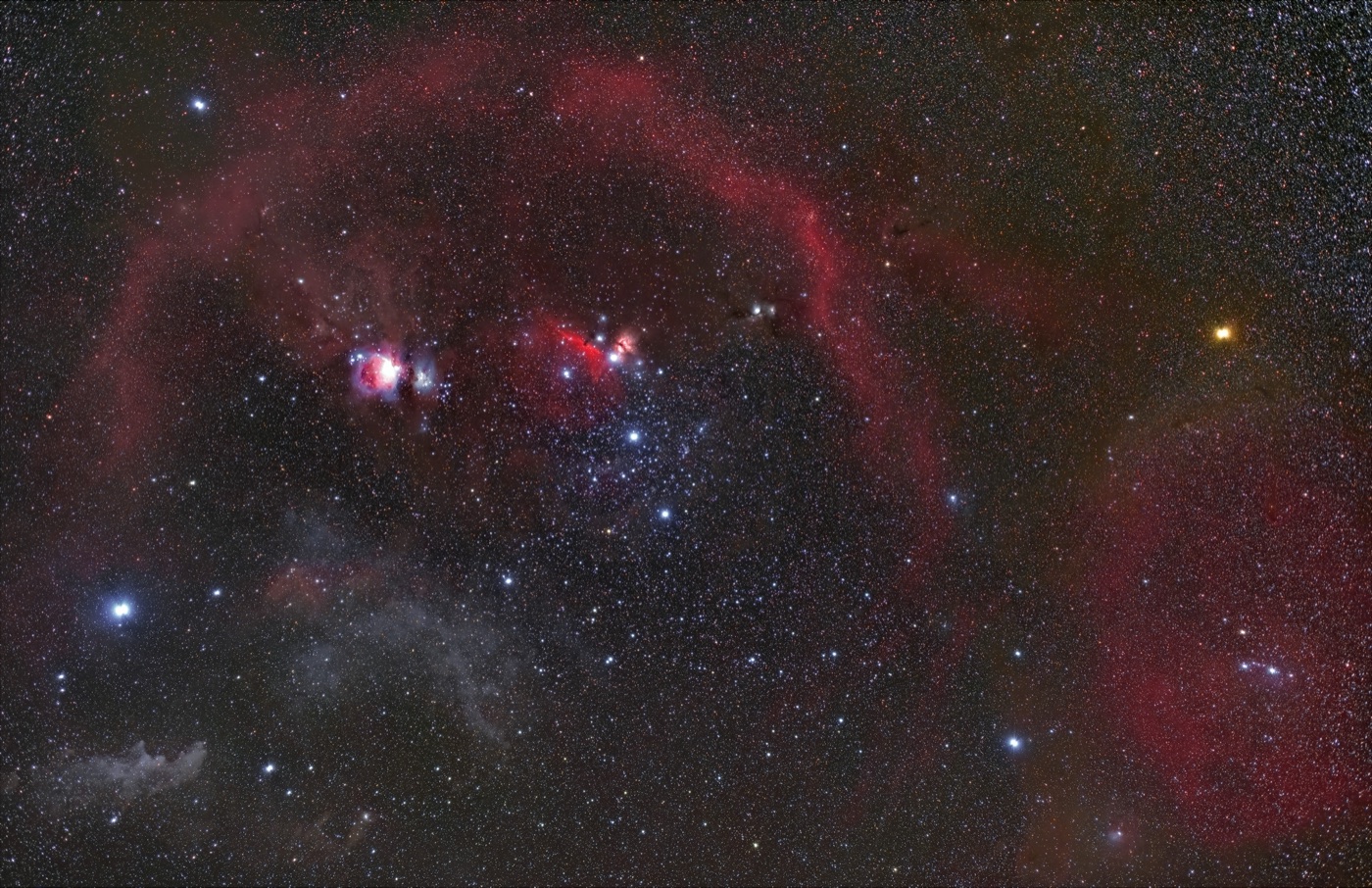
Rigel shines at a mean magnitude of +0.13 yet carries an absolute magnitude of −7.84 — it would far outshine Venus if placed at a standard distance of 10 parsecs. From its actual distance of 863 light-years it is already the seventh-brightest star in the night sky, a testament to a luminosity near 120,000 times the Sun's. It marks the left foot (from our perspective, the right knee) of Orion the Hunter.
The star's Arabic name, Rijl Jauzah al Yusrā, means 'the left leg of the Central One'. In medieval Japan the Minamoto (Genji) clan adopted Rigel as their celestial emblem in the Genpei War, counterpart to the rival Taira (Heike) clan's Betelgeuse — making the two stars symbolic antagonists on opposite sides of Orion's belt. Ancient Egyptian temples were orientated toward its rising, and Renaissance navigators relied on it alongside other bright Orion stars for their azimuth tables.
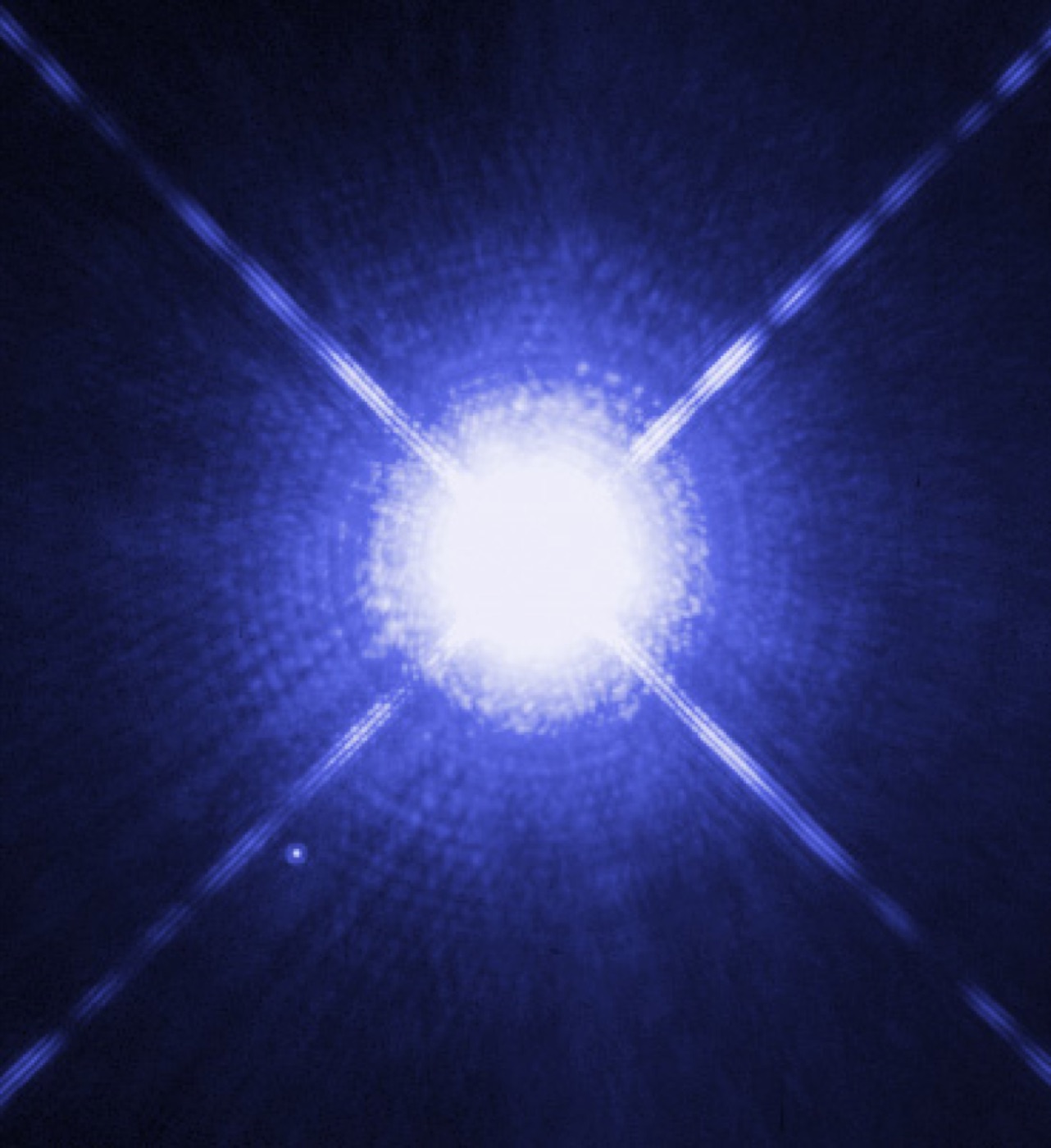
Rigel is a hierarchical multiple star. A triple companion system at 9.5 arcseconds (Rigel BaBb plus a third body) shares a 24,000-year orbit with Rigel A. At only ~8 million years old, the star has already evolved off the main sequence despite its youth — a reminder that massive stars burn through their fuel at a furious rate. Its semi-regular brightness variations of 0.05–0.18 magnitudes hint at internal pulsations.
Compared to the Sun
Sun
This star · 74.1× radius
It shines about 120,000 times as bright as the Sun.
Its fate
At 21 solar masses, Rigel will end its life in a spectacular Type II core-collapse supernova within the next few million years, briefly outshining the full Moon from Earth and potentially leaving a neutron star or black hole. It is one of the most plausible near-future supernova candidates visible to the naked eye.
Find it in the sky
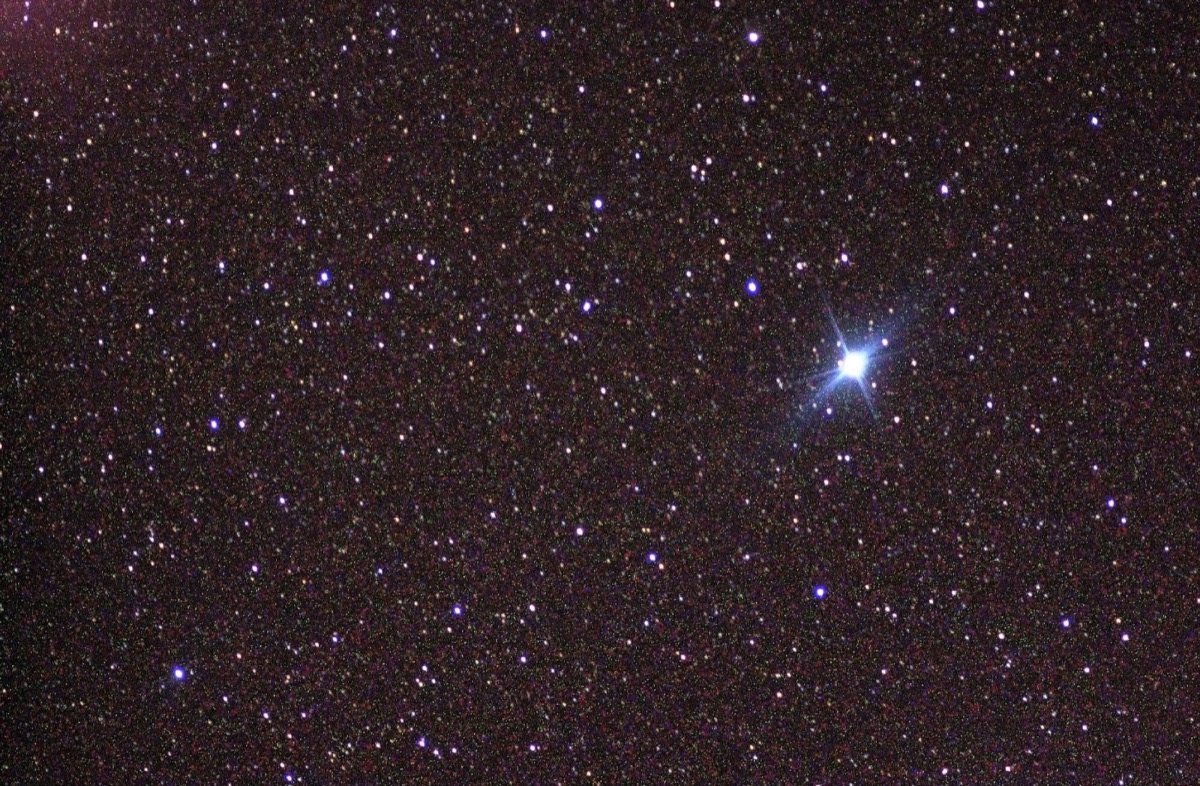
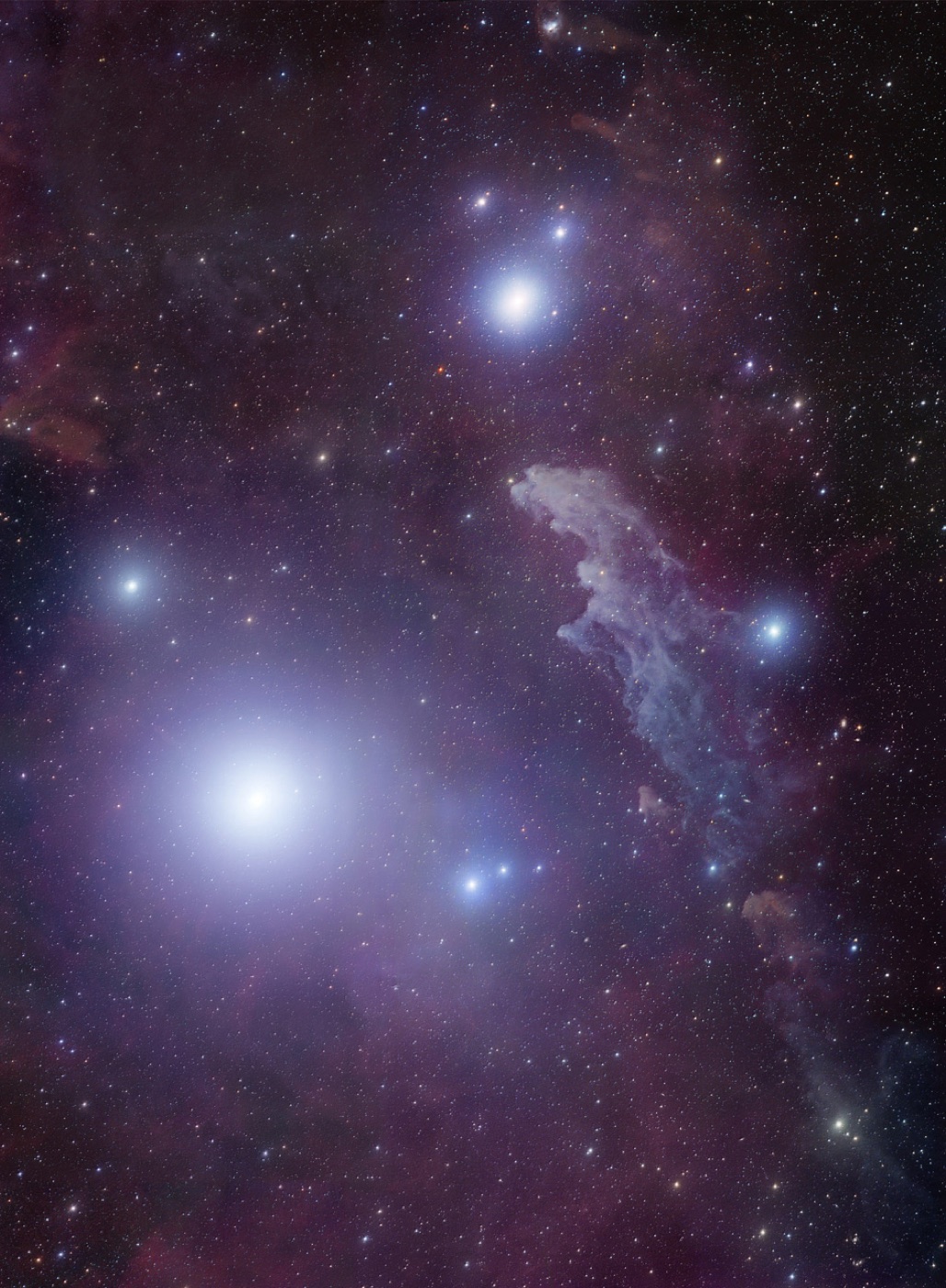
Rigel is the brilliant blue-white star at the lower-right of Orion, unmistakable on winter nights across both hemispheres. Find Orion's Belt — three stars in a row — then trace diagonally down and right to the brightest point in that corner.