α Eridani
Achernar
The Flattest Star in the Sky · Blue-white Be star rapid rotator
At a glance
- Distance
- 139.4 ly
- Constellation
- Eridanus
- Type
- B3Vpe
- Apparent magnitude
- 0.45
- Mass
- 6 M☉
- Luminosity
- 3,490 L☉
- Surface temp
- 15,000 K
The story
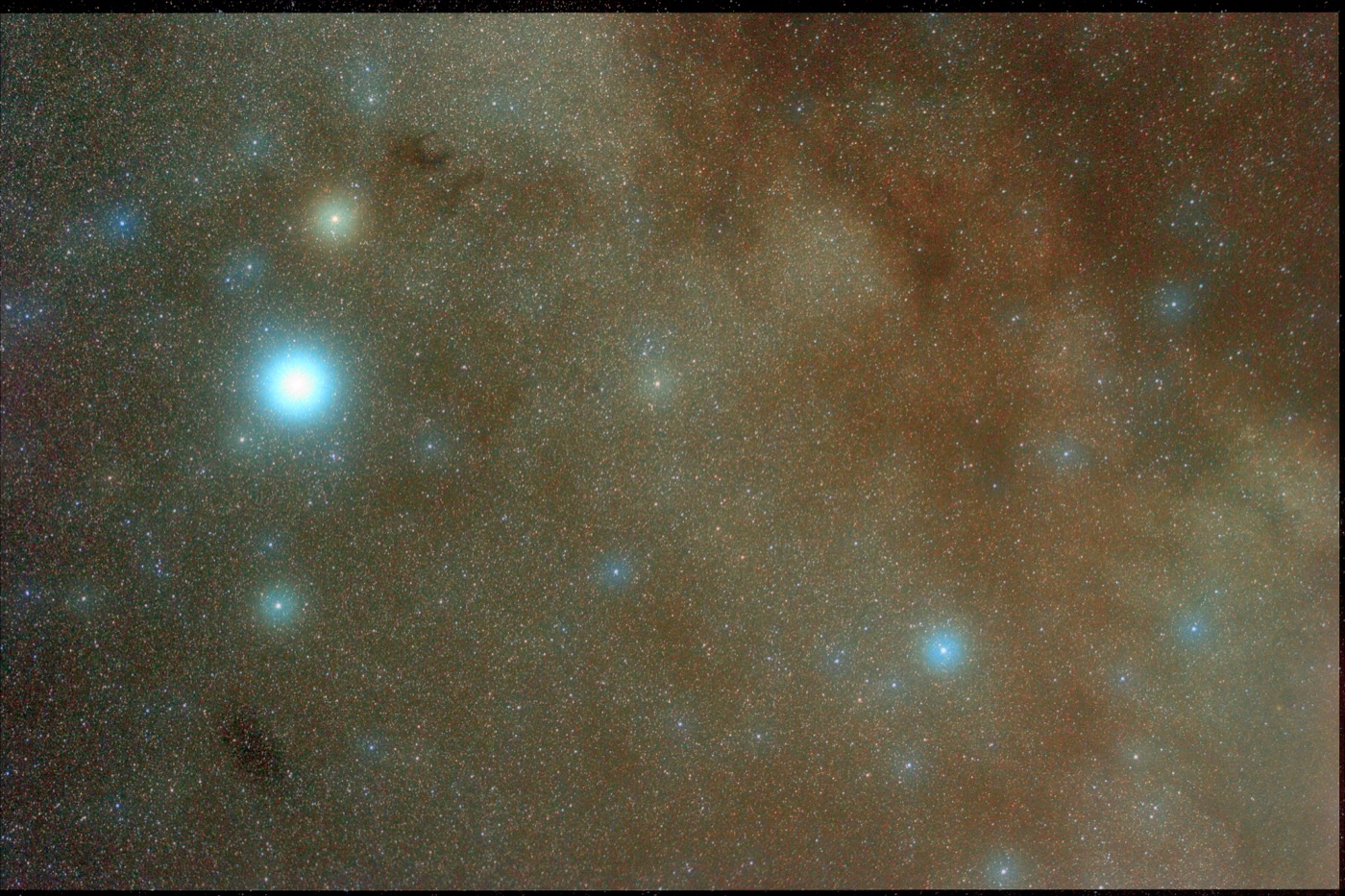
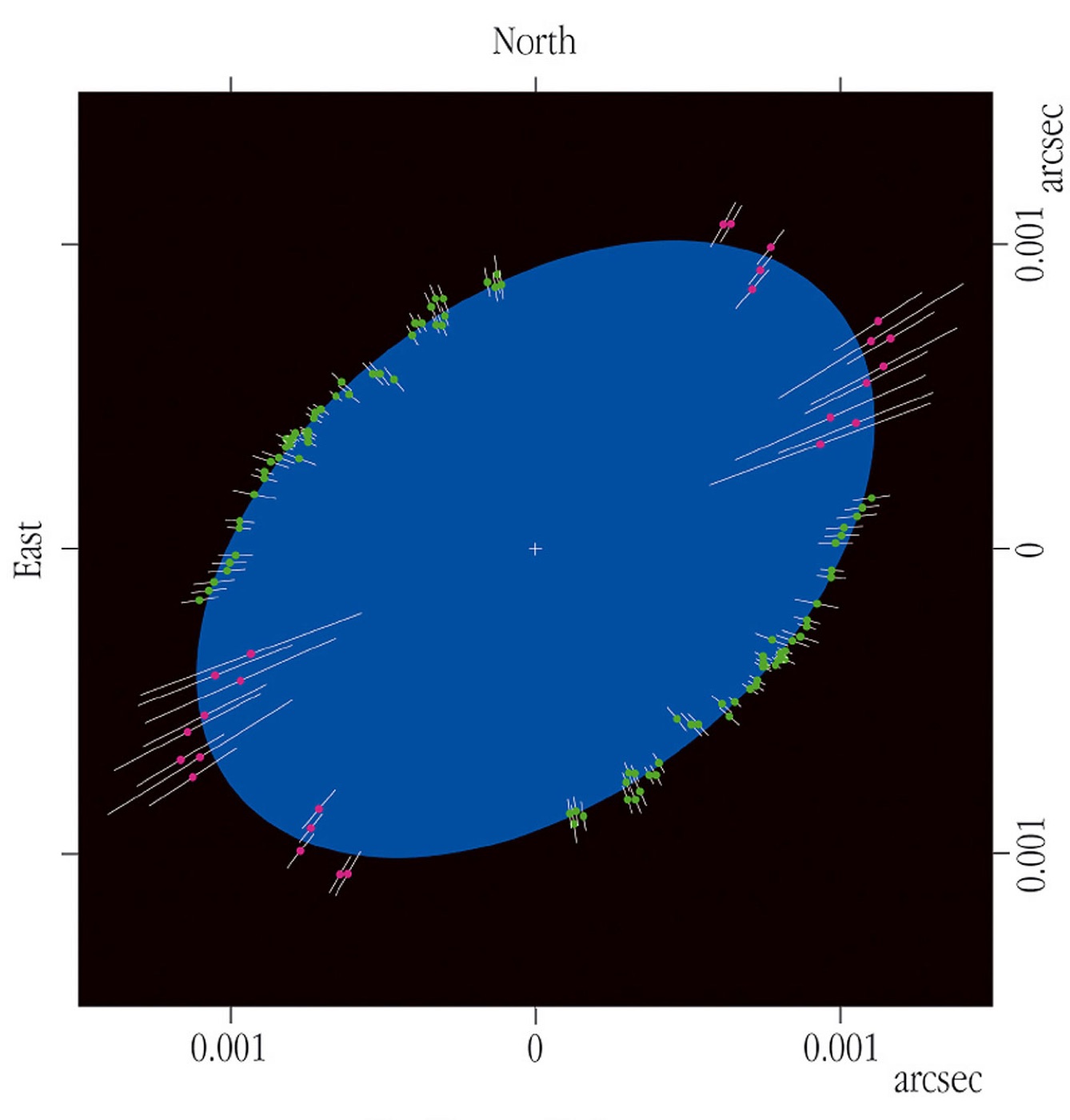
Achernar blazes at the southern end of the River Eridanus, magnitude 0.45 and the ninth brightest star visible from Earth. VLTI interferometry revealed in 2003 that it holds a remarkable record: an equatorial-to-polar axis ratio of roughly 1.56 — meaning it is about 56 percent wider at the equator than it is tall. No other bright star in the sky is so flattened.
This extreme oblateness is a consequence of violent rotation. Achernar spins at a projected velocity of at least 230 km/s, completing a full revolution in well under two days. The centrifugal force at the equator puffs the star outward, pushing surface material away and giving the poles a gravity-darkened, hotter appearance than the cooler, distended equatorial belt. The system also has a fainter companion, Achernar B, a small A-type star in a distant orbit.
For Southern Hemisphere navigators, Achernar is an important waypoint — it lies close to the south celestial pole, tracing a small circle around it, and on clear dark nights it can be used alongside the Southern Cross to find true south. Ancient Arab astronomers knew it as Ākhir al-Nahr, 'the end of the river', which passed into Latin as Achernar.
Its fate
As a main-sequence B star with six solar masses, Achernar will exhaust its core hydrogen in a few hundred million years, swell through a giant phase, and eventually end its life as a core-collapse supernova, leaving behind a neutron star.
Find it in the sky
Achernar is a southern-hemisphere showpiece, invisible from latitudes north of about 33°N. From the southern continents and tropics, look for the brightest star in the long, winding constellation Eridanus near the south celestial pole. In the southern autumn evenings it transits high in the sky.