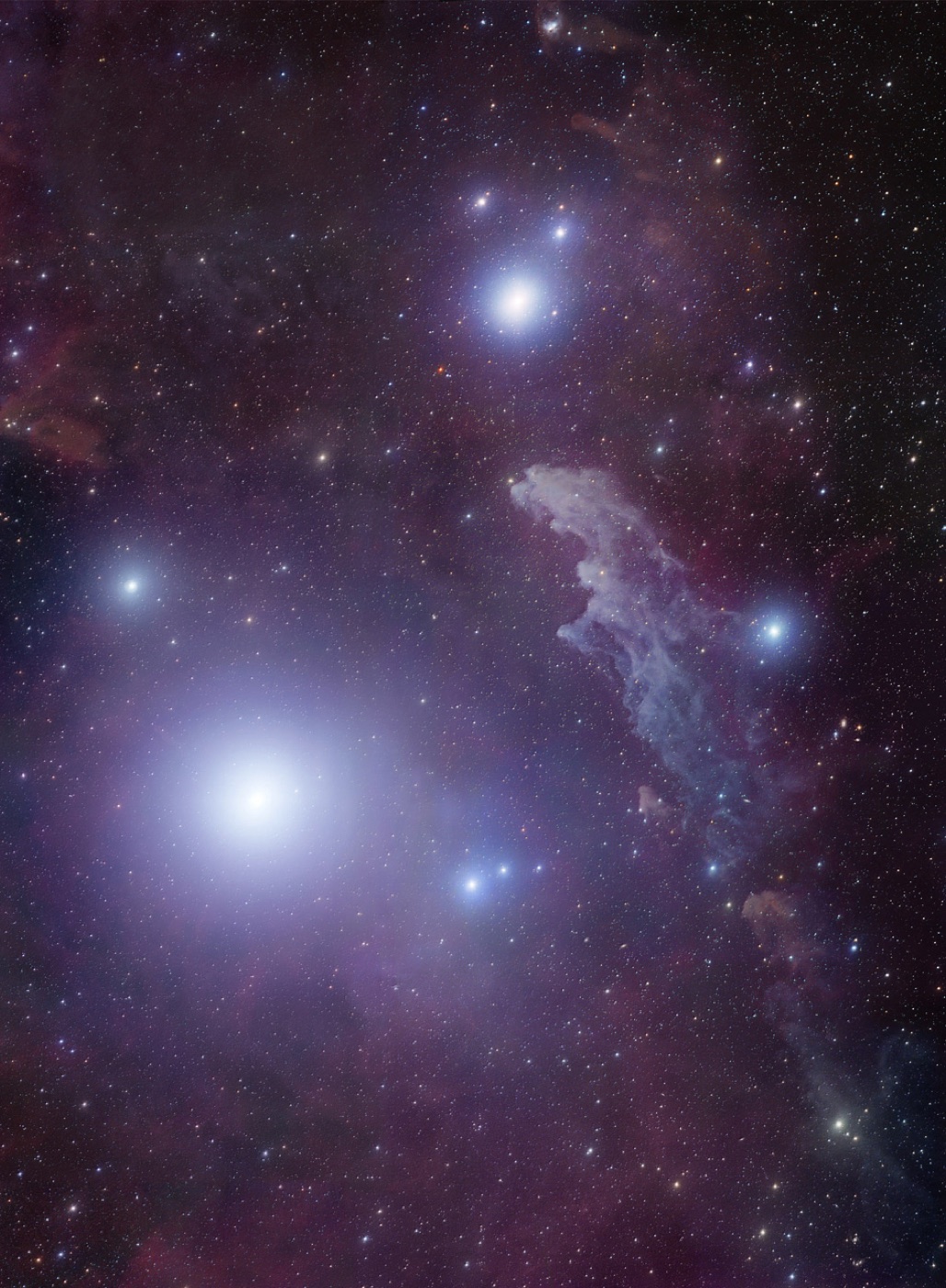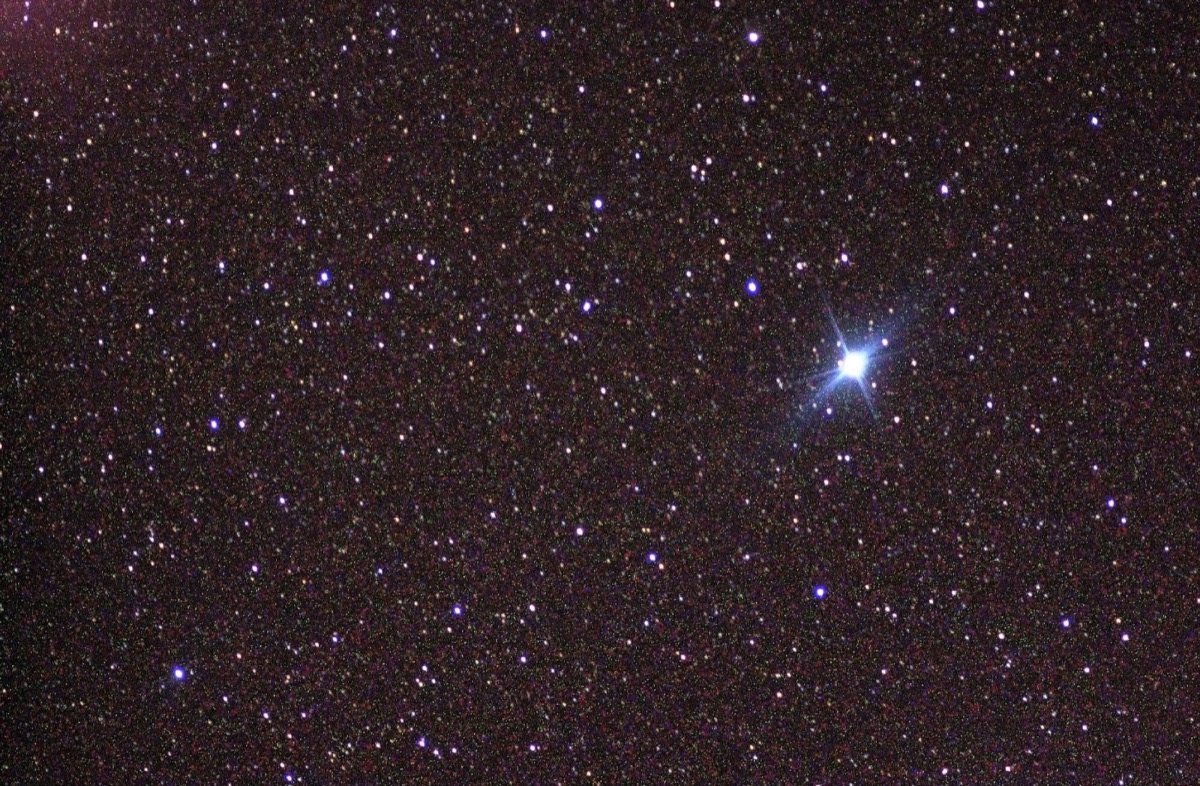
α Carinae
Canopus
The Celestial Navigator · Yellow-white bright giant / supergiant (core-helium burning; spectral type debated A9II–F0Ib)
At a glance
- Distance
- 309.2 ly
- Constellation
- Carina
- Type
- A9II
- Apparent magnitude
- -0.62
- Absolute magnitude
- -5.71
- Mass
- 9.5 M☉
- Radius
- 73.3 R☉
- Luminosity
- 16,600 L☉
- Surface temp
- 7,400 K
- Age
- 0.034 billion yrs
The story
Canopus blazes at magnitude −0.74, the undisputed second-brightest star in the night sky after Sirius. Unlike Sirius, which earns its glory through closeness (8.6 ly), Canopus is genuinely luminous — pouring out 16,600 solar luminosities from 310 light-years away. Without that distance it would outshine every star visible to the naked eye.
Named for the legendary helmsman of Menelaus in the Trojan War, the star has guided mariners for millennia. In ancient India sages called it Agastya; in Chinese astronomy it was the 'Old Man of the South Pole', an omen of longevity; Islamic navigators named it Suhail and used it to cross the Indian Ocean. It anchors Carina, the Keel — a remnant of the vast ancient constellation Argo Navis.
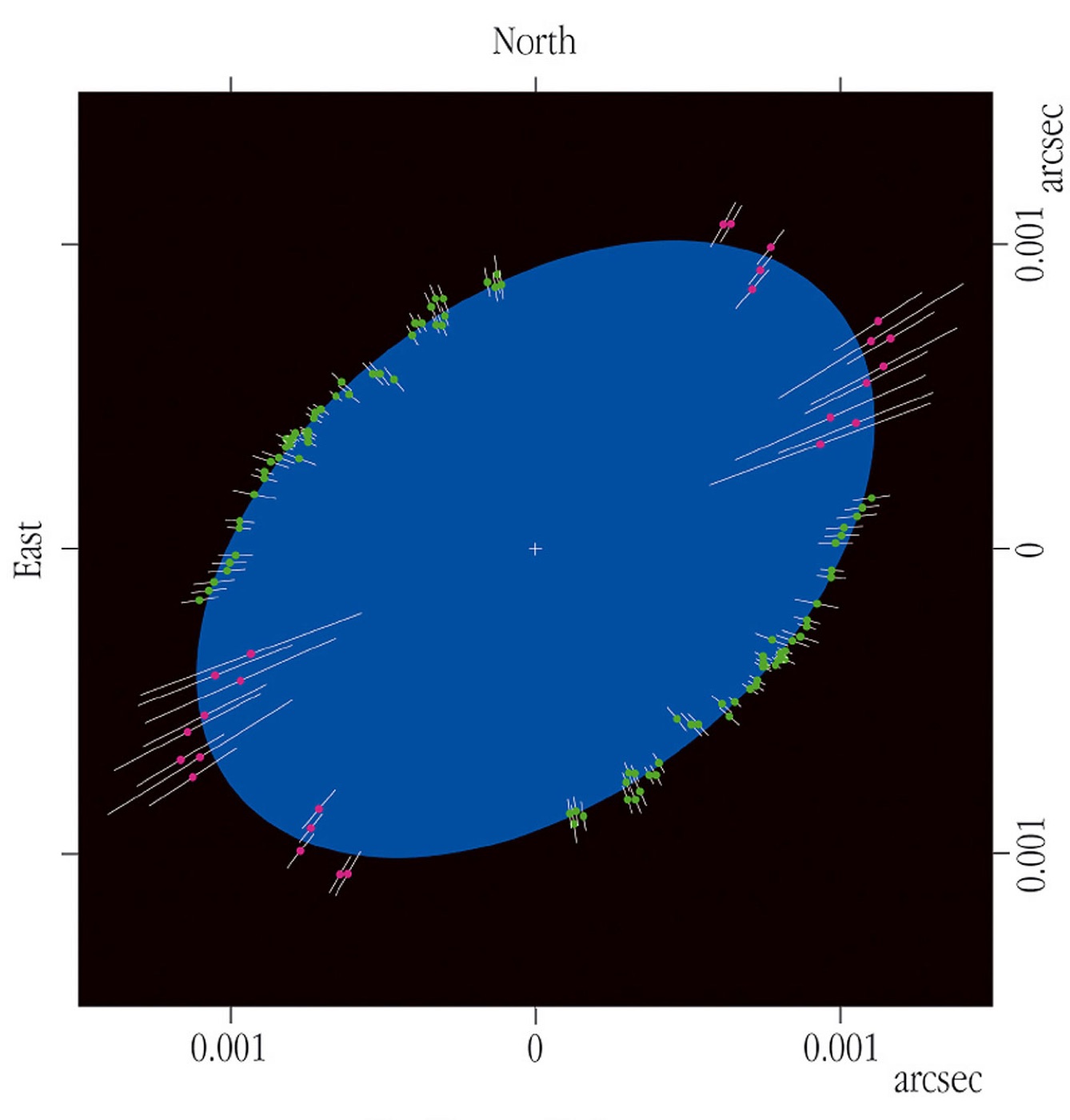
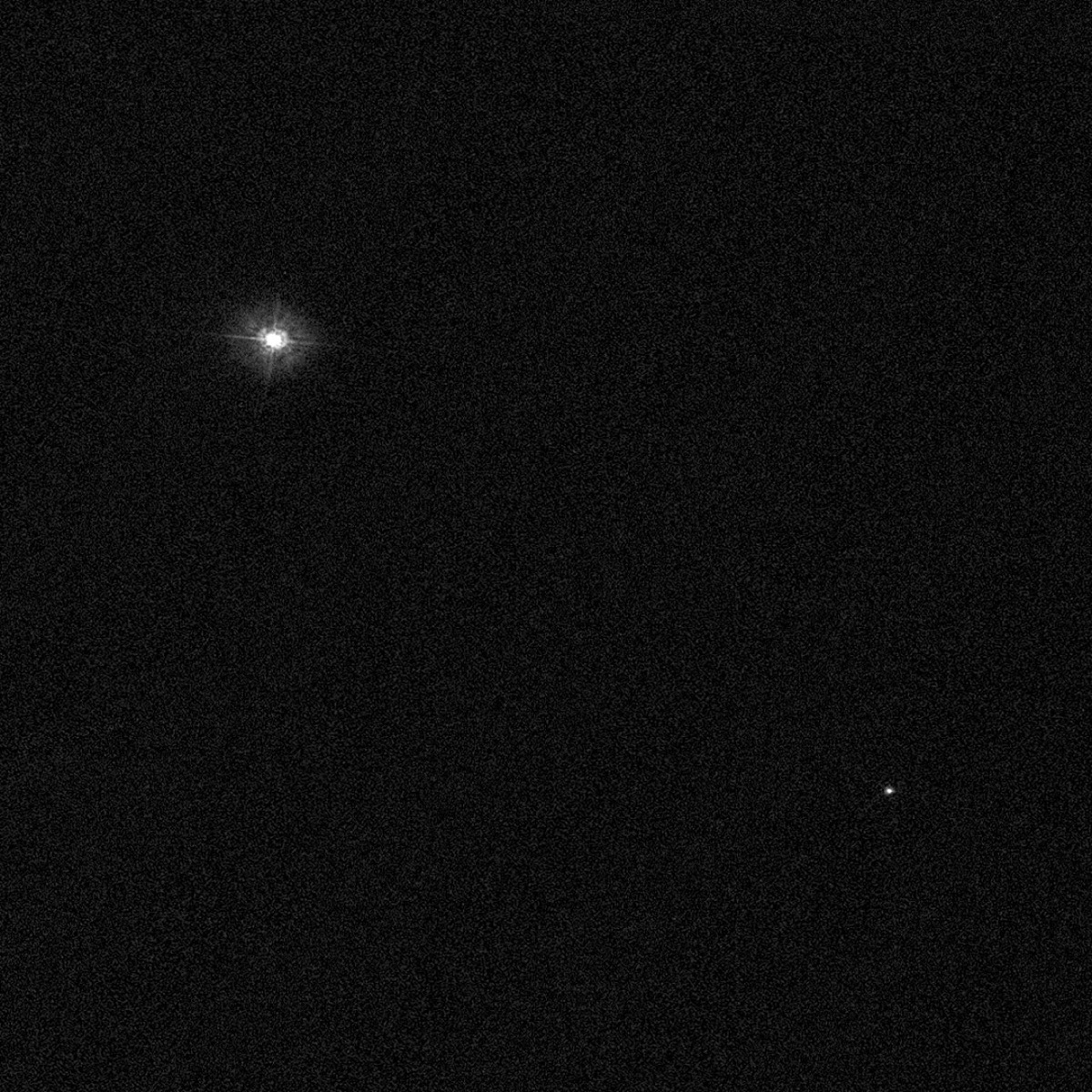
Astronomers classify Canopus as an A9 II bright giant currently burning helium in its core, a 'blue loop' stage reached after it exhausted core hydrogen at around 34 million years of age. It emits detectable X-rays from a magnetically active corona. A candidate low-mass companion star lurks at roughly 20,000 AU, but the pairing is not yet confirmed.
Compared to the Sun
Sun
This star · 73.3× radius
It shines about 16,600 times as bright as the Sun.
Its fate
At nearly 10 solar masses, Canopus will end its life as a core-collapse supernova in a few million years, likely leaving behind a neutron star. It is not yet close enough to supernova imminence to pose any hazard to Earth.
Find it in the sky
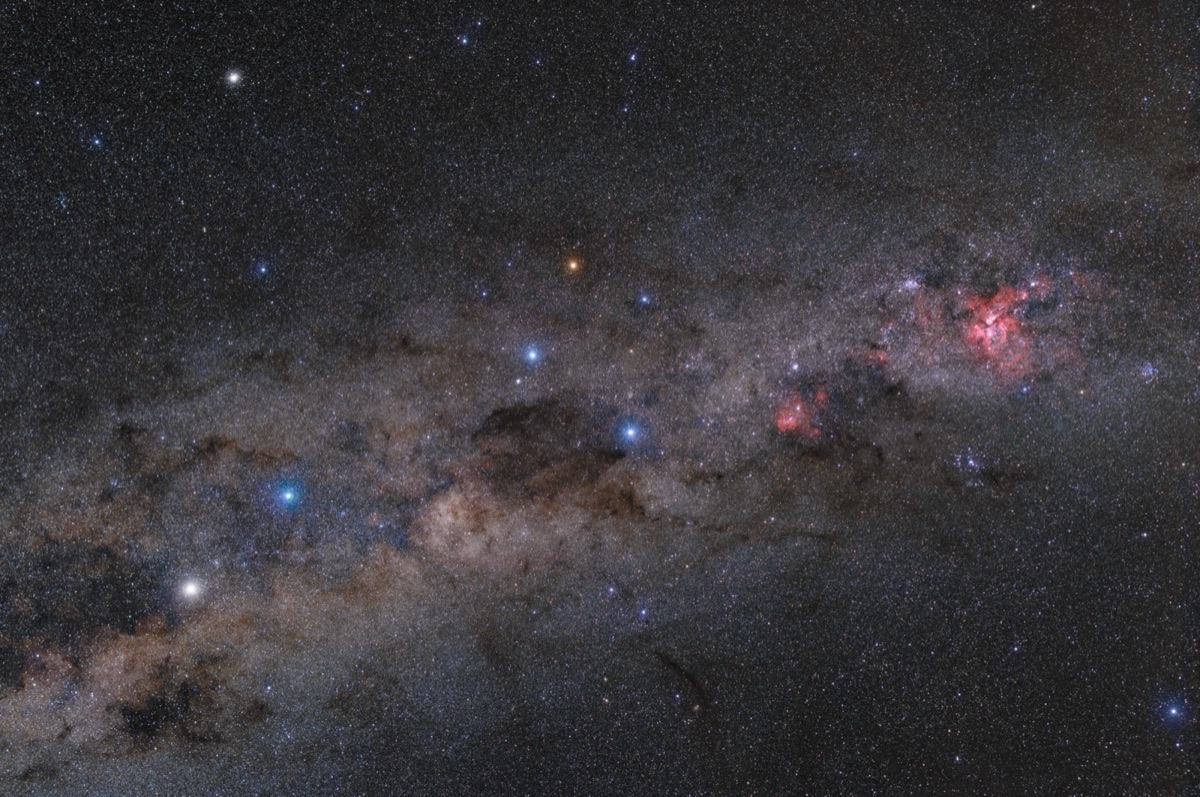
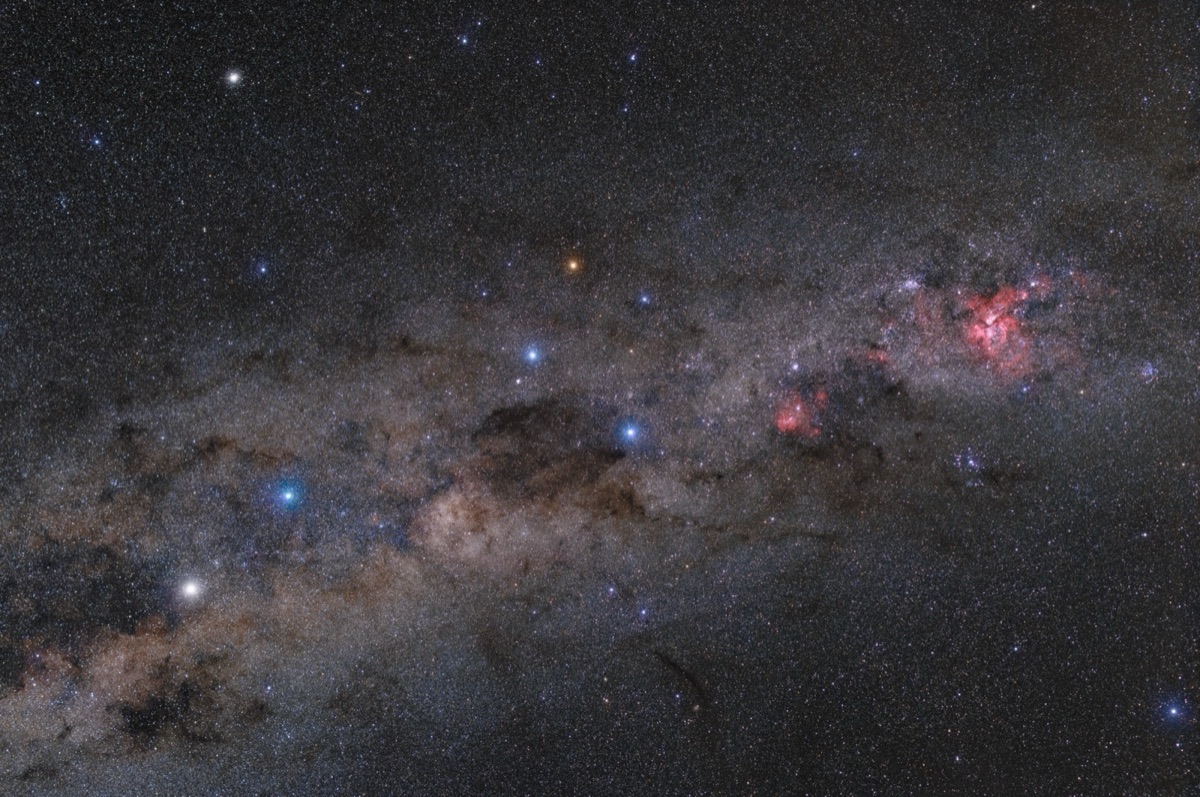
Canopus is circumpolar from latitudes south of about 37°N and never rises for observers north of about 37°N. From the southern hemisphere it gleams unmistakably low in the south during austral summer evenings; from subtropical northern latitudes, look for it skimming the southern horizon on winter nights.