The Company That Prints Its Rockets
Most rocket companies talk about how they build engines. Agnikul Cosmos talks about how it prints them. Tucked inside the incubation cell of the Indian Institute of Technology Madras in Chennai, this startup has spent the better part of a decade pursuing an idea that sounded almost heretical to traditional aerospace: what if you could manufacture an entire rocket engine as a single, continuous piece of metal, with no assembly line, no thousands of fasteners, and no six-month lead time?
That idea produced Agnilet — the world's first single-piece, fully 3D-printed semi-cryogenic rocket engine — and on May 30, 2024, it flew. Agnikul has become the most technologically distinctive company in India's booming private launch sector, not because it is the biggest or the best funded, but because it is chasing a different thesis entirely. Skyroot, its Hyderabad rival, is racing to be first to orbit. Agnikul is trying to change how rockets get made in the first place. This is the story of that bet, the people behind it, and whether the "rocket factory" vision can survive contact with the brutal economics of orbital flight.
Three Founders and a University Lab
Agnikul Cosmos was founded in 2017 by an unusual trio. Srinath Ravichandran, the company's CEO, had trained as an electrical engineer, worked in finance in the United States, and then walked away from a comfortable career to study aerospace engineering because he could not shake the conviction that small satellites deserved dedicated rides to space rather than being treated as afterthought passengers on someone else's rocket. Moin S P M, the co-founder and chief operating officer, brought the operational and program-management backbone. The third pillar was Professor S R Chakravarthy of IIT Madras' Department of Aerospace Engineering, who heads the National Centre for Combustion Research and Development and lent the company deep propulsion expertise and academic legitimacy.
That IIT Madras anchoring is not incidental to Agnikul's identity — it is foundational. The company was born inside the institute's incubation cell, drew on its combustion research infrastructure, and to this day maintains a symbiotic relationship with the university that few space startups anywhere can match. When Agnikul talks about its moat, the deep well of academic combustion talent and institutional support flowing from IIT Madras is a real part of it. Ravichandran has often framed the founding motivation in terms of access: the belief that a customer with a 100-kilogram satellite should be able to launch it where they want and when they want, rather than waiting years for a slot on a large government rocket.
Agnilet: One Engine, One Piece, No Assembly
The heart of Agnikul is Agnilet, and to understand why it matters you have to understand how rocket engines are normally built. A conventional engine is a fantastically complex assembly of hundreds or even thousands of individually machined components — injectors, cooling channels, manifolds, valves — each requiring its own tooling, welds, inspections, and assembly steps. Every joint is a potential leak, a potential failure point, and a source of manufacturing delay.
Agnilet collapses all of that into a single print. Using additive manufacturing, the entire engine is produced as one monolithic piece of Inconel, a nickel-based superalloy prized for its strength at high temperatures. There are no welds joining sub-assemblies because there are no sub-assemblies. Agnikul has said a complete engine can be printed in roughly 72 hours at its in-house Rocket Factory in Chennai, versus the six to twelve months a traditional propulsion supply chain can consume. The engine is semi-cryogenic, burning refined kerosene with cryogenic liquid oxygen — a propellant combination that offers strong performance while being far easier to handle than the deep-cryogenic hydrogen used in some upper stages. Agnilet was patented and first hot-fired years before it flew, and its 2024 flight made Agnikul the only company on Earth to have flown a single-piece 3D-printed semi-cryogenic engine.
SOrTeD: The Flight That Made History
Getting Agnilet off the ground took patience. Agnikul's sub-orbital demonstrator, Agnibaan SOrTeD — Sub-Orbital Technology Demonstrator — endured a string of scrubbed attempts through early 2024 as the team worked through last-second technical holds, the kind of agonizing near-misses that define new launch programs. Then, on May 30, 2024, the vehicle finally lifted off from the Satish Dhawan Space Centre at Sriharikota.
What made the flight historic was not just the engine but the pad. Agnikul launched not from an ISRO facility but from its own launchpad — christened "Dhanush," meaning "bow" in Sanskrit — the first private launchpad in India, built with ISRO's cooperation and dedicated to Agnikul's use. The single-engine, controlled sub-orbital flight validated three things at once: the 3D-printed Agnilet under real flight loads, the vehicle's guidance and control loop, and the company's private launch infrastructure. It was a genuine national milestone, and it planted Agnikul firmly in the small club of private companies worldwide to have flown a liquid-propulsion rocket of their own design. The mission proved the concept. The far harder task — reaching orbit — remained ahead.
Agnibaan: A Rocket You Configure Like a Product
Agnilet is the engine; Agnibaan is the rocket built around it, and its defining feature is configurability. Rather than offering a single fixed vehicle, Agnikul designed Agnibaan as a "plug-and-play" platform. The customizable two-stage rocket can be assembled with a varying number of Agnilet engines clustered in the first stage — up to seven — allowing the vehicle's lift capacity to be tuned to a specific mission. At full configuration, Agnibaan is designed to carry up to roughly 300 kilograms to a low Earth orbit of around 700 kilometers, with the flexibility to fly lighter payloads on smaller configurations.
The strategic logic is the "launch anywhere, anytime" thesis. Because the vehicle is modular and its infrastructure transportable, Agnikul envisions serving dedicated smallsat customers who want to choose their orbit and schedule rather than share a ride and wait. It is explicitly positioned to complement, not compete with, ISRO's PSLV and SSLV workhorses — filling the on-demand, dedicated-launch niche that large government rockets serve poorly. Every part of the design reflects the additive-manufacturing thesis: if you can print engines quickly and cheaply, you can build rockets that are configured per customer the way a product is spec'd, rather than manufactured in rigid, expensive batches.
Money, Government Equity, and a $500 Million Valuation
Agnikul has been backed since its early days by a roster of Indian and international venture investors, including Mayfield India, pi Ventures, Speciale Invest, Celesta Capital, Rocketship.vc, and others. In November 2025, the company closed a Series C extension of around $17 million (roughly ₹150 crore), with participation from names such as Advenza Global, HDFC Bank, Artha Select, and 100X.VC. That round pegged Agnikul's post-money valuation at more than $500 million and lifted cumulative funding into the region of $80 million.
The most striking financial development came in early 2026, when the Tamil Nadu government, through its industrial arm TIDCO, took a direct equity stake of around ₹25 crore (roughly $3 million) in the company — the first time an Indian state government has bought equity in a private space startup. It is a powerful signal: Agnikul is not just a company Tamil Nadu wants to host, it is one the state wants to own a piece of. By mid-2026, reports indicated Agnikul was in talks to raise a further $50 to $75 million at a flat valuation of around $500 million to fund its push toward commercial launches. The state-government backing and IIT Madras anchoring give Agnikul a depth of political and academic capital that few of its peers can claim — a long-runway advantage even if its technical milestones slip.
The Road to Orbit: Test Milestones Through 2026
Between SOrTeD and orbit lies the single hardest engineering problem Agnikul faces: firing multiple engines together, in perfect synchronization, and separating stages cleanly. A cluster of independently pumped engines igniting and throttling in unison has historically been a primary failure mode for new small-lift rockets, and Agnikul has spent 2025 and 2026 methodically de-risking it.
The company reported an early three-engine cluster hot-fire in 2025, then in February 2026 announced what it called India's first successful clustered three-engine semi-cryogenic 3D-printed engine test — a milestone that validated its proprietary software's ability to sync multiple electric-motor-driven propellant pumps. In March 2026 it test-fired its larger Agnite booster engine, and by May 2026 it had escalated to a four-engine semi-cryogenic cluster firing, described as India's first such test and a direct step toward the seven-engine first stage Agnibaan requires. Alongside the cluster work, the team has been developing and testing stage-separation systems. Agnikul's leadership has framed 2026 as the year of perfecting simultaneous multi-engine firing and stage separation, with the maiden Agnibaan orbital flight — carrying a satellite and, ambitiously, attempting booster recovery — targeted for later in the year, though timelines for such firsts have a way of stretching. In July 2026 the company also signed a memorandum of understanding with Finnish firm ICEYE to jointly develop and launch synthetic-aperture-radar Earth-observation satellites from India, an early sign of the customer pipeline Agnibaan will need.
The Skyroot Rivalry and the Challenges Ahead
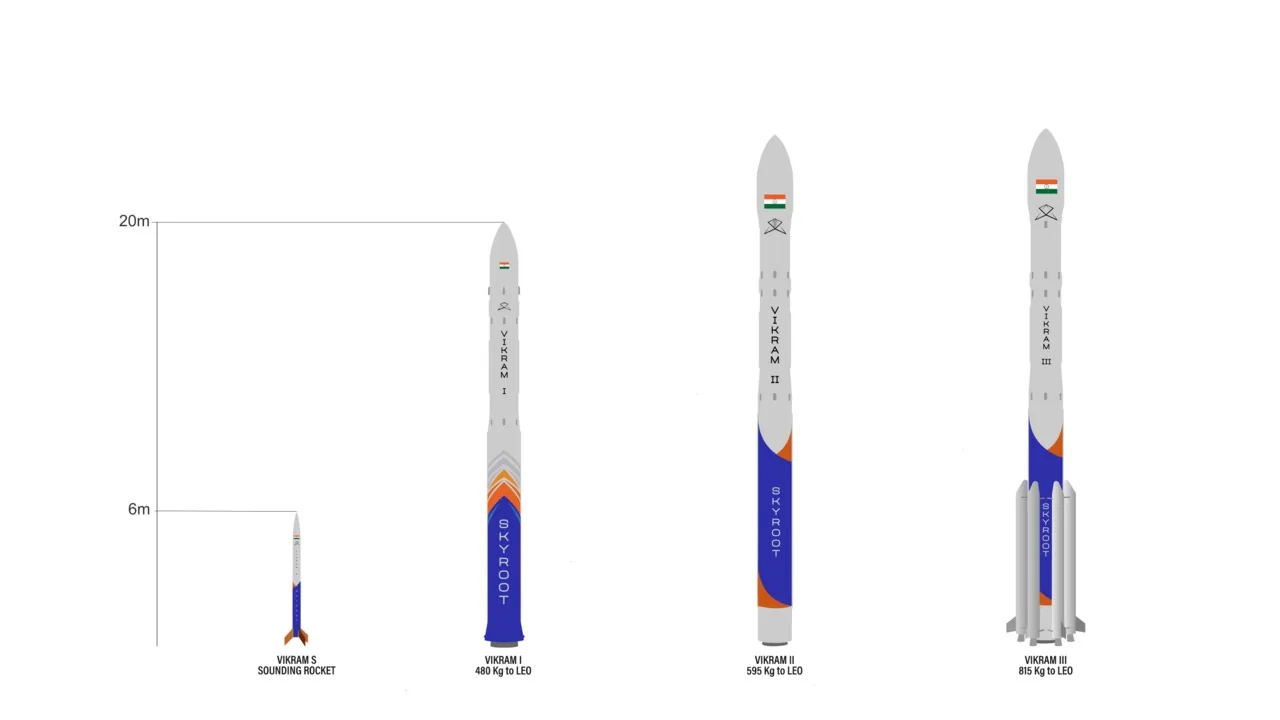
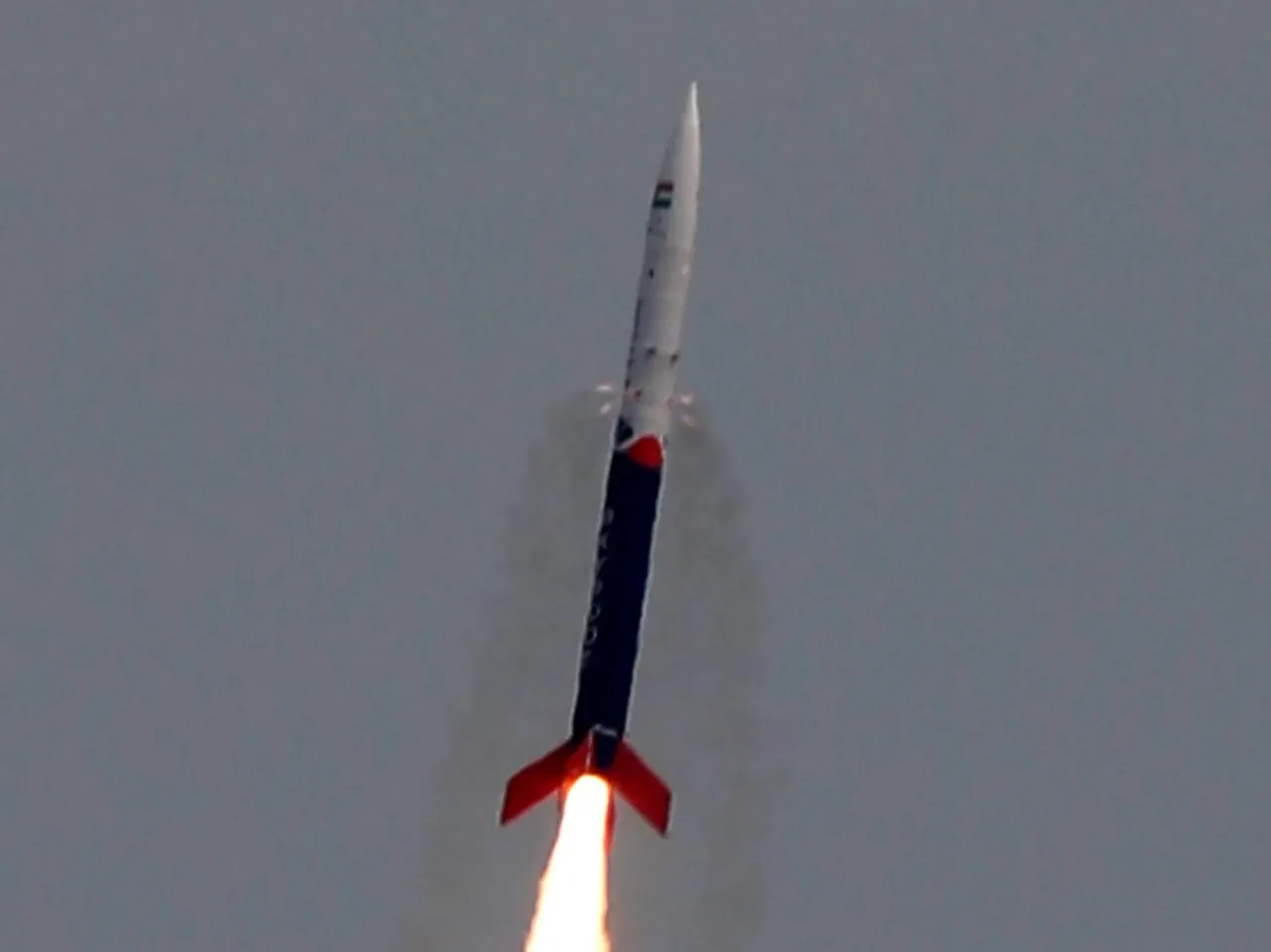
No account of Agnikul is complete without Skyroot Aerospace, its Hyderabad-based rival and the defining competitive relationship in Indian private launch. Skyroot flew India's first private rocket, the sub-orbital Vikram-S, back in 2022, has raised well over double Agnikul's capital, and is widely seen as having a head start toward the orbital debut with its Vikram-1 vehicle. The two companies embody different philosophies: Skyroot leans on a more conventional, ISRO-heritage engineering approach and sheer momentum, while Agnikul bets on manufacturing innovation and a configurable product. Whoever reaches orbit first will claim an enormous symbolic prize, but the deeper contest is over which model scales better once the market matures.
The challenges are real. Agnikul carries concentration risk on a single launch site and a single propulsion architecture — a serious Agnilet anomaly could ground the entire business. Its balance sheet, at roughly $80 million raised, is modest against global rivals like Rocket Lab and Firefly and even against Skyroot, and a Series D will likely be needed within a couple of years to reach a steady commercial cadence. And the orbital flight itself remains unproven; clustering seven engines with clean stage separation is precisely the kind of task that has humbled experienced teams. Yet Agnikul's story is unmistakably the most original in Indian launch. It has flown a printed engine no one else has flown, built a launchpad no one else has built, and attracted a government to buy in as a shareholder. If Agnibaan reaches orbit, the "rocket factory" thesis — that rockets can be printed on demand and configured like products — will have earned its most convincing proof yet.