Disclosure: We may earn a commission from purchases made through links on this page. Editorial picks are independently selected. Read our editorial standards.
Our top pick is Carl Sagan's Cosmos — still the single most influential popular-science book about space ever published, and the one that makes new readers fall in love with the sky. For an inside look at what it actually feels like to be a working astronaut, it's Chris Hadfield's An Astronaut's Guide to Life on Earth. For modern fiction that respects orbital mechanics, Andy Weir's Project Hail Mary has supplanted The Martian as the favorite. Below are 10 books across nonfiction, fiction, history, and astrophysics — every one of them is in print as of 2026.
Space Book Comparison
| Pick | Author | Best For | Price Tier | Buy Link |
|---|---|---|---|---|
| Cosmos | Carl Sagan | Lifelong reread, the foundation text | $ | Buy on Amazon → |
| An Astronaut's Guide to Life on Earth | Chris Hadfield | Memoir, what it's actually like | $ | Buy on Amazon → |
| Astrophysics for People in a Hurry | Neil deGrasse Tyson | Quick astrophysics overview | $ | Buy on Amazon → |
| Packing for Mars | Mary Roach | Funniest book on space (and bodies) | $ | Buy on Amazon → |
| Project Hail Mary | Andy Weir | Best modern hard-SF novel | $ | Buy on Amazon → |
| The Fabric of the Cosmos | Brian Greene | Spacetime and cosmology, deep | $ | Buy on Amazon → |
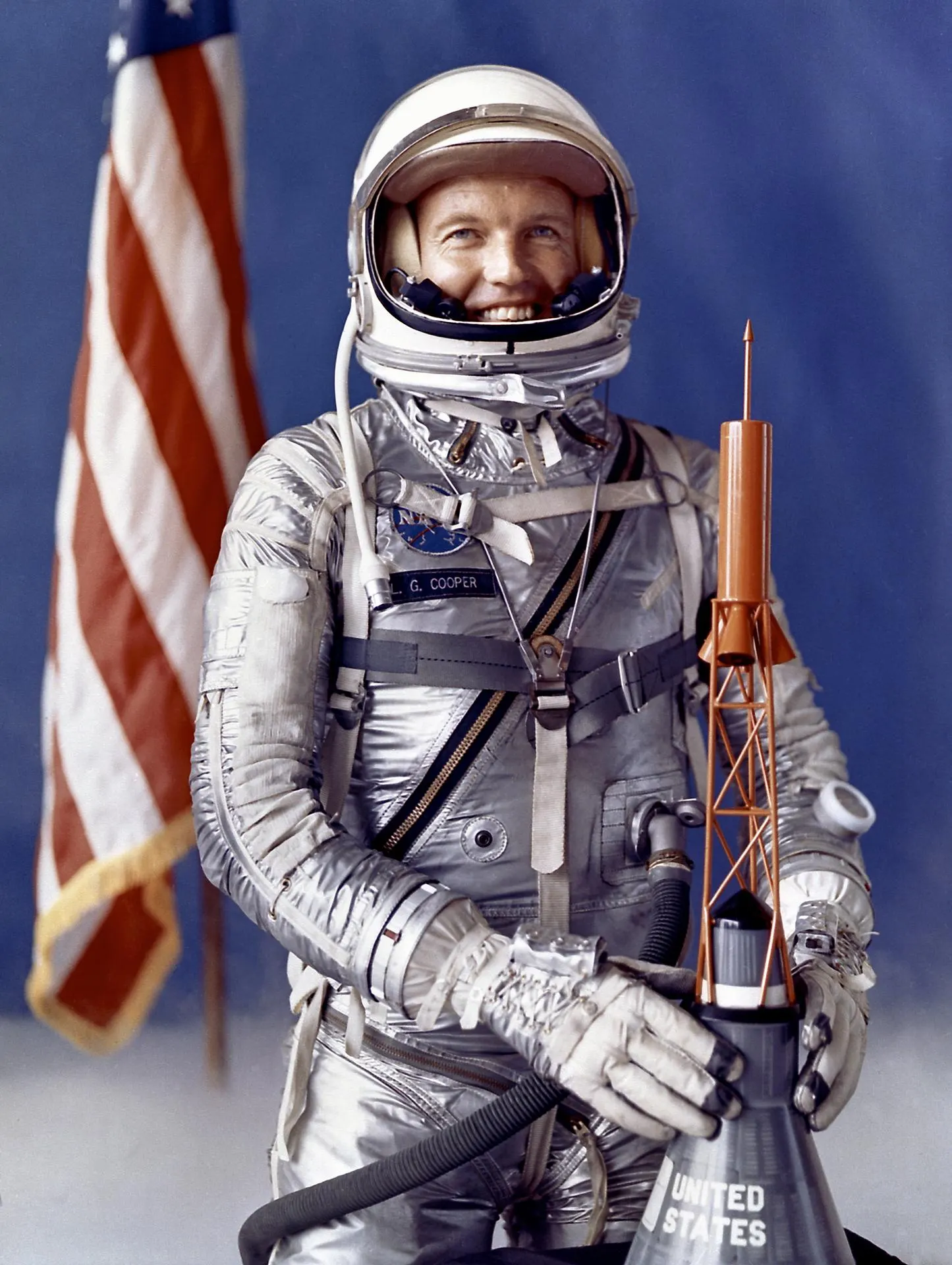
| The Right Stuff | Tom Wolfe | Mercury 7 history, definitive | $ | Buy on Amazon → |
| Endurance | Scott Kelly | A year on the ISS, raw and honest | $ | Buy on Amazon → |
| A Brief History of Time | Stephen Hawking | The popular cosmology classic | $ | Buy on Amazon → |
| The Martian | Andy Weir | Survival on Mars, technically rigorous | $ | Buy on Amazon → |
Price tiers: $ < $25 / $$ $25–$50 / $$$ $50+ (most space books fall in $)
1. Cosmos — Carl Sagan (1980, reissued)

If you read only one book on this list, read Cosmos. Sagan's prose remains uncannily fresh four decades after publication, and the science he covers — from the Library of Alexandria to interstellar travel to the carbon chemistry of life — still tracks. The companion 13-part PBS series, available on streaming, is one of the rare cases where the book and the show genuinely augment each other.
- First published: 1980 (Random House)
- Pages: ~400
- Reading level: Accessible, no math
- Best for: Anyone, ever, at any age over about 14
- Price tier: $ (paperback ~$20)
Pros: Sets the standard for popular space writing, every chapter still earns its place. Cons: A few anecdotes (e.g., on the cause of the loss of the Library of Alexandria) are now considered oversimplified by historians; the science is sound, the history occasionally needs a footnote.
2. An Astronaut's Guide to Life on Earth — Chris Hadfield (2013)
Hadfield commanded ISS Expedition 35 and became a global household name with his viral guitar performance of "Space Oddity" from orbit. The book is part memoir, part operational philosophy of how astronauts train (the through-line is that astronauts train for years for events that may take seconds, and you can apply that to your own life). The chapter on simulator failures and "what's the next thing that will kill me?" is worth the cover price alone.
- First published: 2013 (Little, Brown)
- Pages: ~304
- Reading level: General audience, no science background needed
- Best for: Aspiring astronauts, executives, anyone who wants applied lessons from spaceflight
- Price tier: $ (paperback ~$18)
Pros: Honest, funny, full of useful operational wisdom. Cons: Less hard-science content than some readers want; this is a memoir first.
3. Astrophysics for People in a Hurry — Neil deGrasse Tyson (2017)

Tyson's compressed astrophysics primer reads almost like a long magazine essay. It's the right book to give a smart adult who wants to know what dark matter is, why the cosmic microwave background matters, and how heavy elements get made — but doesn't want to commit to a 600-page Brian Greene volume. Excellent on a long flight.
- First published: 2017 (W. W. Norton)
- Pages: ~224
- Reading level: General audience
- Best for: Quick, witty intro to modern astrophysics
- Price tier: $ (hardcover ~$20, paperback less)
Pros: Concise, clear, memorable analogies. Cons: Not enough room for genuine depth on any single topic; surface-skim by design.
4. Packing for Mars — Mary Roach (2010)
Roach's book on the bodily indignities of human spaceflight is one of the funniest things written about space — and also, somehow, deeply respectful of the engineering and the people who do the work. Vomit research, zero-G toilets, isolation studies, swimsuit testing for splashdown decorum: every chapter has at least one sentence you'll want to read aloud to whoever's nearby.
- First published: 2010 (W. W. Norton)
- Pages: ~320
- Reading level: General audience
- Best for: Readers who want the human side of spaceflight, on the level of "what happens to your stomach contents in zero G"
- Price tier: $ (paperback ~$17)
Pros: Hilarious, well-reported, takes the engineering seriously even while laughing. Cons: Some chapters are squeamishness tests — read with discretion if that's not your thing.
5. Project Hail Mary — Andy Weir (2021)
Weir's third novel is the rare hard-SF book where the science is mostly right, the alien is plausibly designed, and the plot earns its emotional payoffs. A high-school science teacher wakes up alone on an interstellar mission with no memory of how he got there. The novel rewards readers who care about orbital mechanics, exobiology, and the engineering of how a one-person spacecraft might actually work. Ryan Gosling's film adaptation (currently in production) is expected in 2026.
- First published: 2021 (Ballantine Books)
- Pages: ~496
- Reading level: General audience, light science background helps
- Best for: Sci-fi readers who liked The Martian and want more of the same energy
- Price tier: $ (paperback ~$18)
Pros: Best modern hard-SF novel, generous with the science but never lecturing. Cons: First-person voice grates on some readers; the structural twist works best if you go in unspoiled.
6. The Fabric of the Cosmos — Brian Greene (2004)
Greene's second book on relativity, quantum mechanics, and cosmology is the right step up from Astrophysics for People in a Hurry. He covers spacetime, entropy, multiverses, and string theory at a level a determined non-physicist can follow. PBS adapted it into a four-part series in 2011, which is excellent companion viewing.
- First published: 2004 (Knopf)
- Pages: ~592
- Reading level: Determined general reader; some math diagrams appear
- Best for: Readers ready to commit to a deeper cosmology book
- Price tier: $ (paperback ~$22)
Pros: Genuinely deep, well-structured, the gold-standard mid-level cosmology read. Cons: Long; a few chapters on string theory have aged somewhat as the field has moved.
7. The Right Stuff — Tom Wolfe (1979)
Wolfe's account of the Mercury 7 astronauts and the test-pilot culture that produced them remains the definitive narrative history of the early American space program. The opening chapters on Edwards Air Force Base and Chuck Yeager are some of the best aviation writing in English. The Philip Kaufman 1983 film is excellent but the book is denser, funnier, and more honest.
- First published: 1979 (Farrar, Straus and Giroux)
- Pages: ~448
- Reading level: General audience, dense prose style
- Best for: History readers, aviation buffs, Mercury and early-Apollo enthusiasts
- Price tier: $ (paperback ~$18)
Pros: Iconic prose, deeply reported, captures an era. Cons: Wolfe's 1970s perspective on women and minorities in aerospace shows its age in places.
8. Endurance — Scott Kelly (2017)
Kelly's memoir of his year-long ISS mission (March 2015–March 2016, the longest American spaceflight at the time) is unusual among astronaut memoirs in its unguarded honesty about the toll of long-duration spaceflight on the body, the marriage, and the mind. The post-mission medical findings — comparing Scott to his identical twin Mark on the ground — fed directly into the NASA Twins Study and remain the most rigorous data set on long-duration human physiology.
- First published: 2017 (Knopf)
- Pages: ~400
- Reading level: General audience
- Best for: Readers who want a current, candid astronaut memoir grounded in real ISS operations
- Price tier: $ (paperback ~$18)
Pros: Frank, well-written, scientifically grounded. Cons: Some passages on Kelly's personal life feel airing-grievances rather than illuminating.
9. A Brief History of Time — Stephen Hawking (1988)
The book that taught the general public the words "event horizon" and "singularity." Hawking's prose is leaner than Greene's and the book is shorter (around 256 pages) — but the conceptual density per page is higher than nearly anything else on this list. Read it slowly. Reread the chapter on the arrow of time. The 1996 illustrated edition is the most reader-friendly.
- First published: 1988 (Bantam)
- Pages: ~256
- Reading level: General reader who's willing to slow down and reread
- Best for: Cosmology, black holes, the conceptual structure of physics
- Price tier: $ (paperback ~$18)
Pros: Compact, foundational, written by one of the great physicists of the era. Cons: Some readers find the prose dry; modern findings (gravitational-wave detection, multi-messenger astronomy, black-hole imaging) postdate the book.
10. The Martian — Andy Weir (2014)
The book that turned hard SF mainstream. Mark Watney is left for dead on Mars, has to "science the [expletive] out of" survival, and the novel walks through every calculation. NASA consulted Weir on accuracy and the result is a novel where the engineering is pretty much right — Mars dust storms aren't actually as physically forceful as the opening implies, but otherwise the chemistry, ballistics, and orbital math hold up.
- First published: 2014 (Crown)
- Pages: ~384
- Reading level: General audience
- Best for: Readers who want survival fiction with real engineering
- Price tier: $ (paperback ~$17)
Pros: Funny, technically rigorous, briskly paced. Cons: Watney's relentless joke-cracking is divisive; the opening dust-storm premise is the one piece of bad physics in the novel.
What to Look For
Format: Print, Audiobook, or Both
Several of these books are extraordinary in audio. Hadfield narrates An Astronaut's Guide himself; Tyson narrates Astrophysics for People in a Hurry with his trademark pacing; Project Hail Mary features Ray Porter's award-winning narration with sound effects that augment the text. For dense cosmology (Greene, Hawking), print is generally easier because you can flip back to a diagram.
Edition and Updates
Cosmos was reissued in 2013 with a foreword by Neil deGrasse Tyson and updated chapter notes. A Brief History of Time was updated in 1996 (illustrated) and 2005 (briefer). When buying, prefer the most recent print to get post-publication corrections.
Hardback, Paperback, or e-Book
Most of these books are well under $25 in paperback. Hardcovers are pleasant for the cosmology titles you'll reread (Greene, Hawking) but unnecessary for memoirs and one-read fiction.
Reading Level Honesty
Astrophysics for People in a Hurry and Cosmos are accessible to any motivated adult. The Fabric of the Cosmos and A Brief History of Time require concentration and willingness to reread. Match the book to the reader.
Companion Resources
Several of these books have excellent companion documentaries: Cosmos (1980 Sagan, plus 2014 deGrasse Tyson reboot), The Fabric of the Cosmos (PBS, 2011), The Right Stuff (1983 film). Watching after reading reinforces the material.
FAQ
What's the best space book for someone who's never read one before?
Cosmos by Carl Sagan. Forty-plus years on, it remains the single best on-ramp into thinking like a space enthusiast. If they already read magazine-length nonfiction comfortably, Astrophysics for People in a Hurry is a good shorter starter.
What's the best book for someone who only reads fiction?
Project Hail Mary. It's gripping, scientifically grounded, and converts non-space-fans into space-fans more reliably than any other recent novel.
Are there good space books written by women?
Mary Roach (Packing for Mars) is on this list. Other strong recommendations include Janna Levin's Black Hole Blues and Other Songs from Outer Space, Lisa Randall's Warped Passages, Margot Lee Shetterly's Hidden Figures, and Sara Seager's The Smallest Lights in the Universe. We kept this list intentionally short and canonical, but the broader field is rich.
Is A Brief History of Time still relevant after gravitational waves were detected?
Yes. The conceptual framework — what black holes are, what spacetime is, why the universe has an arrow of time — is unchanged. The post-2015 gravitational-wave era confirmed predictions Hawking and his peers made; it didn't invalidate them. Read Hawking for foundations, then read newer books (Janna Levin, Brian Greene) for the modern observational story.
How accurate is Andy Weir's science?
Very accurate, with one famous exception. Mars's atmosphere is so thin that even a 150 mph dust storm produces only modest dynamic pressure — nowhere near enough to topple a MAV ascent vehicle. Weir has acknowledged this. Everything else (water reclamation chemistry, orbital mechanics, communications relay timing) is essentially right.
Should I read The Right Stuff before or after watching For All Mankind?
Read The Right Stuff first — it's the historical foundation. For All Mankind (Apple TV+) is alternate-history fiction that assumes the Soviet Union landed on the Moon first, and it's better if you know the real history it's diverging from.
What about kids' books?
Outside this guide's scope (this is the adult list), but Andrea Beaty's Ada Twist, Scientist, Margot Lee Shetterly's Hidden Figures: The True Story of Four Black Women (young readers edition), and the National Geographic Kids space series are all excellent for under-12 readers.
Sources
- Author and publisher pages: Random House, W. W. Norton, Knopf, Bantam, Crown, Little Brown, Farrar Straus and Giroux
- NASA Twins Study findings (Scott Kelly), www.nasa.gov/feature/nasa-twins-study
- Cosmos (1980) PBS series and 2014 reboot, pbs.org
- The Fabric of the Cosmos PBS NOVA series (2011), pbs.org/nova
- Goodreads bestseller and rating data, goodreads.com
- The New York Times Best Sellers historical archives
- The Royal Society's "Best Science Book of the Year" past winners list
- Andy Weir interview archive on Mars dust storm physics, NASA Goddard Public Outreach