Here is a fact that should stop you in your tracks: everything you have ever seen, touched, or measured -- every star, every planet, every atom in your body -- makes up roughly 5% of the total content of the universe. The other 95% is invisible, mysterious, and profoundly strange. We call it dark matter and dark energy, and after decades of searching, we still do not know what either of them actually is.
This is not a minor gap in our knowledge. This is the universe telling us, with a kind of cosmic bluntness, that we are missing almost everything.
The Case for Dark Matter
The story begins in the 1930s, when Swiss astronomer Fritz Zwicky studied the Coma Cluster -- a massive collection of galaxies about 320 million light-years away. He measured how fast the individual galaxies were moving and calculated how much mass would be needed to hold the cluster together gravitationally. The answer was shocking: there had to be far more mass than the visible galaxies could account for. He called it "dunkle Materie" -- dark matter.
For decades, his observation was largely ignored. Then, in the 1970s, American astronomer Vera Rubin and her colleague Kent Ford made measurements that changed everything. They studied the rotation curves of spiral galaxies -- how fast stars orbit at different distances from the galactic center. According to the visible mass distribution, stars in the outer regions of galaxies should orbit more slowly than those closer in, just as the outer planets in our solar system orbit more slowly than the inner ones. But that is not what Rubin and Ford found. The stars in the outskirts were moving just as fast as those near the center.
The implication was unavoidable: there had to be a vast amount of unseen mass surrounding each galaxy, extending far beyond the visible disk. A dark matter halo, invisible but gravitationally dominant.
Since then, evidence for dark matter has piled up from multiple independent lines of observation:
Galaxy rotation curves remain the classic evidence. Hundreds of galaxies have been measured, and they all show the same pattern: flat rotation curves that demand far more mass than we can see.
Gravitational lensing -- the bending of light from distant galaxies by intervening mass -- allows us to map the distribution of matter (both visible and dark) in galaxy clusters. The maps consistently show far more mass than the visible galaxies contain.
The Bullet Cluster, observed in 2006, provided what many consider a smoking gun. This object consists of two galaxy clusters that have collided and passed through each other. The hot gas (which makes up most of the normal matter) was slowed by the collision and clumped in the middle. But gravitational lensing maps showed that most of the mass had sailed right through, separated from the gas. This is exactly what you would expect if most of the mass were dark matter -- particles that interact gravitationally but not through the electromagnetic force, passing through each other like ghosts.
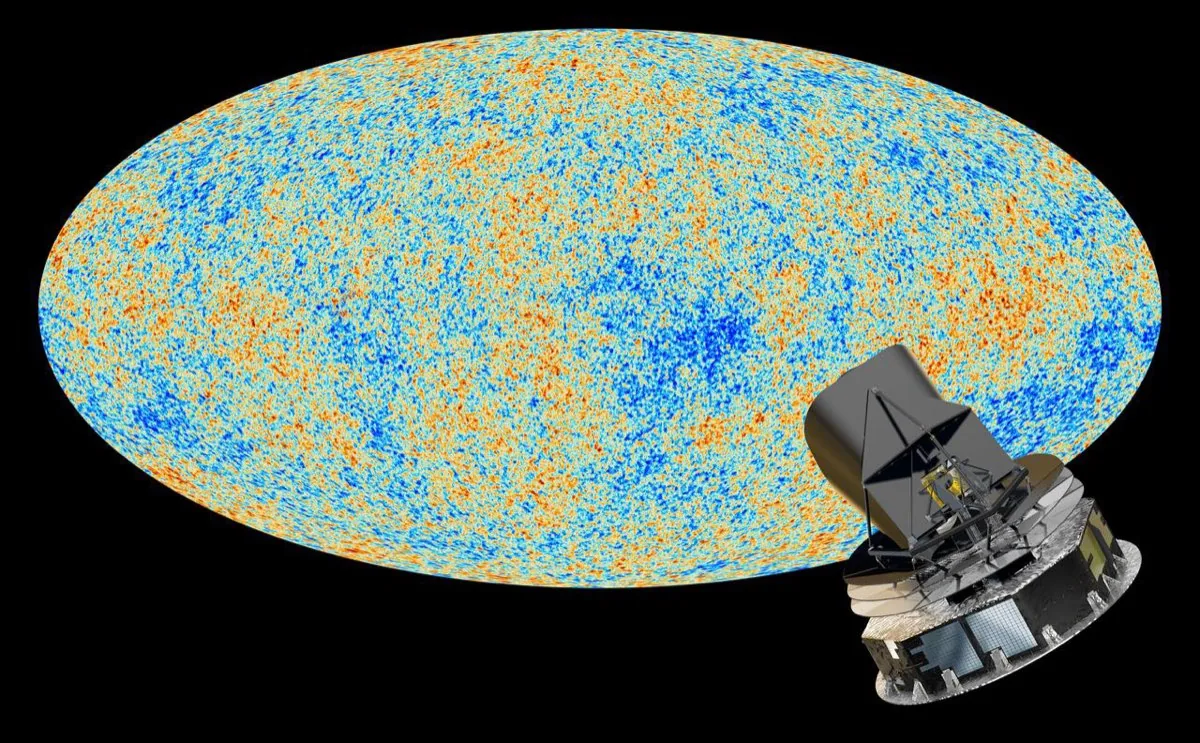
The cosmic microwave background (CMB) -- the afterglow of the Big Bang -- shows tiny temperature fluctuations that encode the composition of the early universe. The pattern of these fluctuations can only be explained if about 27% of the universe's total energy density is in the form of dark matter.
So what is dark matter? That is the trillion-dollar question. The leading candidates include:
- WIMPs (Weakly Interacting Massive Particles): Hypothetical particles that interact through gravity and the weak nuclear force. Despite decades of searching with underground detectors, no confirmed detection has been made.
- Axions: Extremely light particles originally proposed to solve a problem in quantum chromodynamics. Several experiments are actively hunting for them.
- Sterile neutrinos: Heavier cousins of the known neutrinos that interact only through gravity.
- Primordial black holes: Black holes formed in the very early universe. While not completely ruled out, observations have severely constrained how much dark matter they could account for.
None of these candidates has been confirmed. We know dark matter is there. We know roughly how much there is. But its true nature remains one of the deepest mysteries in physics.
Dark Energy: The Accelerating Expansion
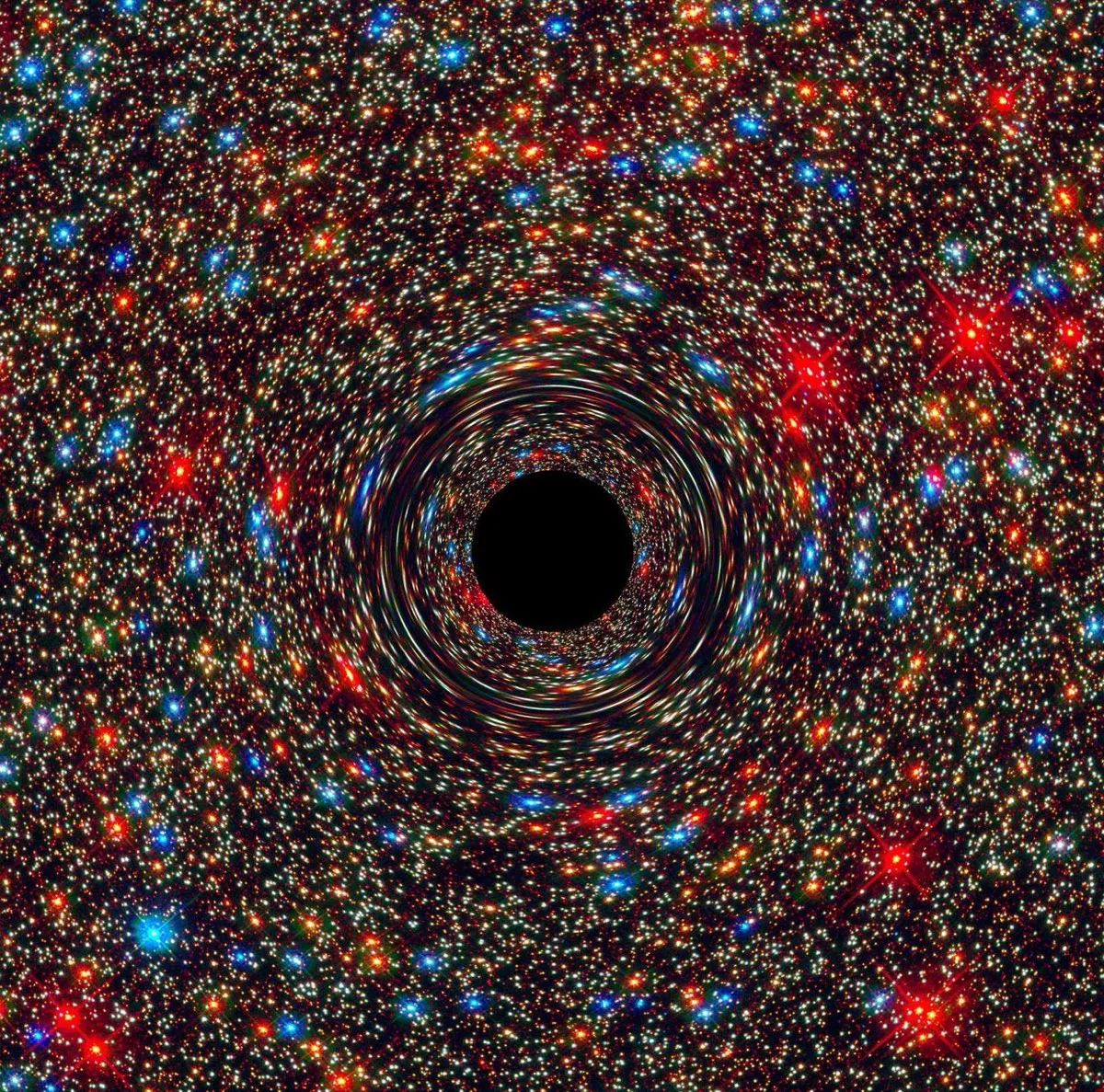
If dark matter is mysterious, dark energy is downright bewildering.
In 1998, two teams of astronomers -- the Supernova Cosmology Project and the High-z Supernova Search Team -- were using Type Ia supernovae as "standard candles" to measure the expansion rate of the universe at different epochs. Everyone expected to find that the expansion was gradually slowing down, pulled back by the gravitational attraction of all the matter in the cosmos.
Instead, they found the opposite. The expansion of the universe is speeding up. Distant supernovae were fainter than expected, meaning they were farther away than they should have been in a decelerating universe. Something was pushing the cosmos apart, and it was winning against gravity on the largest scales.
This discovery earned Saul Perlmutter, Brian Schmidt, and Adam Riess the 2011 Nobel Prize in Physics. The mysterious force driving the acceleration was dubbed dark energy, and it accounts for approximately 68% of the total energy content of the universe.
The simplest explanation for dark energy is the cosmological constant -- a term Einstein originally added to his equations of general relativity and later called his "greatest blunder." It represents a constant energy density filling all of space, an inherent property of the vacuum itself. Quantum field theory predicts that empty space should indeed have energy, but the predicted amount is absurdly larger than what we observe -- off by a factor of about 10^120. This is sometimes called the worst prediction in all of physics.
Other theories propose that dark energy is not constant but changes over time -- a concept called quintessence. Some models even suggest that dark energy could eventually grow strong enough to tear apart galaxies, stars, and even atoms in a "Big Rip" scenario. Others propose modifications to general relativity itself on cosmological scales.
New Eyes on the Dark Universe: Euclid and DESI
The good news is that we are entering a golden age of dark universe research, with powerful new surveys designed specifically to pin down the nature of dark matter and dark energy.
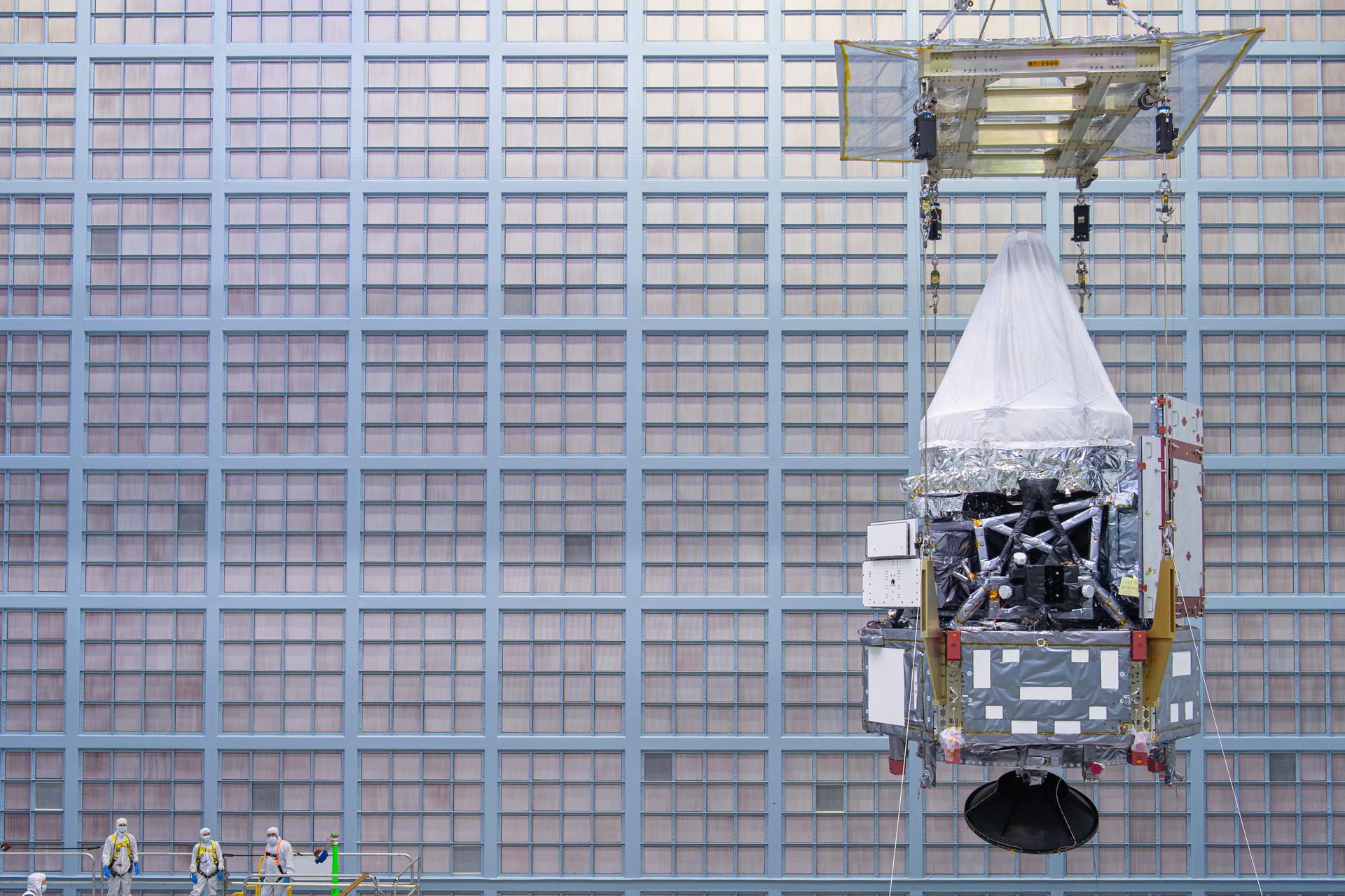
The Euclid space telescope, launched by the European Space Agency in July 2023, is mapping the three-dimensional distribution of galaxies across one-third of the sky, looking back over 10 billion years of cosmic history. By measuring the shapes of billions of galaxies (to detect the subtle distortions caused by gravitational lensing) and the clustering patterns of galaxies (which encode information about the growth of cosmic structure), Euclid aims to trace how dark matter is distributed and how dark energy has influenced the expansion of the universe over time. Its first science images, released in late 2023, were breathtaking -- showing galaxy clusters, nearby galaxies, and star-forming regions in unprecedented detail. The full survey will take about six years and is expected to revolutionize our understanding of the dark cosmos.
Meanwhile, on the ground, the Dark Energy Spectroscopic Instrument (DESI), mounted on the Mayall Telescope in Arizona, has been measuring the redshifts of millions of galaxies and quasars to build the most detailed three-dimensional map of the universe ever created. In April 2024, the DESI collaboration released its first-year results, and they were tantalizing.
The data hinted -- cautiously -- that dark energy might not be constant after all. The measurements showed slight tension with the standard cosmological constant model, suggesting that the strength of dark energy may be evolving over time. If confirmed by future data releases, this would be a seismic shift in cosmology. A changing dark energy would rule out the simplest explanations and point toward new physics that we do not yet understand.
It is important to emphasize that these are early results and the statistical significance is not yet overwhelming. But the cosmology community is paying very close attention.
The Bigger Picture
Step back for a moment and consider what we are dealing with. The universe -- this vast, ancient, magnificent thing -- is mostly made of stuff we cannot see, cannot touch, and cannot yet explain. Normal matter, the stuff of stars and planets and people, is a thin frosting on an invisible cake.
Dark matter builds the scaffolding on which galaxies form. Without it, the cosmic web of large-scale structure would not exist, and neither would we. Dark energy determines the ultimate fate of the universe -- whether it will expand forever, accelerate into oblivion, or do something we have not yet imagined.
Understanding these two components is not just an academic exercise. It is the key to understanding where the universe came from, what it is made of, and where it is going. The answers may require new particles, new forces, or even new theories of gravity. They may reveal connections between the very large and the very small that we cannot currently foresee.
We live in a time when the instruments exist to probe these questions with real data, when space telescopes and ground-based surveys are actively hunting for answers. The dark universe is not just a mystery to ponder abstractly. It is a frontier being explored right now, in real time.
And somewhere in that invisible 95% of reality, the answers are waiting. We just have to figure out how to see them.