The Moment a Nation Held Its Breath
At 6:04 PM Indian Standard Time on August 23, 2023, over a billion people were glued to screens across India. In schools, offices, living rooms, and tea stalls, an entire nation watched a live feed from the Indian Space Research Organisation's mission control in Bengaluru. The Vikram lander was descending toward the Moon's surface, and the tension was almost unbearable.
Four years earlier, Chandrayaan-2's Vikram lander had crashed during its final descent on September 7, 2019, just 2.1 kilometers from its intended landing site. That failure had been heartbreaking. ISRO Chairman K. Sivan's tears at the time had moved the entire nation. Now, with Chandrayaan-3, India was trying again -- and the stakes felt even higher.
When the telemetry confirmed soft landing, mission control erupted. Prime Minister Narendra Modi, watching from South Africa where he was attending the BRICS summit, declared to the world: "India is on the Moon." The landing site was later named Shiv Shakti Point by the Indian government. India had become the fourth nation in history to achieve a controlled soft landing on the Moon, after the Soviet Union, the United States, and China -- and the first to land near the lunar south pole.
From Failure to Triumph: How ISRO Rebuilt Its Approach
The Chandrayaan-3 mission was born directly from the lessons of Chandrayaan-2's landing failure. ISRO's engineers conducted an exhaustive investigation of what went wrong and redesigned the lander with a philosophy that Chairman S. Somanath later described as "failure-based design" -- systematically identifying everything that could go wrong and engineering solutions for each scenario.
The changes were significant. Chandrayaan-3's Vikram lander carried more fuel than its predecessor, giving it a larger margin for trajectory corrections during descent. The landing legs were made stronger and wider to handle a broader range of touchdown velocities and slopes. The lander's software was rewritten to be more robust, capable of handling deviations from the planned descent profile. Additional sensors were incorporated, including a laser Doppler velocimeter and an altimeter. And crucially, the mission team expanded the acceptable landing zone from a 500-meter by 500-meter box to a massive 4-kilometer by 2.4-kilometer area, giving the lander far more flexibility to find a safe spot.
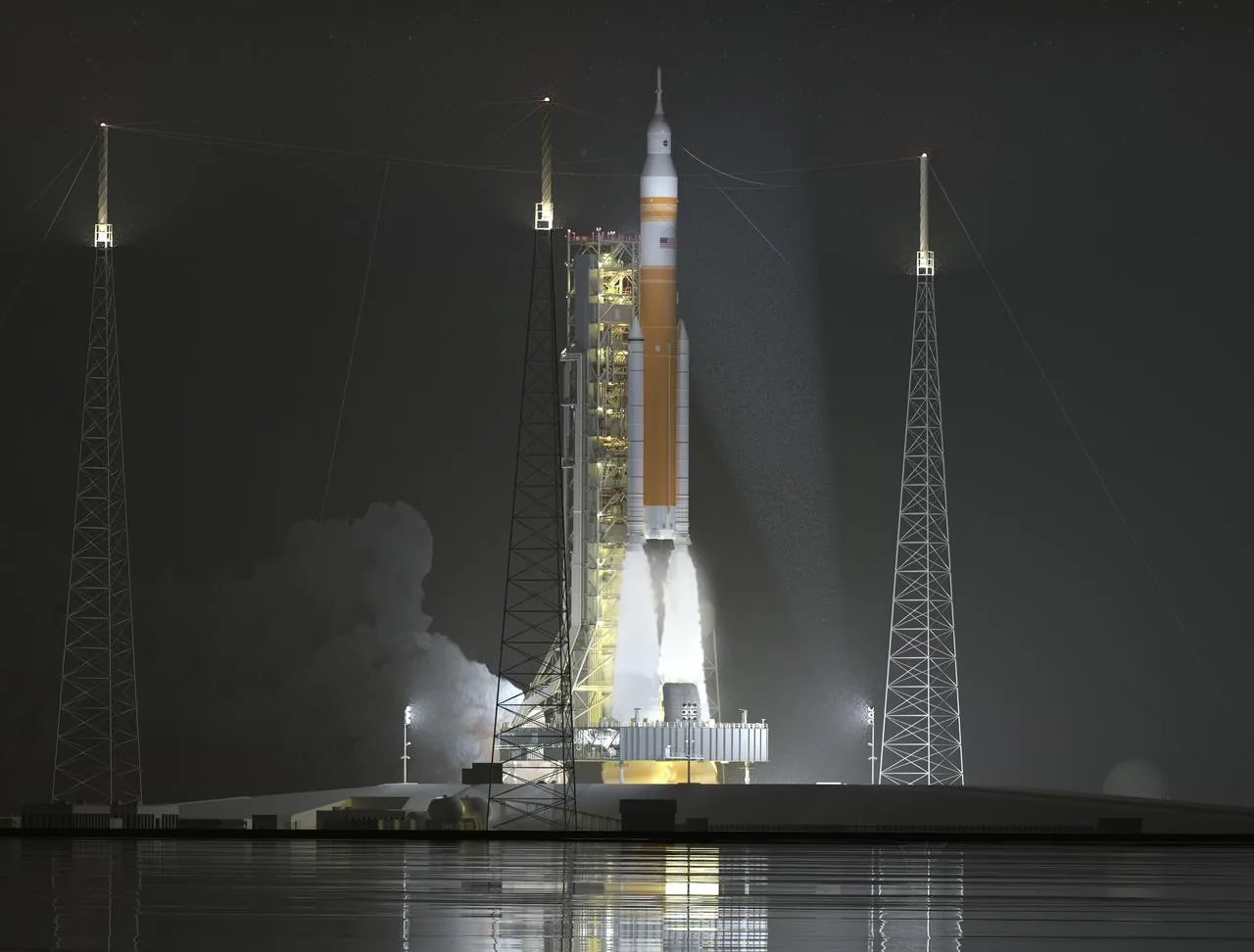
The mission launched on July 14, 2023, aboard ISRO's LVM3 (Launch Vehicle Mark 3) rocket from the Satish Dhawan Space Centre in Sriharikota. Unlike the Apollo missions, which reached the Moon in about three days, Chandrayaan-3 took a slower, more fuel-efficient route, gradually raising its orbit around Earth before executing a trans-lunar injection on August 1. The spacecraft entered lunar orbit on August 5 and spent the following weeks lowering its orbit in preparation for landing.
The total mission cost was approximately 6.15 billion Indian rupees -- about $75 million at the time. For context, that is less than the production budget of many Hollywood blockbusters. ISRO's ability to conduct interplanetary missions at such remarkably low costs has been one of the agency's defining characteristics.
Fourteen Days of Discovery: The Pragyan Rover
Approximately four hours after landing, the Vikram lander deployed Pragyan, a 26-kilogram, six-wheeled rover about the size of a suitcase. Pragyan rolled down a ramp and onto the lunar surface, leaving its wheel tracks in the regolith -- an image that became iconic worldwide.
Pragyan carried two primary science instruments. The Alpha Particle X-ray Spectrometer (APXS) analyzed the elemental composition of lunar soil and rocks by bombarding them with alpha particles and measuring the characteristic X-rays emitted. The Laser-Induced Breakdown Spectroscopy (LIBS) instrument fired a high-energy laser pulse at the surface, creating a tiny plasma plume whose spectral emission revealed elemental composition.
The results were fascinating. Pragyan confirmed the presence of sulfur in the south polar regolith -- the first in-situ confirmation of this element near the Moon's south pole. This detection was significant because sulfur's presence and distribution could shed light on the Moon's volcanic history and the processes that shaped its surface. The rover also detected aluminum, calcium, iron, chromium, titanium, manganese, silicon, and oxygen, building a detailed chemical profile of the landing site.
The Vikram lander carried its own suite of instruments. The Chandra's Surface Thermophysical Experiment (ChaSTE) inserted a thermal probe into the lunar regolith and measured temperature at multiple depths down to 10 centimeters. The results were striking: the surface temperature in sunlight was about 50 degrees Celsius, but just 8 centimeters below, it plunged to approximately minus 10 degrees Celsius. This steep thermal gradient -- far sharper than models had predicted -- has important implications for understanding how the lunar soil insulates and how volatiles might be preserved just below the surface.
The Instrument for Lunar Seismic Activity (ILSA) detected what appeared to be a small seismic event on August 26, 2023, potentially the first recorded moonquake from the lunar surface since the Apollo-era seismometers were shut down in 1977. The Radio Anatomy of Moon Bound Hypersensitive Ionosphere and Atmosphere (RAMBHA) instrument measured plasma density near the surface.
The Race Against Sunset
Chandrayaan-3 was designed as a one-lunar-day mission. A lunar day lasts about 14 Earth days, followed by 14 Earth days of darkness during which surface temperatures at the landing site could drop to minus 120 degrees Celsius or lower. Neither Vikram nor Pragyan were designed to survive the lunar night -- they lacked the nuclear heating units or insulation systems that would be needed.
This gave the mission team exactly 14 days of operations from landing to sunset. They made every hour count. Pragyan traversed approximately 100 meters from the lander, conducting measurements at multiple points along its path. On September 2, 2023, as the lunar night approached, ISRO commanded Pragyan to enter sleep mode, parking it with its solar panel facing the direction of the next sunrise, and similarly put Vikram into hibernation.
ISRO made attempts to reestablish contact with both the rover and lander when sunlight returned around September 22, 2023, but neither responded. The extreme cold of the lunar night had, as expected, exceeded the hardware's survival limits. The mission was officially concluded, having exceeded its objectives.
What Chandrayaan-3 Means for India and the World
The impact of Chandrayaan-3 extended far beyond science. In India, it sparked a wave of enthusiasm for space and science that was compared to the effect of the 1969 Apollo 11 landing in the United States. Schools held special assemblies. Children who had watched the landing declared they wanted to become scientists and engineers. ISRO reported a surge in applications for its programs.
Internationally, the mission cemented India's position as a top-tier spacefaring nation. India joined an exclusive club, and notably, it succeeded where Russia's Luna-25 had failed just three days earlier -- the Russian lander crashed into the Moon on August 19, 2023, after a propulsion malfunction during its pre-landing orbit correction. The contrast was stark and widely noted.
The mission also validated ISRO's cost-effective approach to space exploration. At $75 million, Chandrayaan-3 cost roughly one-tenth of comparable missions by other agencies. This efficiency is not about cutting corners -- it reflects lower labor costs, smart engineering choices, and a culture of doing more with less that has defined ISRO since its founding in 1969.
Looking Ahead: Chandrayaan-4 and Beyond
ISRO has announced Chandrayaan-4 as a lunar sample return mission, aiming to collect regolith from the south polar region and bring it back to Earth for detailed laboratory analysis. This mission, planned for around 2028, would make India only the fourth entity (after the United States, the Soviet Union, and China) to return lunar samples.
India is also collaborating with Japan on the Lunar Polar Exploration Mission (LUPEX), which will place a larger, more capable rover on the Moon to explore permanently shadowed regions and search for water ice. ISRO's roadmap includes plans for a crewed orbital mission (Gaganyaan) and eventually Indian astronauts contributing to international lunar surface missions.
Chandrayaan-3 was not just a mission. It was a statement. It told the world that space exploration is not the exclusive domain of superpowers, that ingenuity and determination can overcome budgetary constraints, and that a nation of 1.4 billion people can dare to reach for the Moon -- and succeed.
When Pragyan's wheel tracks are eventually photographed by future visitors to Shiv Shakti Point, they will stand as a testament to what India achieved on that extraordinary August day in 2023. Tracks in the dust, left by a small rover from a developing nation, marking one of humanity's great accomplishments.