The universe has a story, and it is the grandest story ever told. It begins with an unimaginable explosion of space itself, passes through epochs of fire and darkness, and arrives -- 13.8 billion years later -- at a cosmos filled with hundreds of billions of galaxies, each containing hundreds of billions of stars, some orbited by planets where beings have evolved who can look up and wonder how it all began.
Let me walk you through that story. All 13.8 billion years of it.
The First Fraction of a Second (t = 0 to 10^-32 seconds)
We do not know what happened at the very first instant -- at time zero. Our current physics breaks down at the extreme temperatures and densities of the initial singularity. What we do know is that within an almost inconceivably tiny fraction of a second, something extraordinary happened.
Cosmic inflation -- a period of exponential expansion -- blew the universe up by a factor of at least 10^26 in roughly 10^-32 seconds. A region smaller than a proton was stretched to something larger than the observable universe today. This was not an explosion in space; it was an explosion of space itself.
Inflation explains several puzzles about the universe. Why does it look so uniform in every direction? Because the entire observable universe was once a tiny, connected patch that was stretched to cosmic scales. Why is space so geometrically flat? Because inflation smoothed out any curvature, the same way blowing up a balloon makes its surface look flat to an ant standing on it. And the tiny quantum fluctuations that existed before inflation -- random jitters in the energy of the vacuum -- were stretched into the seeds of all future cosmic structure. Every galaxy, every star, every planet traces its ancestry back to those primordial quantum whispers.
The Quark Soup and the First Particles (t = 10^-32 seconds to 3 minutes)
After inflation ended, the universe was a seething, impossibly hot plasma of quarks, gluons, electrons, neutrinos, and photons. As it expanded and cooled, quarks combined to form protons and neutrons. This happened within the first microsecond.
Over the next few minutes, the universe cooled enough for Big Bang nucleosynthesis to take place. Protons and neutrons fused together to form the nuclei of the lightest elements: about 75% hydrogen, 25% helium, and trace amounts of lithium and deuterium. This process was essentially done by the time the universe was about 20 minutes old. All the heavier elements -- carbon, oxygen, iron, gold -- would have to wait for stars.
The Dark Ages and Recombination (t = 3 minutes to ~400 million years)
For the next 380,000 years, the universe was an opaque fog. Photons could not travel far without bouncing off free electrons, so the cosmos was filled with a blinding, formless glow. Then, as the temperature dropped below about 3,000 Kelvin, a momentous transition occurred: electrons combined with nuclei to form neutral atoms for the first time. This event is called recombination, and it made the universe transparent.
The light released at that moment has been traveling through space ever since, stretched by the expansion of the universe from visible light into microwaves. We detect it today as the cosmic microwave background (CMB) -- a faint glow filling all of space, the oldest light in the universe. Its temperature is now just 2.725 Kelvin, barely above absolute zero, but it carries a snapshot of the cosmos as it was 380,000 years after the Big Bang.
After recombination, the universe entered the cosmic dark ages -- a period with no stars, no galaxies, no sources of light. Just vast clouds of neutral hydrogen and helium, slowly being gathered by gravity into denser and denser clumps. This darkness would last for hundreds of millions of years.
Cosmic Dawn: The First Stars Ignite (t = ~100-400 million years)
Then, light returned.
Deep within the densest regions of gas, gravity finally compressed matter enough to ignite nuclear fusion. The first stars -- known as Population III stars -- blazed to life. These were unlike any stars we see today. Composed of pure hydrogen and helium (no heavier elements existed yet), they were likely enormous, perhaps hundreds of times the mass of the Sun, and they burned furiously hot and bright. Their lifetimes were short -- just a few million years -- before they exploded as supernovae, seeding the universe with the first heavy elements.
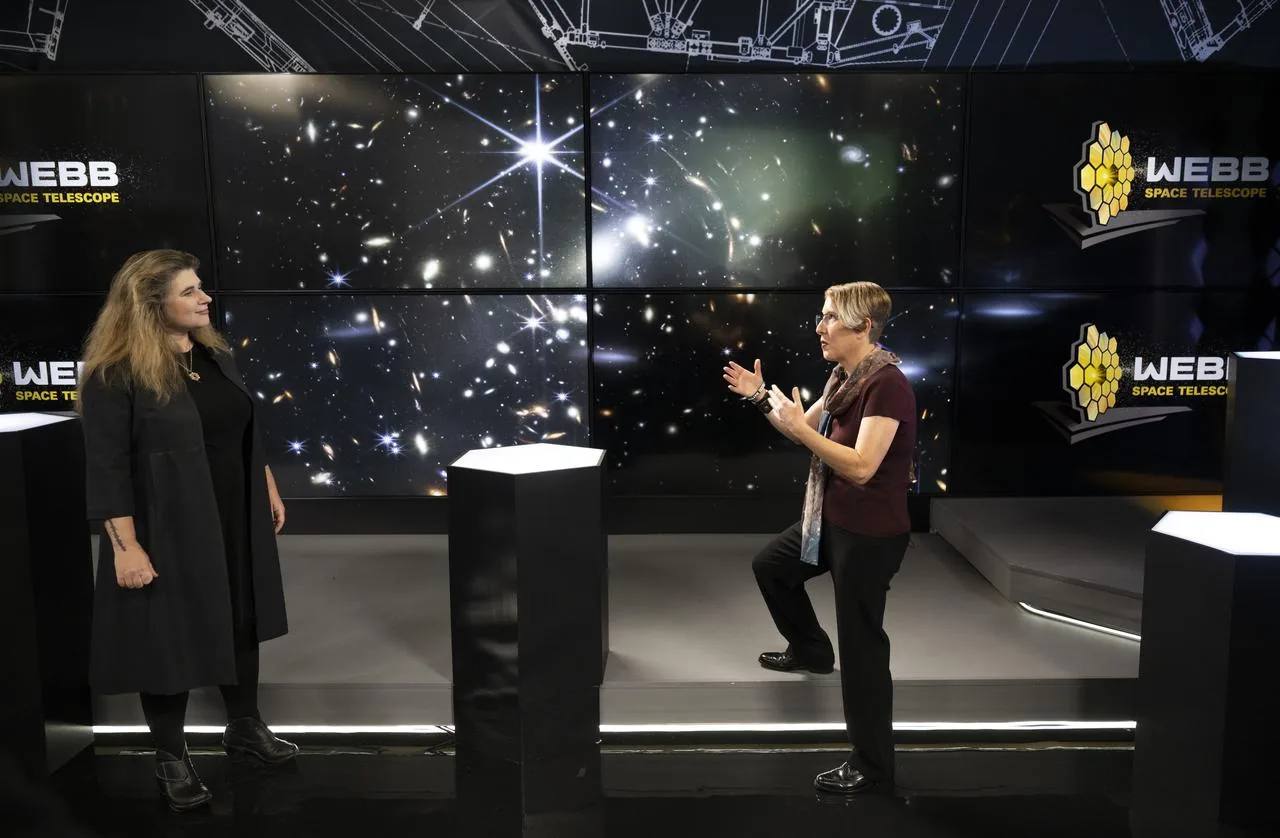
This era is called cosmic dawn, and it is one of the most exciting frontiers in modern astronomy. The James Webb Space Telescope (JWST) has been peering deeper into the past than any telescope before it, and the results have been astonishing. JWST has detected galaxies at redshifts greater than 13, meaning we are seeing them as they existed less than 350 million years after the Big Bang. Some of these galaxies are surprisingly large, bright, and mature for their age, challenging our models of how quickly structure could form in the early universe.
Every new JWST deep-field image is a time machine, and it is rewriting the opening chapters of the cosmic story in real time.
The Epoch of Reionization (t = ~400 million to 1 billion years)
As the first stars and galaxies formed, their ultraviolet radiation began to ionize the neutral hydrogen that filled intergalactic space -- stripping electrons from atoms and making the universe transparent to ultraviolet light once more. This process, called reionization, was patchy and gradual, like Swiss cheese holes of ionized gas growing around each young galaxy until they overlapped and filled all of space.
By about one billion years after the Big Bang, reionization was largely complete. The universe had gone from opaque to transparent, through dark ages, back to luminous -- and this time, the light would never go out.
Galaxy Formation and the Cosmic Web (t = 1-10 billion years)
Over the next several billion years, the universe assembled itself into the grand cosmic architecture we see today. Dark matter, which had been clumping under gravity since the earliest times, formed a vast cosmic web -- a network of filaments and nodes, with enormous voids in between. Normal matter followed the dark matter, falling into the gravitational wells and forming galaxies at the densest intersections.
Galaxies grew through a combination of gas accretion and mergers. Small galaxies collided and merged to form larger ones, a process of hierarchical assembly that continues to this day. Our own Milky Way has consumed dozens of smaller galaxies over its history, and the debris of some of those ancient mergers can still be detected as streams of stars in our galaxy's halo.
By about 10 billion years ago, the universe was in its prime era of star formation. Galaxies were forming stars at prodigious rates, and the cosmic star formation rate peaked at roughly 3-4 billion years after the Big Bang. Since then, it has been declining as galaxies use up their gas reservoirs.
Our Solar System Forms (t = ~9.2 billion years / 4.6 billion years ago)
About 4.6 billion years ago, in the outer suburbs of a fairly ordinary spiral galaxy, a cloud of gas and dust -- enriched with heavy elements from generations of stellar explosions -- began to collapse. Perhaps triggered by a nearby supernova, the cloud flattened into a spinning disk with a growing protostar at its center.
That protostar became our Sun. The disk of leftover material coalesced into planets, moons, asteroids, and comets. Within the first 100 million years, the basic architecture of the solar system was in place: rocky planets close in, gas and ice giants farther out, and a vast swarm of small bodies beyond.
The Earth formed, cooled, developed an atmosphere and oceans, and -- through processes we are still piecing together -- became host to life. Simple microbial life appeared within the first billion years. Complex multicellular life took much longer, not emerging until about 600 million years ago. And beings capable of contemplating their own origins? That is an extremely recent development -- the last few hundred thousand years out of a 13.8 billion year story.
The Universe Today
Today, the observable universe stretches about 93 billion light-years across (larger than 13.8 billion light-years because space itself has been expanding). It contains roughly two trillion galaxies, each a vast city of stars. The cosmic expansion is accelerating, driven by dark energy, and the universe is slowly growing colder and darker as star formation winds down.
But we are not at the end of the story. We are, by most measures, still near the beginning. Stars will continue forming for trillions of years. The universe has time ahead of it that dwarfs the time that has already passed.
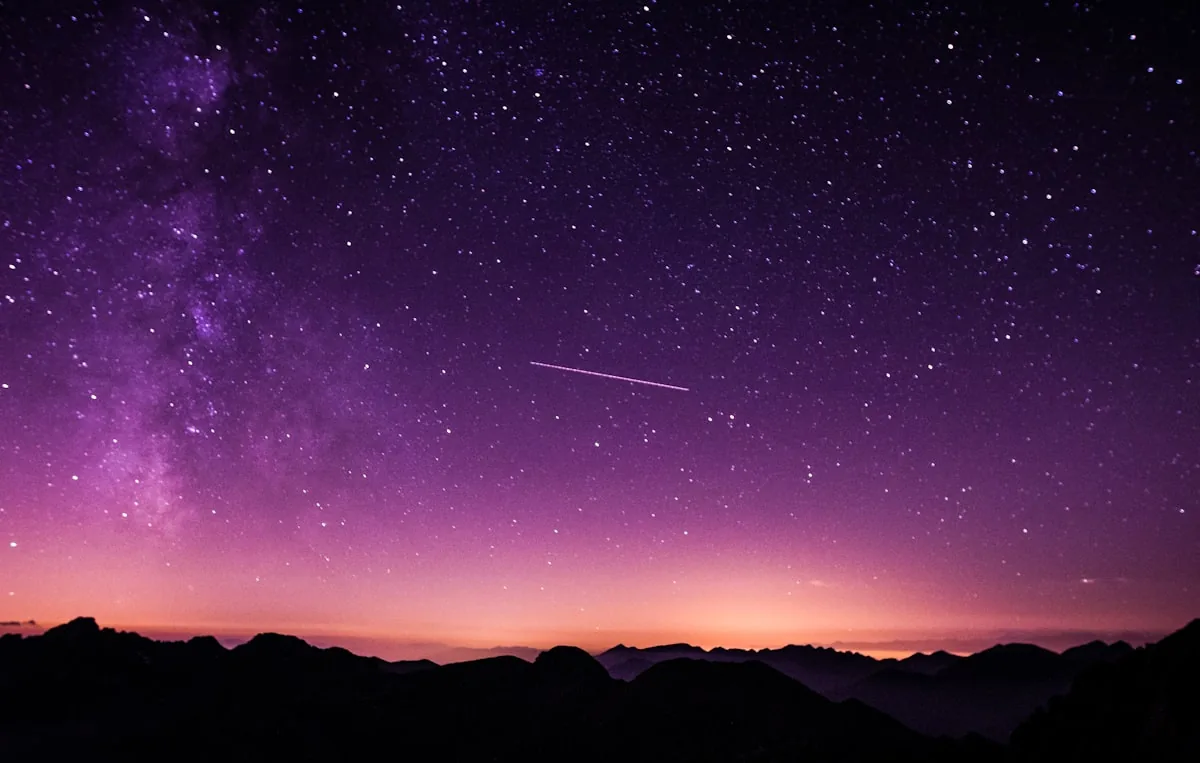
When you look up at the night sky, you are looking at the accumulated history of 13.8 billion years of cosmic evolution -- from quantum fluctuations to quasars, from the first atoms to the elements in your blood. Every photon that reaches your eye is a messenger from the past, and together they tell the story of how nothing became everything.
It is, without question, the most remarkable story there is.