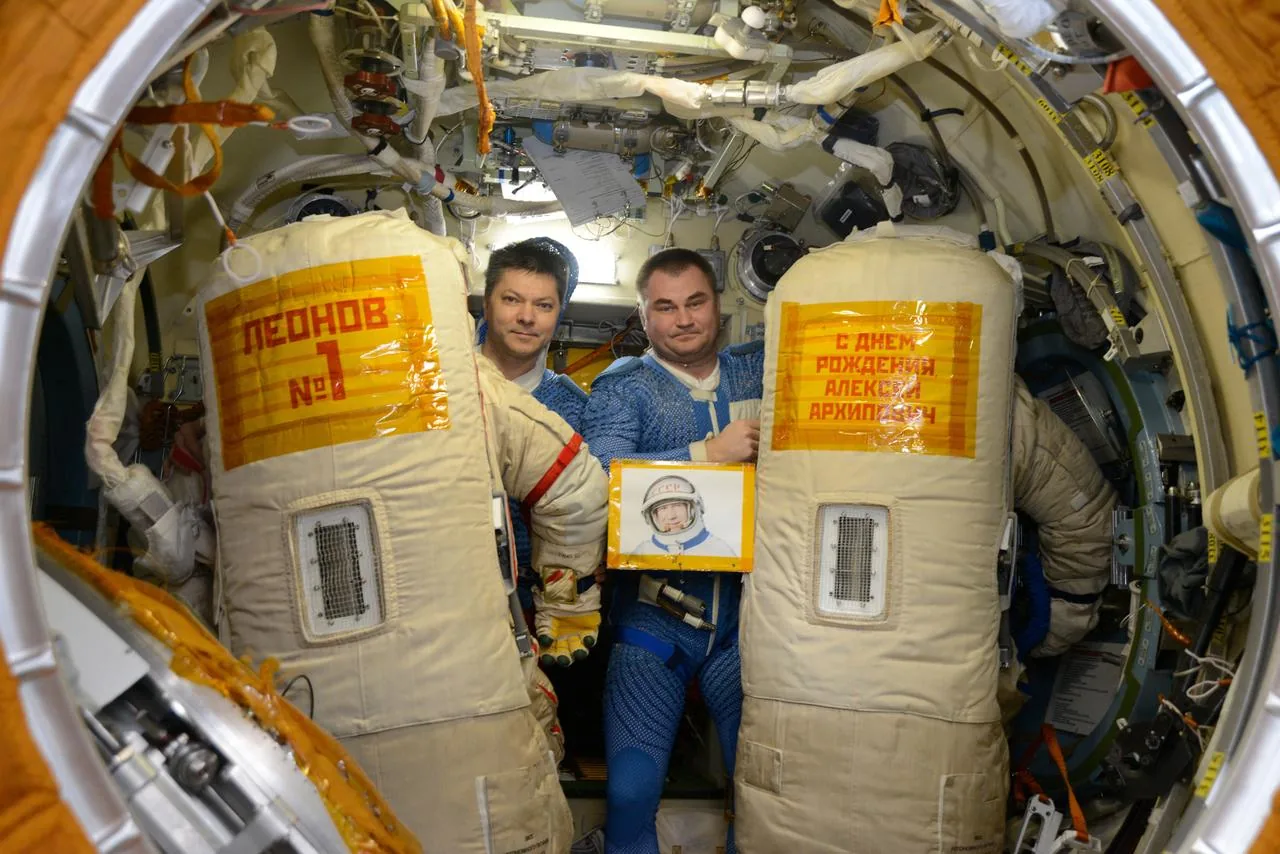
On March 18, 1965, a 30-year-old Soviet Air Force pilot named Alexei Arkhipovich Leonov opened a hatch, pushed himself into the void, and became the first human being to float freely in space. The entire excursion lasted just over twelve minutes. In that time, Leonov nearly died -- not from the grandeur of the cosmos, but from the brutal physics of a spacesuit that tried to kill him. His story is one of the most harrowing, least understood episodes in the history of space exploration, and it set the stage for every spacewalk that followed.
The Race to Walk in Space
By early 1965, the Space Race between the United States and Soviet Union was in full sprint. The Soviets had achieved a string of firsts -- first satellite, first man in orbit, first woman in space, first multi-crew mission -- and Soviet Premier Nikita Khrushchev (and his successor Leonid Brezhnev) demanded more. Intelligence suggested that NASA was preparing an extravehicular activity on an upcoming Gemini mission. The Soviets intended to beat them to it.
The vehicle chosen was Voskhod 2, a modified version of the single-seat Vostok capsule hastily adapted to carry two cosmonauts and an inflatable airlock. The airlock was a collapsible tube called Volga, roughly 8.2 feet long and 3.9 feet in diameter, which extended from the spacecraft's hatch. It was a crude but functional solution: the cosmonaut would enter the airlock, seal the inner hatch, depressurize the airlock, and exit through the outer hatch into space. The alternative -- depressurizing the entire cabin -- would have exposed the second cosmonaut and the spacecraft's electronics to vacuum.
Leonov was selected for the EVA. His crewmate, Pavel Belyayev, would remain inside as mission commander. Both men knew the risks. The Volga airlock had never been tested in space. The spacesuit, designated Berkut (Golden Eagle), was a semi-rigid design that had been tested in vacuum chambers on the ground but never in actual orbital conditions. Nobody truly knew what would happen when a human body was exposed to the unfiltered radiation, temperature extremes, and vacuum of open space.
Twelve Minutes Outside
Voskhod 2 launched at 10:00 a.m. Moscow time from Baikonur Cosmodrome. Ninety minutes later, in the spacecraft's second orbit, Leonov entered the Volga airlock. He was wearing the Berkut suit, connected to the spacecraft by a 17.7-foot tether. At approximately 11:34 a.m. Moscow time, the outer hatch opened, and Leonov pulled himself into the void.
What he saw was overwhelming. The Earth curved below him in vivid blues, greens, and whites. The Black Sea was directly beneath him. He could see from the Baltic to the Mediterranean. The silence was absolute. "I felt like a seagull with its wings spread," he later said. He tumbled gently, connected to the spacecraft by his umbilical, a lone human figure against the immensity of the cosmos. A camera mounted on the airlock recorded the scene and broadcast it live to Soviet television audiences.
For the first few minutes, everything appeared to go well. Leonov pushed himself away from the airlock, floated, and maneuvered at the end of his tether. He carried a small handheld movie camera and attempted to photograph the Earth below. But within minutes, a serious problem was developing.
The Suit That Tried to Kill Him
In the vacuum of space, with no external atmospheric pressure to counterbalance the suit's internal pressure, the Berkut suit began to balloon. The fabric layers stiffened and expanded. Leonov's hands pulled away from his gloves. His feet lifted out of his boots. The suit became so rigid and inflated that he could barely move his fingers, let alone grip anything. He described it as being inside a balloon that was slowly inflating around him.
This was the moment the mission nearly became a catastrophe. Leonov realized he could not fit back through the outer hatch of the airlock. The inflated suit was simply too large. He was stuck outside, connected to his spacecraft by a tether, unable to return.
What Leonov did next was never sanctioned by mission control, and he did not tell them he was doing it. He made a decision that violated every safety protocol: he opened a valve on his suit and began bleeding pressure from the interior. He reduced his suit pressure from 5.87 psi to 3.87 psi -- dangerously close to the threshold where decompression sickness becomes a certainty. Nitrogen bubbles could form in his blood. He could lose consciousness. He could die.
But the suit softened enough for him to force himself, head-first rather than feet-first as planned, back through the airlock hatch. He had to contort his body to make the turn inside the narrow tube. By the time he sealed the outer hatch, his core body temperature had risen by 3.2 degrees Fahrenheit. He was drenched in sweat -- an estimated six liters of perspiration sloshed inside his suit. His heart rate had spiked to 190 beats per minute.
He had been outside for 12 minutes and 9 seconds.
The Ordeal Was Not Over
If Leonov thought the worst was behind him, the mission had other plans. When Belyayev and Leonov jettisoned the Volga airlock, the action threw off the spacecraft's center of gravity. The automatic orientation system struggled to compensate. Oxygen levels inside the cabin began rising to dangerous levels -- above 45 percent -- creating a serious fire risk. The cosmonauts spent anxious hours monitoring the atmosphere, unable to do anything about it.
Then came reentry. The automatic guidance system failed, and the crew had to perform a manual reentry -- the first in the Soviet space program. Belyayev fired the retrorockets himself, but the delay meant they overshot their intended landing zone by a staggering 240 miles. Instead of touching down on the flat steppes of Kazakhstan, Voskhod 2 landed deep in the taiga forests of the Ural Mountains, near the city of Perm, in chest-deep snow.
The capsule came to rest wedged between two fir trees. The hatch was partially blocked. When the cosmonauts finally forced it open, they emerged into a frozen wilderness in temperatures around minus 22 degrees Fahrenheit. Wolves and bears inhabited the region. The recovery teams could not reach them by helicopter because of the dense forest canopy. Leonov and Belyayev spent the night in their capsule, shivering, waiting.
A rescue team on skis reached them the following day. A helicopter landing zone was cleared, and the cosmonauts were eventually extracted. They had survived, but barely. The Soviet government, true to form, announced the mission as a flawless triumph.
Ed White: America's First Spacewalk
Just three months later, on June 3, 1965, American astronaut Ed White performed the first U.S. spacewalk during the Gemini 4 mission. White's EVA lasted 23 minutes -- nearly double Leonov's -- and was, by comparison, far more controlled. His suit, pressurized at 3.7 psi with pure oxygen, did not suffer the same ballooning problems. He used a handheld maneuvering unit -- a small gas gun -- to control his movements.
White was so exhilarated by the experience that when Mission Control ordered him back inside, he famously replied: "I'm coming back in, and it's the saddest moment of my life." His euphoric, almost poetic descriptions of the experience -- the Earth turning below him, the absolute clarity of the stars -- stood in sharp contrast to Leonov's harrowing ordeal.
Tragically, Ed White would die less than two years later in the Apollo 1 fire on January 27, 1967. He was 36 years old.
Leonov's Later Life and Legacy
Alexei Leonov went on to command the Soviet crew of the Apollo-Soyuz Test Project in 1975, the first joint American-Soviet space mission, where he famously greeted astronaut Tom Stafford with a handshake in orbit. He became a respected painter, producing dozens of artworks depicting scenes from space. He was also one of the few Soviet-era cosmonauts to speak candidly about the dangers and near-disasters of the early space program.
Leonov died on October 11, 2019, at the age of 85. He was buried with full military honors in Moscow.
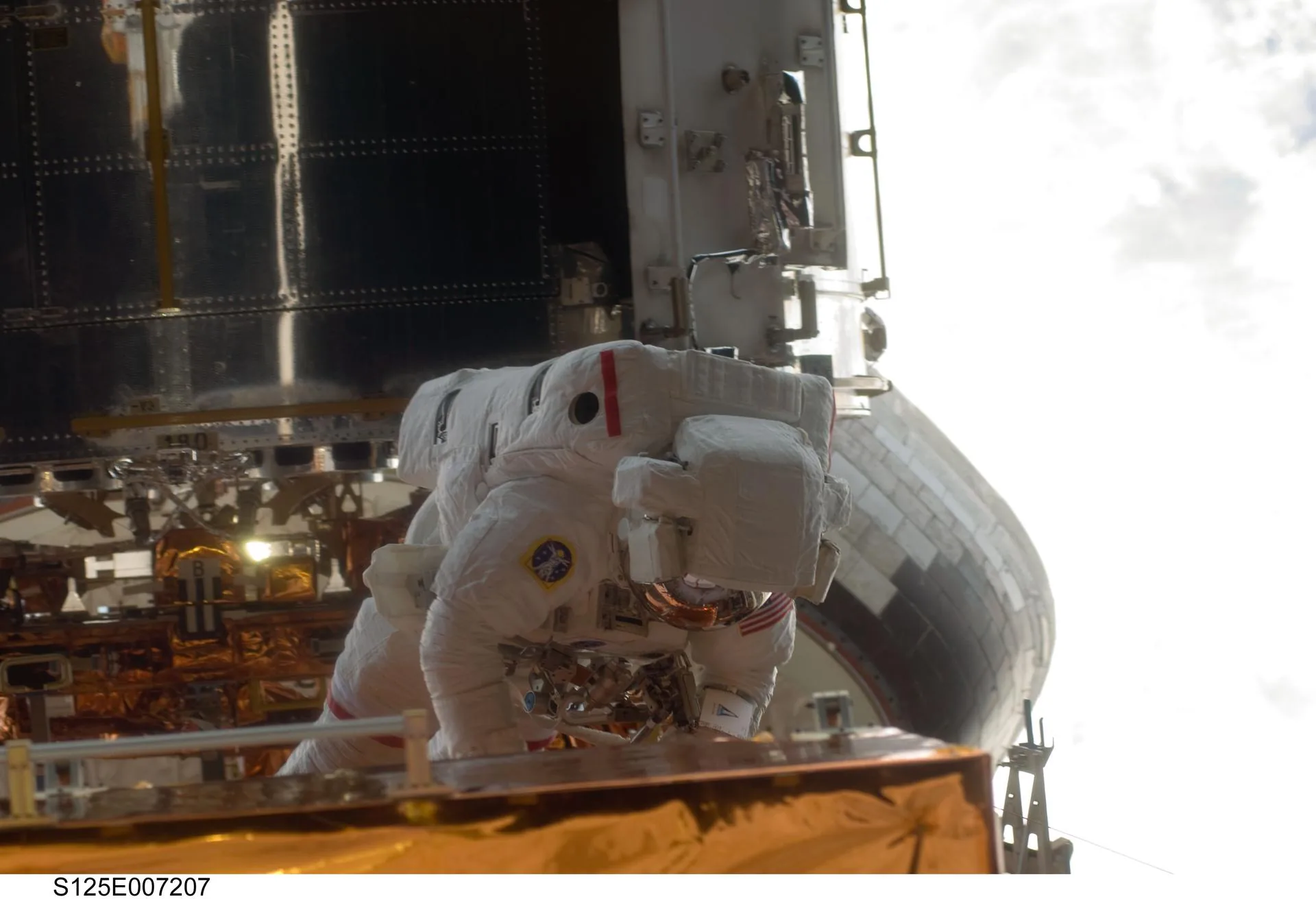
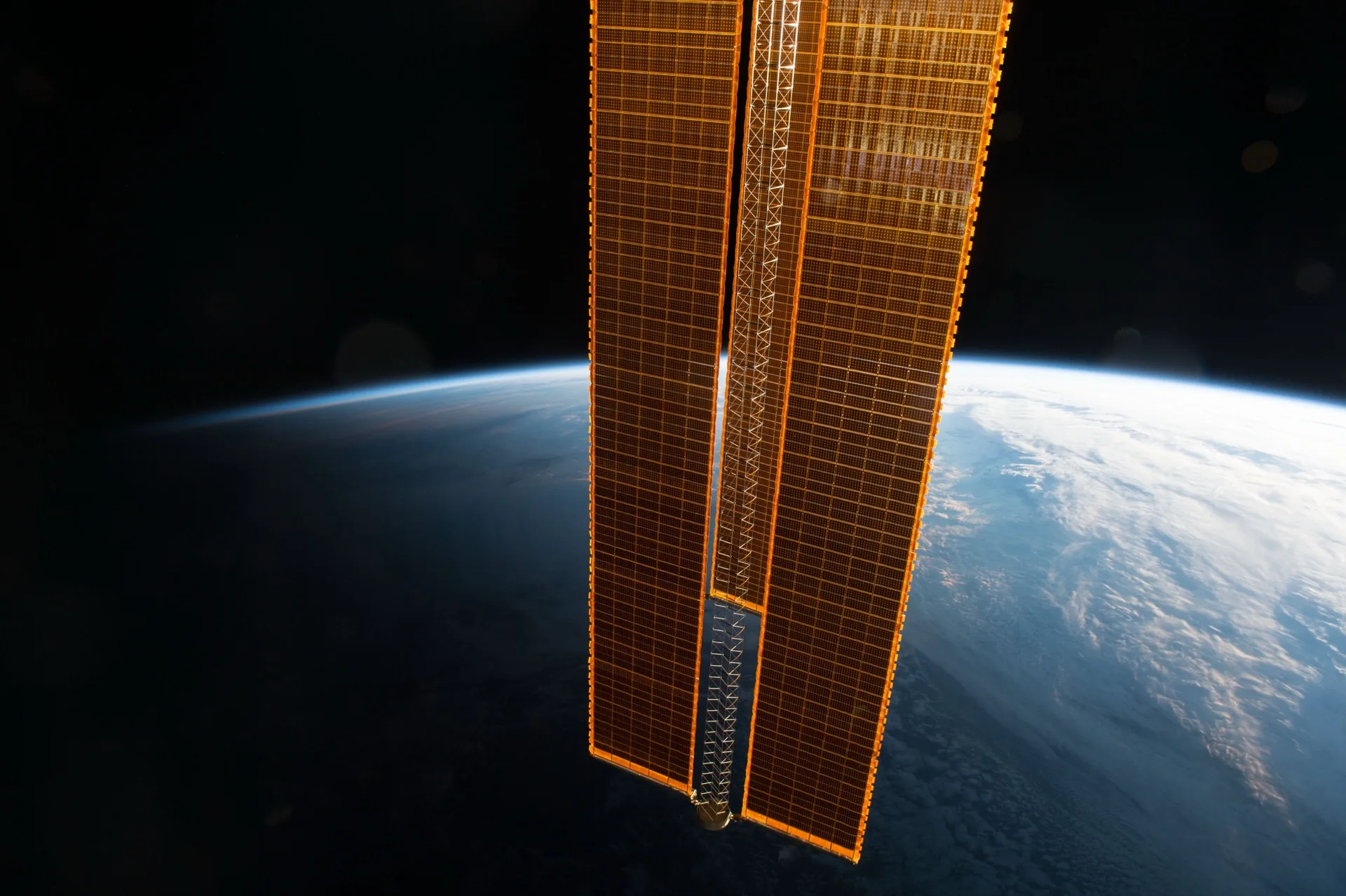
His twelve minutes outside Voskhod 2 proved that a human being could survive and function in the vacuum of space -- a prerequisite for every spacewalk, every space station construction task, and every lunar surface excursion that followed. The International Space Station could not exist without EVA capability. The Hubble Space Telescope could not have been repaired. Every astronaut who has floated outside a spacecraft owes a debt to the young Soviet pilot who opened a hatch, pushed himself into nothing, and fought his own suit to come back alive.
It was twelve minutes that changed the trajectory of human spaceflight. And it was almost twelve minutes that ended it before it truly began.