Sixty Years of Reaching for the Moon
Humanity's quest to land on the Moon is a story of breathtaking ambition, staggering achievement, and heartbreaking failure. Since Luna 2 first slammed into the lunar surface in 1959 and Luna 9 made the first soft landing in 1966, dozens of missions have attempted the journey -- some making history, others ending in debris fields on the regolith. This is the complete record of every lunar surface mission, successful and failed, from the dawn of the Space Age to the present day.
Lunar Surface Missions: Complete Timeline
| Year | Mission | Country / Org | Type | Outcome | Significance |
|---|---|---|---|---|---|
| 1959 | Luna 2 | USSR | Impactor | Success | First spacecraft to reach the Moon |
| 1966 | Luna 9 | USSR | Soft lander | Success | First soft landing on another world |
| 1966 | Surveyor 1 | USA | Soft lander | Success | First US soft landing |
| 1966 | Surveyor 2 | USA | Soft lander | Failure | Crashed after engine misfire |
| 1967 | Surveyor 3 | USA | Soft lander | Success | Later visited by Apollo 12 crew |
| 1967 | Surveyor 4 | USA | Soft lander | Failure | Lost contact during descent |
| 1967 | Surveyor 5 | USA | Soft lander | Success | First chemical analysis of lunar soil |
| 1967 | Surveyor 6 | USA | Soft lander | Success | First lift-off from another world |
| 1968 | Surveyor 7 | USA | Soft lander | Success | Last Surveyor; landed near Tycho |
| 1969 | Apollo 11 | USA | Crewed landing | Success | First humans on the Moon (Armstrong, Aldrin) |
| 1969 | Apollo 12 | USA | Crewed landing | Success | Pinpoint landing near Surveyor 3 |
| 1969 | Luna 15 | USSR | Sample return | Failure | Crashed during Apollo 11 mission |
| 1970 | Apollo 13 | USA | Crewed flyby | Aborted | No landing; safe return after O2 tank explosion |
| 1970 | Luna 16 | USSR | Sample return | Success | First robotic lunar sample return |
| 1970 | Luna 17 / Lunokhod 1 | USSR | Lander + rover | Success | First rover on another world |
| 1971 | Apollo 14 | USA | Crewed landing | Success | Landed in Fra Mauro highlands |
| 1971 | Apollo 15 | USA | Crewed landing | Success | First Lunar Roving Vehicle |
| 1972 | Luna 20 | USSR | Sample return | Success | Returned highland samples |
| 1972 | Apollo 16 | USA | Crewed landing | Success | First landing in lunar highlands |
| 1972 | Apollo 17 | USA | Crewed landing | Success | Last humans on the Moon (Cernan, Schmitt) |
| 1973 | Luna 21 / Lunokhod 2 | USSR | Lander + rover | Success | ~42 km traversed; long-standing off-world driving record |
| 1976 | Luna 24 | USSR | Sample return | Success | Last Soviet/Russian lunar landing for 47 years |
| 2013 | Chang'e 3 / Yutu | China | Lander + rover | Success | China becomes 3rd nation to soft-land |
| 2019 | Chang'e 4 / Yutu-2 | China | Lander + rover | Success | First soft landing on the Moon's far side |
| 2019 | Beresheet | Israel / SpaceIL | Private lander | Crash | First private attempt; main engine failure |
| 2019 | Chandrayaan-2 Vikram | India / ISRO | Soft lander | Crash | Lost during final descent near south pole |
| 2020 | Chang'e 5 | China | Sample return | Success | First lunar samples since 1976 |
| 2023 | HAKUTO-R M1 | Japan / ispace | Private lander | Crash | Altimeter confused by crater rim |
| 2023 | Luna 25 | Russia | Soft lander | Crash | Russia's first lunar mission in 47 years |
| 2023 | Chandrayaan-3 | India / ISRO | Soft lander | Success | First soft landing near the lunar south pole |
| 2024 | SLIM | Japan / JAXA | Soft lander | Success | Precision landing within ~100 m of target |
| 2024 | Peregrine Mission One | USA / Astrobotic | Private lander | Failure | Propulsion leak; never reached Moon |
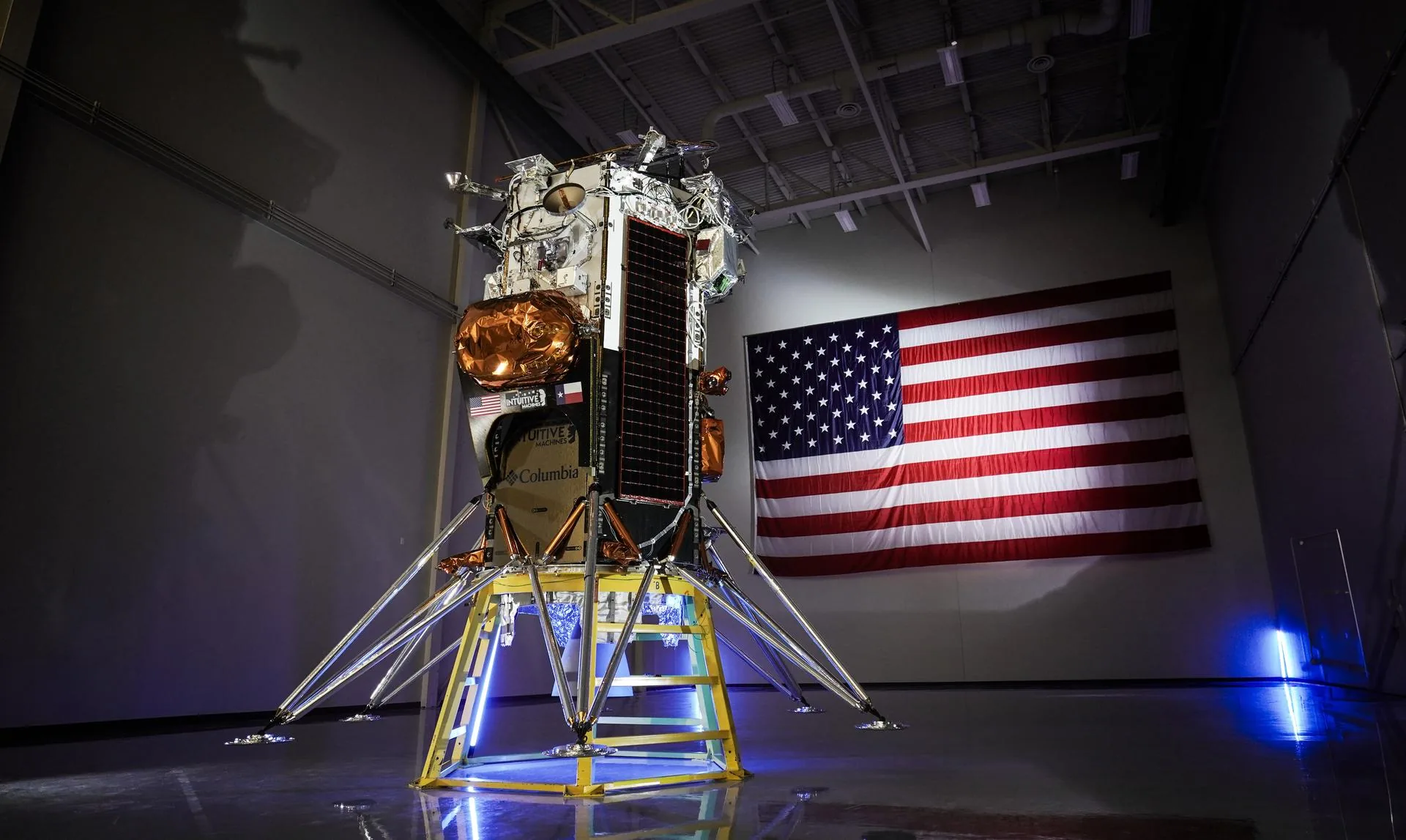
| 2024 | Odysseus / IM-1 | USA / Intuitive Machines | Private lander | Partial | First US soft landing in 51 years; tipped on side |
| 2024 | Chang'e 6 | China | Sample return | Success | First samples returned from the lunar far side |
| 2025 | Blue Ghost 1 | USA / Firefly Aerospace | Private lander | Success | First fully successful private lunar landing |
| 2025 | IM-2 / Athena | USA / Intuitive Machines | Private lander | Partial | Tipped over; water-ice prospecting near south pole |
| 2025 | Resilience / HAKUTO-R M2 | Japan / ispace | Private lander | Crash | ispace's second lander lost on descent |
| 2026 | IM-3 / Athena 2 (planned) | USA / Intuitive Machines | Soft lander | In preparation | South-pole CLPS payloads |
| 2026 | Chang'e 7 (planned) | China | Lander + rover + hopper | In preparation | South-pole resource scouting |
| 2027 | Artemis III (planned) | USA / NASA | Crewed landing | In preparation | First crewed landing since Apollo 17 |
| 2027 | Chandrayaan-4 (planned) | India / ISRO | Sample return | In preparation | India's first lunar sample return |
The Soviet Union Leads the Way (1966-1976)
The first successful soft landing on any celestial body beyond Earth belongs to the Soviet Union. On February 3, 1966, Luna 9 touched down in Oceanus Procellarum (the Ocean of Storms) and transmitted the first photographs from the lunar surface back to Earth. Those grainy, panoramic images showed a rocky, desolate landscape and proved, crucially, that the surface was solid enough to support a spacecraft -- there had been genuine concern that a lander might sink into deep dust.
Just four months later, on June 2, 1966, the United States followed with Surveyor 1, which landed in Oceanus Procellarum and returned over 11,000 photographs. The Surveyor program would send five successful landers to the Moon between 1966 and 1968 (Surveyors 1, 3, 5, 6, and 7), while Surveyors 2 and 4 failed.
The Soviet Luna program continued with remarkable achievements. Luna 16 (September 20, 1970) became the first robotic mission to return lunar samples to Earth, scooping up 101 grams of regolith from the Sea of Fertility. Luna 17 (November 17, 1970) deployed Lunokhod 1, the first successful rover on another world, which operated for 322 Earth days and traversed over 10 kilometers. Luna 20 (February 21, 1972) returned another 55 grams of samples. Luna 21 (January 15, 1973) delivered Lunokhod 2, which covered approximately 42 kilometers -- a record for off-Earth driving that stood until NASA's Opportunity rover surpassed it on Mars in 2014. Luna 24 (August 18, 1976) returned 170 grams of samples, including material drilled from two meters below the surface. This was the Soviet Union's last lunar mission and the last soft landing on the Moon for over 37 years.
Several Soviet landing attempts during this period ended in failure, including Luna 15 (which crashed in July 1969, just hours before Apollo 11's crew departed the Moon), Luna 18, and Luna 23.
Apollo: Humans Walk on the Moon (1969-1972)
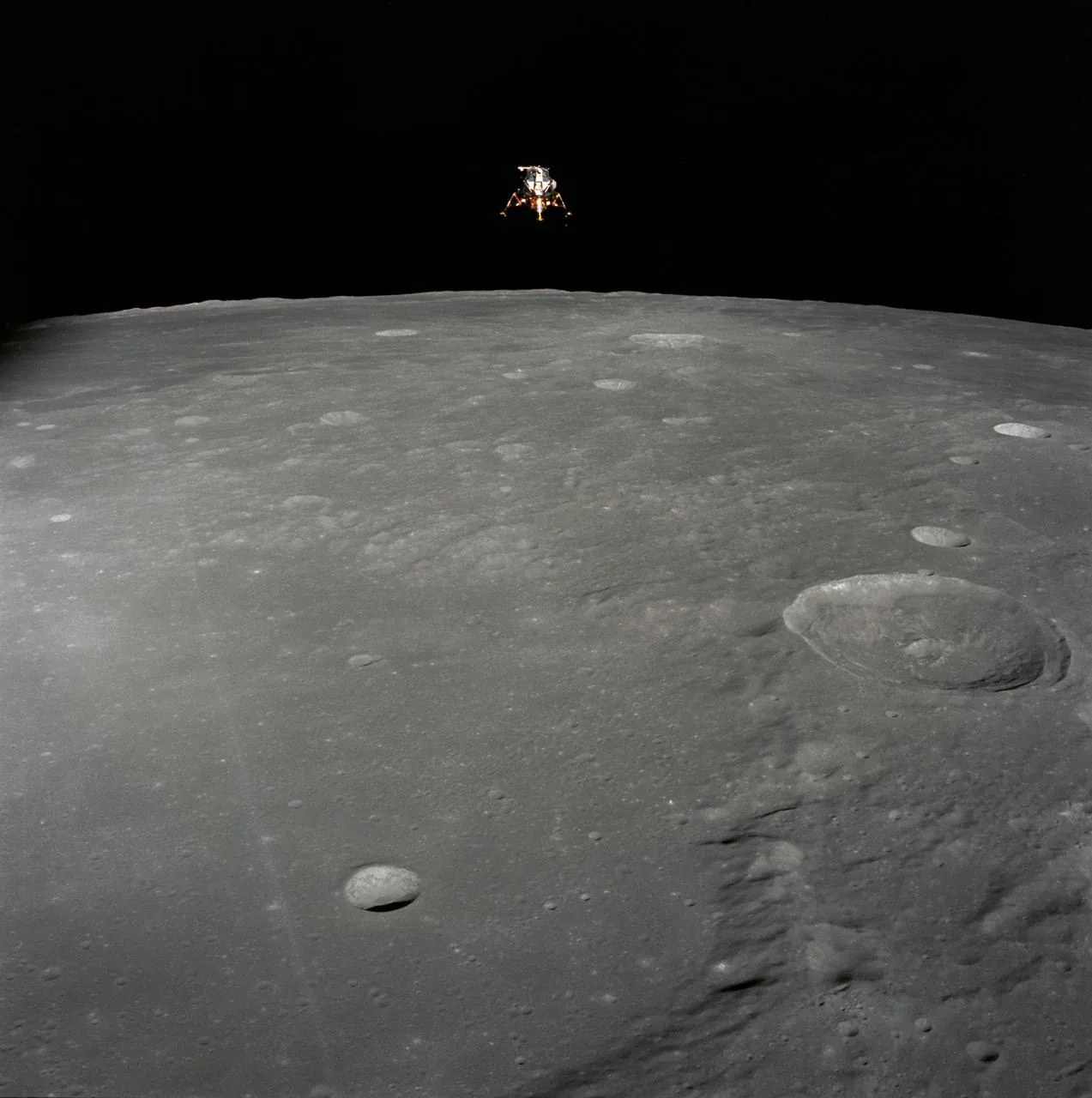
The Apollo program remains humanity's greatest exploration achievement. Six missions successfully landed humans on the Moon, and each one expanded our understanding of our nearest celestial neighbor.
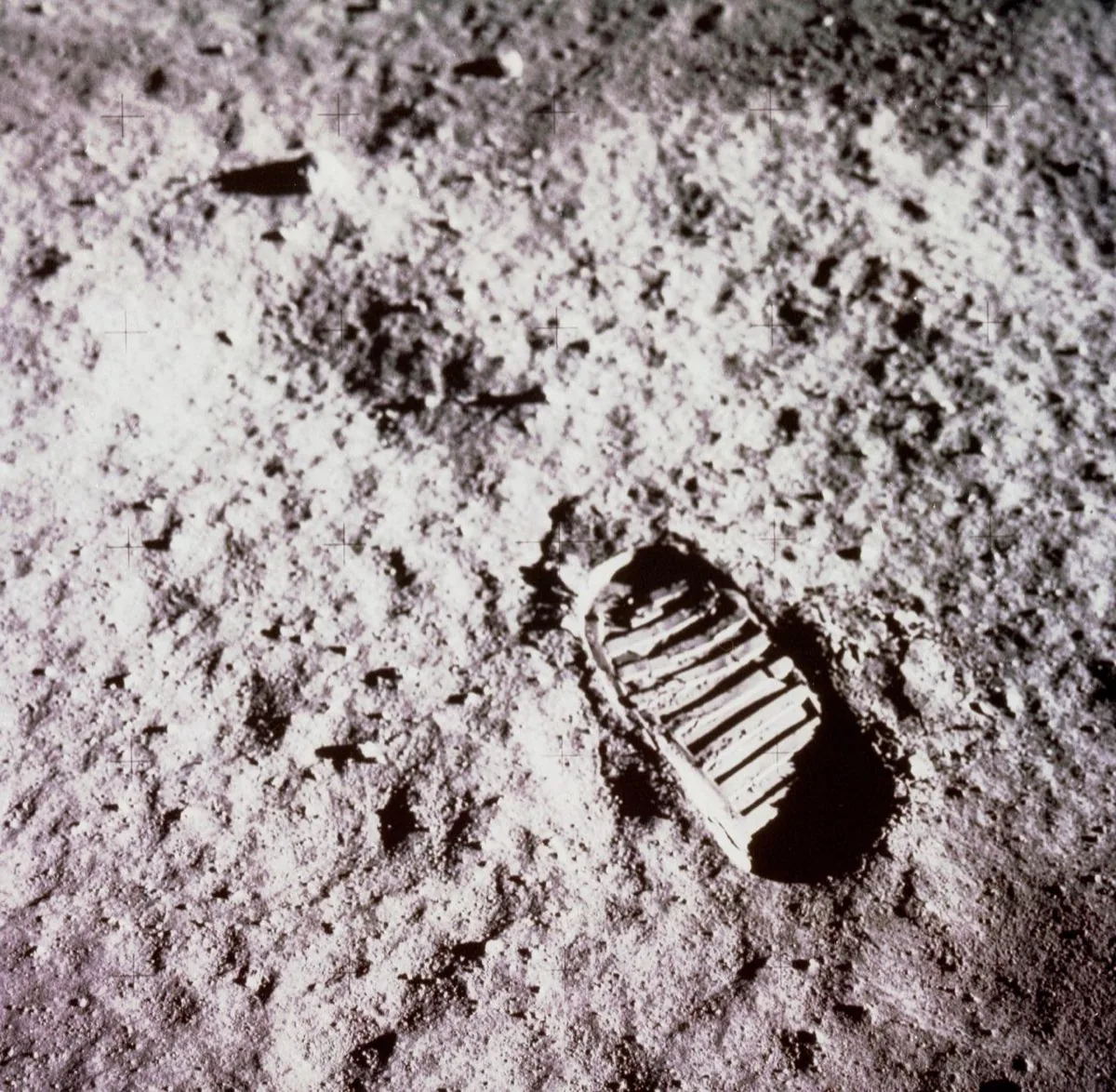
Apollo 11 -- July 20, 1969. Commander Neil Armstrong and Lunar Module Pilot Buzz Aldrin became the first humans to walk on another world, spending 2 hours and 31 minutes outside the Eagle lander in the Sea of Tranquility while Michael Collins orbited above in the Command Module. Armstrong's first step occurred at 10:56 PM Eastern Daylight Time. The crew returned 21.5 kilograms of lunar samples.
Apollo 12 -- November 19, 1969. Pete Conrad and Alan Bean achieved a precision landing in Oceanus Procellarum, setting down just 163 meters from the Surveyor 3 probe that had landed in 1967. They retrieved components from Surveyor 3 and brought back 34.3 kilograms of samples. Richard Gordon remained in lunar orbit.
Apollo 13 -- April 1970. This mission famously never landed. An oxygen tank explosion on April 13, 1970, crippled the Service Module, and the crew of Jim Lovell, Jack Swigert, and Fred Haise used the Lunar Module as a lifeboat for a harrowing return to Earth. It is often called NASA's "successful failure."
Apollo 14 -- February 5, 1971. Alan Shepard and Edgar Mitchell landed in the Fra Mauro highlands -- the intended landing site for Apollo 13. Shepard famously hit two golf balls on the Moon. The crew collected 42.3 kilograms of samples. Stuart Roosa orbited in the Command Module.
Apollo 15 -- July 30, 1971. David Scott and James Irwin landed at Hadley Rille with the first Lunar Roving Vehicle (LRV), dramatically expanding the area astronauts could explore. They covered 27.9 kilometers by rover and collected 77 kilograms of samples, including the famous "Genesis Rock," a 4-billion-year-old piece of the original lunar crust. Alfred Worden orbited above.
Apollo 16 -- April 21, 1972. John Young and Charles Duke explored the Descartes Highlands, the first landing in a lunar highland region. They drove 26.7 kilometers and returned 95.7 kilograms of samples. Ken Mattingly orbited in the Command Module.
Apollo 17 -- December 11, 1972. The final Apollo mission sent Gene Cernan and Harrison Schmitt (the only professional geologist to walk on the Moon) to the Taurus-Littrow valley. They spent over 22 hours outside the Lunar Module across three EVAs, drove 35.9 kilometers, and brought back 110.5 kilograms of samples -- the largest haul of any Apollo mission. As Cernan stepped off the surface for the last time on December 14, 1972, he said: "We leave as we came and, God willing, as we shall return: with peace and hope for all mankind." It would be over 51 years before an American spacecraft returned to the lunar surface.
In total, the six Apollo landings returned 382 kilograms of lunar samples that scientists continue to study today. Twelve humans have walked on the Moon -- all American men, all between 1969 and 1972.
The Long Drought (1976-2013)
After Luna 24 in 1976, no nation landed on the Moon for 37 years. Lunar exploration shifted to orbital missions: Clementine (1994) and Lunar Prospector (1998) from NASA, SMART-1 from ESA (2003), Kaguya from JAXA (2007), Chandrayaan-1 from ISRO (2008), and the Lunar Reconnaissance Orbiter from NASA (2009, still operational). These missions revolutionized our understanding of the Moon from orbit but did not attempt landings.
China Opens a New Era (2013-2024)
China's Chang'e program shattered the long silence. Chang'e 3 landed on December 14, 2013, in Mare Imbrium (the Sea of Rains), deploying the Yutu rover. China became the third nation to soft-land on the Moon. Yutu operated for 31 months, though its mobility was impaired after about six weeks.
Chang'e 4 made history on January 3, 2019, as the first spacecraft ever to land on the far side of the Moon, touching down in Von Karman crater within the South Pole-Aitken Basin. This required a relay satellite, Queqiao, positioned at the Earth-Moon L2 Lagrange point to maintain communications. The Yutu-2 rover has since traveled well over 1,600 meters and remained operational into 2026, making it the longest-operating lunar rover in history.
Chang'e 5 (December 1, 2020) was a sample return mission, landing in Oceanus Procellarum and returning 1,731 grams of lunar material to Earth on December 16, 2020. Analysis of these samples revealed that volcanic activity on the Moon continued until at least 2 billion years ago -- a billion years more recently than previously thought.
Chang'e 6 (launched May 3, 2024) achieved yet another first: the first sample return from the Moon's far side. The spacecraft landed in the Apollo crater within the South Pole-Aitken Basin on June 1, 2024, collected approximately 1,935 grams of material, and returned to Earth on June 25, 2024. These far-side samples are expected to provide unprecedented insights into the Moon's geological history.
The New Competitors (2019-2024)
The past several years have seen a surge of lunar landing attempts from new players -- with a mix of successes and failures that underscores just how difficult Moon landings remain.
Beresheet (Israel) -- April 11, 2019. Built by SpaceIL and Israel Aerospace Industries, Beresheet would have made Israel the fourth nation to soft-land on the Moon. During final descent, the main engine malfunctioned, and the spacecraft crashed into Mare Serenitatis at high velocity. A valiant attempt by a small nonprofit organization with a budget of approximately $100 million.
Chandrayaan-2 Vikram Lander (India) -- September 7, 2019. ISRO's lander lost communication during its final descent and crashed approximately 2.1 kilometers from its intended landing site in the south polar region. The orbiter component, however, continues to function successfully and return valuable data.
Hakuto-R Mission 1 (Japan/ispace) -- April 25, 2023. The first commercial lunar landing attempt by Japanese company ispace ended in failure when the lander's altimeter was confused by the rim of a crater, causing it to believe it was higher than it actually was. The spacecraft ran out of fuel and crashed into the surface at Atlas crater.
Luna-25 (Russia) -- August 19, 2023. Russia's first lunar mission in 47 years ended in disaster when the spacecraft fired its engines for too long during an orbital correction maneuver and crashed into the Moon's surface. The failure was a stark illustration of how institutional knowledge can erode when a space program neglects a particular capability for decades.
Chandrayaan-3 (India) -- August 23, 2023. India's triumphant redemption. The Vikram lander successfully touched down near the south pole, deploying the Pragyan rover. India became the fourth nation to achieve a soft landing on the Moon.
SLIM (Japan) -- January 19, 2024. JAXA's Smart Lander for Investigating Moon touched down with pinpoint accuracy but landed upside down (see our dedicated SLIM article). Despite the inverted orientation, the mission was a success and Japan became the fifth nation to soft-land on the Moon.
Odysseus/IM-1 (United States/Intuitive Machines) -- February 22, 2024. The first American lunar landing in over 51 years and the first by a commercial company. Odysseus tipped onto its side upon landing but still completed its mission objectives.
Peregrine Mission One (United States/Astrobotic) -- January 8, 2024. This CLPS mission suffered a propulsion system failure shortly after launch and never reached the Moon. The spacecraft was intentionally deorbited to burn up in Earth's atmosphere.
The Scorecard
As of May 2026, the nations and organizations that have successfully soft-landed on the Moon are:
- Soviet Union/Russia -- Multiple successes (1966-1976), one failure in modern era (2023)
- United States -- Surveyor program (1966-1968), six crewed Apollo landings (1969-1972), Odysseus commercial landing (2024)
- China -- Four consecutive successes (2013, 2019, 2020, 2024)
- India -- One success (2023) after one failure (2019)
- Japan -- One success (2024)
The first commercial company to land on the Moon: Intuitive Machines (2024).
Failed attempts in the modern era include missions by Israel, Japan (ispace), Russia, and the United States (Astrobotic).
What Comes Next
The pace of lunar landings is accelerating. Multiple CLPS missions are manifested for 2025 and beyond. China's Chang'e 7 is targeting the south pole. India's Chandrayaan-4 aims for sample return. And NASA's Artemis program plans to return humans to the surface.
After decades of relative quiet, the Moon is busier than it has been since the height of the Space Race. The timeline of lunar landings is no longer a historical document -- it is a living record, being updated in real time, as humanity writes the next chapter of its oldest dream: reaching the world that lights our night sky.