The Hubble Space Telescope is arguably the most important scientific instrument ever built. It has peered 13.4 billion years into the past, discovered that the expansion of the universe is accelerating, confirmed the existence of supermassive black holes at the centers of galaxies, and produced images of such breathtaking beauty that they have entered the permanent visual vocabulary of our civilization. But Hubble's story is not simply one of technological brilliance. It is a story of catastrophic failure, public humiliation, and one of the most extraordinary rescue missions in the history of human spaceflight.
A Dream Decades in the Making
The concept of a large space telescope dates back to 1946, when astronomer Lyman Spitzer published a paper arguing that a telescope above Earth's atmosphere would see far more clearly than any ground-based observatory. The atmosphere distorts and absorbs incoming light; remove it, and the universe becomes sharper.
Development of what would become Hubble began in earnest in the 1970s. Originally budgeted at $400 million, costs ballooned to $1.5 billion by the time of launch. The telescope's primary mirror, 94.5 inches in diameter, was ground to exacting specifications by the Perkin-Elmer Corporation. It was, engineers believed, the most precisely shaped large mirror ever made.
On April 24, 1990, Space Shuttle Discovery carried Hubble into orbit on mission STS-31, deploying it at an altitude of approximately 340 miles. Astronomers around the world held their breath in anticipation of the first images.
The Flaw
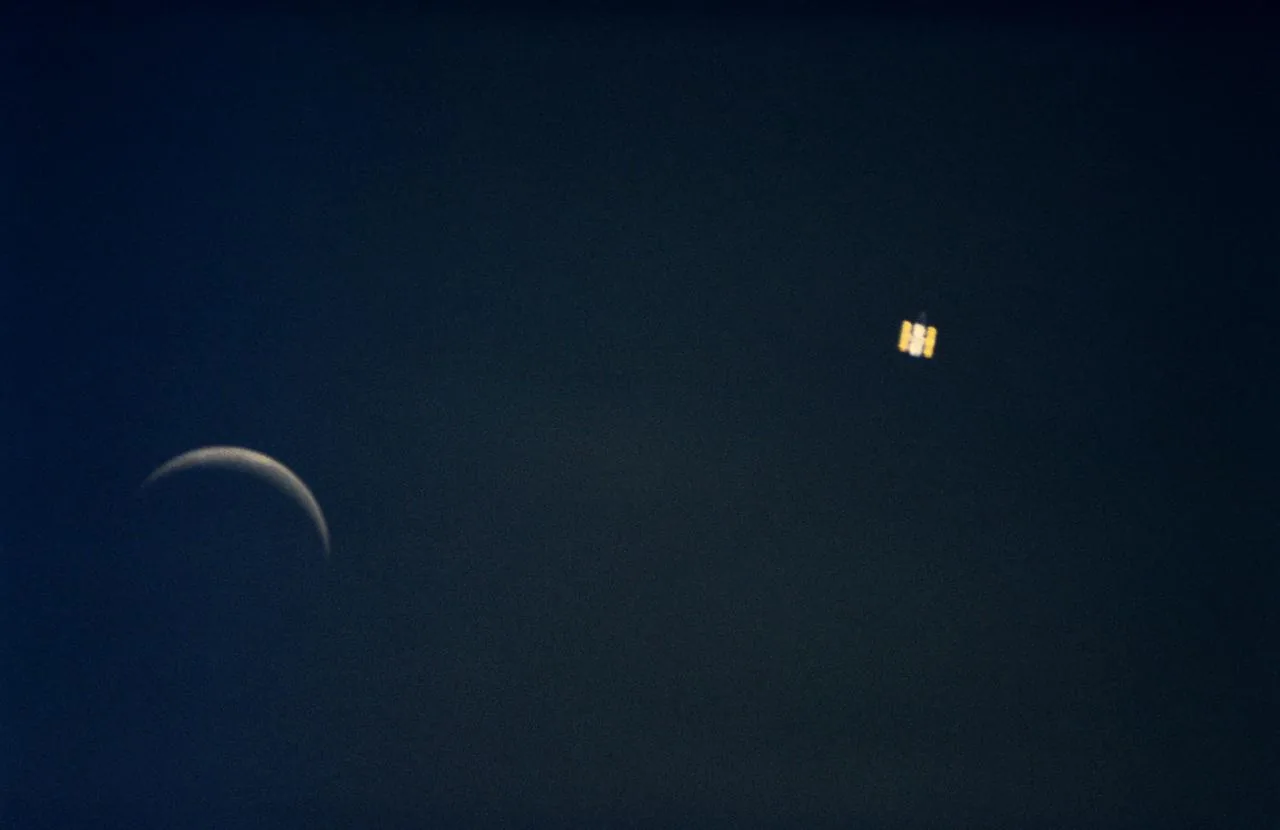
When those first images arrived, they were blurry. Not slightly soft -- unmistakably, disastrously out of focus. Something was profoundly wrong with the most expensive telescope ever built.
Investigation revealed the cause: the primary mirror had been ground to the wrong shape. A device called a reflective null corrector, used to test the mirror's curvature during manufacturing, had been assembled incorrectly. One lens in the device was displaced by 1.3 millimeters. As a result, the mirror's edge was too flat by approximately two microns -- roughly 1/50th the width of a human hair. It was one of the most precisely wrong mirrors in history: perfectly smooth, flawlessly polished, and shaped to exactly the wrong prescription.
The error was a catastrophe for NASA, already reeling from the Challenger disaster four years earlier. Late-night comedians savaged the agency. Congress was furious. The $1.5 billion telescope was, in the words of one senator, "a techno-turkey." Hubble became shorthand for government incompetence.
But the telescope had been designed to be serviced in orbit. And that design decision would save everything.
The Prescription: COSTAR
Engineers at the Space Telescope Science Institute and NASA's Goddard Space Flight Center quickly realized that because the mirror's flaw was precisely known, it could be precisely corrected -- the same way eyeglasses correct a person's vision. They designed a device called COSTAR (Corrective Optics Space Telescope Axial Replacement), a set of small mirrors on mechanical arms that would intercept the light from the primary mirror and correct its aberration before it reached the scientific instruments.
Simultaneously, a new Wide Field and Planetary Camera 2 (WFPC2) was built with its own internal corrective optics. The two fixes together would restore Hubble to full capability.
But someone had to install them. In space. On a telescope orbiting at 17,000 miles per hour.
STS-61: The Mission That Saved Hubble
Servicing Mission 1 launched on December 2, 1993, aboard Space Shuttle Endeavour. The crew was among the most experienced ever assembled: Commander Dick Covey, Pilot Ken Bowersox, and mission specialists Kathryn Thornton, Claude Nicollier, Jeff Hoffman, Story Musgrave, and Tom Akers. Musgrave, at 58 the oldest member of the crew, had personally lobbied for years to lead the repair effort.
The mission was planned with extraordinary precision. Over eleven days in orbit, the crew conducted five back-to-back spacewalks totaling 35 hours and 28 minutes -- an unprecedented feat. The EVAs were performed in pairs: Musgrave and Hoffman on the first, third, and fifth spacewalks; Thornton and Akers on the second and fourth.
On the first spacewalk, Musgrave and Hoffman replaced the telescope's gyroscopes and electrical control units. The second and third spacewalks were the critical ones: the installation of WFPC2 and COSTAR. Hoffman carefully extracted the old Wide Field and Planetary Camera, a refrigerator-sized instrument, from Hubble's instrument bay. Musgrave guided the new camera into place. The tolerances were razor-thin; the instrument had to slide along guide rails and lock into position with submillimeter precision. Working in bulky pressurized gloves at 17,000 miles per hour, the astronauts performed the equivalent of brain surgery.
COSTAR was installed on the third spacewalk. The device replaced the High Speed Photometer, one of Hubble's original instruments, and deployed its corrective mirrors into the optical path of the remaining instruments.
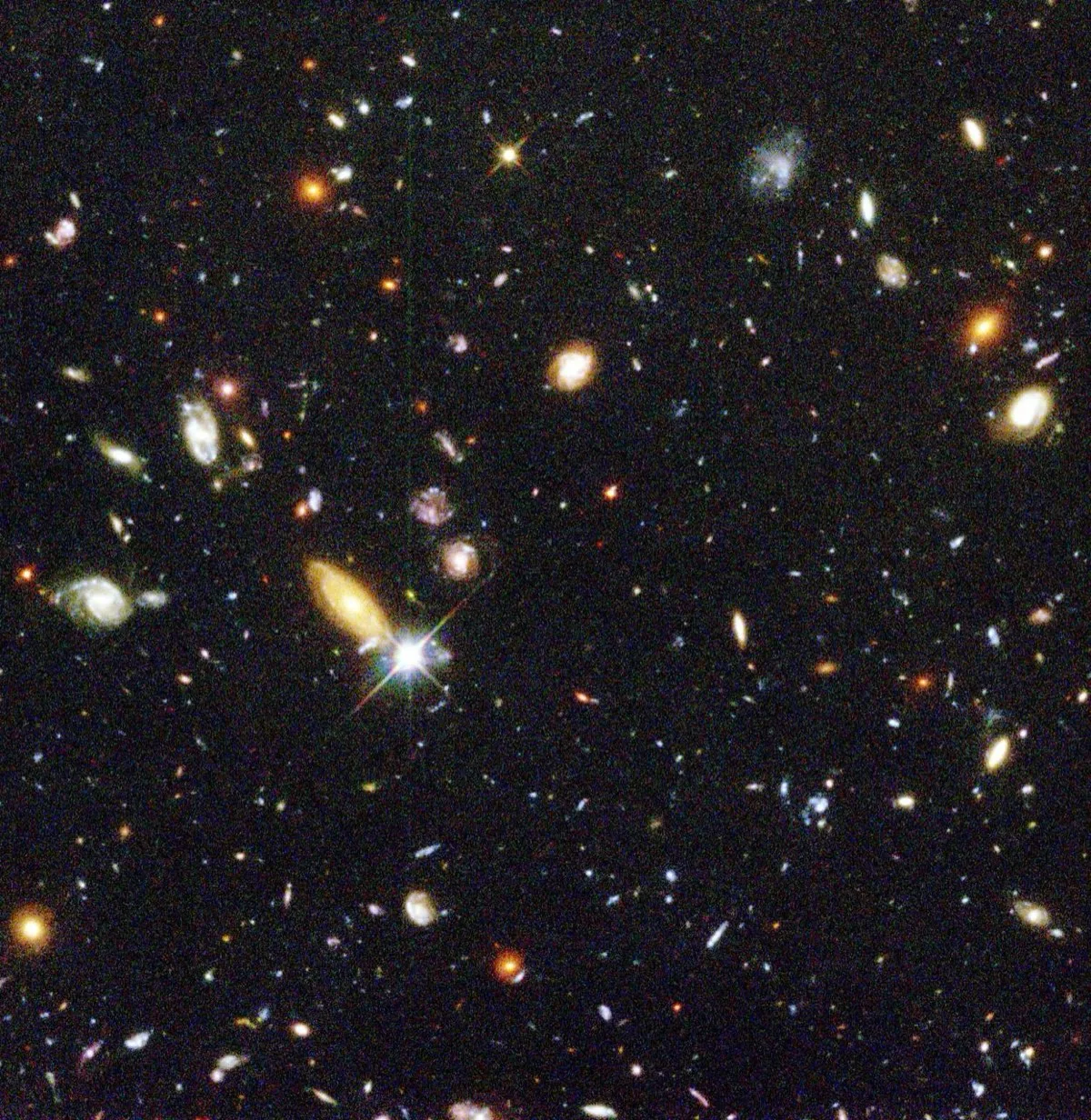
On December 13, 1993, Endeavour released the telescope back into orbit. Weeks later, the first images arrived. They were sharp. Stunningly, magnificently sharp. At a press conference in January 1994, NASA displayed before-and-after images of the galaxy M100. The difference was astonishing. Hubble worked.
Story Musgrave later said of the moment the first corrected images appeared: "We felt like we had given sight to the blind."
The Servicing Missions That Followed
Hubble was serviced five times in total, and each mission enhanced the telescope's capabilities far beyond its original design.
Servicing Mission 2 (STS-82, February 1997): Astronauts installed the Space Telescope Imaging Spectrograph (STIS) and the Near Infrared Camera and Multi-Object Spectrometer (NICMOS), dramatically expanding Hubble's ability to see in ultraviolet and infrared wavelengths. The mission included four spacewalks over ten days.
Servicing Mission 3A (STS-103, December 1999): An emergency mission launched after the failure of a fourth gyroscope threatened to end Hubble's science operations. The crew replaced all six gyroscopes, installed a new computer 20 times faster than the original, and replaced a fine guidance sensor. Three spacewalks totaling 24 hours and 33 minutes accomplished the work.
Servicing Mission 3B (STS-109, March 2002): Astronauts installed the Advanced Camera for Surveys (ACS), which increased Hubble's discovery efficiency tenfold. They also replaced the solar arrays and installed a new power control unit during five spacewalks.
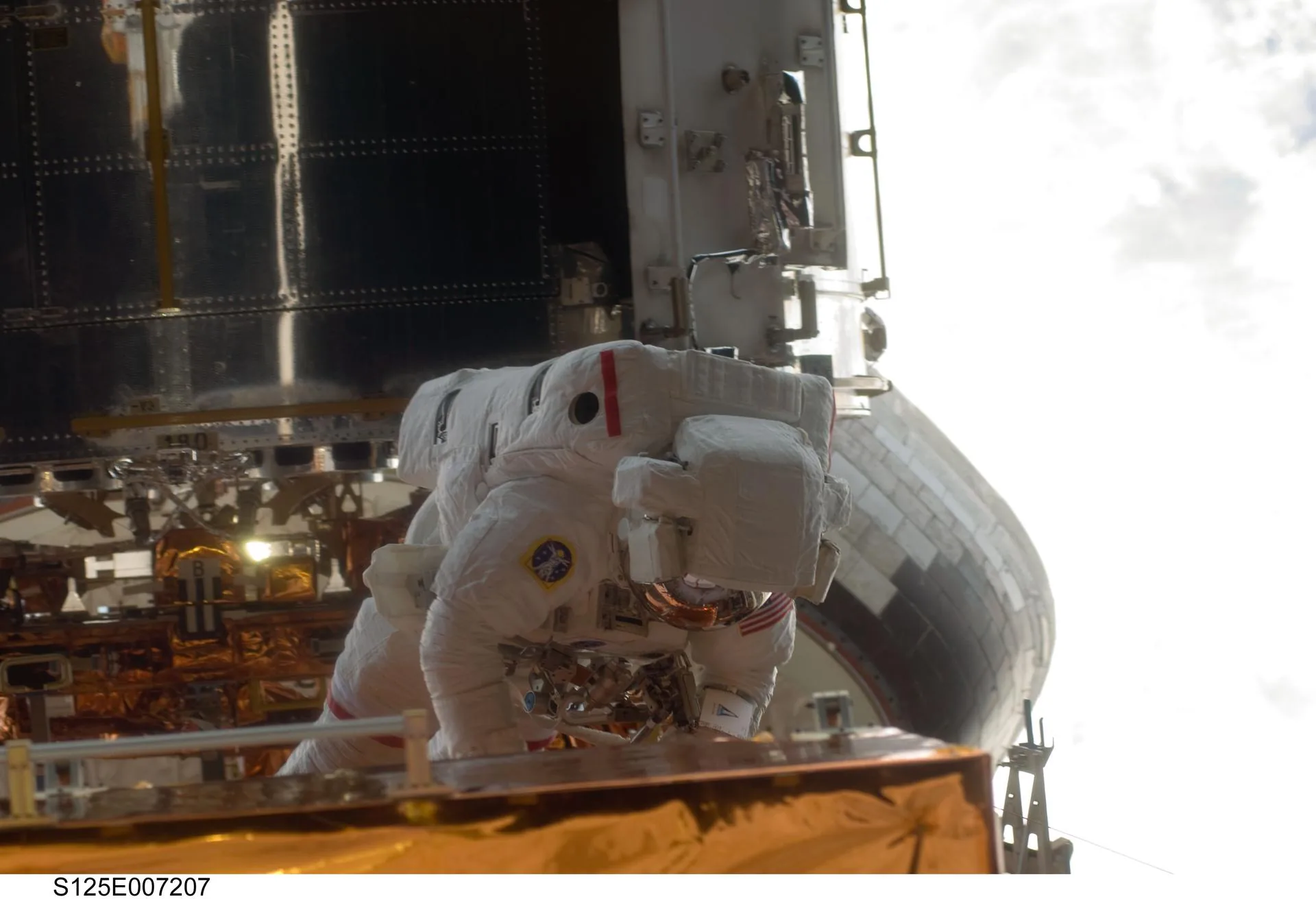
Servicing Mission 4 (STS-125, May 2009): The final and most ambitious servicing mission. This one almost did not happen. After the Columbia disaster in 2003, NASA Administrator Sean O'Keefe cancelled the mission, arguing that a Shuttle crew could not reach the safety of the International Space Station from Hubble's orbit if their vehicle was damaged. The decision was deeply controversial. Scientists, astronauts, and the public mounted an intense campaign to reverse it. O'Keefe's successor, Michael Griffin, reinstated the mission in 2006 after the development of in-orbit repair techniques.
STS-125 launched on May 11, 2009, with Commander Scott Altman and a crew of six. Over five spacewalks totaling 36 hours and 56 minutes, astronauts John Grunsfeld and Drew Feustel, and Mike Massimino and Mike Good, performed some of the most technically demanding work ever attempted in space. They replaced both COSTAR (no longer needed, as all instruments now had internal corrective optics) and WFPC2 with new instruments: the Cosmic Origins Spectrograph and Wide Field Camera 3. They also repaired STIS and ACS -- instruments that were never designed to be repaired in orbit -- by removing tiny screws and circuit boards while wearing pressurized gloves.
Mike Massimino, unable to remove a stuck handrail blocking access to STIS, was authorized by Mission Control to simply rip it off with brute force. He did. The repair succeeded.
A Legacy Written in Light
The servicing missions extended Hubble's life by decades and transformed it from a single-generation instrument into an evolving observatory. As of 2025, Hubble has been operating for 35 years -- far beyond its original 15-year design life. It has made more than 1.5 million observations, and its data has been cited in over 20,000 scientific papers, making it the most productive scientific instrument in history.
Every servicing mission was a testament to the unique capabilities of human spaceflight. Robots could not have performed the improvisations, judgment calls, and delicate manual work required. When Mike Massimino ripped that handrail off, no robot would have been authorized -- or able -- to make that call. When Story Musgrave guided WFPC2 into its bay by feel, using tactile feedback through his gloves, he was doing something no machine could replicate.
Hubble's story is ultimately one of redemption. A flawed mirror became the catalyst for some of the most remarkable spacewalks ever performed. A national embarrassment became a source of national pride. And a telescope that could not see became the eye through which humanity glimpsed the farthest reaches of the cosmos.