Science fiction has a reputation for being escapist, for spinning fantasies about laser swords and warp drives that will never exist. But the genre's actual track record is something far more interesting. Again and again, the imaginative leaps of novelists and screenwriters have anticipated -- and sometimes directly inspired -- the technologies that define our world.
This is not coincidence. The best science fiction writers are rigorous thinkers who extrapolate from existing science. And the engineers who grow up reading their work often set out to build what they imagined. The line between fiction and engineering is blurrier than most people realize.
Here are ten times science fiction got there first.
1. Arthur C. Clarke's Geostationary Satellites (1945)
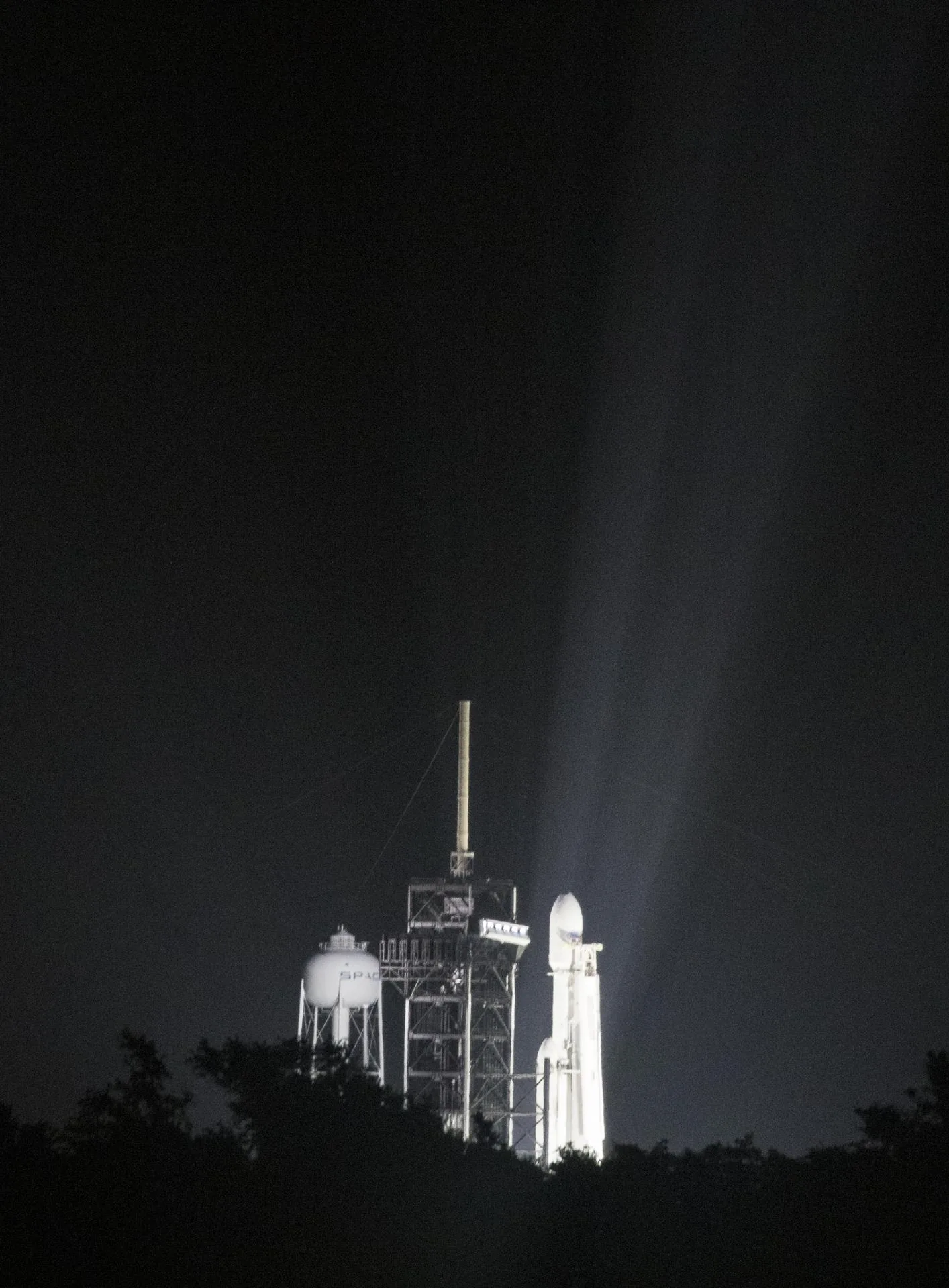
This is perhaps the most extraordinary prediction in the history of science fiction. In 1945 -- twelve years before Sputnik, twenty-four years before the Moon landing -- Arthur C. Clarke published a paper in Wireless World magazine titled "Extra-Terrestrial Relays: Can Rocket Stations Give World-wide Radio Coverage?"
In it, Clarke described placing satellites in orbit at an altitude of 35,786 kilometers, where their orbital period would match Earth's rotation, causing them to hover over a fixed point on the surface. Three such satellites, spaced evenly around the equator, could provide global telecommunications coverage.
This is exactly how modern communication satellites work. The geostationary orbit is sometimes called the "Clarke Orbit" in his honor. He later joked that he should have patented the idea instead of publishing it, though he also said he was glad he did not -- "I might have become the richest man in the world, and that would have ruined me."
2. Jules Verne's Florida Moon Launch (1865)
In From the Earth to the Moon, published in 1865, Jules Verne described a Moon launch from a site in Florida, with a three-person crew, in a projectile that splashed down in the Pacific Ocean upon return. Over a century later, Apollo 11 launched from Cape Canaveral, Florida, with a three-person crew, and splashed down in the Pacific Ocean.
Verne even got the approximate velocity needed to escape Earth's gravity roughly correct, and his choice of Florida as a launch site was based on sound reasoning about latitude and trajectory -- the same reasoning NASA would later use.
The method was wrong (a giant cannon rather than a rocket, which would have liquefied the passengers), but the parameters were eerily accurate. NASA astronauts have acknowledged Verne's influence, and the Apollo command module was even nicknamed after his spacecraft.
3. Star Trek's Communicators Became Flip Phones (1966)
When Captain Kirk flipped open his handheld communicator on the original Star Trek series in 1966, it seemed like pure fantasy. A wireless device small enough to fit in your hand that could connect you to anyone instantly?
Martin Cooper, the Motorola engineer who created the first handheld mobile phone in 1973, has explicitly credited Star Trek as his inspiration. The first flip phone designs bore an unmistakable resemblance to Kirk's communicator. Cooper has said in interviews: "That was not fantasy to us. That was a goal."
The communicator also anticipated features beyond voice calls -- later iterations in the franchise included text-based communication, location tracking, and universal translation, all of which exist in modern smartphones.
4. 2001: A Space Odyssey's Tablets Became iPads (1968)
In Stanley Kubrick's 2001: A Space Odyssey, astronauts aboard the Discovery One use flat, rectangular screens called "newspads" to read news and consume media content. The devices are thin, portable, and feature a touchscreen-like interface.
When Apple released the iPad in 2010, the resemblance was so striking that Samsung's legal team used clips from the film in their defense during the Apple v. Samsung patent trial, arguing that the tablet form factor was prior art from 1968.
Arthur C. Clarke's novelization describes the device even more precisely: "When he tired of official reports and memoranda and minutes, he would plug in his foolscap-sized newspad into the ship's information circuit and scan the latest reports from Earth." That is, quite literally, what millions of people do every morning.
5. H.G. Wells Described Atomic Weapons (1914)
In The World Set Free, published in 1914 -- three decades before the Manhattan Project -- H.G. Wells described weapons powered by atomic energy that would cause unprecedented destruction. He called them "atomic bombs."
Wells based his speculation on Frederick Soddy's work on radioactive decay, extrapolating from laboratory observations to weapons applications. The novel describes cities destroyed by chain reactions, radioactive fallout making areas uninhabitable, and a subsequent world government formed in response to the existential threat.
Leo Szilard, the physicist who conceived the nuclear chain reaction and later worked on the Manhattan Project, read Wells's novel in 1932 and has said it directly influenced his thinking. The line from fiction to reality passes through a single reader who happened to be in a position to make it real.
6. Neal Stephenson's Metaverse (1992)
In Snow Crash, Neal Stephenson described a persistent, shared virtual reality space called the "Metaverse" where people interacted through customizable avatars, owned virtual real estate, and conducted business. The term and the concept entered the cultural vocabulary directly from this novel.
When Facebook rebranded as Meta in 2021 and announced its vision for an immersive virtual world, the debt to Stephenson was obvious and widely noted. Second Life, VR Chat, and virtually every virtual world platform traces its conceptual lineage to Snow Crash. Stephenson himself has consulted for various technology companies, including Magic Leap, bringing his fictional vision into engineering conversations.
7. The Martian's In-Situ Resource Utilization (2011)
Andy Weir's The Martian depicted an astronaut surviving on Mars by manufacturing water from rocket fuel components, growing food in Martian soil amended with human waste, and extracting oxygen from the Martian atmosphere. These are not fictional technologies -- they are real engineering concepts collectively known as In-Situ Resource Utilization, or ISRU.
NASA's MOXIE experiment aboard the Perseverance rover successfully demonstrated oxygen extraction from Mars's carbon dioxide atmosphere in 2021, directly validating one of the novel's central survival strategies. Research into Martian regolith agriculture is ongoing at multiple universities. The novel did not predict these technologies so much as popularize concepts that were already being studied, but its cultural impact accelerated public and political support for Mars exploration.
8. Star Trek's Replicators Became 3D Printing in Space (1987)
Star Trek: The Next Generation introduced the replicator -- a device that could manufacture virtually any object from a digital template, assembling it at the molecular level. It was used for everything from spare parts to Earl Grey tea.
In 2014, Made In Space installed the first 3D printer aboard the International Space Station, capable of manufacturing tools and replacement parts on demand. The company's founders have explicitly cited Star Trek as an inspiration. NASA now regularly uses additive manufacturing in space, and the technology is central to planning for long-duration missions where carrying every possible spare part is impractical.
We are a long way from replicating a cup of tea, but the core concept -- digital-to-physical manufacturing on demand, in space -- is here.
9. Dick Tracy's Smartwatch (1946)
Chester Gould's comic strip detective Dick Tracy began using a two-way wrist radio in 1946, which was later upgraded to a two-way wrist television in 1964. The device allowed voice communication, video calls, and information access from a device worn on the wrist.
The Apple Watch, Samsung Galaxy Watch, and their competitors offer all of these capabilities and more. Dick Tracy's wrist communicator was one of the most iconic technological predictions in popular culture, and it took roughly seven decades for reality to catch up. The cultural image of the wrist-based communicator was so powerful that it influenced product designers directly -- early smartwatch marketing frequently referenced the comic strip.
10. Robert Heinlein's Waterbeds (1961)
This one is delightfully specific. In Stranger in a Strange Land, Robert Heinlein described a bed filled with water, heated to body temperature, used for both comfort and therapeutic purposes. He described it in enough detail that when Charles Hall attempted to patent the waterbed in 1971, the patent examiner cited Heinlein's novel as prior art.
Heinlein had also described waterbeds in earlier works, including Double Star (1956) and Starship Troopers (1959), always in the context of space travel and convalescence. The connection between science fiction and consumer products does not get more direct than a novel literally blocking a patent.
The Feedback Loop: Why This Keeps Happening
The relationship between science fiction and real technology is not one-directional. It is a feedback loop. Writers imagine possibilities based on emerging science. Engineers read those stories and internalize the vision. They build toward it, sometimes consciously, sometimes not. And when the technology arrives, new writers extrapolate from the new baseline.
Elon Musk has cited Isaac Asimov's Foundation series as a key influence on his thinking about making humanity multi-planetary. Jeff Bezos named his rocket company Blue Origin after the "pale blue dot" imagery that pervades space literature. The engineers at NASA's Jet Propulsion Laboratory are, almost to a person, voracious science fiction readers.
This is not a trivial observation. It suggests that imagination is not merely a precursor to innovation -- it is a necessary component of it. Before a technology can be built, someone has to believe it is possible. And that belief often comes not from a research paper but from a story.
The science fiction writers who got the future right were not prophets. They were careful, creative thinkers who took existing science seriously and asked, "What comes next?" That their answers so often proved correct is a testament to the power of disciplined imagination -- and a reminder that the future is, in part, something we write into existence.