Long before we had the technology to reach space, we were painting it, singing about it, and writing stories set among the stars. The cosmos has been humanity's grandest canvas since we first looked up and wondered. But the relationship between space and art is not just one of inspiration flowing downward from the heavens. Art has actively shaped how we explore space, how we fund it, how we understand it, and how we feel about our place in the universe.
This is the story of that relationship -- from the paintings that launched the Space Age to the golden record hurtling through interstellar darkness right now, carrying our music to the void.
Chesley Bonestell: The Painter Who Made Space Real
If you want to understand how profoundly art can influence the course of history, start with Chesley Bonestell. Before his work, space was an abstraction -- a subject for scientists and dreamers. After his work, it was a destination.
Bonestell was a trained architect and illustrator who, in the 1940s and 1950s, began creating breathtakingly realistic paintings of what other worlds might look like. His depiction of Saturn as seen from its moon Titan, published in Life magazine in 1944, was a revelation. It showed the ringed planet hanging in an alien sky above a craggy, ice-covered landscape, rendered with a photographic realism that no one had seen applied to space before.
The impact was immediate and enormous. Wernher von Braun, the rocket engineer who would later lead the development of the Saturn V, collaborated with Bonestell on a series of articles for Collier's magazine in the early 1950s that laid out a detailed vision for space exploration. Von Braun provided the engineering; Bonestell provided the vision. The articles reached millions of readers and are widely credited with building the public support that eventually led to NASA's creation.
Bonestell's paintings did something that engineering diagrams and scientific papers could not: they made people feel what it would be like to stand on another world. That emotional connection -- that sense of possibility made tangible -- was arguably as important to the Space Age as any rocket engine.
NASA's Artistic Eye
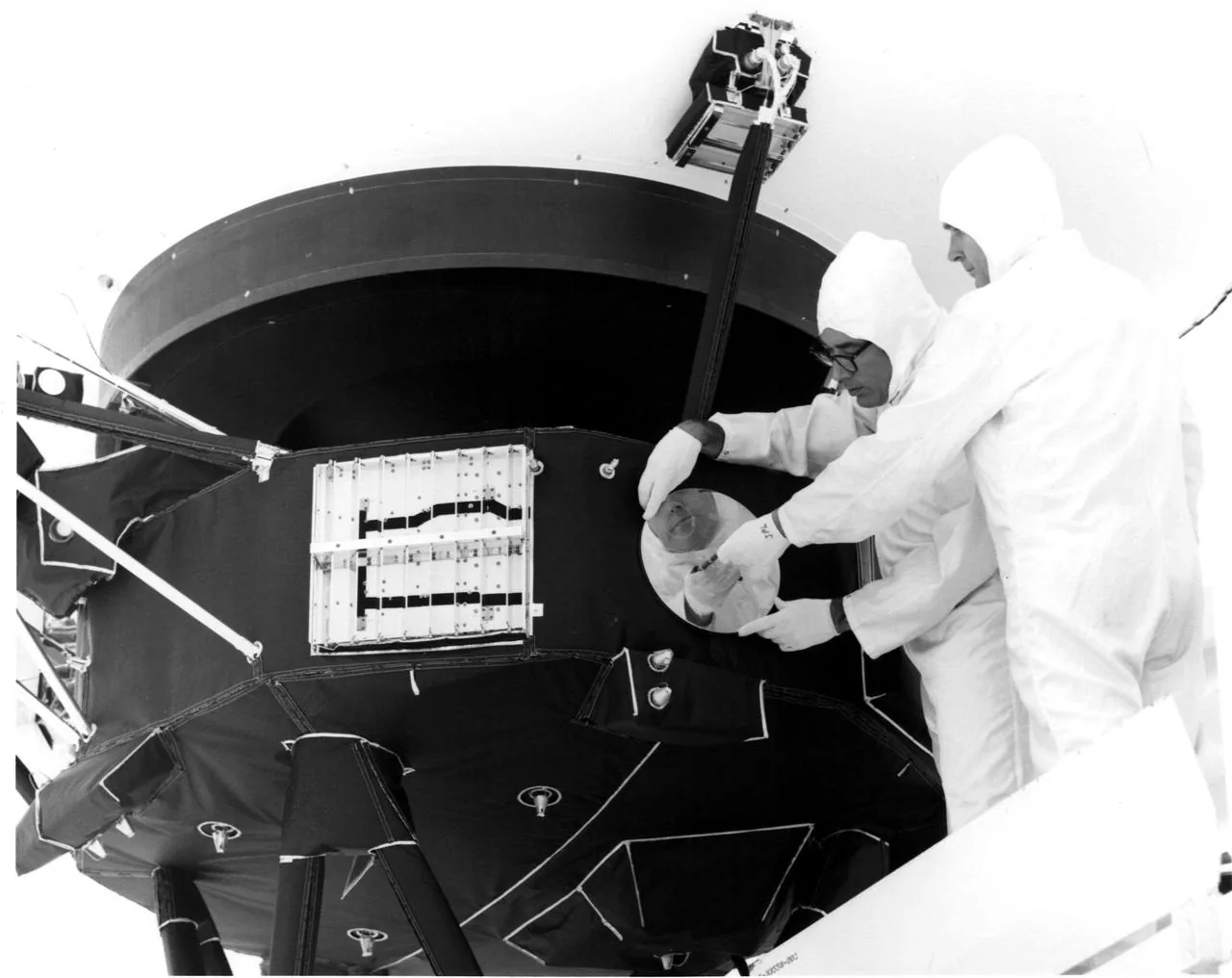
NASA has understood the power of art from its earliest days. The agency established an Art Program in 1962, commissioning fine artists to document the space program not as photographers or journalists but as interpreters. The program was championed by NASA administrator James Webb, who believed that the cultural significance of space exploration was as important as its scientific achievements.
Over the decades, artists including Robert Rauschenberg, Norman Rockwell, and Annie Leibovitz have participated. The resulting works -- paintings, sculptures, photographs -- capture dimensions of spaceflight that technical documentation cannot: the loneliness, the grandeur, the human scale of people doing extraordinary things.
More recently, NASA has continued this tradition through collaborations with contemporary artists and designers. The agency's retro-futuristic "Visions of the Future" travel posters, depicting imagined tourism on exoplanets and solar system destinations, became a viral sensation and are now among the most widely reproduced pieces of graphic design in the world. They hang in offices, classrooms, and living rooms everywhere -- quiet ambassadors for the idea that space is not just for scientists.
Space Photography as Art
Some of the most iconic images in human history were taken from space, and their power extends far beyond their scientific value.
Earthrise (1968): Taken by Apollo 8 astronaut William Anders during the first crewed orbit of the Moon, this photograph of Earth rising above the lunar horizon is widely considered one of the most influential photographs ever made. The wilderness photographer Galen Rowell called it "the most influential environmental photograph ever taken." It is credited with catalyzing the modern environmental movement -- the first Earth Day was held less than two years later.
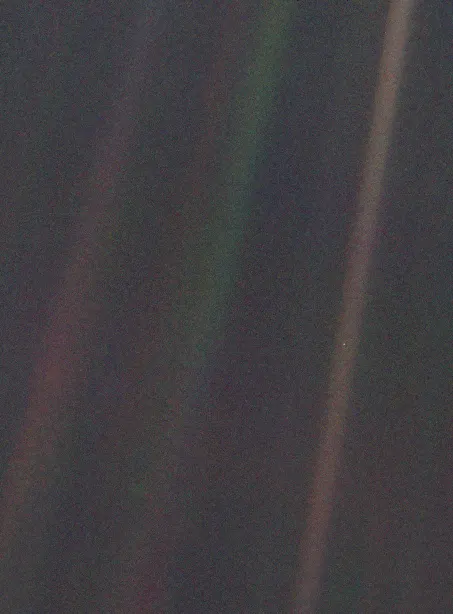
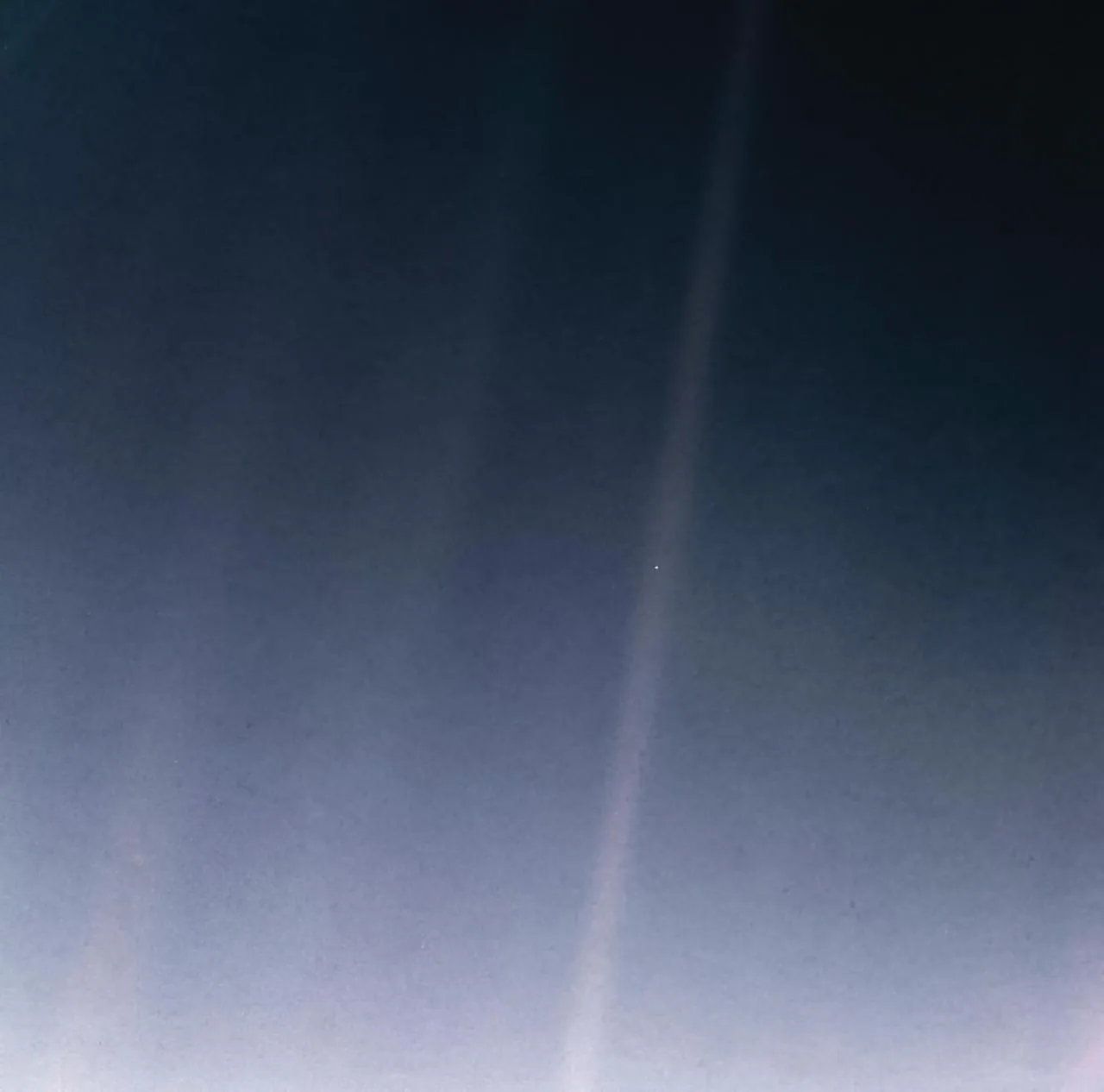
Pale Blue Dot (1990): At Carl Sagan's request, the Voyager 1 spacecraft turned its camera back toward Earth from a distance of 3.7 billion miles. The resulting image shows Earth as a tiny, barely visible speck suspended in a beam of scattered sunlight. Sagan's accompanying reflection -- "Look again at that dot. That's here. That's home. That's us." -- is one of the most quoted passages in the history of science writing. The image is not scientifically useful. It is entirely, deliberately, art.
Pillars of Creation (1995, revisited 2022): The Hubble Space Telescope's image of towering columns of interstellar gas and dust in the Eagle Nebula became an instant cultural icon. It appeared on T-shirts, posters, album covers, and tattoos. When the James Webb Space Telescope captured a new version of the same structure in 2022, with infrared clarity that revealed newborn stars hidden within the pillars, the image went viral again. These are scientific instruments producing images that function as profound works of art.
The Music of the Spheres
The cosmos has been a musical subject since antiquity -- Pythagoras spoke of the "music of the spheres," the idea that celestial bodies produce harmonious sounds through their motion. But the modern relationship between space and music is richer and stranger than ancient philosophy could have imagined.
Gustav Holst's The Planets (1914-1917) remains the foundational work of space-inspired classical music. Each movement captures the astrological character of a planet -- Mars as the bringer of war, Venus as the bringer of peace, Jupiter as the bringer of jollity. Holst wrote the suite before the Space Age, drawing on mythology rather than science, yet the music has become inextricably linked with our visual experience of space. NASA mission documentaries, planetarium shows, and space films have used Holst's themes so frequently that many people cannot think of Jupiter without hearing his triumphant melody.
David Bowie made space the central metaphor of his career. "Space Oddity," released just days before the Apollo 11 launch in 1969, told the story of Major Tom, an astronaut who drifts away from his capsule and into the void. The song works on multiple levels -- as a literal space narrative, as a metaphor for alienation and drug use, and as a meditation on the loneliness of anyone who ventures beyond the familiar. Bowie returned to Major Tom throughout his career, in "Ashes to Ashes" and "Hallo Spaceboy," each time deepening the mythology. His final album, Blackstar, released two days before his death in 2016, is saturated with cosmic imagery.
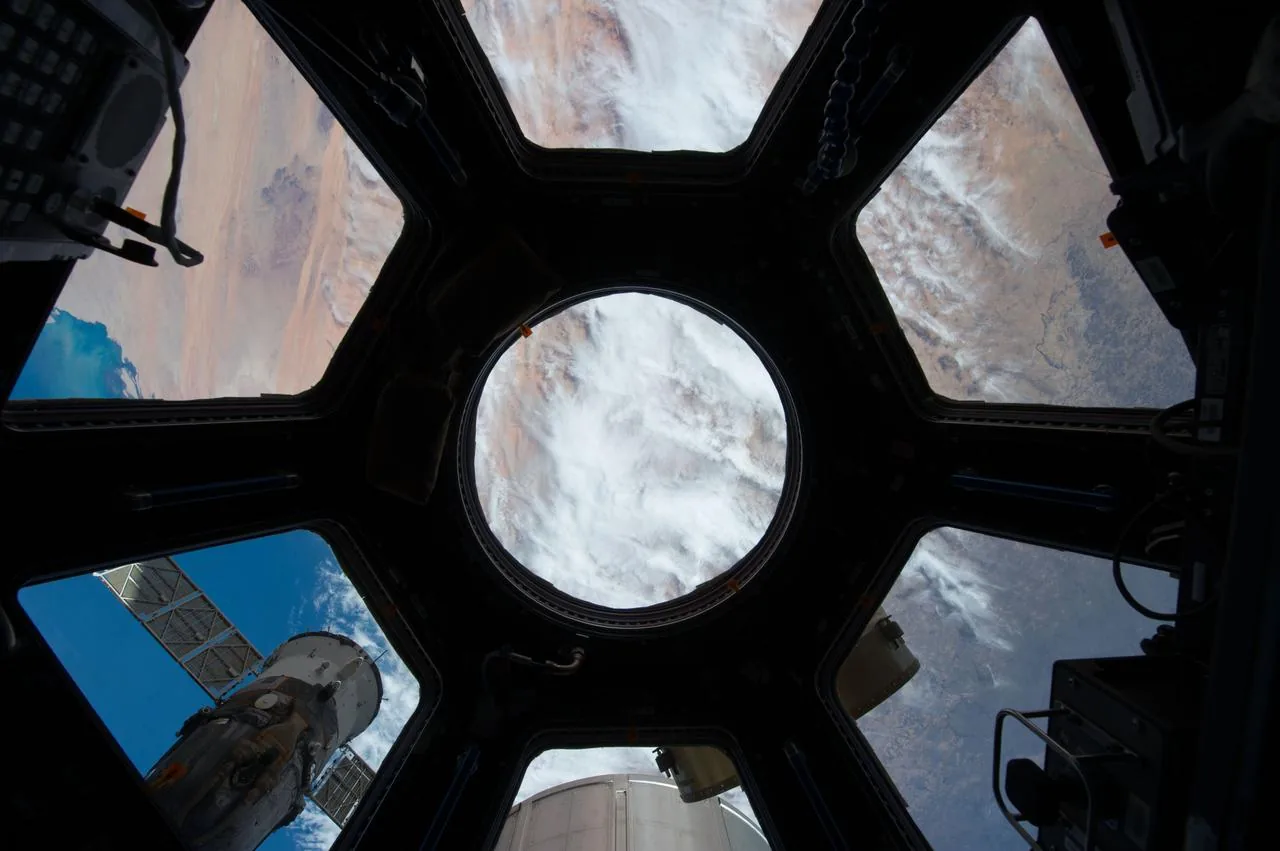
Chris Hadfield's performance of "Space Oddity" from the International Space Station in 2013 was a cultural event that transcended the space community. Floating in zero gravity with an acoustic guitar, Hadfield sang Bowie's song from actual space, and the video was viewed tens of millions of times. Bowie himself approved the cover, calling it "possibly the most poignant version of the song ever created." It was a moment where art, technology, and human experience converged perfectly.
Radiohead's OK Computer (1997), while not explicitly about space, channeled the alienation and technological anxiety of the late twentieth century in ways that resonated with space-age themes. The band's later work, particularly Kid A and Amnesiac, drew on ambient and electronic textures that evoke the vastness and strangeness of cosmic spaces. Thom Yorke has cited science fiction and space imagery as influences on his songwriting.
Other essential entries in the space music canon include Sun Ra's Afrofuturist jazz, which reimagined space as a site of Black liberation and cosmic consciousness; Pink Floyd's The Dark Side of the Moon, whose title and themes orbit around existential questions amplified by the space age; and, more recently, artists like Flying Lotus and Bjork, who use electronic production to create soundscapes that feel genuinely extraterrestrial.
The Voyager Golden Record: Art for Eternity
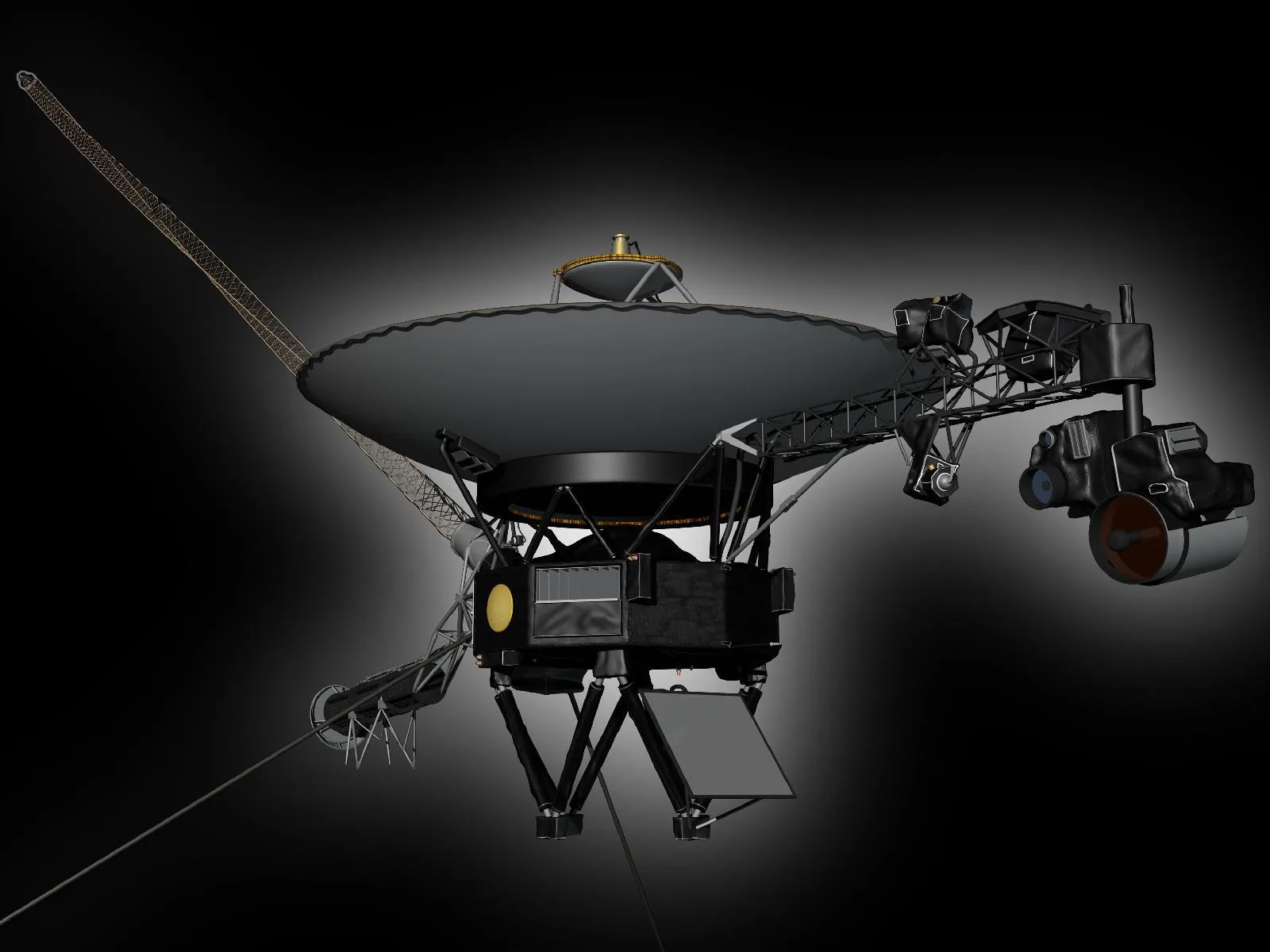
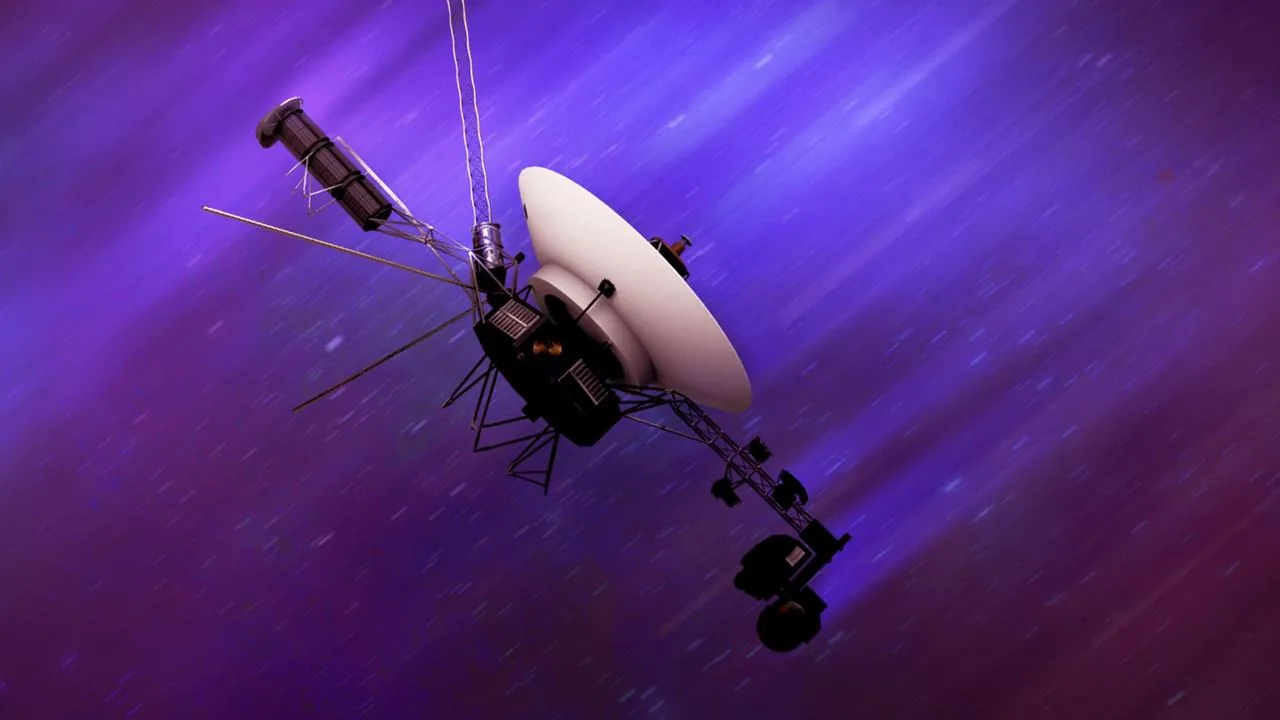
In 1977, when NASA launched the Voyager 1 and Voyager 2 spacecraft on their grand tour of the outer planets, a small committee chaired by Carl Sagan curated a message for any extraterrestrial intelligence that might one day find the probes drifting through interstellar space.
The result was the Golden Record -- a gold-plated copper phonograph record containing 115 images, greetings in 55 languages, natural sounds of Earth (wind, rain, birdsong, whales), and 90 minutes of music ranging from Bach and Beethoven to Chuck Berry, Javanese gamelan, and Navajo night chant.
The Golden Record is, by any measure, one of the most extraordinary art objects ever created. It was designed to represent the full breadth of human culture to an audience that might not be human, might not understand language, and might not encounter it for millions of years. The selection process was agonizing and beautiful -- how do you choose the music that represents a species?
The record is now the most distant human-made object from Earth, traveling through interstellar space at roughly 38,000 miles per hour. It will likely outlast every other artifact of human civilization. Long after our cities have crumbled and our languages have been forgotten, Bach's Brandenburg Concerto No. 2 will still be traveling through the darkness, a message in a bottle thrown into the cosmic ocean.
How Astronauts See Beauty
Astronauts are not typically selected for their artistic sensibilities, but many of them become unexpectedly eloquent about beauty once they reach orbit. Something about the experience unlocks a capacity for wonder that their training did not prepare them for.
Scott Kelly, who spent a year aboard the ISS, became an accomplished photographer during his mission, posting stunning images of Earth to social media that blurred the line between documentation and art. Karen Nyberg brought a sewing machine to the station and created a quilted dinosaur in microgravity. Don Pettit, an engineer by training, became one of the most celebrated space photographers in history, experimenting with long exposures that captured star trails and city lights in images of haunting beauty.
These are not frivolous activities. They represent something fundamental about human nature: when we encounter the sublime, we reach for ways to express it. We paint, we sing, we photograph, we write. We have been doing this since the first cave paintings depicted the night sky, and we will keep doing it as we push further into the cosmos.
The relationship between space and art is not decorative. It is essential. Art is how we process what space means -- not as data or policy or engineering, but as experience. It is how we carry the cosmos back to Earth and share it with everyone who has not yet been there.
And perhaps, if the Golden Record is any indication, it is how we will introduce ourselves to whatever else is out there.