For decades, asteroid mining lived in the same mental category as warp drives and lightsabers: fun to think about, permanently out of reach. That is changing, and the shift is driven not by science fiction enthusiasm but by cold economic logic, advancing technology, and a growing understanding that the resources scattered throughout our solar system are not just scientifically interesting but commercially valuable. The question is no longer whether asteroid mining will happen. It is when, and who will get there first.
OSIRIS-REx: The Sample That Changed the Conversation
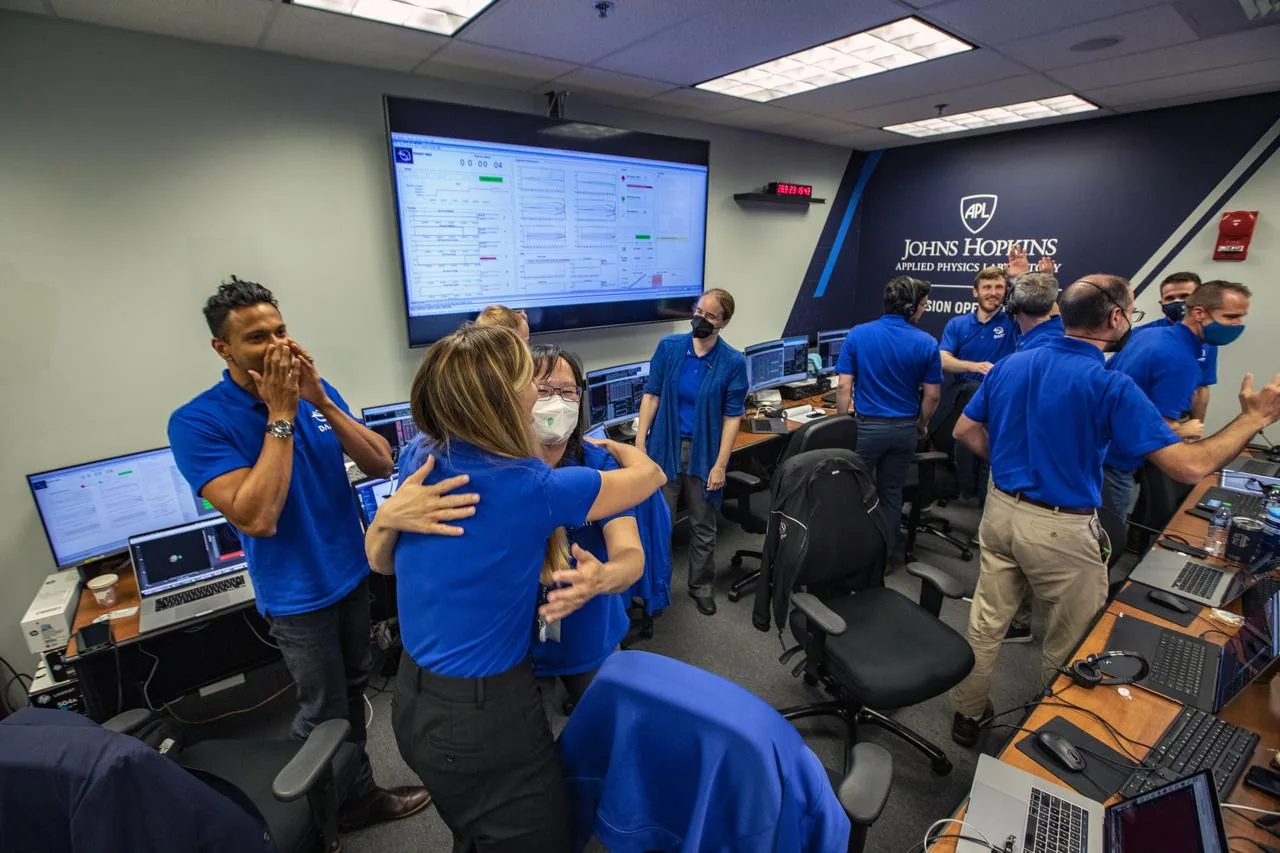
When NASA's OSIRIS-REx spacecraft delivered a 121.6-gram sample of asteroid Bennu to the Utah desert in September 2023, it was more than a scientific triumph. It was a proof of concept. A robotic spacecraft had traveled to an asteroid, mapped its surface in extraordinary detail, collected material, and delivered it safely to Earth. The entire mission was an engineering demonstration that the fundamental operations required for asteroid mining, rendezvous, proximity operations, surface interaction, and material handling, are within our current technological capability.
The analysis of the Bennu sample has been revelatory. Scientists found abundant water-bearing minerals, carbon-rich organic compounds, and phosphorus, a key element for life. The sample contained clay minerals that trap water in their crystal structure, confirming that certain asteroid types are essentially water reservoirs floating in space. In the context of space resource utilization, water is arguably more valuable than gold. It can be split into hydrogen and oxygen for rocket propellant, used for life support, and employed as radiation shielding. An asteroid that contains water is, effectively, a gas station and a supply depot.
The mineral composition analysis also identified commercially interesting concentrations of platinum-group metals, nickel, cobalt, and iron. While the quantities in a 121-gram sample are scientifically interesting rather than commercially significant, they validate the spectroscopic surveys that have long suggested certain asteroid classes contain these materials in extractable concentrations.
Psyche: The $10,000 Quadrillion Asteroid
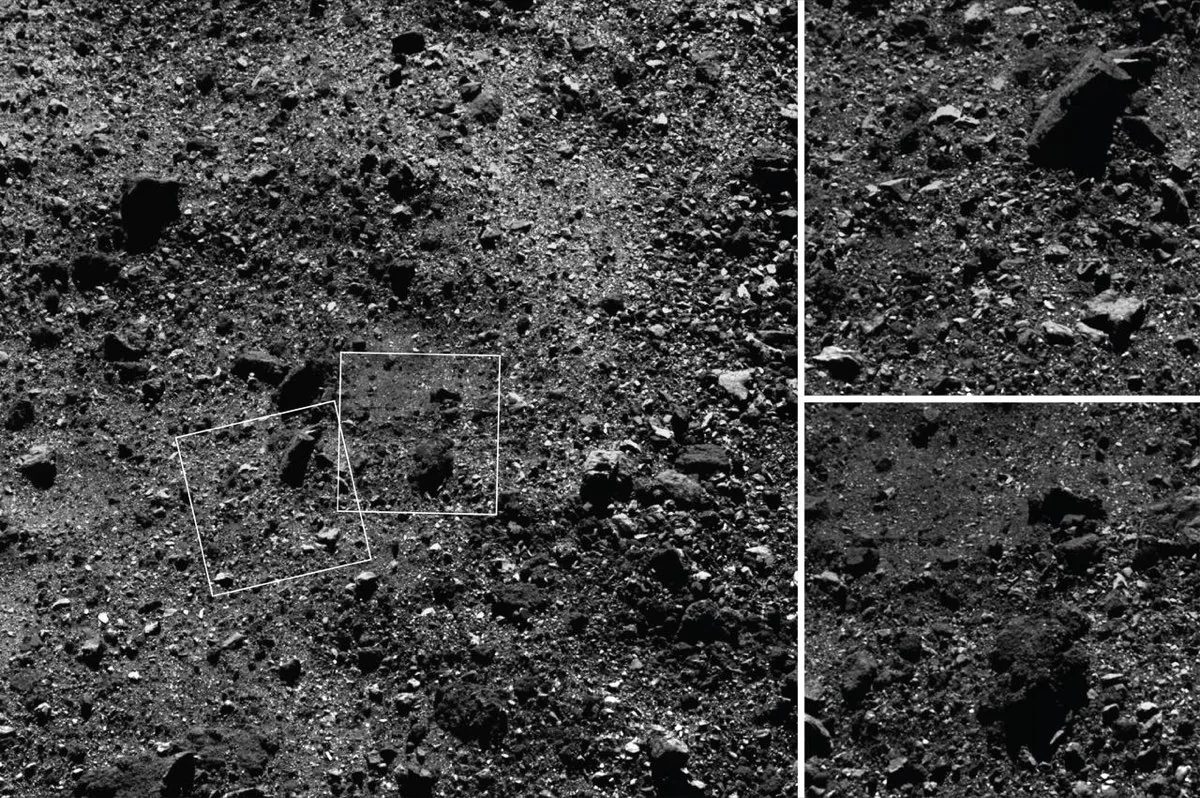
NASA's Psyche mission, launched in October 2023 and currently en route to the asteroid 16 Psyche, targets what may be the most economically interesting object in the solar system. Psyche is a 140-mile-wide metallic asteroid believed to be the exposed core of a protoplanet, one that had its rocky outer layers stripped away by collisions billions of years ago. It is composed primarily of iron and nickel, with estimated traces of gold, platinum, copper, and other metals.
Media outlets have breathlessly reported that Psyche's metal content could be "worth $10,000 quadrillion," a number so large it is essentially meaningless. No one is going to mine an asteroid 140 miles across and ship its contents to Earth. The sudden introduction of that much raw material to terrestrial markets would crash commodity prices to near zero. But the Psyche mission serves a critical purpose beyond hypothetical valuations.
When the spacecraft arrives at the asteroid in 2029, it will spend 26 months mapping the surface, measuring the composition, and characterizing the structure of a metallic body in unprecedented detail. This data will inform our understanding of how metals are distributed in asteroids, what extraction techniques might work, and what concentrations are realistic. For anyone planning a future mining operation, Psyche's data will be foundational.
AstroForge: The Startup Taking the First Shot
While NASA conducts scientific missions, the private sector is moving toward commercial operations. AstroForge, a Los Angeles-based startup founded in 2022 by Matt Gialich and Jose Acain, is the most aggressive player in the asteroid mining space. The company's approach is refreshingly direct: find a metal-rich asteroid, send a spacecraft to extract platinum-group metals, and return them to Earth for sale.
AstroForge has already launched two test missions. The first, Brokkr-1, rode as a secondary payload on a SpaceX Falcon 9 in April 2023 and tested the company's refining technology in orbit. The second, Brokkr-2, launched later that year to conduct a flyby of a target asteroid and collect compositional data.
The company's refining approach is innovative. Rather than mining raw material and returning it to Earth for processing, which would require enormous energy and mass, AstroForge plans to refine metals in space, producing a concentrated high-value product that justifies the cost of Earth return. Platinum, which trades at over $900 per ounce, is the primary target. A relatively small quantity of refined platinum, measured in tens of kilograms, could be worth millions of dollars, potentially enough to make early missions economically viable.
AstroForge has raised over $55 million in venture funding and has attracted investment from initialized Capital and Y Combinator. The company's timeline is aggressive, with plans for extraction missions within the next few years. Whether they hit those targets remains to be seen, but the fact that serious investors are backing asteroid mining startups signals a shift in how the financial world views space resources.
TransAstra: Mining Water, Not Metals
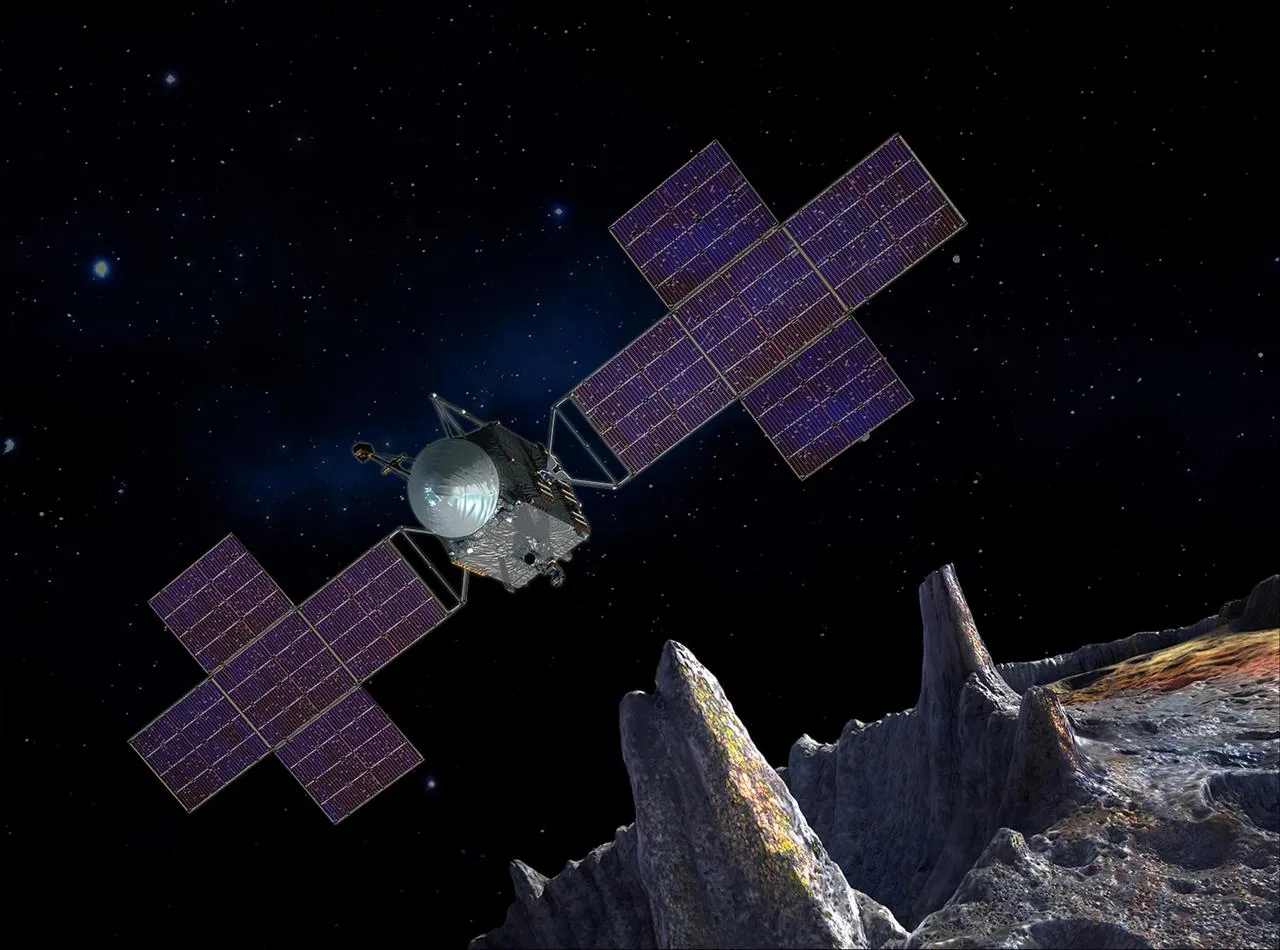
TransAstra, founded by Joel Sercel, a veteran of NASA's Jet Propulsion Laboratory, takes a different approach. Instead of targeting precious metals for return to Earth, TransAstra focuses on extracting water from asteroids for use in space. Their concept, called optical mining, uses concentrated sunlight to heat asteroid surfaces and liberate water vapor, which is then captured and stored.
The logic is compelling. Water in space is extraordinarily expensive when launched from Earth, roughly $10,000 to $50,000 per kilogram depending on the destination. Water extracted from an asteroid near its point of use could be orders of magnitude cheaper. TransAstra envisions a space-based economy where propellant depots, supplied by asteroid-derived water, enable cheaper and more flexible transportation throughout the inner solar system.
TransAstra has received NASA funding through the Innovative Advanced Concepts (NIAC) program and Small Business Innovation Research (SBIR) contracts, and is developing the Worker Bee spacecraft platform for asteroid prospecting and resource extraction. The company's approach may lack the headline-grabbing appeal of mining platinum in space, but the economics of in-space water supply could prove more immediately viable than precious metal extraction.
The Legal Framework: Who Owns an Asteroid?
Any serious discussion of asteroid mining must address the legal question: who has the right to extract and sell resources from celestial bodies? The answer, while not perfectly settled, is clearer than many people assume.
The U.S. Commercial Space Launch Competitiveness Act of 2015, commonly known as the Space Resource Act, explicitly grants U.S. citizens and companies the right to own, transport, use, and sell resources extracted from asteroids and other celestial bodies. The law does not claim sovereignty over the asteroids themselves, which would violate the 1967 Outer Space Treaty, but asserts that the extracted resources are the property of the entity that extracted them.
Luxembourg passed similar legislation in 2017, and the United Arab Emirates followed suit. Japan's legal framework also supports space resource utilization. The Artemis Accords, signed by over 30 nations, include provisions supporting the extraction and use of space resources.
Not everyone agrees. Russia and China have raised objections, arguing that the Space Resource Act conflicts with the common heritage provisions of international space law. The debate echoes the disagreements over deep-sea mining rights that have played out over decades. But the practical reality is that the countries with the most advanced space capabilities have created legal frameworks that support resource extraction, and those frameworks will shape the industry's early development.
The Resource Case: What Is Out There?
The asteroid belt between Mars and Jupiter contains millions of objects, but the most accessible targets for early mining operations are near-Earth asteroids (NEAs), which pass close to our planet and require relatively modest energy to reach.
Over 34,000 NEAs have been cataloged, and surveys suggest the total population of NEAs larger than 10 meters exceeds several million. Among these, carbonaceous (C-type) asteroids are rich in water and organic compounds. Silicaceous (S-type) asteroids contain significant iron, nickel, and magnesium. Metallic (M-type) asteroids are composed primarily of iron and nickel with traces of precious metals.
A single 500-meter metallic asteroid could contain more platinum-group metals than have been mined in all of human history. A water-rich asteroid of similar size could contain enough water to fuel thousands of deep-space missions. The resource base is, for all practical purposes, inexhaustible. The challenge is not finding the resources. It is developing the technology and economics to extract them.
The Realistic Timeline
Asteroid mining will not generate significant revenue in 2025 or 2026. The technology is real but early. The missions flown so far have been demonstrations, not commercial operations. The supply chains for building, launching, and operating mining spacecraft do not yet exist at scale.
A realistic timeline looks something like this: prospecting missions through the mid-2020s, initial extraction demonstrations in the late 2020s, and the first commercially viable operations in the early to mid-2030s. Water extraction for in-space use may come first because the customer base, spacecraft operators who need propellant, is already in orbit. Precious metal extraction for terrestrial markets will take longer because the economics require either dramatic reductions in mission costs or the discovery of particularly rich and accessible targets.
Why It Matters
Asteroid mining matters not because of the speculative dollar values attached to metallic asteroids but because of what accessible space resources enable. A civilization that can access resources in space does not need to launch everything from Earth's deep gravity well. Propellant from asteroids makes Mars missions cheaper. Metals from asteroids can be used to build structures in orbit without the expense of launching raw materials. Water from asteroids supports human habitation beyond Earth.
The first wave of asteroid mining companies may succeed or fail. The specific startups active today may not be the ones that eventually dominate the industry. But the fundamental proposition, that the solar system contains resources worth accessing and that the technology to access them is within reach, is no longer speculative. The samples are in laboratories. The spacecraft are in development. The legal frameworks are in place. Asteroid mining is not science fiction anymore. It is an industry in its infancy, waiting for the right combination of technology, capital, and ambition to grow up.