On September 24, 2023, a capsule the size of a car tire blazed through Earth's atmosphere at nearly 28,000 miles per hour, slammed into the Utah desert, and delivered the most precious cargo in the history of planetary science. Inside that capsule were 121.6 grams of pristine material from asteroid Bennu -- rocks and dust that had not been touched, weathered, or contaminated by any process since the earliest days of our solar system, over 4.5 billion years ago.
The OSIRIS-REx mission had done what once seemed impossible. It had traveled to a near-Earth asteroid, mapped it in extraordinary detail, grabbed a sample from its surface, and brought it home. And what scientists have found inside those samples is nothing short of revelatory.
Seven Years in the Making
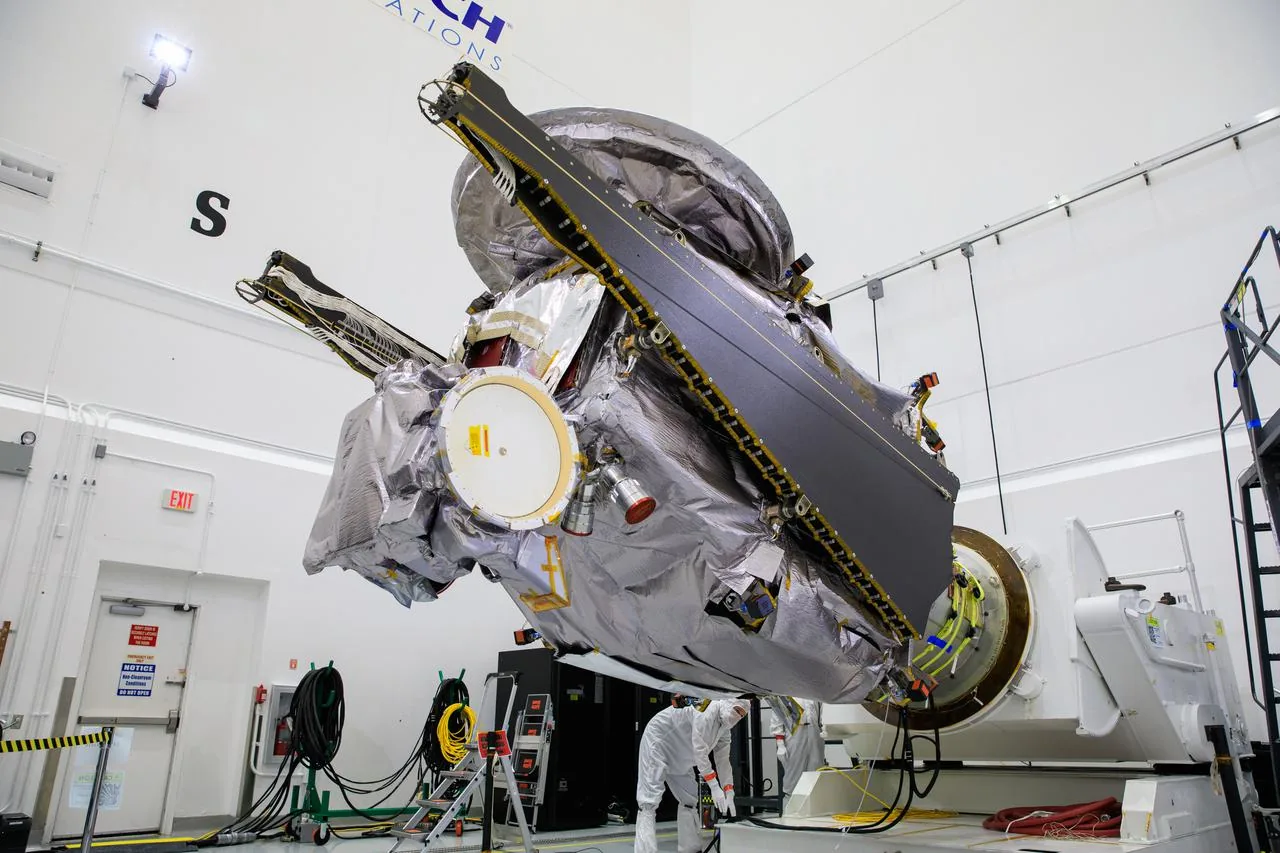
Let me take you back to the beginning, because the scale of this achievement deserves context. OSIRIS-REx (Origins, Spectral Interpretation, Resource Identification, and Security-Regolith Explorer -- NASA does love a good acronym) launched on September 8, 2016, from Cape Canaveral. It arrived at Bennu in December 2018, and for nearly two years it orbited and studied the asteroid before attempting its daring sample collection.
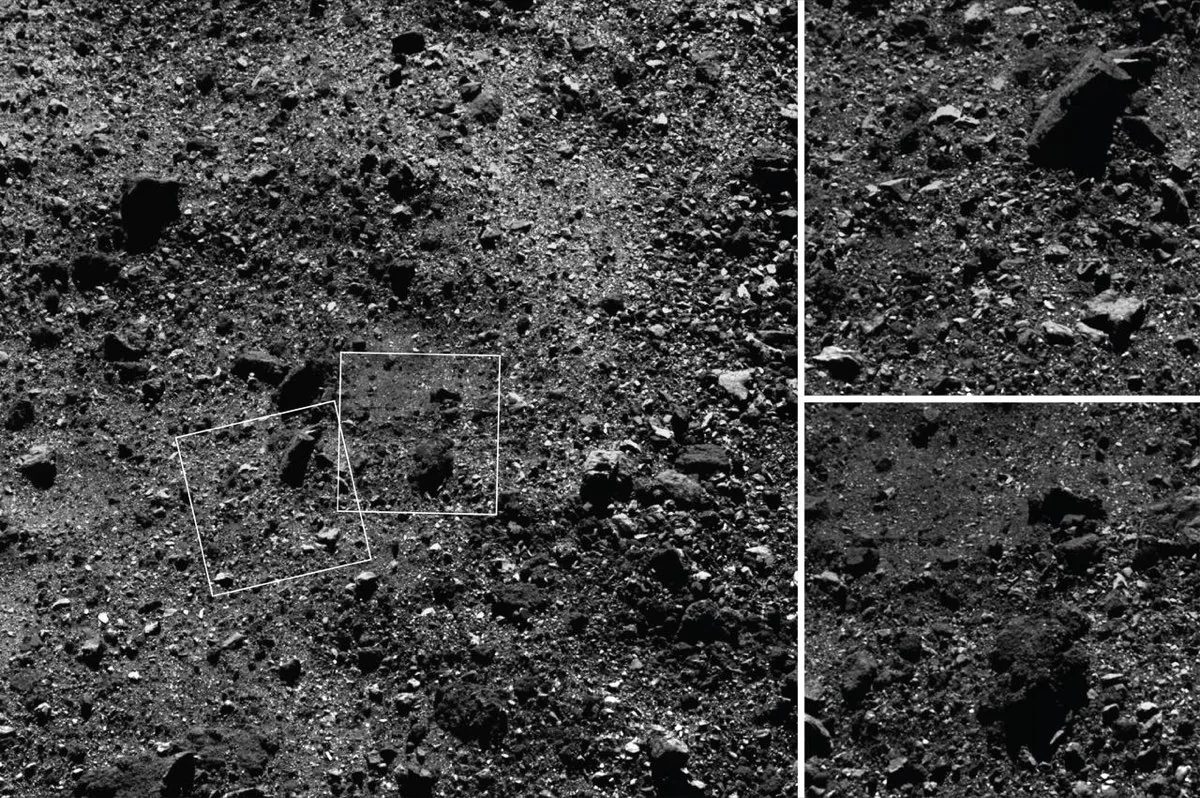
Bennu is tiny by cosmic standards -- about 500 meters across, roughly the size of the Empire State Building if you turned it on its side. It is a rubble pile asteroid, meaning it is not a single solid rock but rather a loose collection of boulders, pebbles, and fine-grained material held together by its own feeble gravity. When OSIRIS-REx arrived and sent back its first close-up images, the science team was stunned. They had expected a relatively smooth surface with plenty of easy spots to grab a sample. Instead, they found a rugged landscape strewn with hazardous boulders.
The team adapted. They selected a site called Nightingale, a small crater near Bennu's north pole, and on October 20, 2020, they executed the Touch-And-Go (TAG) maneuver. The spacecraft descended, extended its sampling arm, touched the surface for about six seconds, and fired a burst of nitrogen gas to stir up material and funnel it into the collection chamber. When the team saw the images afterward, they knew it had worked spectacularly -- the arm had sunk nearly half a meter into Bennu's surface, and so much material was collected that the chamber's lid could not fully close. Particles were visibly leaking out into space.
They had planned to collect at least 60 grams. They got 121.6 grams -- more than double the minimum requirement.
Opening Pandora's Box (Very, Very Carefully)
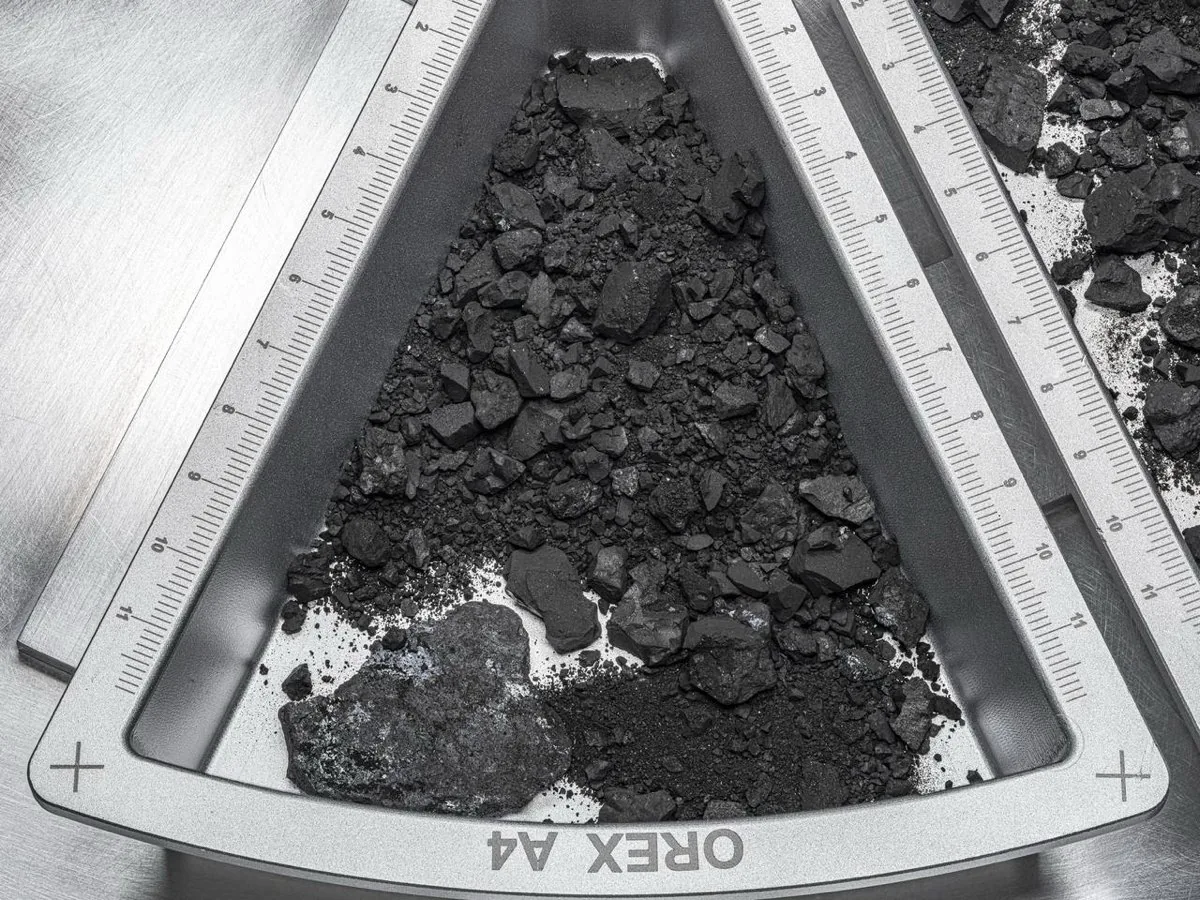
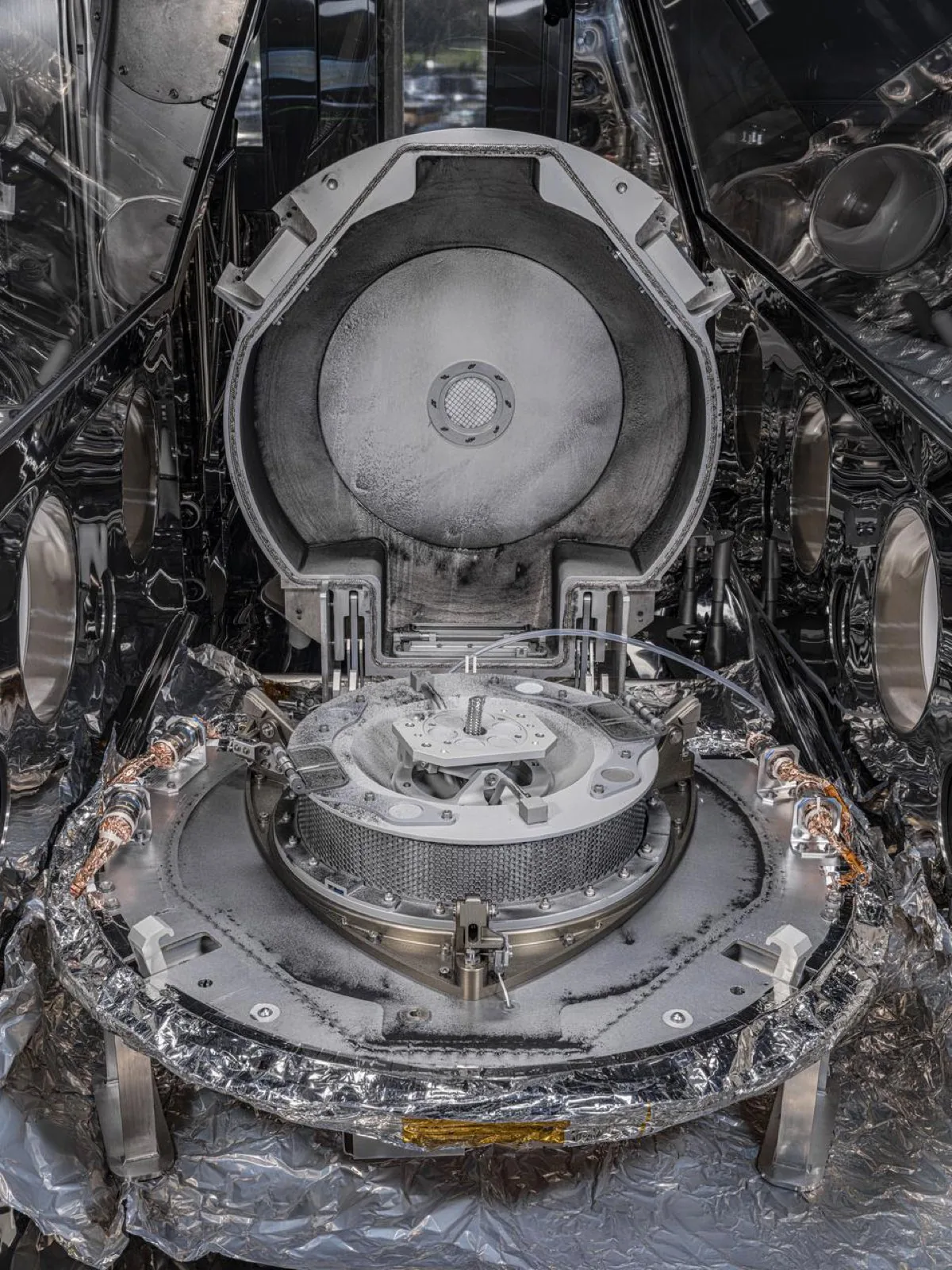
When the sample return capsule landed in Utah in September 2023, a recovery team in clean-room suits rushed to secure it. The canister was transported to NASA's Johnson Space Center in Houston, where a dedicated curation facility had been built specifically for this moment. The room is cleaner than an operating theater, filled with nitrogen gas instead of regular air to prevent any contamination from Earth's atmosphere.
Opening the canister was a painstaking process that took weeks. The initial external material -- fine-grained dust clinging to the outside of the sample collection mechanism -- was analyzed first and immediately produced stunning results. But the main event was getting the primary sample container open. A pair of stubborn fasteners delayed the full opening until early 2024, requiring engineers to design custom tools that could work within the ultra-clean glovebox environment.
The wait was worth it.
Amino Acids: The Building Blocks of Life
Perhaps the most headline-grabbing discovery was the detection of amino acids in the Bennu samples. Amino acids are the molecular building blocks of proteins, which in turn are the workhorses of all known biology. Scientists found multiple types of amino acids in the sample material, confirming what had long been suspected from studies of meteorites but never before demonstrated from a pristine, uncontaminated extraterrestrial sample.
Why does the pristine part matter so much? Because meteorites fall through Earth's atmosphere and land on our planet's surface, where they are immediately exposed to terrestrial biology. Every meteorite ever studied has been contaminated to some degree by earthly amino acids. Scientists have always had to ask: are the amino acids we detect truly extraterrestrial, or are they stowaways from our own biosphere?
With the Bennu samples, that question is answered definitively. These amino acids formed in space, on an asteroid, through purely chemical processes -- no biology required. They are proof that the universe is capable of manufacturing the fundamental ingredients of life in environments that have nothing to do with Earth.
Water-Bearing Minerals: An Asteroid Soaked in History
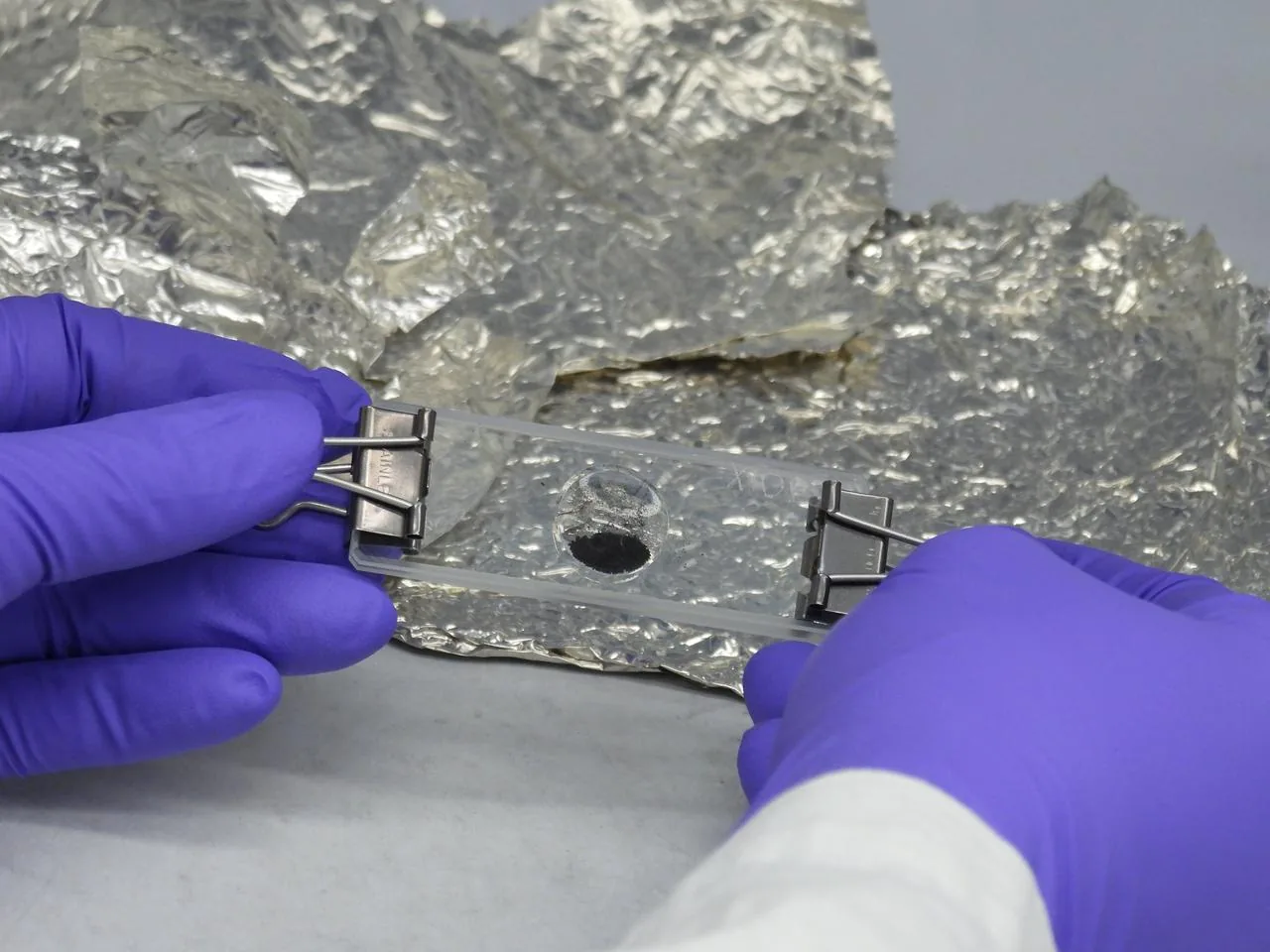
The Bennu samples turned out to be rich in hydrated minerals -- clay minerals and other compounds that contain water molecules locked into their crystal structures. These minerals tell a dramatic story. Bennu, or rather the much larger parent body from which Bennu's rubble originated, once had liquid water flowing through its rocks. The water interacted with the rocky material, altering the original minerals and creating the clays and carbonates that now dominate the sample.
This aqueous alteration happened billions of years ago, likely within the first ten million years of the solar system's history. The parent body was large enough to retain internal heat from the decay of radioactive isotopes, and that heat melted ice within the body, creating a warm, wet interior where water and rock chemistry could play out over thousands or millions of years.
Think about that for a moment. The material in your hand -- or rather, in the Houston clean room -- was once part of a wet, chemically active environment older than any rock on Earth's surface. We are literally holding fragments of the solar system's infancy.
Carbon-Rich Composition: A Cosmic Time Capsule
Bennu belongs to a class of asteroids known as carbonaceous or C-type asteroids, and the samples confirmed just how carbon-rich this material is. The carbon content is among the highest ever measured in an extraterrestrial sample, and it comes in a variety of forms: organic molecules, carbonate minerals, and even more complex carbon compounds that scientists are still working to fully characterize.
The carbon is not just abundant -- it is diverse. The organic inventory includes compounds that span a wide range of molecular weights and structures. Some are simple molecules that form readily in space. Others are more complex, hinting at the kind of prebiotic chemistry that could have seeded a young planet with the raw materials for life.
This is the heart of why the OSIRIS-REx mission matters. Bennu's material is a time capsule from the epoch when the solar system was forming. The asteroid has preserved a chemical record that has been erased from every planet, every moon, and every other large body in our neighborhood. Planets melt, differentiate, get bombarded, develop atmospheres, and recycle their surfaces. Asteroids like Bennu just sit there, quietly preserving the original recipe.
Implications for the Origin of Life
The combination of amino acids, water-bearing minerals, and abundant organic carbon in the Bennu samples supports a hypothesis that has been gaining ground for decades: that asteroids and comets delivered essential prebiotic materials to the early Earth, seeding our planet with the chemical toolkit needed for life to emerge.
Earth's first few hundred million years were a violent time. The planet was repeatedly struck by massive impactors during the Late Heavy Bombardment period. For a long time, scientists viewed these impacts purely as destructive events. But the Bennu findings reinforce the idea that many of those impactors were themselves rich in organics and water. Every collision was also a delivery -- a cosmic care package containing amino acids, water, and carbon compounds that accumulated on Earth's surface and in its oceans.
This does not mean that asteroids "brought life" to Earth. What it means is that asteroids brought ingredients. Life's emergence still required the right conditions, the right energy sources, and the right sequence of chemical reactions. But the Bennu samples show us that the universe is remarkably generous in providing the starting materials.
What Happens Next
The 121.6 grams of Bennu material will keep scientists busy for generations. NASA has distributed portions to research teams around the world, and the bulk of the sample is being preserved for future study using analytical techniques that have not yet been invented. This is standard practice for sample return missions -- NASA still has Apollo lunar samples under lock and key, and modern instruments continue to extract new discoveries from them decades later.
Meanwhile, the spacecraft itself has been renamed OSIRIS-APEX and is now on its way to asteroid Apophis, which will make a remarkably close flyby of Earth in April 2029 -- passing within just 20,000 miles of our planet's surface, closer than our geostationary satellites. OSIRIS-APEX will study how that close encounter changes Apophis, giving us valuable data for planetary defense.
But the legacy of the Bennu samples will be the enduring story. In those 121.6 grams of ancient asteroid dust, we have found water, amino acids, and a carbon-rich chemistry that speaks directly to the question of how life began. We went to Bennu looking for our origins, and in a very real sense, we found them.
The solar system's oldest material is now in our hands. And it is telling us that the story of life on Earth is not just an Earth story -- it is a cosmic one.