What if we could harvest solar energy where the Sun never sets, the sky is never cloudy, and the collector faces the full unfiltered power of sunlight 24 hours a day? What if we could then beam that energy down to Earth, providing clean, baseload electricity to any point on the globe?
This is not a thought experiment from a physicist's daydream. It is a concept that has been studied since the 1960s, validated by laboratory experiments, demonstrated in orbit, and is now the subject of active development programs by space agencies in Europe, Japan, and the United States. Space-based solar power may be the most transformative energy technology that almost nobody outside the space industry has heard of.
The Basic Concept
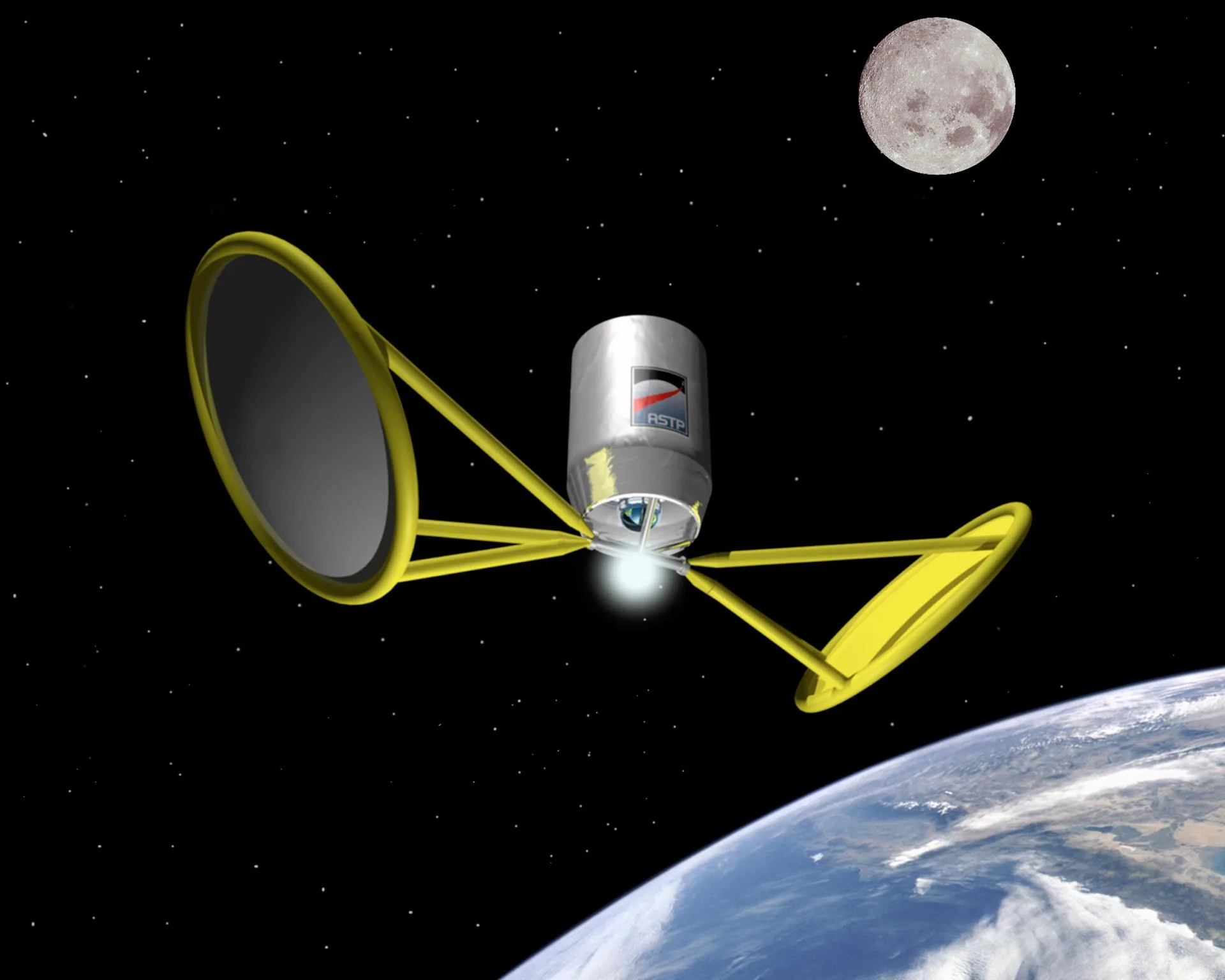
A space-based solar power (SBSP) system consists of three components: a solar energy collector in orbit, a wireless power transmission system, and a ground-based receiver.
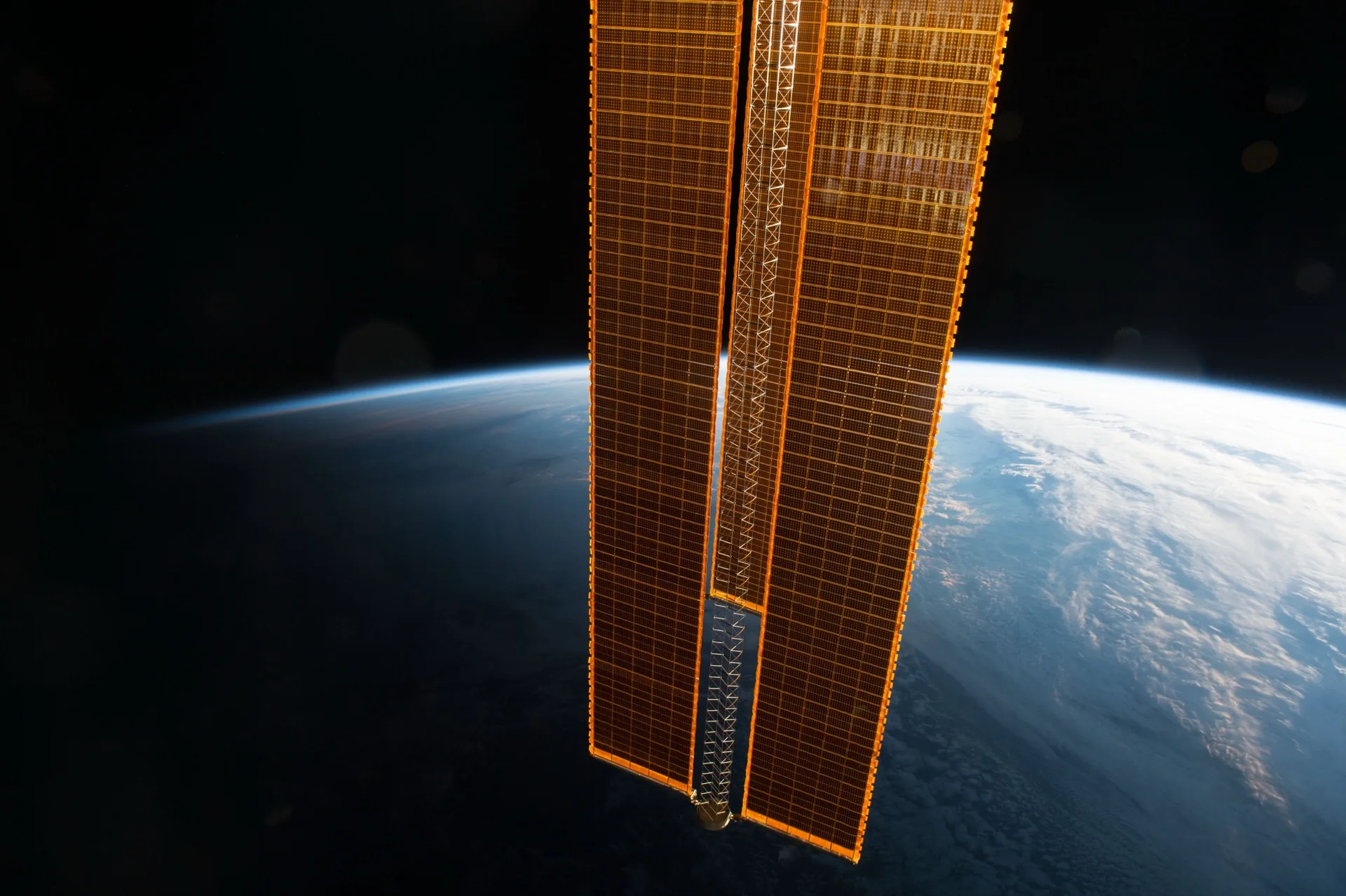
The collector is essentially a very large solar array positioned in geostationary orbit (GEO), 35,786 kilometers above the equator. At this altitude, the satellite orbits in sync with Earth's rotation, staying fixed over the same point on the ground. In GEO, the satellite experiences sunlight for more than 99% of the year -- the only interruptions are brief eclipse periods around the equinoxes when Earth's shadow crosses the orbital plane.
The sunlight in GEO is about 36% more intense than at Earth's surface on a clear day, because there is no atmospheric absorption or scattering. Combined with the near-continuous illumination, an SBSP satellite receives roughly 5 to 10 times more solar energy per unit area per year than a ground-based solar panel in a sunny location.
The collected energy is converted to microwaves (or, in some designs, laser light) and transmitted in a focused beam to a ground-based receiving station called a rectenna -- a rectifying antenna that converts microwave energy back into electricity. The rectenna would be a large array of small antennas, potentially several kilometers in diameter, but unlike solar farms, it could be largely transparent to sunlight and rainfall, allowing agriculture or other land uses underneath.
Why Microwaves?
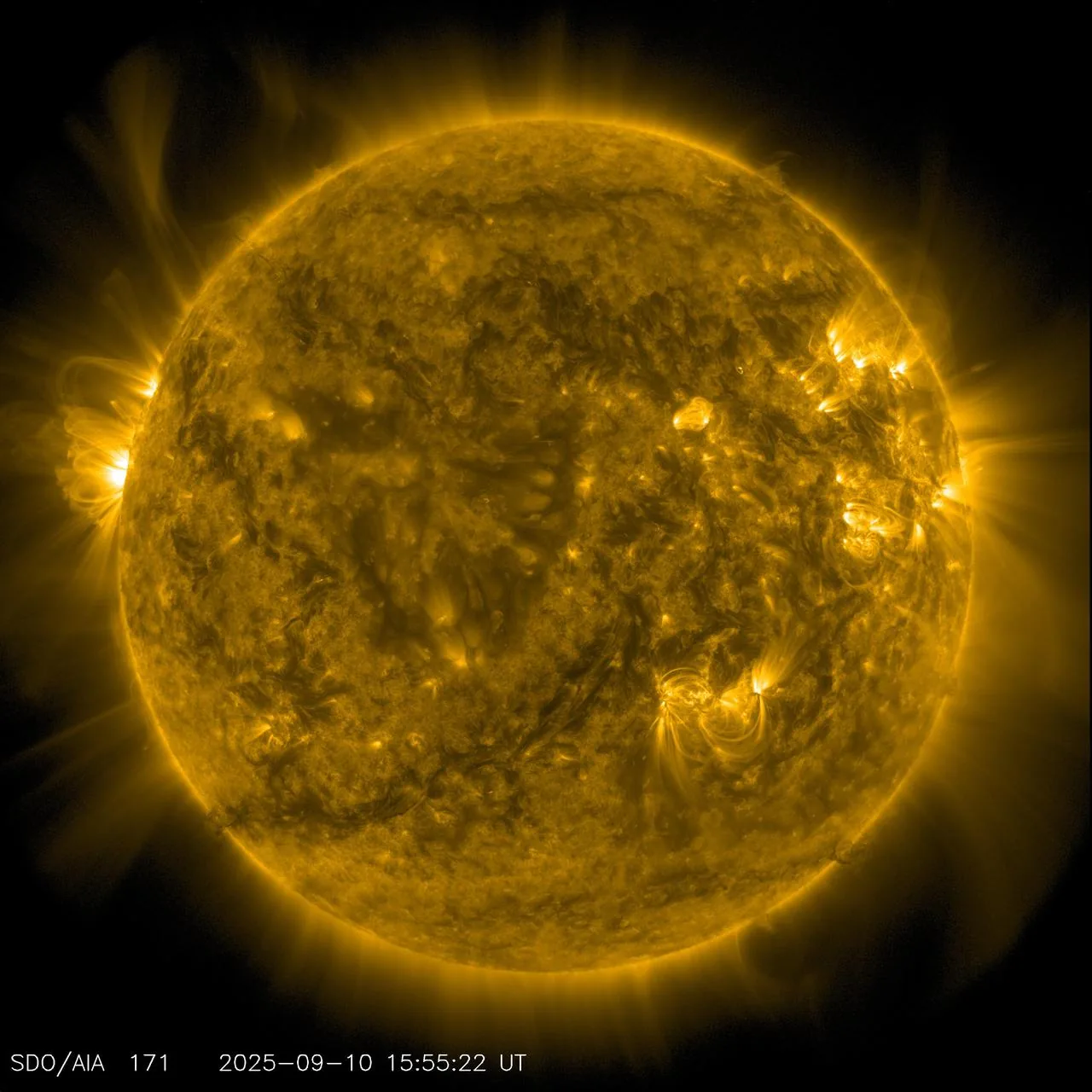
The choice of microwave transmission is not arbitrary. Microwaves at frequencies around 2.45 GHz or 5.8 GHz pass through Earth's atmosphere with minimal absorption, even through clouds, rain, and fog. This is the critical advantage over simply building more ground solar -- SBSP provides consistent power regardless of weather, time of day, or season.
The microwave beam would be low-intensity by design. At the center of the rectenna, the power density would be roughly comparable to the intensity of sunlight -- perceptible as warmth but not dangerous. Outside the rectenna, intensity drops rapidly. Birds could fly through the beam without harm. This is not a death ray; it is a very large, very gentle shower of radio waves.
Laser-based transmission offers the advantage of smaller collector and receiver footprints but is more susceptible to atmospheric interference and raises more severe safety concerns. Most serious SBSP designs favor microwaves.
Caltech's SSPD-1: It Actually Works
In January 2023, the California Institute of Technology launched the Space Solar Power Demonstrator (SSPD-1) aboard a SpaceX Falcon 9 rocket. This small satellite carried three experimental payloads, and in June 2023, one of them -- the Microwave Array for Power-transfer Low-orbit Experiment (MAPLE) -- successfully transmitted power wirelessly from orbit to a receiver on the roof of Caltech's Gordon and Betty Moore Laboratory in Pasadena.
The power level was tiny -- enough to light an LED, not a city. But the significance was enormous. SSPD-1 demonstrated that wireless power transmission from space to a specific point on Earth's surface is not merely theoretical. It works. The physics holds up. The engineering, at small scale, is validated.
SSPD-1 also tested deployable ultralight solar cell structures and various photovoltaic technologies in the space environment. The mission was funded by a $100 million donation from Donald Bren, chairman of Irvine Company, making it one of the largest privately funded space research initiatives ever.
ESA's Solaris Program
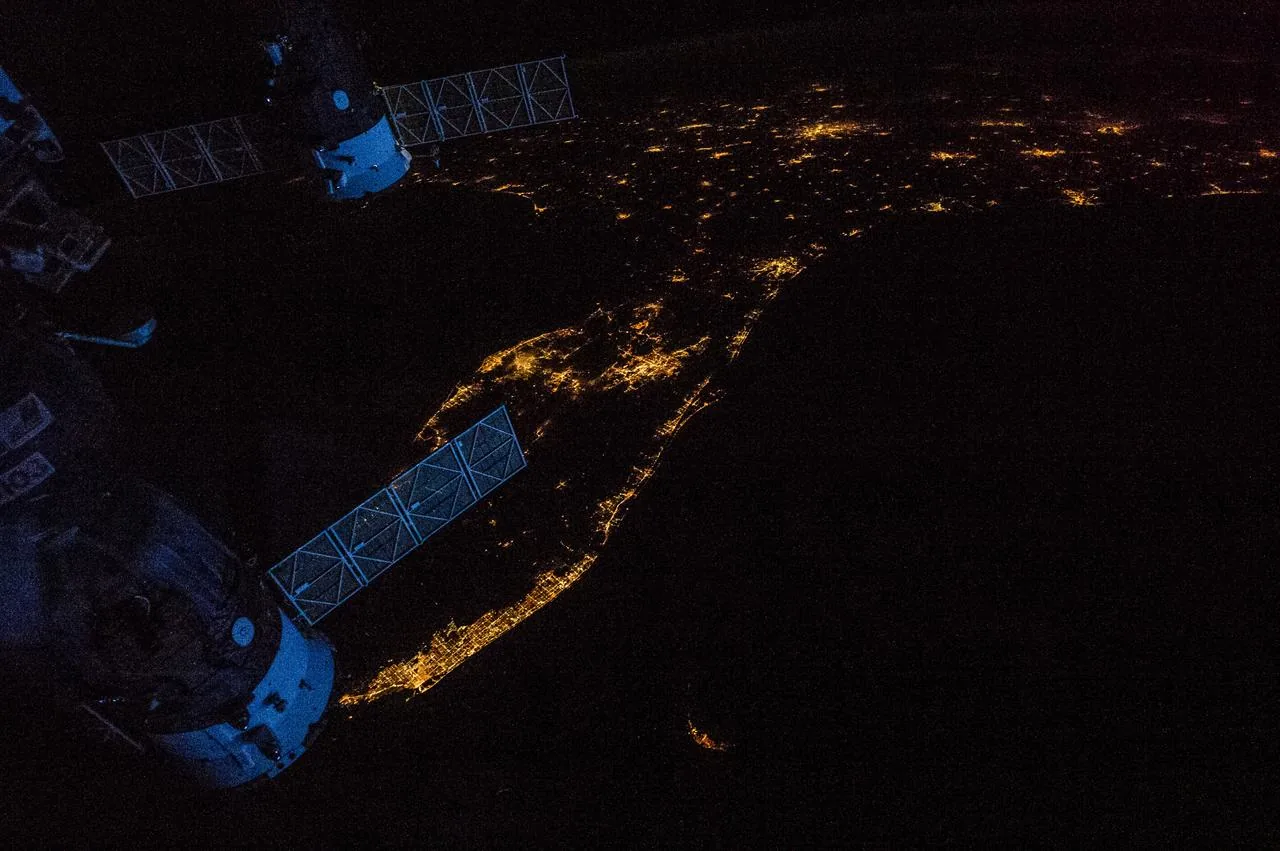
The European Space Agency has been perhaps the most systematic in its approach to SBSP. In 2022, ESA launched the Solaris program, a preparatory initiative to study the feasibility of space-based solar power and decide, by 2025, whether to commit to a full development program.
Solaris has funded studies on system architecture, environmental impact, wireless power transmission safety, and economic viability. ESA's preliminary analysis suggests that a single SBSP satellite in GEO could deliver 1-2 gigawatts of continuous power -- equivalent to a large nuclear power plant -- with a rectenna footprint of about 5 by 10 kilometers.
ESA has framed SBSP as a potential contributor to European energy independence and climate targets. The argument is straightforward: Europe's northern latitudes receive relatively weak and seasonal sunlight, making ground solar less effective than in equatorial regions. SBSP could provide baseload clean energy to northern European cities with the same consistency as a gas turbine plant but with zero emissions.
JAXA's Long Road
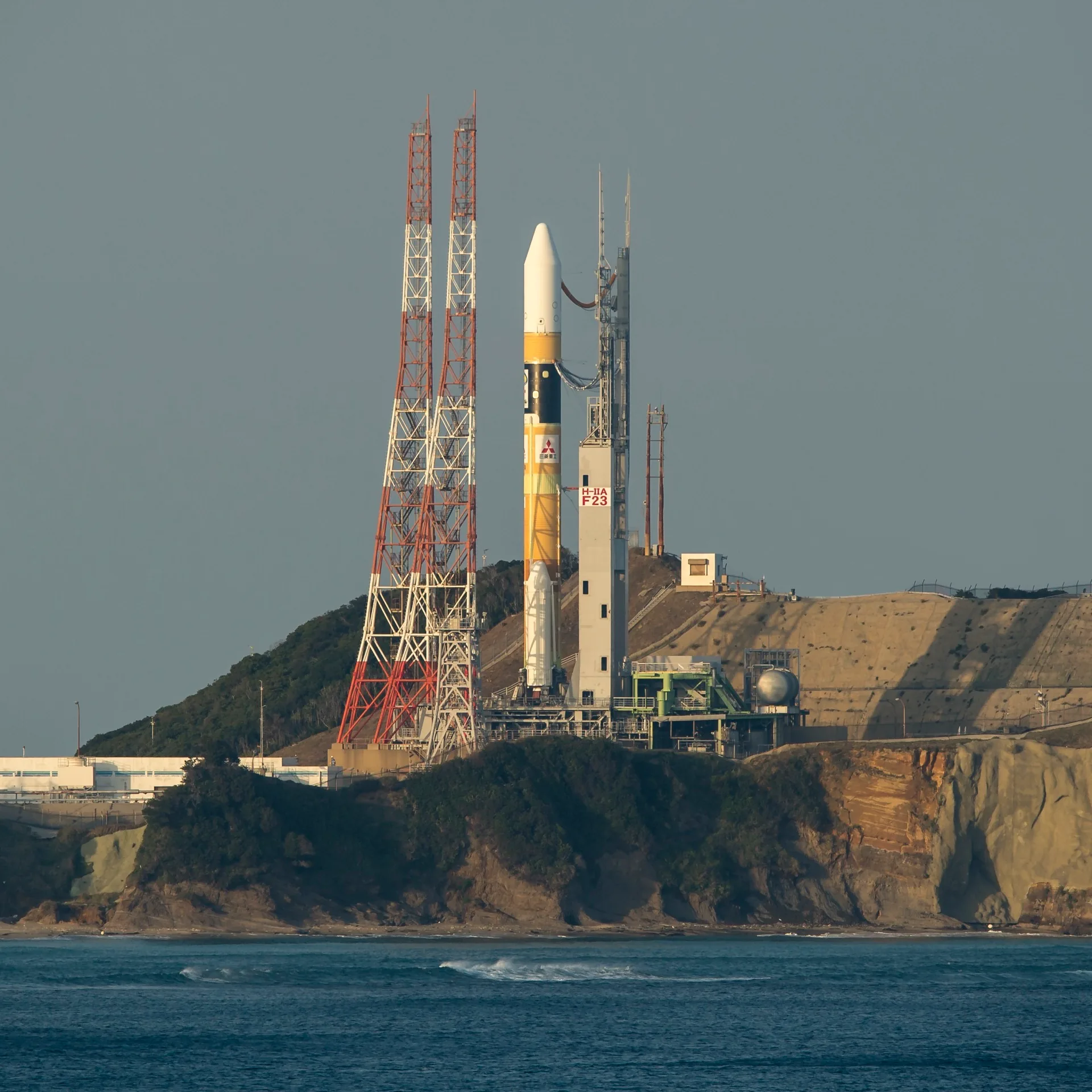
Japan's space agency, JAXA, has been studying SBSP longer than anyone. Japanese researchers have been working on wireless power transmission technology since the 1980s, and JAXA has conducted numerous ground-based demonstrations of microwave power beaming over increasing distances.
JAXA's roadmap envisions a commercial SBSP system by the 2030s-2040s, starting with a 1-megawatt demonstrator and scaling to gigawatt-class systems. In 2015, Japan's Mitsubishi Heavy Industries demonstrated the transmission of 10 kilowatts of power over 500 meters using microwaves -- a ground-based test, but at power levels relevant to practical applications.
Japan's interest in SBSP is driven partly by energy security concerns. An island nation with limited fossil fuel resources and a complex relationship with nuclear power after Fukushima, Japan has strong incentives to pursue energy sources that do not depend on imports or seismic stability.
The Cost Challenge
Here is where SBSP skeptics sharpen their pencils, and they have legitimate points.
Current estimates for a gigawatt-class SBSP system range from tens of billions to over a hundred billion dollars. The system requires launching thousands of tons of solar arrays and transmission equipment to GEO. Even with SpaceX's Starship dramatically reducing launch costs, the initial capital investment is staggering.
Meanwhile, ground-based solar and wind power costs have plummeted. Utility-scale solar in 2024 costs roughly $20-30 per megawatt-hour in favorable locations, and it continues to fall. Battery storage costs are declining in parallel. Why build an enormously expensive orbital system when you can carpet deserts with cheap panels?
The SBSP counter-argument rests on several points. First, SBSP provides baseload power -- continuous, 24/7 electricity that does not require storage. Battery storage at grid scale for multi-day weather events remains expensive and resource-intensive. Second, SBSP can deliver power to any point on Earth, including regions with poor solar resources, conflict zones, disaster areas, or remote island nations. Third, SBSP's environmental footprint may be smaller than the vast land areas required for equivalent ground solar and wind installations.
The most honest assessment is that SBSP is not competitive with ground solar today, and may not be for decades. Its economic case depends on continued reduction in launch costs (Starship could be transformative here), advances in lightweight solar cell technology, and the maturation of in-space assembly robotics. If launch costs drop below $100 per kilogram and automated orbital assembly becomes routine, SBSP economics change dramatically.
The Airbus and UK Connection
In 2022, Airbus unveiled a concept called SOLARIS (distinct from ESA's program of the same name) for a space-based solar power satellite that would beam energy to ground rectennas using microwaves. The UK government has also invested in SBSP feasibility studies, with a 2021 report by the Frazer-Nash Consultancy concluding that SBSP could be cost-competitive with other clean energy sources by 2040-2050, given achievable advances in launch costs and solar cell efficiency.
The UK's interest is strategic. As a northern, cloudy island nation transitioning away from fossil fuels, Britain faces the same seasonal solar challenge as the rest of northern Europe. SBSP offers a path to clean energy independence that does not depend on favorable geography.
What Needs to Happen
For SBSP to move from demonstration to deployment, several things need to converge:
Launch costs must continue falling. The single biggest cost driver is getting hardware to GEO. Starship, New Glenn, and future fully reusable heavy-lift vehicles are essential enablers.
In-space assembly must mature. A gigawatt-class SBSP satellite would be kilometers across. It cannot be launched as a single unit. Robotic assembly in orbit -- deploying, connecting, and maintaining thousands of modular solar panels and transmitter elements -- must become routine.
Lightweight solar cells must improve. Current space-rated solar cells are efficient but heavy. Perovskite and other thin-film technologies promise dramatic weight reductions, which translate directly into reduced launch costs.
Regulatory frameworks must develop. SBSP involves transmitting gigawatts of microwave energy through the atmosphere. International agreements on spectrum allocation, beam safety standards, and orbital slot management are prerequisites for commercial deployment.
The Bigger Picture
Space-based solar power sits at a fascinating intersection of energy policy, space technology, and climate action. It is not a silver bullet -- no single technology is. But it addresses specific limitations of ground-based renewables (intermittency, geographic dependence, land use) in a way that no other technology can.
The 2023 Caltech demonstration proved the concept works. ESA, JAXA, and multiple governments are investing real money. The remaining challenges are economic and engineering, not physical. If launch costs follow their current downward trajectory and in-space manufacturing matures as expected, the first commercial SBSP satellite could be operational within the 2040s.
The Sun pours roughly 3.8 x 10^26 watts of energy into space every second. Earth intercepts less than a billionth of that. Capturing even a tiny additional fraction from orbit and beaming it to where it is needed could reshape the global energy landscape. The Sun has been broadcasting free, clean energy for 4.6 billion years. It is about time we tuned in from a better vantage point.