Image: NASA
Apollo 9
Mission Profile
| Launch date | 1969-03-03 |
|---|---|
| Launch site | Kennedy Space Center LC-39A |
| Launch vehicle | Saturn V (AS-504) |
| Spacecraft | Gumdrop (CSM-104) + Spider (LM-3) |
| Target | Low Earth Orbit |
| Type | Crewed |
| End date | 1969-03-13 |
| Recovery | USS Guadalcanal, Atlantic Ocean |
| Mass | Apollo CSM+LM stack ~41 t in LEO configuration |
| Duration | 10 days, 1 hour, 1 minute |
| Partners | NASA Manned Spacecraft Center, North American Rockwell (CSM), Grumman (LM), ILC Dover (A7L suit) |
Overview
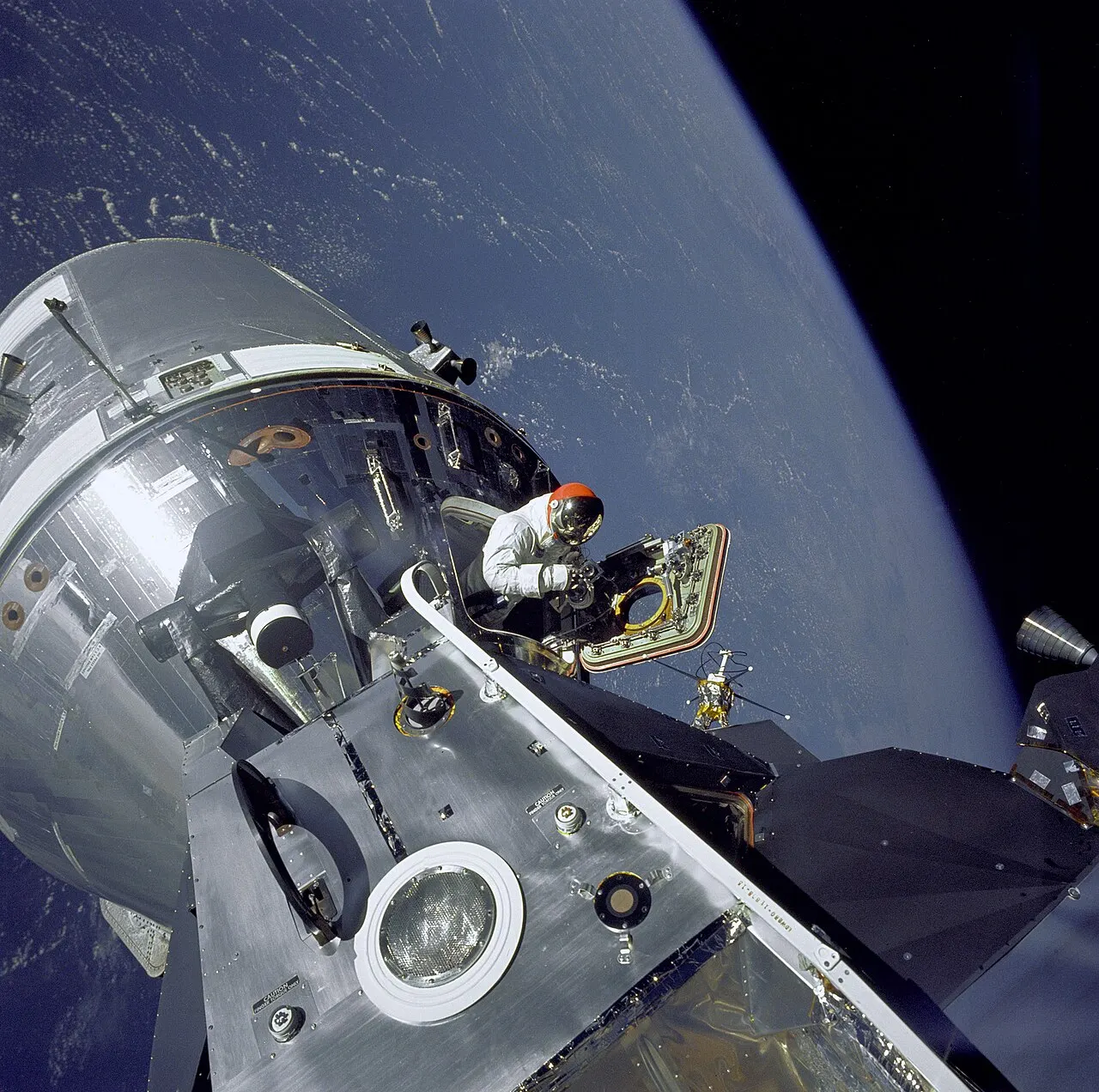
Apollo 9 was the first crewed flight of the Lunar Module — the make-or-break shakedown of the machine that would land humans on the Moon four months later. Over ten days in Earth orbit, Commander Jim McDivitt, Command Module Pilot David Scott, and Lunar Module Pilot Rusty Schweickart put the complete lunar mission stack through every maneuver short of an actual landing: transposition and docking, LM extraction from the S-IVB stage, dual-spacecraft flight, and on 7 March a free flight in which McDivitt and Schweickart took Spider more than 100 miles from Gumdrop — flying a spacecraft that could not return them to Earth — before staging the ascent engine and completing the rendezvous and docking that every lunar crew's life would depend on. Schweickart's EVA on the porch of the LM was the first spacewalk to rely entirely on the self-contained Portable Life Support System backpack rather than an umbilical, qualifying the suit that would walk on the Moon. The mission returned to an Atlantic splashdown on 13 March 1969 with every major objective achieved, clearing the path for Apollo 10's dress rehearsal and Apollo 11's landing.
Crew
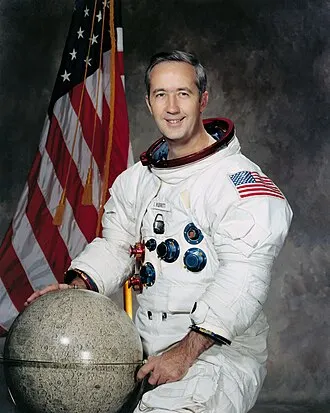
Jim McDivitt
Commander
Second flight; flew Spider with Schweickart on the LM's first crewed free flight.
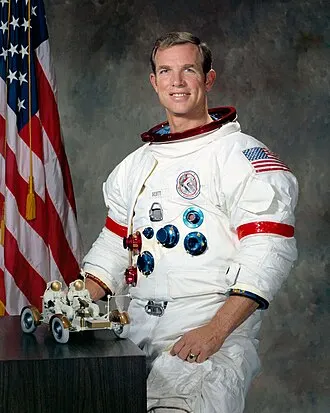
David Scott
Command Module Pilot
Second flight; later commanded Apollo 15.
Rusty Schweickart
Lunar Module Pilot
First flight; performed the first EVA on self-contained life support.
Key Milestones
1969-03-03
Saturn V launch from KSC LC-39A
1969-03-03
Transposition, docking, and LM extraction — first crewed CSM/LM docking
1969-03-06
Schweickart EVA tests the Apollo PLSS suit in free space
1969-03-07
Spider free flight to 111 miles separation; ascent-stage rendezvous and re-docking
1969-03-13
Splashdown in the Atlantic; recovery by USS Guadalcanal
Key Achievements
First crewed flight of the Lunar Module
First crewed docking and crew transfer between two spacecraft built for the lunar mission
First EVA on a fully self-contained life-support backpack (Apollo PLSS)
Demonstrated LM free flight, staging, rendezvous, and docking — the full lunar-orbit sequence
Qualified the complete Apollo mission stack in Earth orbit
Legacy & Significance
Apollo 9 is the least-remembered of the crewed Apollo flights and among the most consequential: every maneuver a lunar landing crew would stake their lives on — undocking, free flight, staging, rendezvous — was proven here first, in an orbit low enough to come home from if anything failed. The PLSS backpack Schweickart qualified on Spider's porch became the suit system worn on every Apollo moonwalk.