Picture this: a ribbon of material stretching from the equator all the way to geostationary orbit, 35,786 kilometers above Earth. You step into a climber car, press a button, and ride smoothly into space over the course of a few days. No explosive chemical rockets, no crushing g-forces, no million-dollar launch costs. Just a quiet, steady ascent into the cosmos.
It sounds like pure science fiction. And for decades, it was. But the idea of a space elevator has migrated from the pages of speculative novels into serious engineering discussions, academic conferences, and corporate roadmaps. The question is no longer whether the physics works -- it does -- but whether our materials science and political will can catch up to the math.
The Idea That Would Not Die
The concept of a tower reaching into the heavens is ancient, but the modern space elevator traces its lineage to a 1895 paper by Russian scientist Konstantin Tsiolkovsky, who imagined a "celestial castle" at geostationary altitude connected to the ground by a tower. The idea resurfaced in 1960 when another Russian engineer, Yuri Artsutanov, proposed a tensile cable deployed from orbit rather than a compression tower built from the ground up. That insight changed everything.
But the concept truly entered the popular imagination through Arthur C. Clarke's 1979 novel The Fountains of Paradise, in which engineers construct a space elevator off the coast of Sri Lanka. Clarke, never one to let good physics go to waste, championed the idea for the rest of his life. He famously quipped that the space elevator would be built "about 50 years after everyone stops laughing."
Well, people have mostly stopped laughing.
How It Would Actually Work
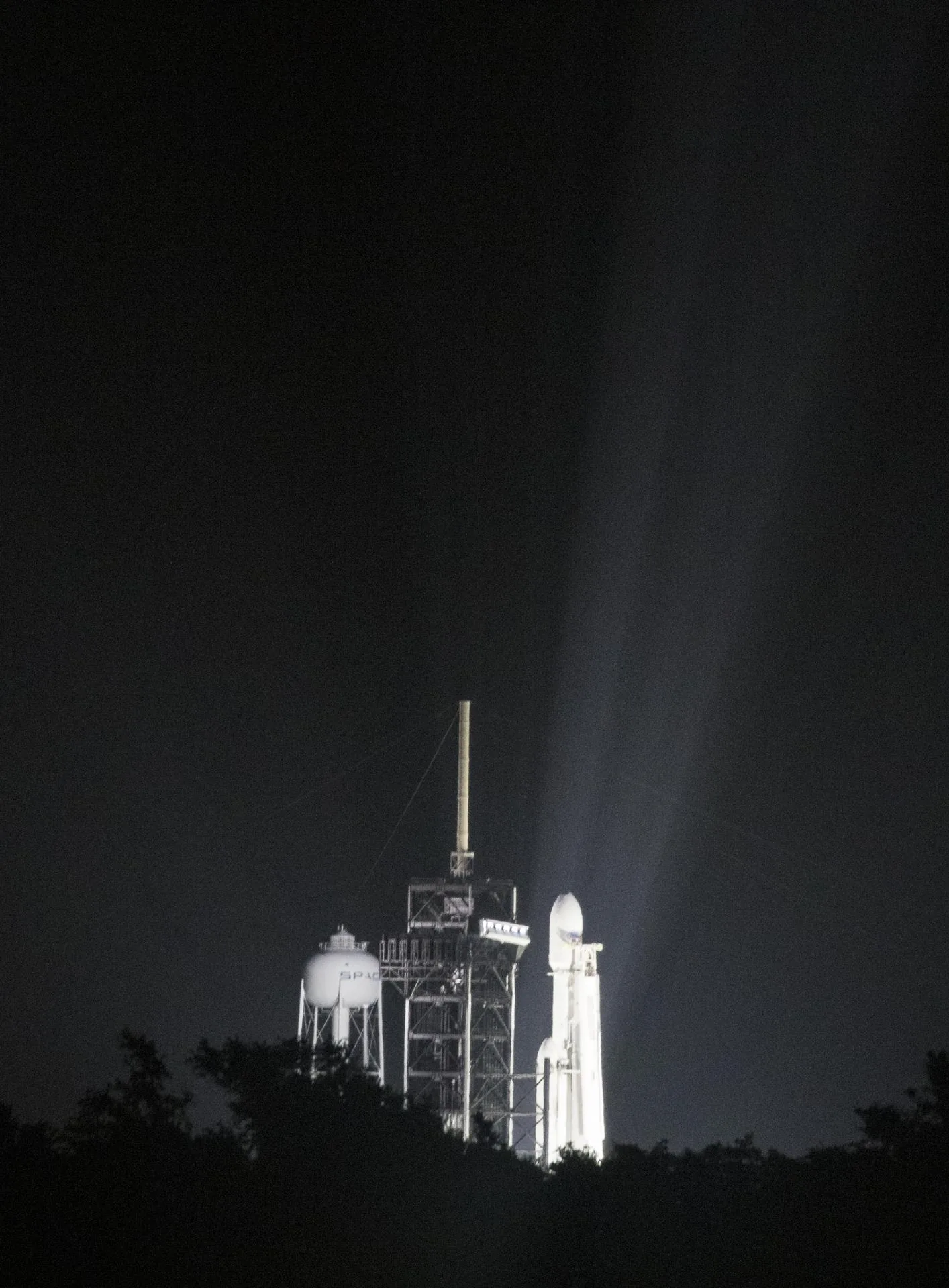
A space elevator is elegantly simple in principle and ferociously difficult in practice. The basic architecture involves a tether anchored at or near the equator, extending upward past geostationary orbit to a counterweight. The center of mass of the entire structure sits at geostationary altitude, where orbital velocity matches Earth's rotation. This means the tether stays taut through a balance of gravitational and centrifugal forces -- the lower portion is pulled down by gravity, the upper portion is flung outward by centrifugal force.
Climber vehicles would ascend the tether using electric motors, powered by ground-based lasers or solar panels. Payloads released at different altitudes would enter different orbits. Release something at geostationary altitude, and it stays in geostationary orbit. Release it higher, and centrifugal force flings it outward -- potentially providing free delta-v for interplanetary missions.
The cost savings would be staggering. Current launch costs on SpaceX's Falcon 9 hover around $2,700 per kilogram to low Earth orbit, a figure already revolutionary compared to the Space Shuttle era. A functioning space elevator could theoretically reduce that to roughly $200 per kilogram or less, largely limited to the energy cost of the climber's ascent. At those prices, the economics of space change fundamentally. Orbital solar power becomes viable. Space tourism becomes middle-class. Space manufacturing becomes competitive with terrestrial factories.
The Carbon Nanotube Problem
Here is where dreams collide with reality. The tether must support its own weight across 35,786 kilometers while withstanding dynamic loads from climbers, wind, and orbital perturbations. No material humanity has ever mass-produced comes close to having the necessary specific strength -- the ratio of tensile strength to density.
Steel fails spectacularly. Kevlar fails. Even high-performance polymers fall short by orders of magnitude. The material that theoretically works is carbon nanotubes (CNTs), which possess a tensile strength of roughly 130 gigapascals and a density of only 1.3 grams per cubic centimeter. Individual nanotubes tested in laboratories have demonstrated the required specific strength.
The problem is that we cannot yet manufacture carbon nanotubes in the lengths and quantities needed. Laboratory CNTs are typically measured in centimeters, occasionally meters. A space elevator tether requires a continuous, defect-free ribbon tens of thousands of kilometers long. Every atomic-scale flaw reduces strength. Scaling up from centimeter-long laboratory samples to a megastructure-grade ribbon remains one of the most daunting materials science challenges in history.
Some researchers have explored alternatives. Graphene ribbons, boron nitride nanotubes, and diamond nanothreads all show theoretical promise. In 2019, researchers in Japan synthesized carbon nanotube bundles with tensile strengths approaching the theoretical limit, but only at microscopic scales. The gap between laboratory proof-of-concept and industrial-scale production remains vast.
Who Is Actually Working on This?
Despite the challenges, several organizations are investing real resources into space elevator research.
The International Space Elevator Consortium (ISEC) has held annual conferences since 2002, bringing together engineers, materials scientists, and policy experts. ISEC publishes technical reports on everything from tether materials to climber design to legal frameworks for a structure that would span multiple national airspaces.
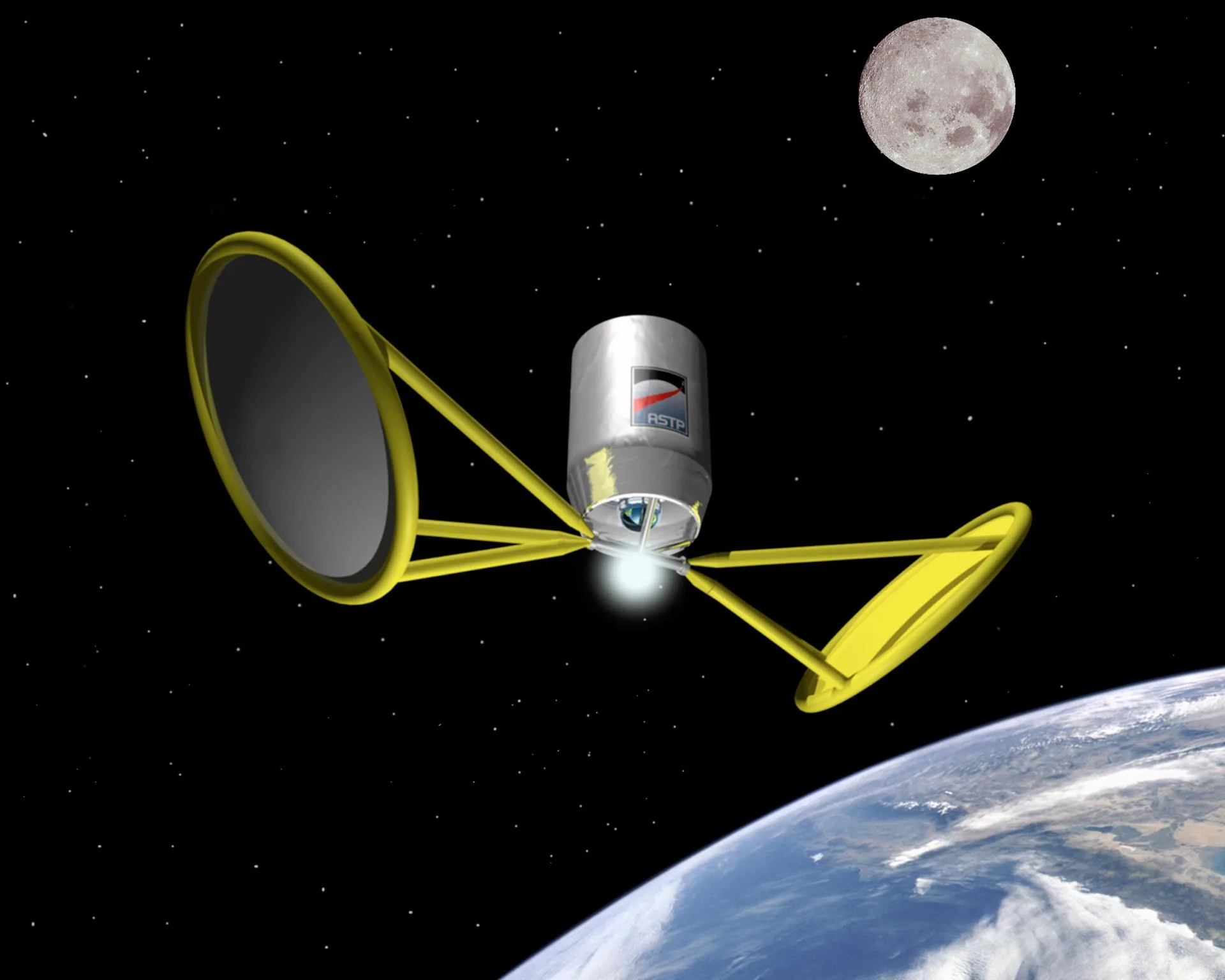
Japan has been particularly serious. The Japan Aerospace Exploration Agency (JAXA) has funded space elevator research for over a decade. In 2018, JAXA launched a small-scale experiment aboard the International Space Station that tested a miniature climber moving along a tether between two small satellites. It was a proof-of-concept at tiny scale, but it demonstrated the basic mechanics in microgravity.
The Obayashi Corporation, one of Japan's largest construction firms, has publicly stated its goal of building a functioning space elevator by 2050. Their design envisions a carbon nanotube cable, six oval-shaped cars carrying up to 30 passengers each, and a journey time of roughly eight days to reach geostationary orbit. Whether 2050 is realistic depends almost entirely on breakthroughs in nanotube manufacturing, but the fact that a major construction company has committed corporate resources and reputation to a public timeline says something about where the engineering community's confidence is heading.
The Lunar Elevator: A Stepping Stone
Here is something that gets less attention but may prove more important in the near term: a space elevator on the Moon would be vastly easier to build than one on Earth.
The Moon's gravity is one-sixth of Earth's, it has no atmosphere (eliminating wind loads and weather concerns), and its slower rotation means the tether length requirements are different. Most compellingly, existing materials -- high-strength polymers like Zylon or Dyneema -- are already strong enough for a lunar space elevator. No carbon nanotubes required.
A lunar elevator could dramatically reduce the cost of moving materials from the lunar surface to orbit, which becomes critical if we are serious about using lunar resources for in-space construction. Several studies, including work published by researchers at Columbia University, have concluded that a lunar space elevator is feasible with current technology. The main barriers are economic and logistical, not materials science.
What Could Go Wrong
The engineering challenges extend well beyond materials. A space elevator tether would be vulnerable to micrometeorite impacts, though modeling suggests that a sufficiently wide ribbon could sustain small punctures without catastrophic failure. Orbital debris is a more serious concern -- the tether would cross the entire orbital environment from LEO through MEO to GEO, intersecting paths with thousands of tracked objects and countless untracked fragments.
Lightning strikes, hurricanes, and atmospheric oscillations would stress the lower portion of the tether. An equatorial ocean platform (Clarke's original suggestion) could mitigate some weather risks while avoiding most territorial disputes, but it adds its own engineering complexity.
And then there is the failure mode. If a space elevator tether were severed, the lower portion would fall to Earth (though it would be lightweight enough to flutter down rather than crash), while the upper portion would fly outward into a higher orbit. The climbers on the tether at the time would face varying fates depending on their altitude. These scenarios are survivable and manageable, but they require careful engineering.
The Verdict: When, Not If
The physics of space elevators is sound. The engineering is challenging but not impossible. The economics are transformative. The main obstacle is a single, specific materials science problem: manufacturing carbon nanotubes (or an equivalent material) at scale with near-theoretical strength.
History suggests that materials science problems, once clearly defined, tend to get solved. The question is whether it takes 20 years or 200. If carbon nanotube production follows a trajectory anything like that of carbon fiber -- which went from laboratory curiosity to aerospace staple in about four decades -- then a space elevator within this century is not unreasonable.
In the meantime, the lunar elevator stands as a nearer-term possibility that could prove the concept and build institutional knowledge. And every advance in nanotube manufacturing, every small-scale tether experiment, every ISEC conference paper brings the idea closer to the boundary between speculation and engineering.
Arthur C. Clarke believed humanity would build a space elevator. The engineers working on the problem today believe it too. The universe, as far as we can tell, has no objection. It is simply waiting for us to weave a thread strong enough to climb.