α Aquilae
Altair
The Eagle's Eye · White main-sequence rapid rotator
At a glance
- Distance
- 16.7 ly
- Constellation
- Aquila
- Type
- A7IV-V
- Apparent magnitude
- 0.76
- Mass
- 1.79 M☉
- Radius
- 2.03 R☉
- Luminosity
- 10.6 L☉
- Surface temp
- 7,550 K
- Age
- 1.2 billion yrs
The story
At just 16.7 light-years away Altair is one of our nearest stellar neighbours and the twelfth brightest star in the night sky, shining white at magnitude 0.76. In 2007 the CHARA Array at Mount Wilson captured the first resolved image of its surface, revealing a visibly oblate disk — the star is noticeably flattened at the poles because it spins at roughly 286 km/s at the equator, completing a full rotation in only about nine hours.
This extreme spin creates a dramatic temperature gradient: the poles are around 8,600 K while the bloated equator sags to about 6,900 K — a phenomenon known as gravity darkening, first confirmed for Altair in 2001. The result is that Altair's polar caps shine more brightly than its equatorial waist. Asteroseismology with TESS data pegs its age at approximately 1.2 billion years.
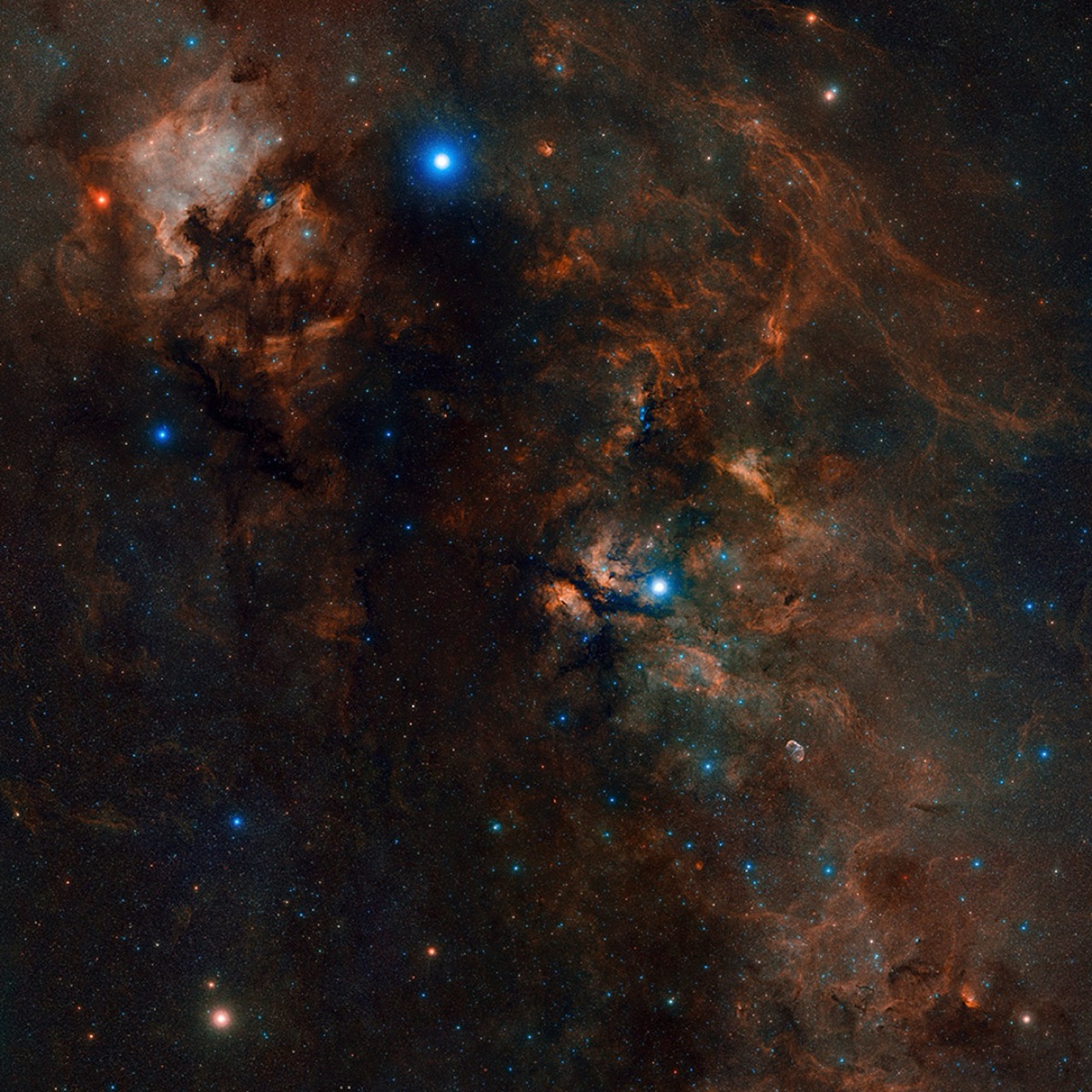
Altair anchors the Summer Triangle alongside Vega and Deneb, and in Japan it is celebrated as Hikoboshi, the Cowherd star, separated from his beloved Vega by the Milky Way in the legend of Tanabata. In ancient Mesopotamia it was associated with the eagle of the god Enlil — a mythological identity preserved in the name of its constellation, Aquila the Eagle.
Compared to the Sun
Sun
This star · 2.03× radius
It shines about 10.6 times as bright as the Sun.
Its fate
Altair has already begun to evolve slightly away from the main sequence. Within a few billion years it will swell into a subgiant and eventually a red giant, shedding its outer layers to form a planetary nebula and leaving behind a white dwarf.
Find it in the sky
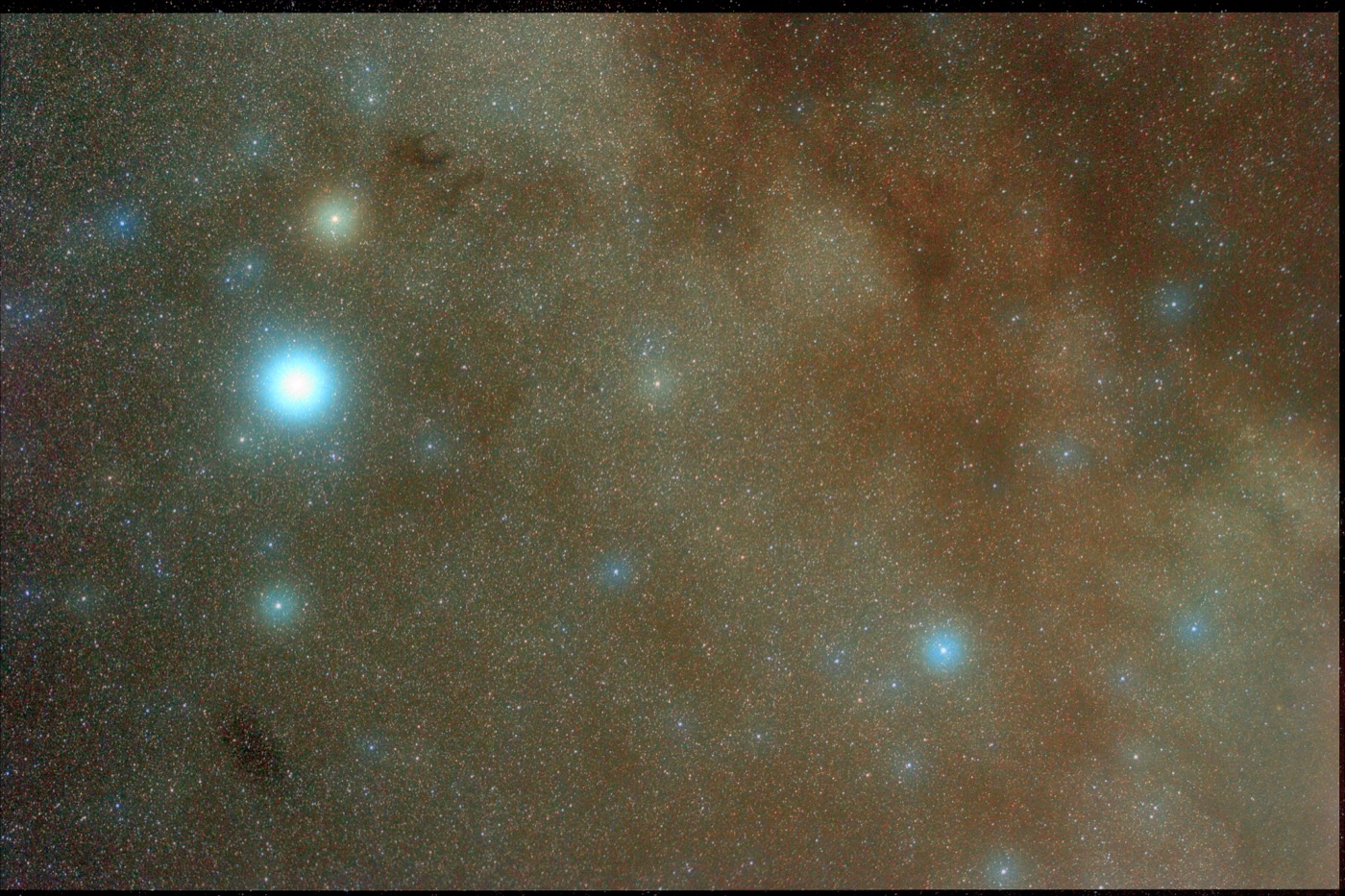
Altair is the southernmost vertex of the Summer Triangle and is prominent throughout the northern summer and autumn evenings. Look for the two fainter flanking stars Tarazed and Alshain on either side; this tight trio helps identify Altair. It is visible from virtually everywhere on Earth.