α Centauri A
Rigil Kentaurus
Our Nearest Stellar Neighbour · Yellow main-sequence star (Sun twin) in a binary system
At a glance
- Distance
- 4.3 ly
- Constellation
- Centaurus
- Type
- G2V
- Apparent magnitude
- -0.01
- Absolute magnitude
- 4.34
- Mass
- 1.1 M☉
- Radius
- 1.23 R☉
- Luminosity
- 1.52 L☉
- Surface temp
- 5,790 K
- Age
- 5.3 billion yrs
The story
Rigil Kentaurus — from the Arabic Rijl Qanṭūris, 'Foot of the Centaur' — appears as the third-brightest star in the night sky at magnitude −0.01, but the light comes from two stars: Alpha Centauri A and B, both too close together for the naked eye to resolve. Component A, the star known as Rigil Kentaurus proper, is a near-twin of the Sun: 10% more massive, 23% wider, and 52% more luminous, with a surface temperature of 5,790 K — almost identical to the Sun's 5,778 K. Its estimated age of 5.3 billion years is close to the Sun's 4.6 billion. If you stood on a planet orbiting Alpha Centauri A, you would see a slightly brighter and whiter sun overhead.
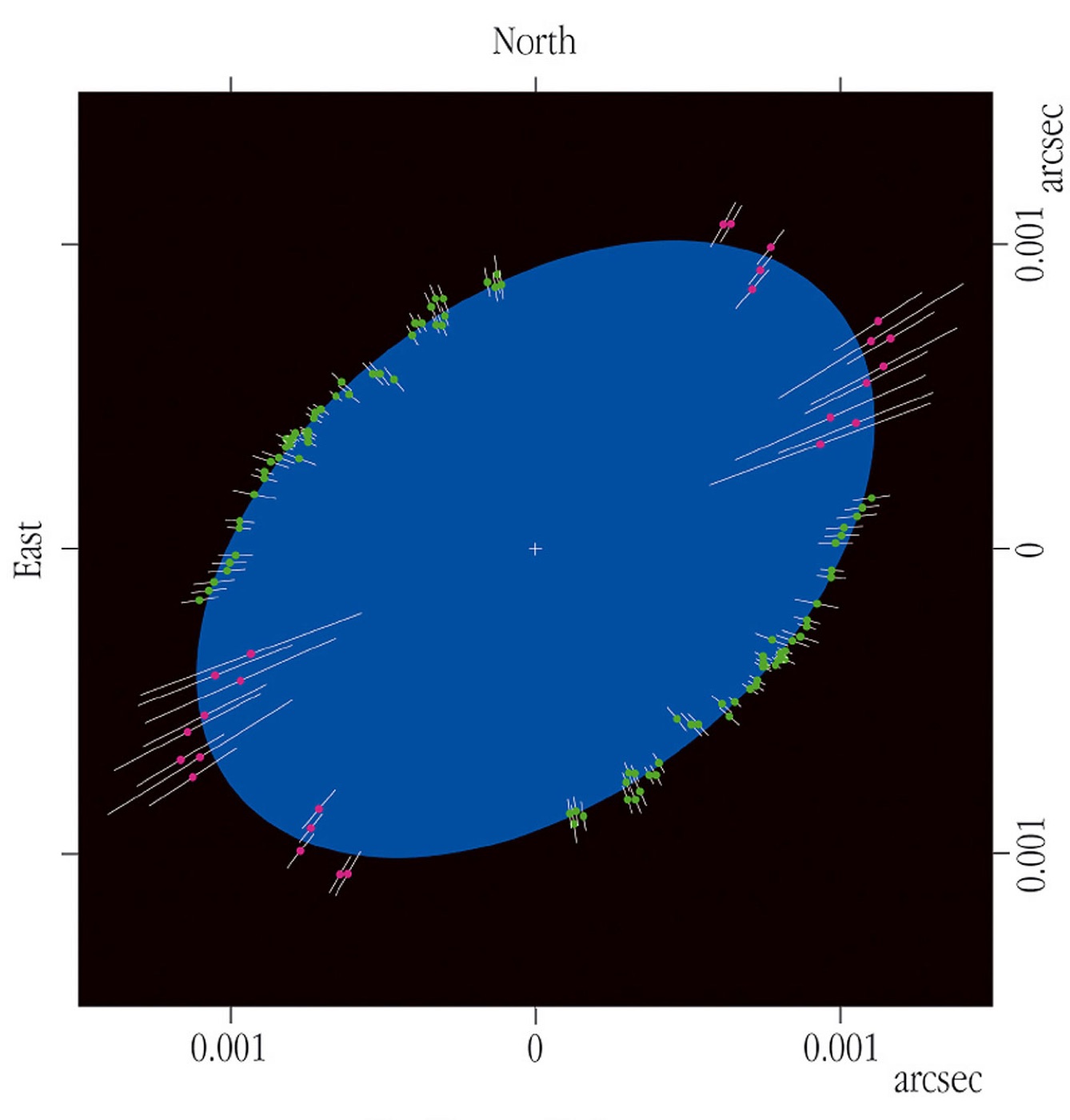
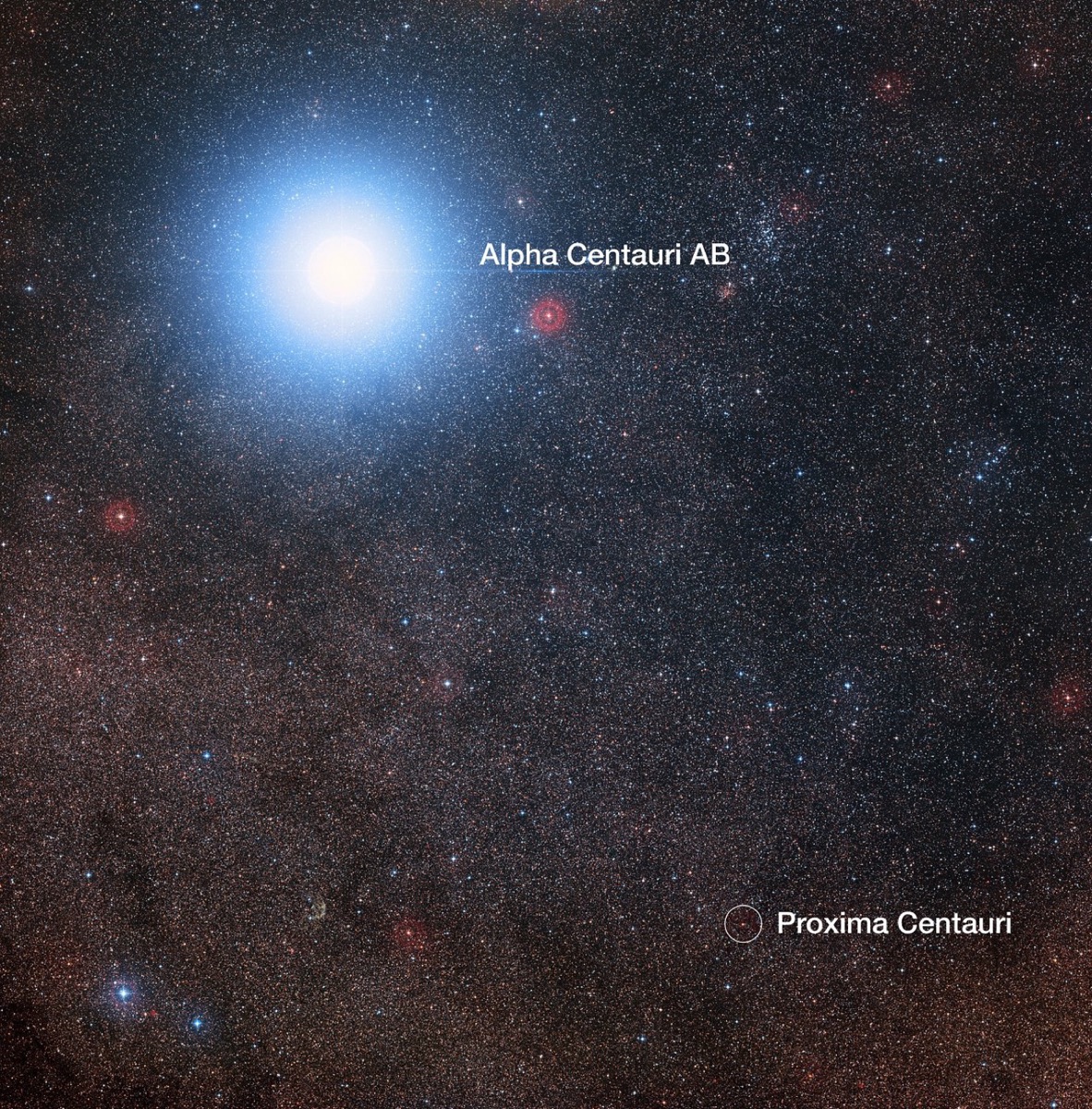
Alpha Centauri A and B orbit their common centre of mass roughly every 79.9 years, currently separated by about 23 AU (between Uranus and Neptune's distances from our Sun). Lurking 0.2 light-years further out is Proxima Centauri — a faint red dwarf that, at 4.24 ly, is actually the closest individual star to the Sun. Whether Proxima is gravitationally bound to the AB pair or merely a temporary companion is still debated, though current orbital modelling favours a loosely bound system.
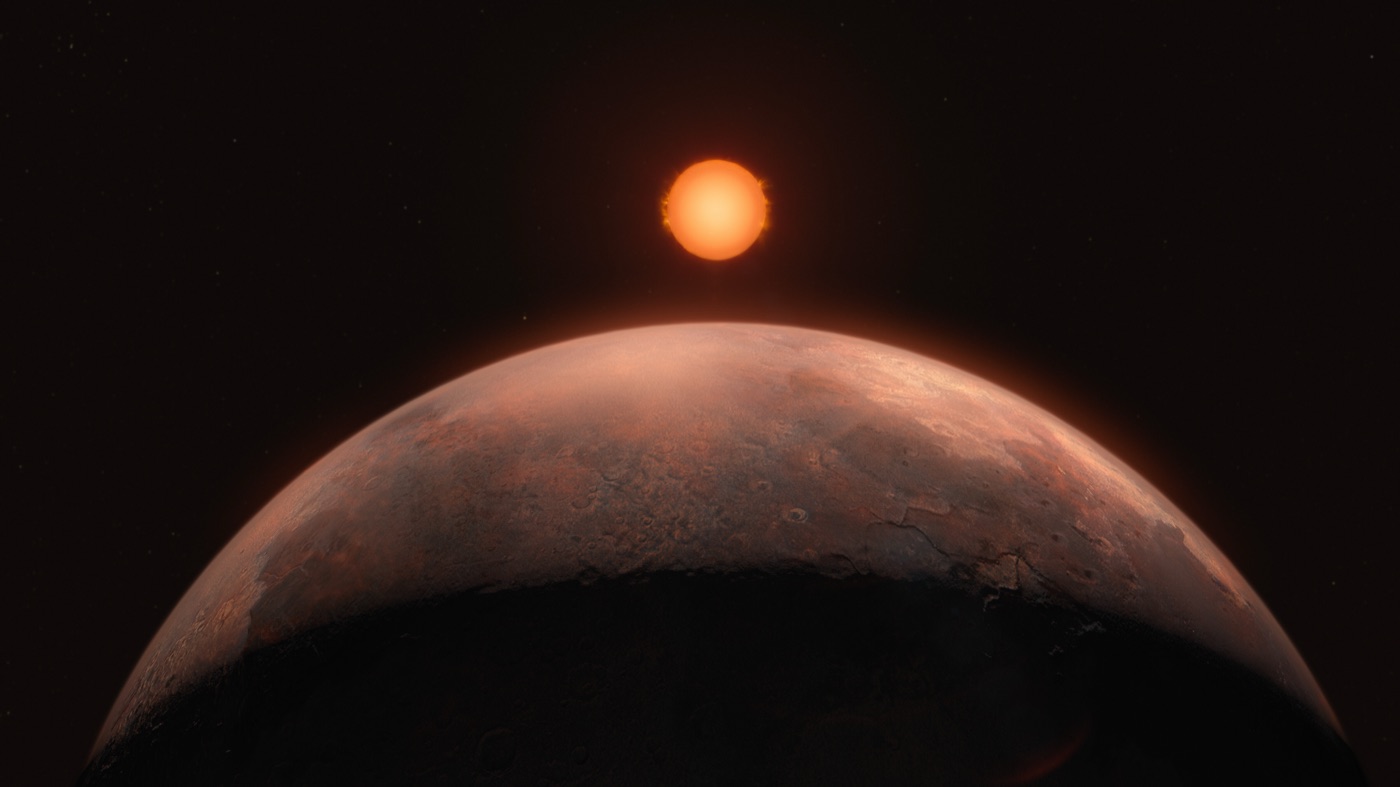
Because the system is so close, it has been the prime target for planet searches and interstellar mission concepts. Proxima Centauri hosts Proxima b, an Earth-mass exoplanet in the habitable zone — confirmed in 2016. Claims of a candidate planet around Alpha Centauri B appeared in 2012 but were later withdrawn. The Breakthrough Starshot initiative specifically targets Alpha Centauri for laser-propelled sail probes that could arrive in 20 years — the first serious engineering study of an interstellar mission.
Compared to the Sun
Sun
This star · 1.23× radius
It shines about 1.52 times as bright as the Sun.
Its fate
Alpha Centauri A is a main-sequence star with billions of years of hydrogen-burning life remaining. In about 2 billion years it will become noticeably more luminous, and eventually — in roughly 4–5 billion years — it will swell into a red giant, as the Sun will do in parallel. The AB binary orbit will persist; Proxima Centauri will fade over trillions of years as a red dwarf before going dim.
Find it in the sky
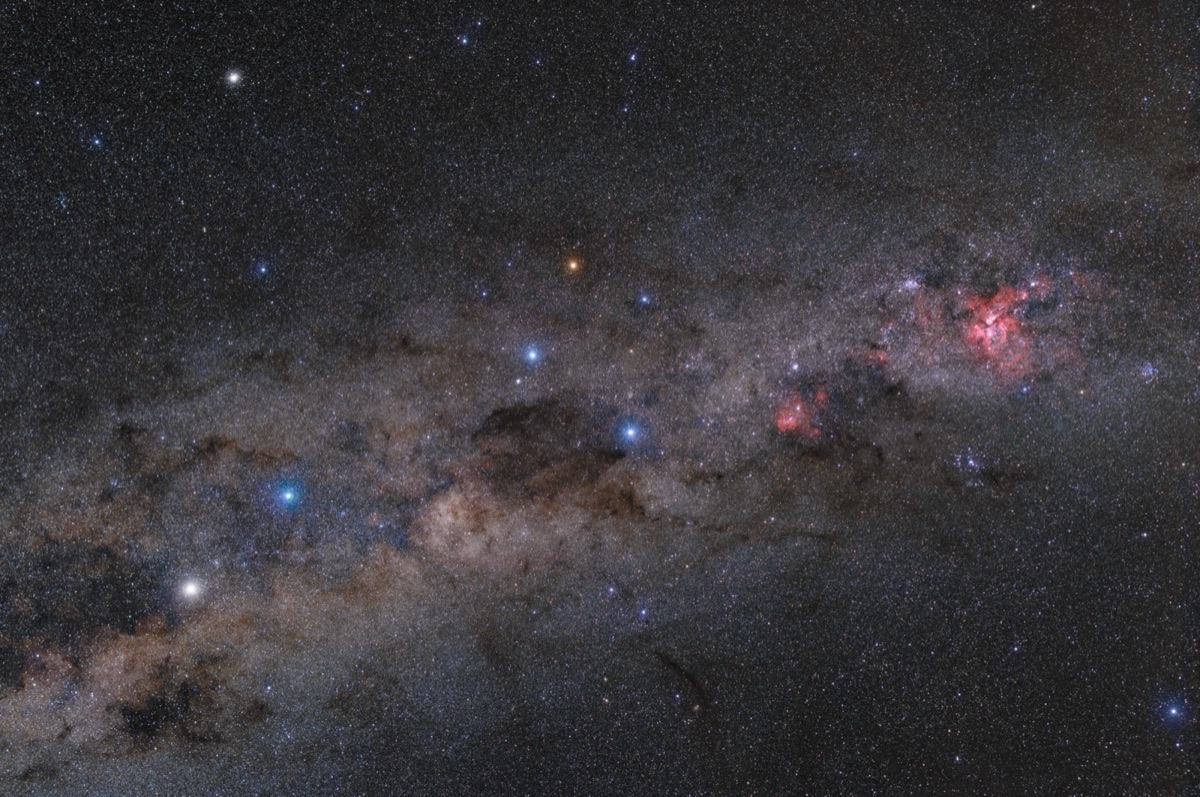
Alpha Centauri (Rigil Kentaurus and Toliman combined) is visible only south of about 29°N latitude, and is circumpolar from latitudes south of 29°S. From the southern hemisphere it is unmissable — the brightest point in Centaurus and the third-brightest star in the sky, sitting just off the Southern Cross and pointing toward it. Binoculars cleanly separate the A and B components at most orbital phases.