α Crucis
Acrux
The Foot of the Cross · Multiple blue star system
At a glance
- Distance
- 322 ly
- Constellation
- Crux
- Type
- B0.5IV
- Apparent magnitude
- 0.77
- Absolute magnitude
- -3.77
- Mass
- 17.2 M☉
- Radius
- 6.8 R☉
- Luminosity
- 31,110 L☉
- Surface temp
- 28,950 K
- Age
- 0.011 billion yrs
The story
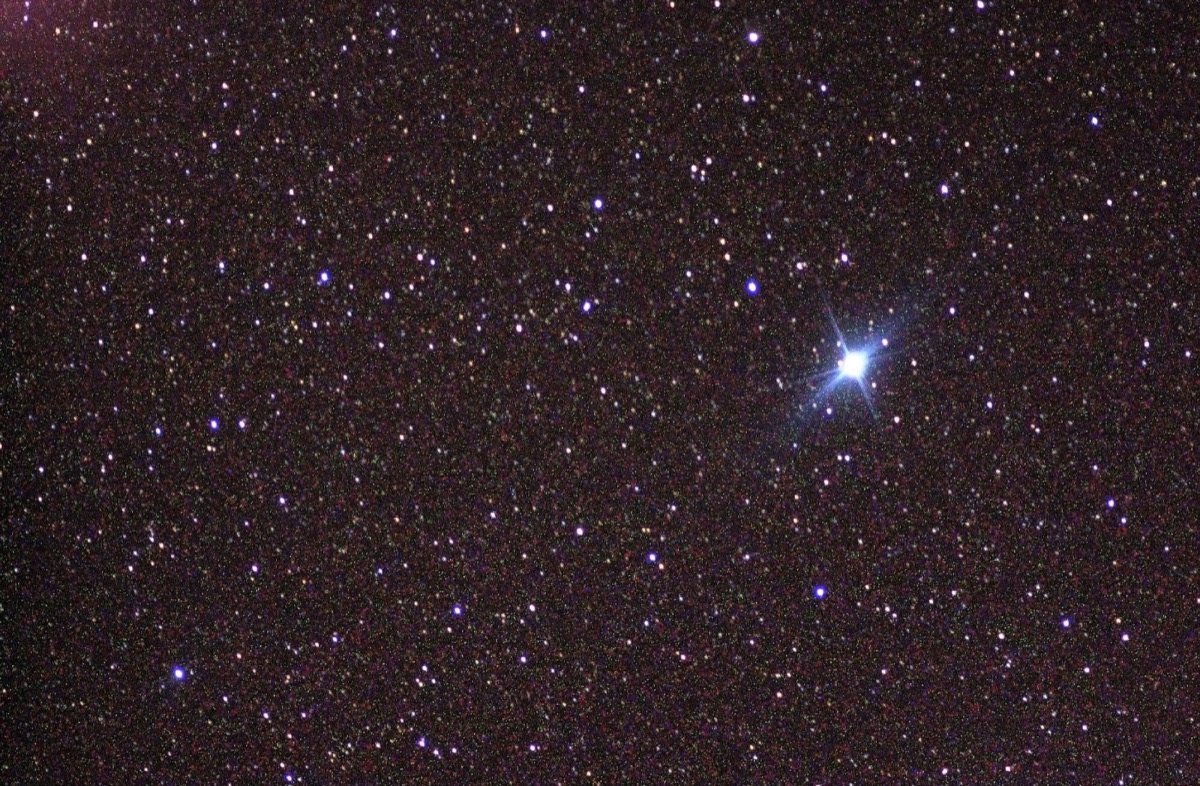
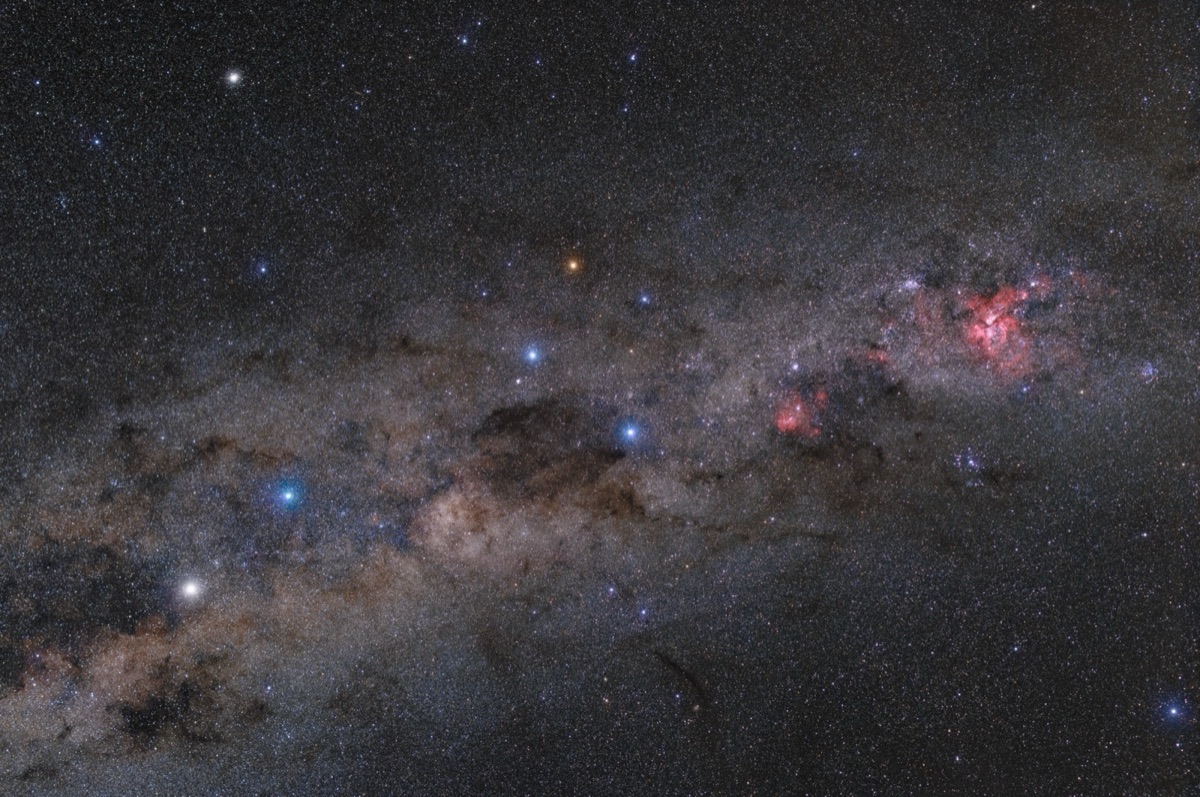
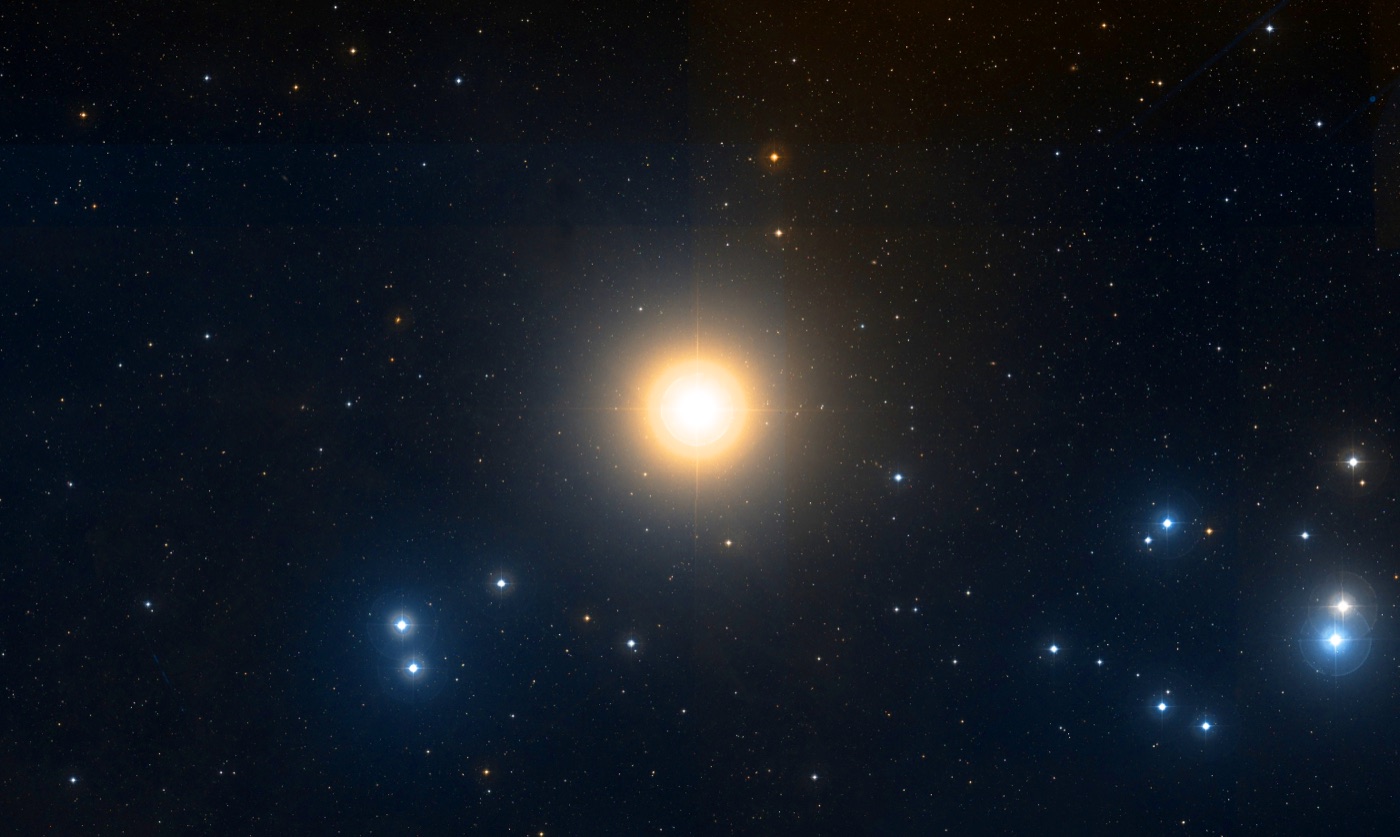
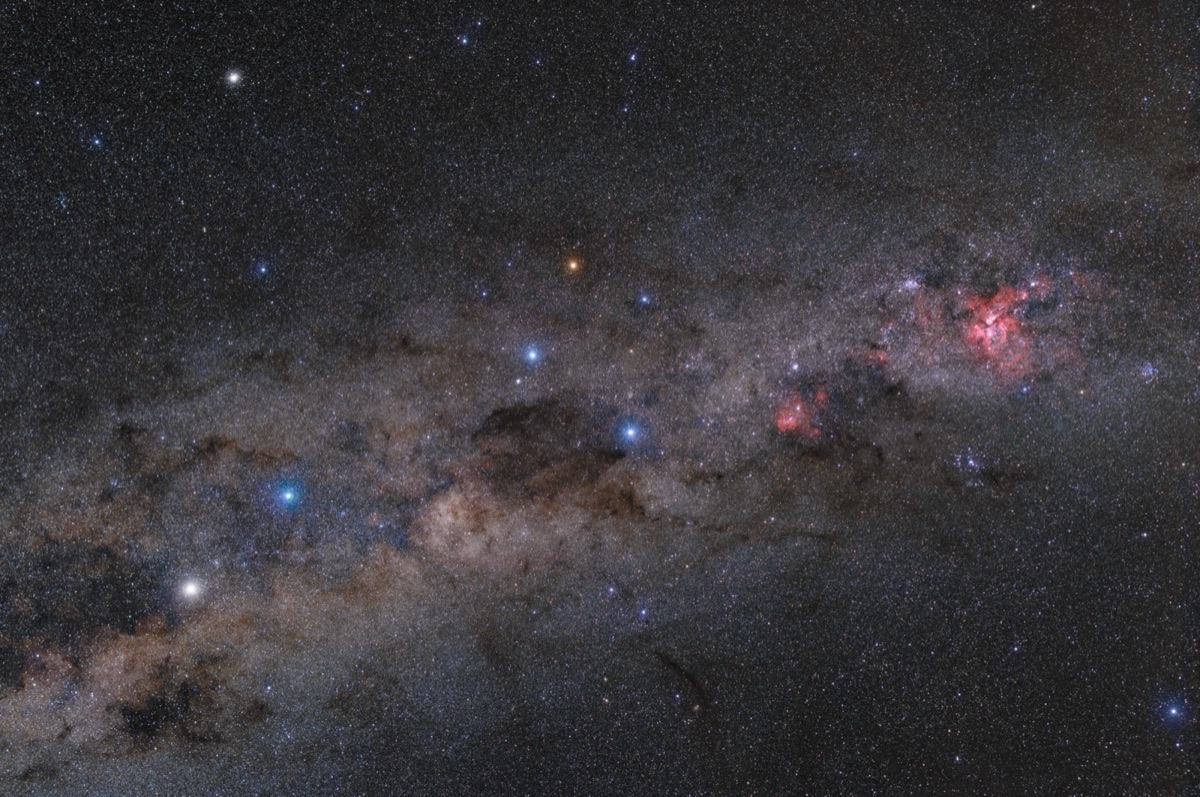
Acrux — a contraction of its Bayer designation Alpha Crucis — is the brightest star in Crux, the Southern Cross, and the 13th-brightest star in the entire night sky at magnitude 0.77. Embedded in Southern Hemisphere culture for millennia, the Southern Cross appears on the flags of Australia, New Zealand, Brazil, Papua New Guinea, and Samoa, with Acrux marking its foot. Indigenous Australian peoples used it as a seasonal and directional guide for tens of thousands of years.
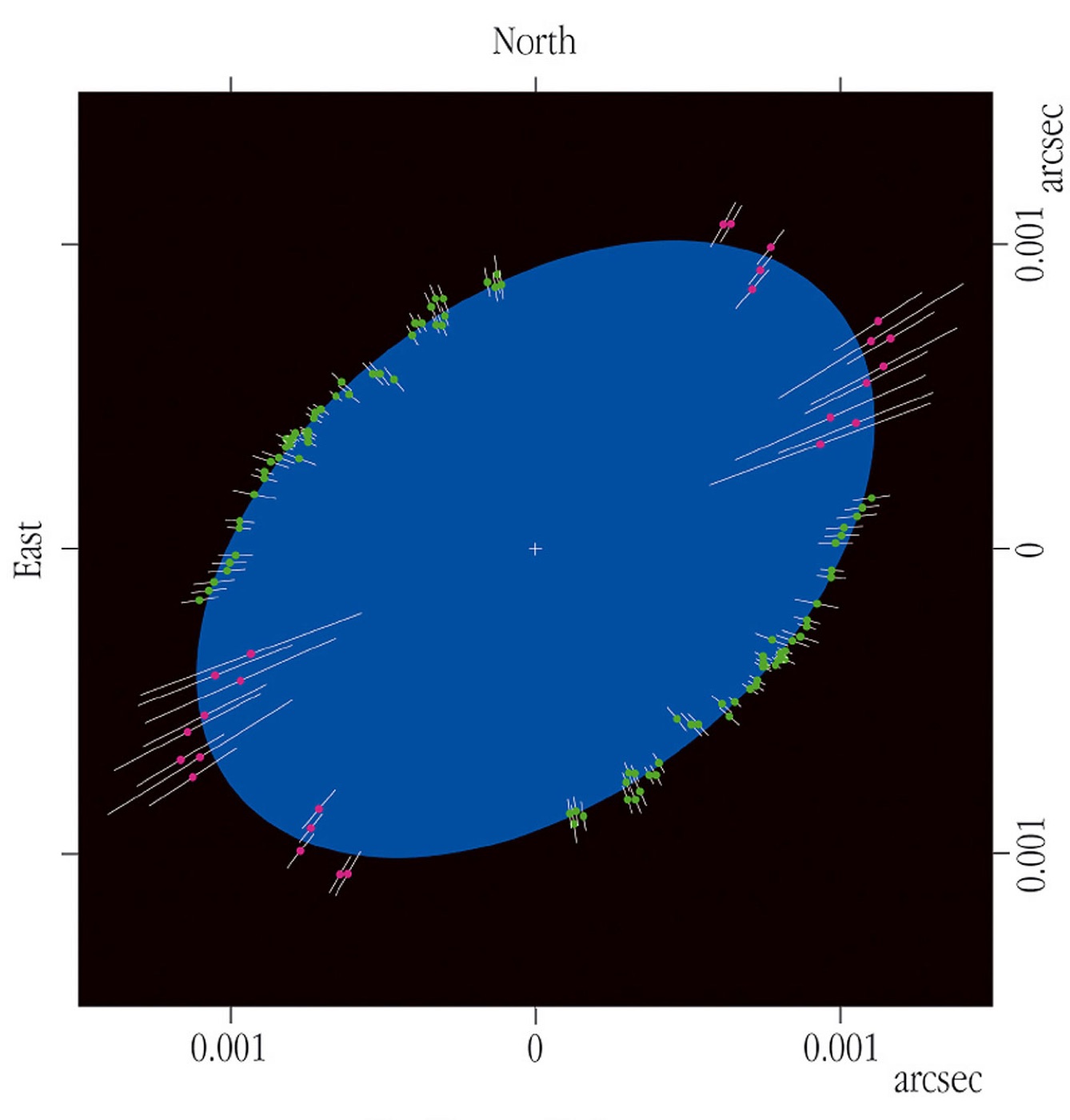
To the naked eye Acrux appears as a single brilliant blue point, but a modest telescope reveals two blue B-type stars, Alpha-1 and Alpha-2, separated by about 4 arcseconds. Alpha-1 (the brighter) is itself a spectroscopic binary: its components of 17.2 and 6.8 solar masses orbit each other every 76 days at roughly 1 AU. Alpha-2 is likely a second close pair, making Acrux at least a quadruple system. All four stars blaze at temperatures between 20,000 and 29,000 K, making the combined system roughly 31,000 times more luminous than the Sun in visible light alone (and far more in ultraviolet).
At 322 light-years, Acrux lies at the southern tip of the Coalsack Nebula region, amid the rich star-forming complex of Centaurus-Crux. Its near neighbour in the field, the Jewel Box cluster (NGC 4755), contains another family of hot young stars at a similar distance, making this patch of the southern sky one of the most spectacular in the Milky Way band.
Compared to the Sun
Sun
This star · 6.8× radius
It shines about 31,110 times as bright as the Sun.
Its fate
The most massive component (17 solar masses) will be the first to exhaust its hydrogen, ballooning into a red supergiant before a core-collapse supernova within a few million years. The remaining components will follow the same path in succession, leaving the system's remnants as neutron stars or black holes.
Find it in the sky
Acrux never rises above the horizon north of approximately 27° N. From the southern hemisphere or tropics, look for the compact kite shape of the Southern Cross in autumn and winter evenings; Acrux is the southernmost bright star, at the base of the Cross. It transits the meridian due south and can be used to estimate the direction of the south celestial pole.