β Crucis
Mimosa
The Blue Cross Star · Blue giant (Beta Cephei variable)
At a glance
- Distance
- 278.5 ly
- Constellation
- Crux
- Type
- B0.5III
- Apparent magnitude
- 1.25
- Absolute magnitude
- -3.92
- Mass
- 14.5 M☉
- Radius
- 8.4 R☉
- Luminosity
- 25,700 L☉
- Surface temp
- 28,840 K
- Age
- 0.0113 billion yrs
The story
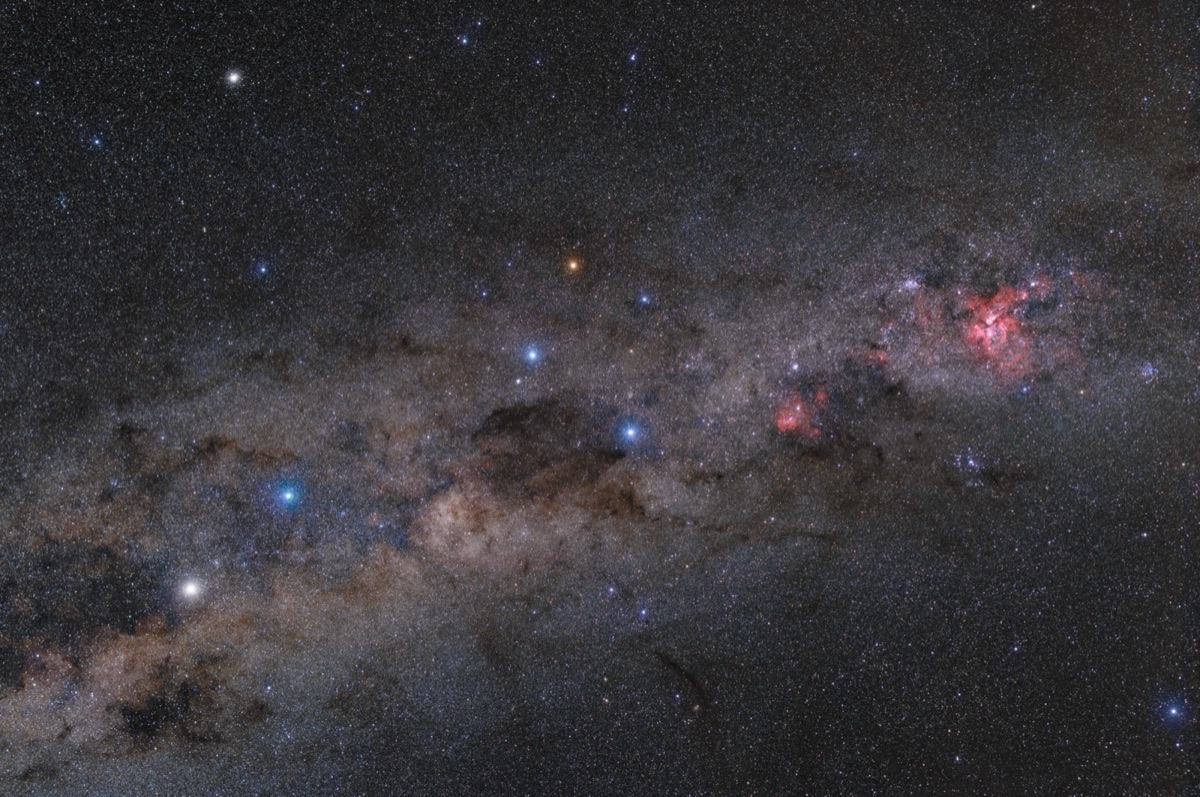
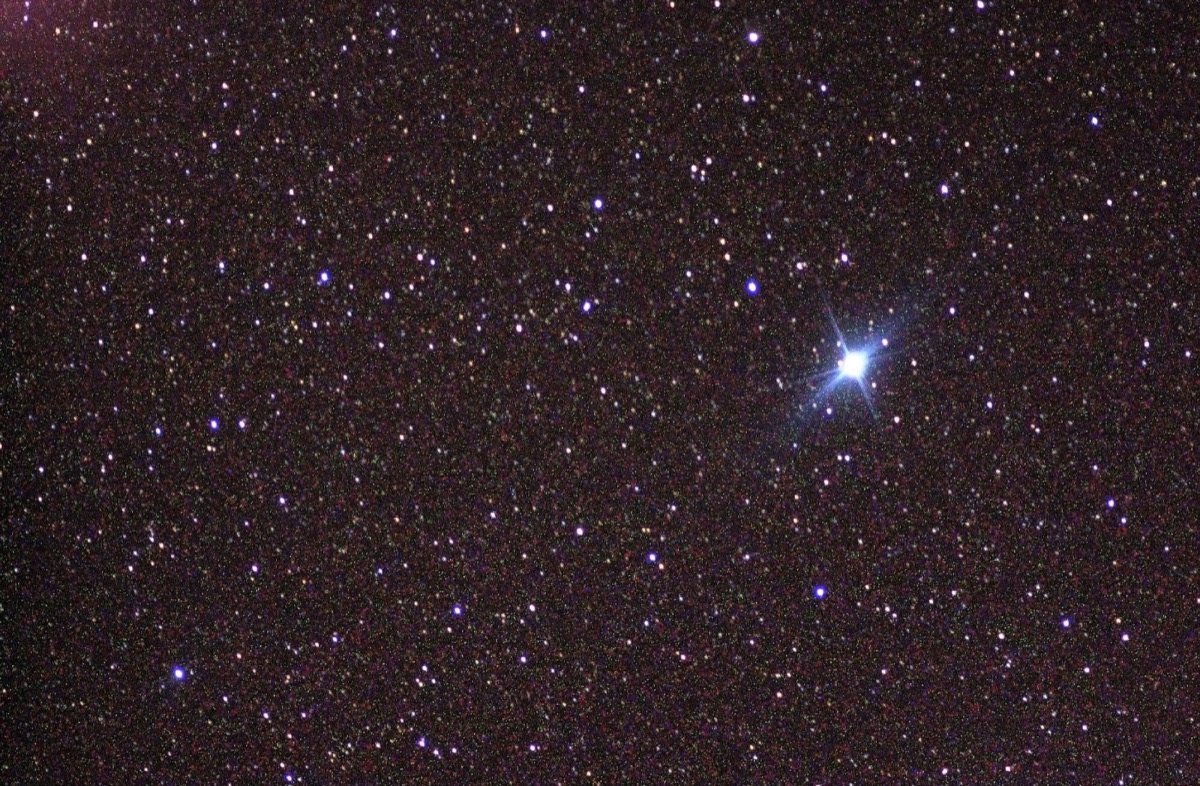
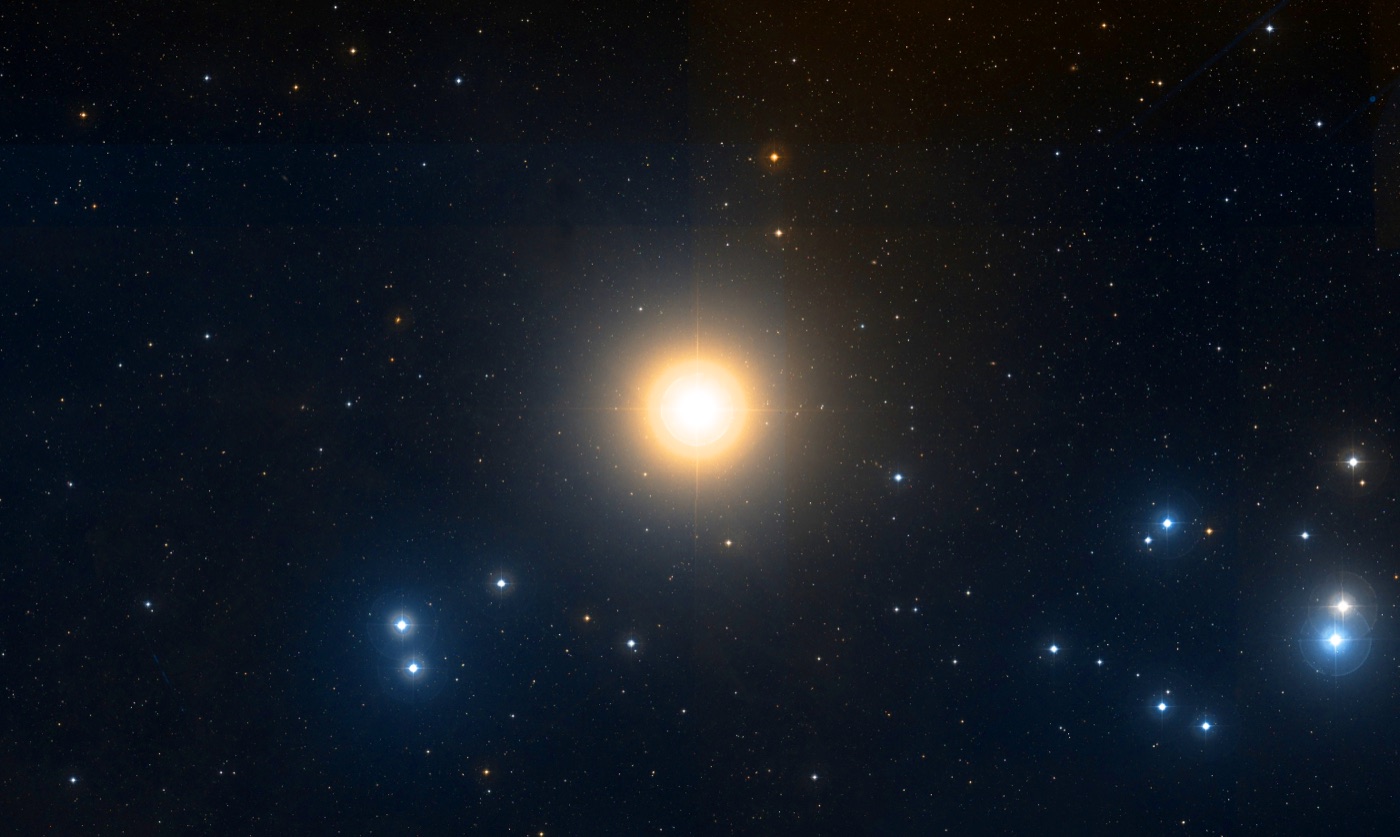
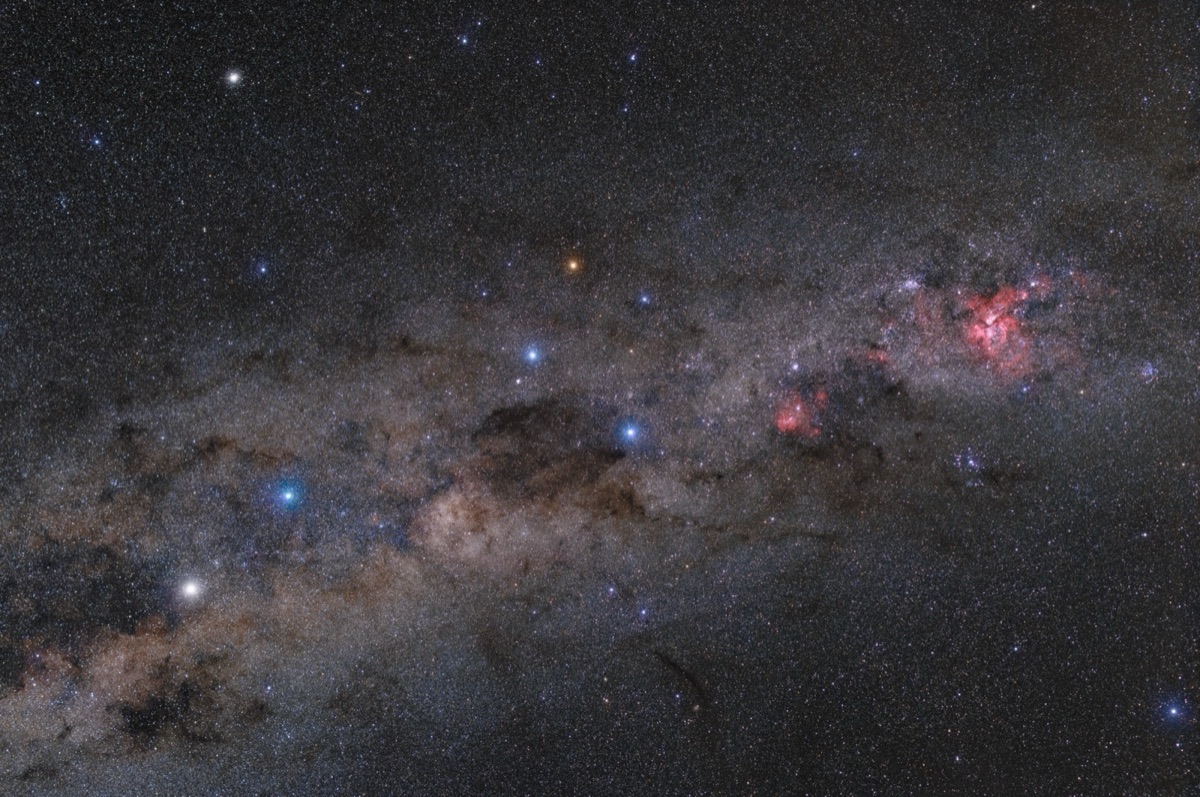
Mimosa — named for its blue hue reminiscent of the mimosa flower — shines at apparent magnitude 1.25 as the second-brightest star in Crux, the Southern Cross. The International Astronomical Union formally approved the name in 2016. In the southern hemisphere, the Cross is a celebrated navigation marker pointing toward the south celestial pole, and Mimosa is its eastern arm.
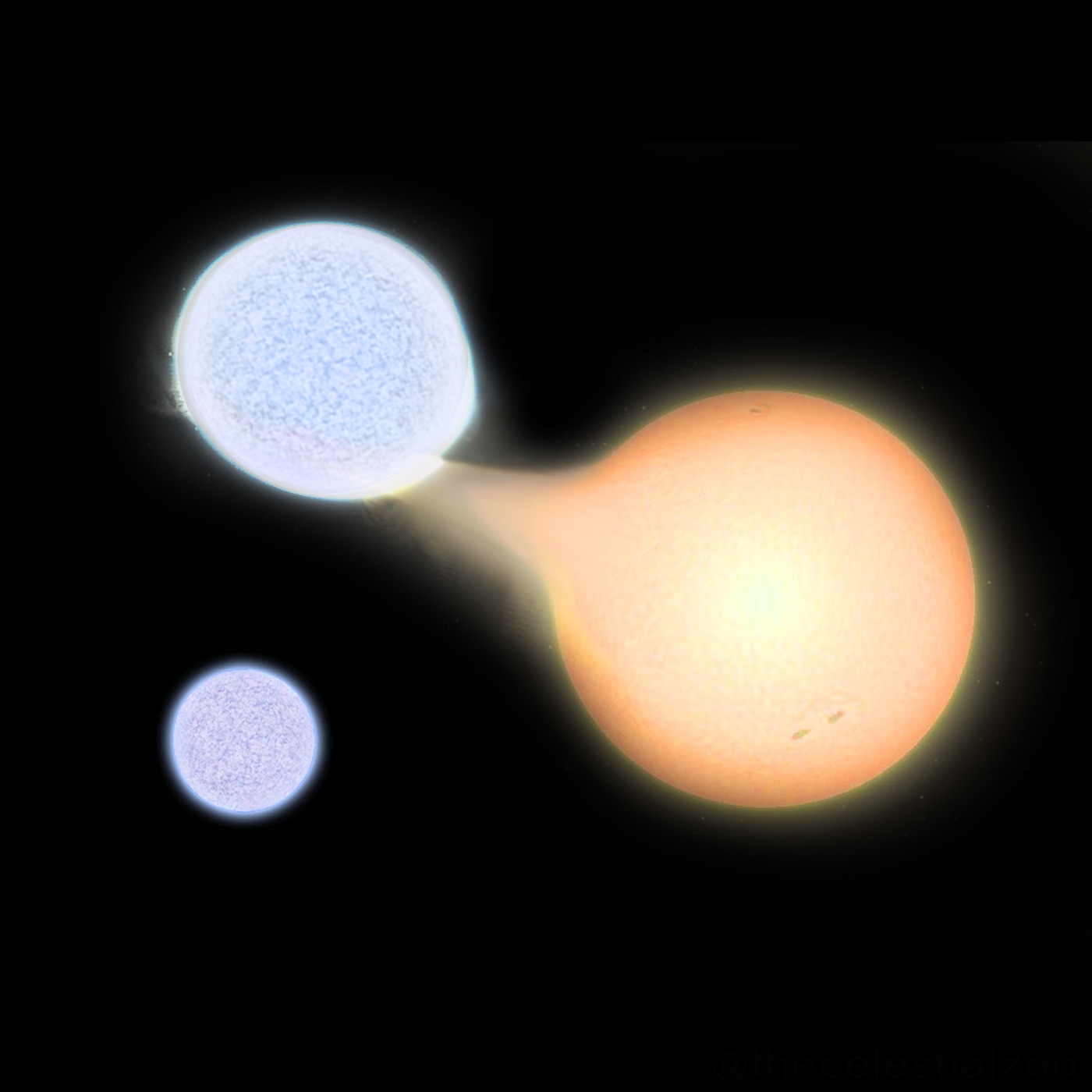
Mimosa is a triple system. The primary, Beta Crucis A, is a blue giant of spectral class B0.5 III that pulses in brightness over a period of about 4.6 hours — a Beta Cephei variable, where pressure waves ripple through the stellar interior. A lower-mass companion (Beta Crucis B, around 1.9 solar masses) orbits every five years at a separation of 5–12 AU. A pre-main-sequence star, Beta Crucis D, revealed by the Chandra X-ray Observatory in 2008, orbits much further out.
At only 11 million years old and 278 light-years distant, Mimosa is one of the youngest and most luminous first-magnitude stars. It sits at the fringe of the 'Coalsack Nebula' dark cloud, making Crux a showcase region of both star birth and massive stellar evolution.
Compared to the Sun
Sun
This star · 8.4× radius
It shines about 25,700 times as bright as the Sun.
Its fate
Mimosa's 14.5-solar-mass primary will exhaust its core hydrogen in a few million years, swell into a red supergiant, and end its life in a core-collapse supernova, seeding the surrounding interstellar medium with heavy elements.
Find it in the sky
Mimosa is only visible south of roughly 25° N latitude. Look for Crux low on the southern horizon in spring evenings from subtropical latitudes; Mimosa is the bright blue star on the eastern (left) arm of the Cross, just north of Acrux.