α Piscis Austrini
Fomalhaut
The Loneliest Bright Star · Blue-white main-sequence star with a debris disk triple system
At a glance
- Distance
- 25.1 ly
- Constellation
- Piscis Austrinus
- Type
- A3V
- Apparent magnitude
- 1.17
- Absolute magnitude
- 1.74
- Mass
- 1.92 M☉
- Radius
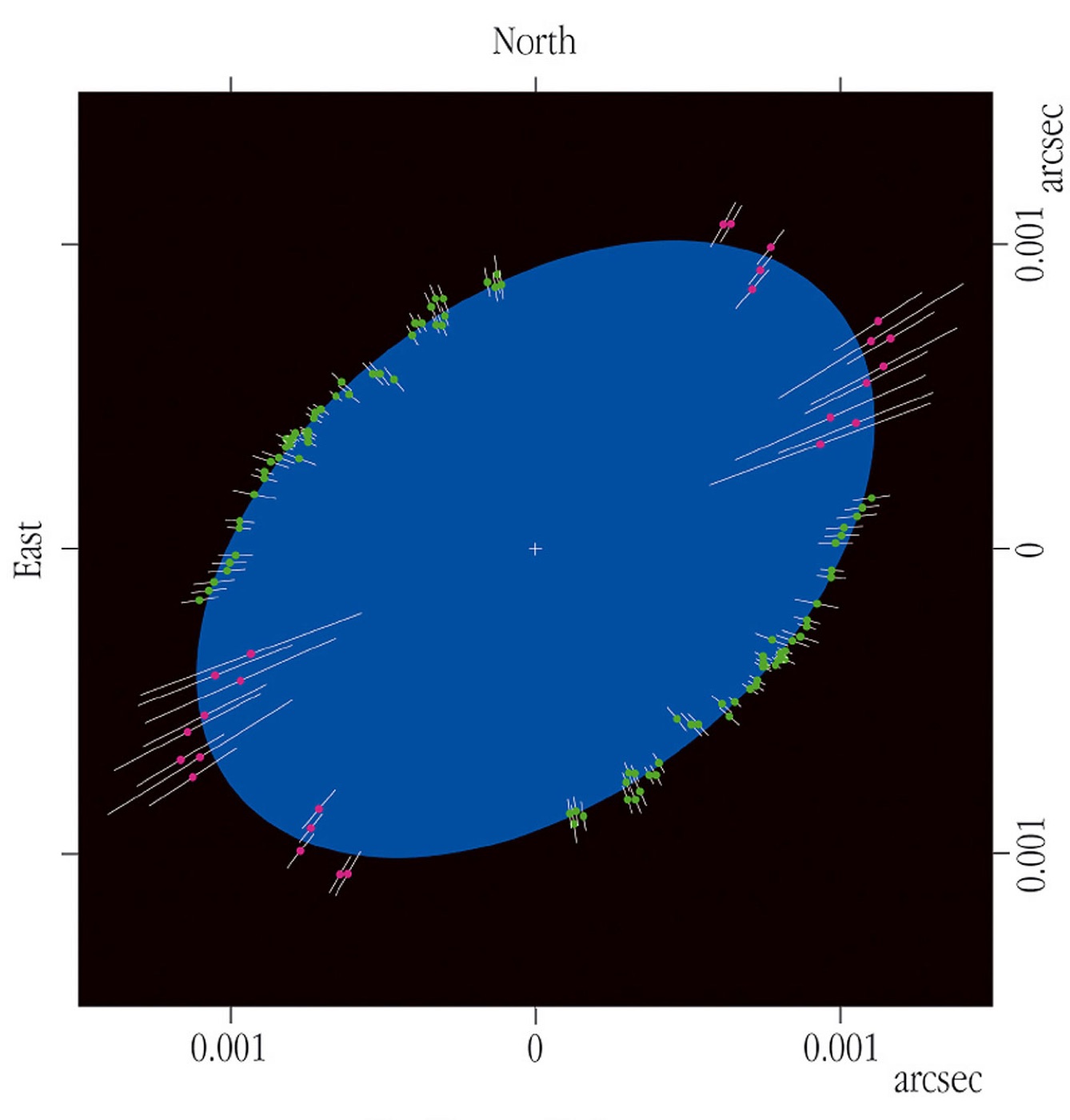
- 1.84 R☉
- Luminosity
- 16.6 L☉
- Surface temp
- 8,590 K
- Age
- 0.44 billion yrs
The story
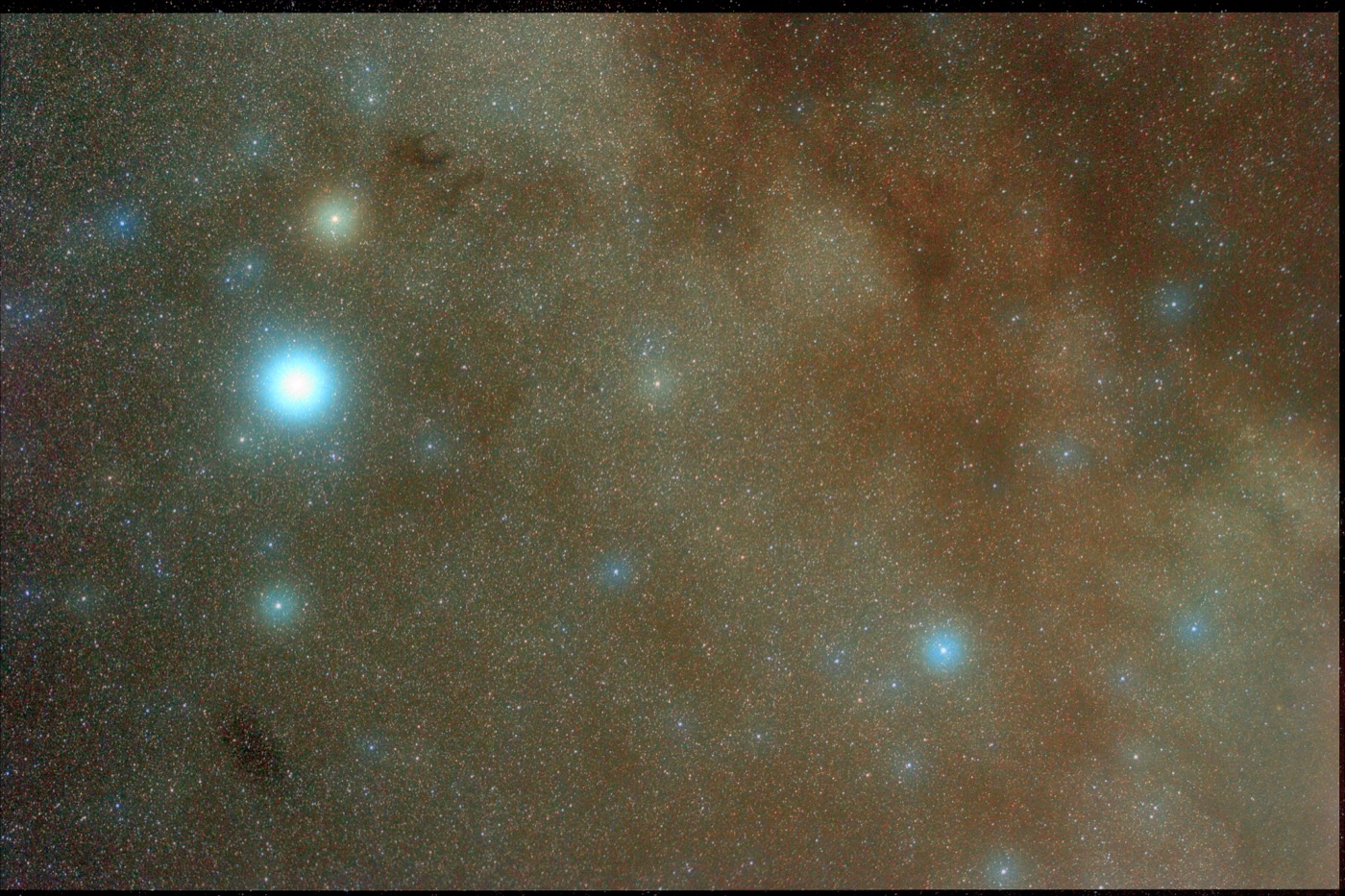
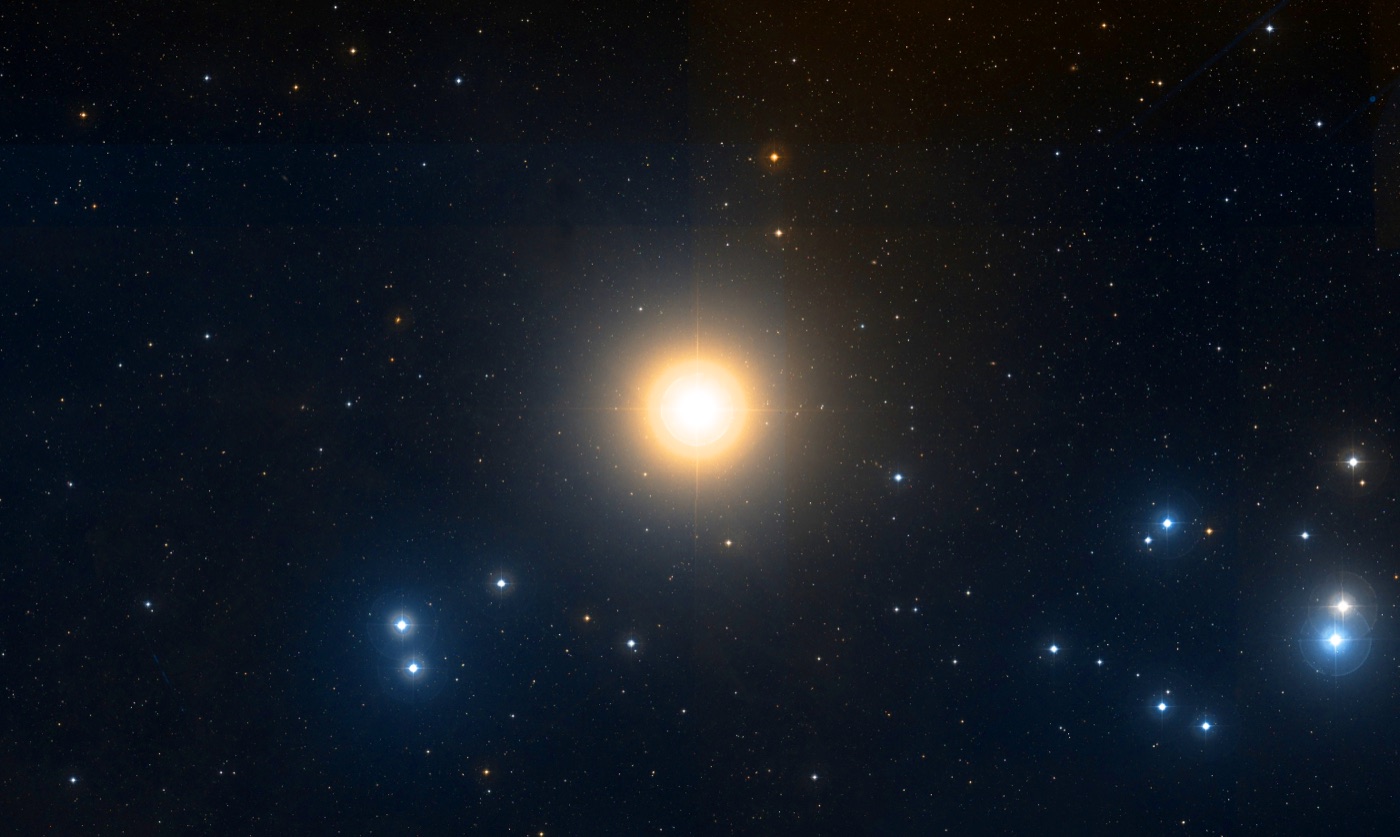
Fomalhaut shines at magnitude 1.17 in an autumn sky conspicuously empty of other bright stars, earning it the nickname 'the Loneliest Bright Star'. It anchors the otherwise faint constellation Piscis Austrinus, the Southern Fish, and in the medieval astrolabe tradition was counted among the four Royal Stars — a guardian of the southern sky. Its name derives from the Arabic Fam al-Hūt, 'Mouth of the Fish'.
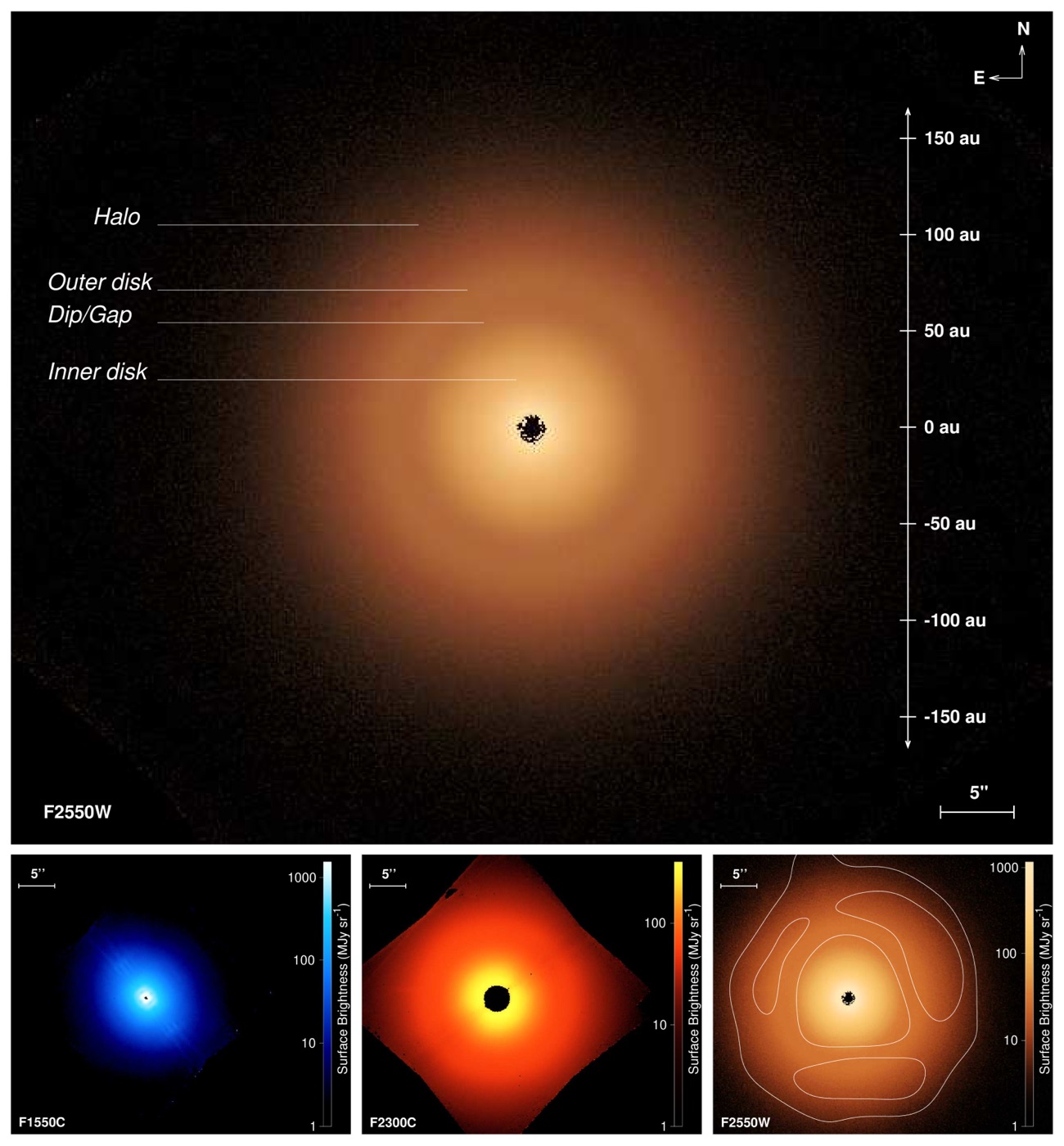
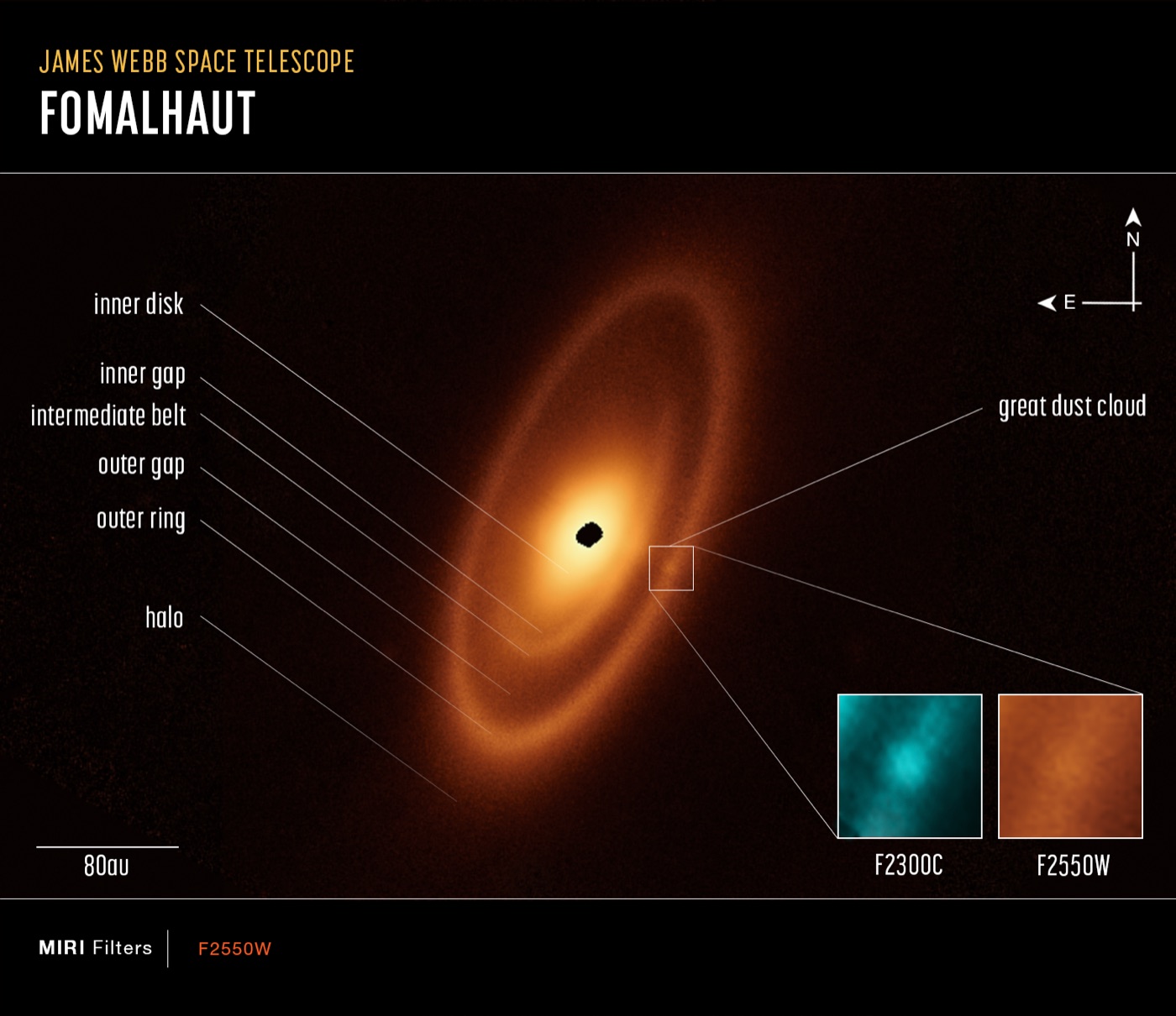
At just 440 million years old, Fomalhaut is genuinely young on a cosmic scale — a stellar adolescent still assembling the planetary system around it. The evidence is spectacular: Hubble first resolved a vast, toroidal debris ring in 2004, inclined 24 degrees from edge-on, with a sharp inner edge at 133 AU — a classic sign that unseen planets are herding the dust into a clean belt. JWST's MIRI instrument pushed further in 2023, revealing two additional inner rings never seen before, one analogous to the asteroid belt and one to the Kuiper belt.
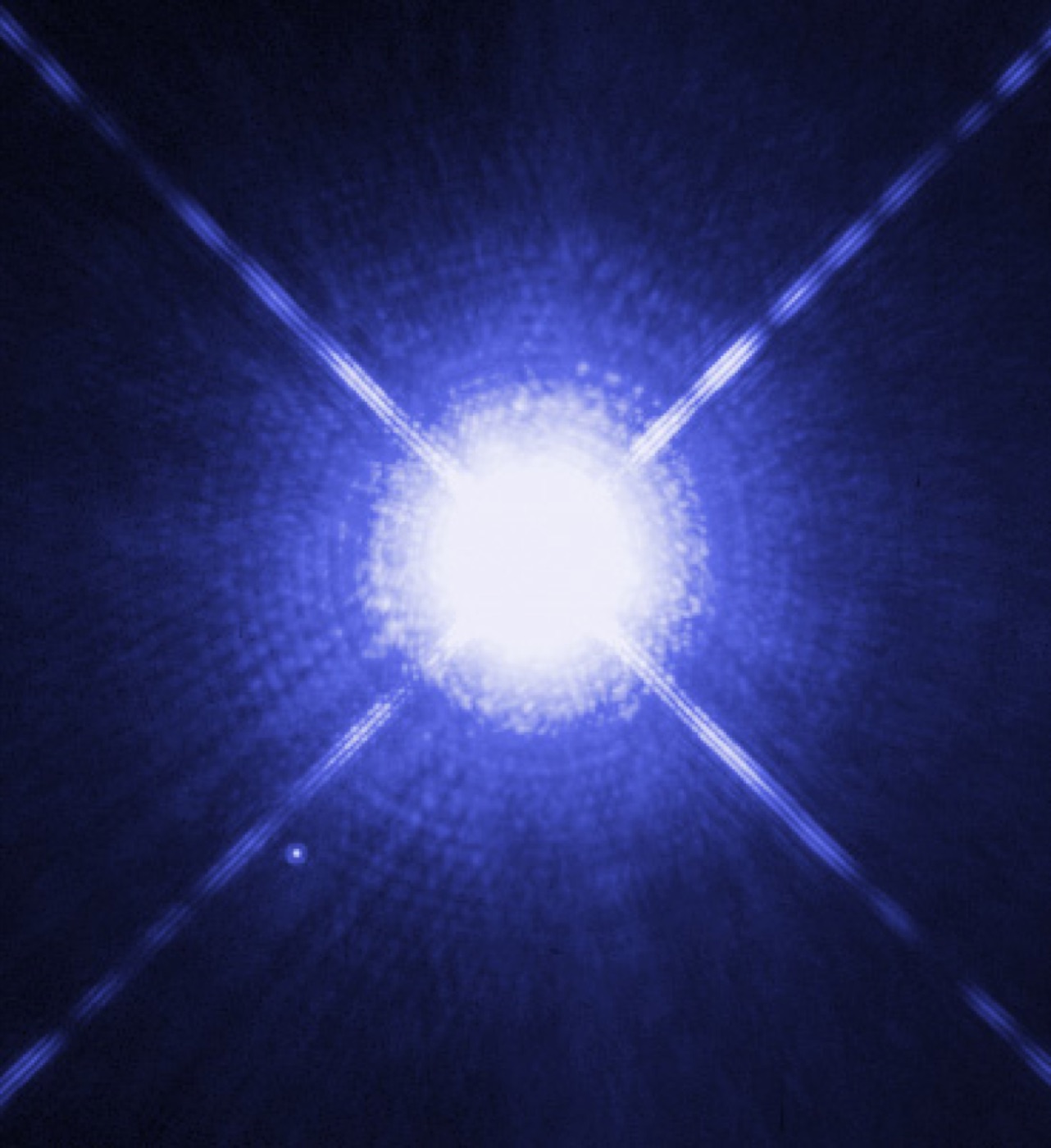
In 2008, Hubble provided the first visible-light image of a candidate exoplanet: Fomalhaut b, subsequently dubbed Dagon. Later analysis suggested it may be the expanding dust cloud of a catastrophic collision between large planetesimals rather than a planet proper, but JWST observations continue to probe the system. Fomalhaut is itself part of a triple star system, with companions TW Piscis Austrini (an orange K dwarf) and LP 876-10 (a red dwarf) gravitationally associated at wide separations.
Compared to the Sun
Sun
This star · 1.84× radius
It shines about 16.6 times as bright as the Sun.
Its fate
With roughly twice the Sun's mass, Fomalhaut will deplete core hydrogen in about 800 million years from now and evolve off the main sequence into a subgiant and then a red giant. It will eventually shed its layers to become a white dwarf, leaving its debris disk and any surviving planets behind.
Find it in the sky
Fomalhaut is the brightest star in the southern autumn sky for mid-northern observers. From 40°N latitude it barely clears the southern horizon in October and November evenings. Observers south of 30°N see it high and splendid; from the southern hemisphere it stands overhead. Look south: if you see a solitary first-magnitude star with no bright neighbours, it is almost certainly Fomalhaut.