α Canis Minoris
Procyon
Before the Dog · Yellow-white subgiant with a white-dwarf companion
At a glance
- Distance
- 11.5 ly
- Constellation
- Canis Minor
- Type
- F5IV-V
- Apparent magnitude
- 0.4
- Absolute magnitude
- 2.66
- Mass
- 1.48 M☉
- Radius
- 2.04 R☉
- Luminosity
- 7.05 L☉
- Surface temp
- 6,582 K
- Age
- 1.87 billion yrs
The story
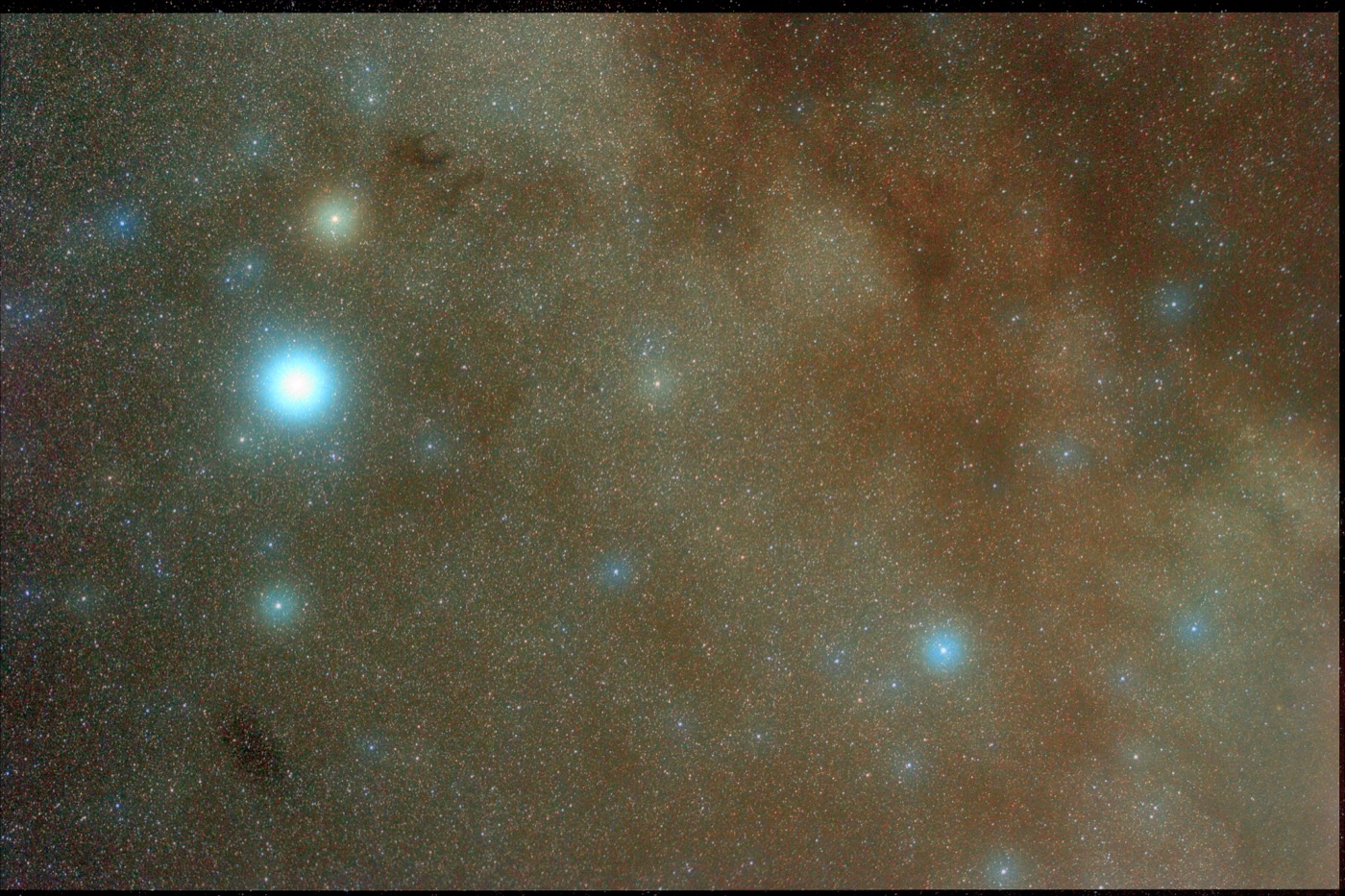
Procyon shines at magnitude +0.34 — the eighth-brightest star in the night sky — from a distance of only 11.5 light-years, making it one of our very closest stellar neighbours. Its name means 'before the dog' in Greek, because it rises just ahead of Sirius, the Dog Star, in the winter sky. Together with Betelgeuse and Sirius it forms the Winter Triangle.
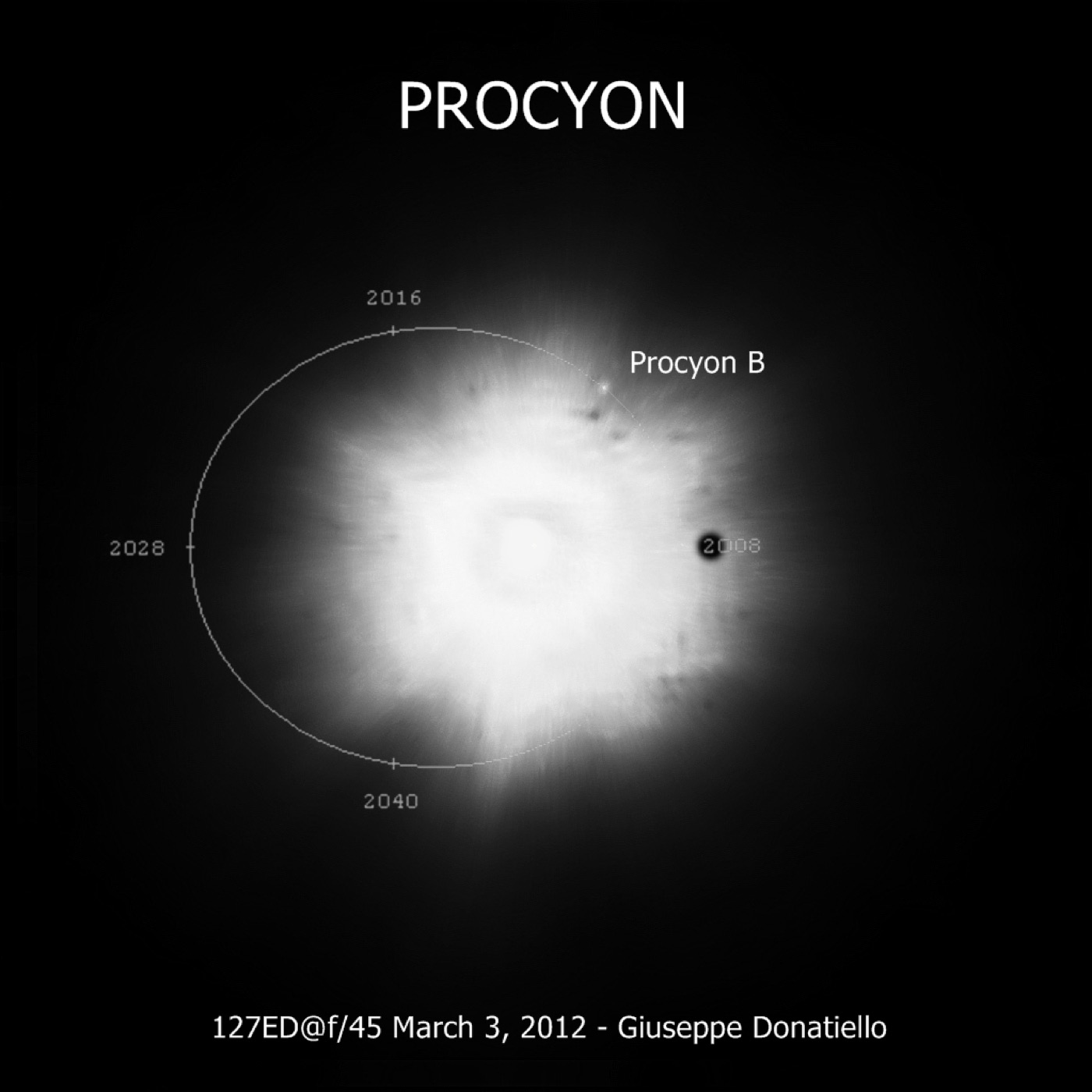
Procyon is a subgiant beginning to swell off the main sequence at 1.87 billion years of age — a process that has already inflated it to twice the Sun's diameter. Orbiting at a distance of about 15 AU with a 40.8-year period is Procyon B, a white dwarf of roughly 0.6 solar masses. Procyon B is extraordinary: it is one of the nearest white dwarfs to Earth and has cooled to below 8,000 K, faintly visible in amateur telescopes as a challenge target only 5 arcseconds from the blazing primary.
In Greek myth, Procyon was associated with Maera, the hound of Erigone — a loyal dog that pined to death for its master. The star was used as a chronological marker in ancient Mesopotamia and Egypt. Its proximity and relatively modest temperature made it a long-studied benchmark for stellar atmosphere models.
Compared to the Sun
Sun
This star · 2.04× radius
It shines about 7.05 times as bright as the Sun.
Its fate
Procyon A will continue expanding into a true red giant within the next few hundred million years, eventually ejecting its outer layers as a planetary nebula. The remaining core will become a white dwarf like its current companion, leaving the pair a double white-dwarf system slowly cooling over billions of years.
Find it in the sky
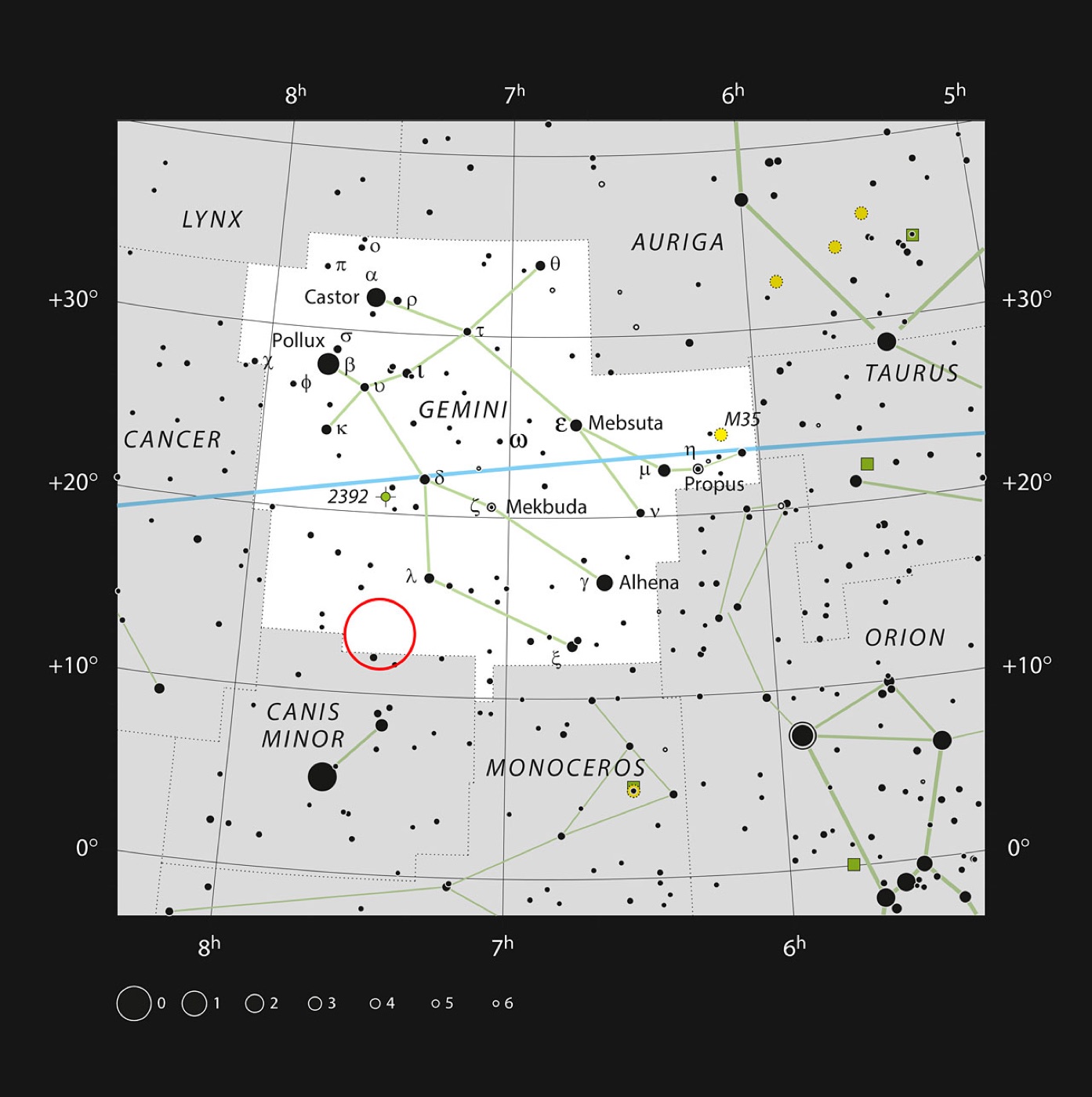
Procyon is the bright yellowish-white star in the sparse constellation Canis Minor. On winter evenings look above and to the left of Sirius; Procyon shines almost as a solitary bright point with few neighbours. It is visible from all inhabited latitudes.