α Lyrae
Vega
The Pole Star of Tomorrow · Blue-white main-sequence star (Delta Scuti variable)
At a glance
- Distance
- 25 ly
- Constellation
- Lyra
- Type
- A0Va
- Apparent magnitude
- 0.03
- Absolute magnitude
- 0.58
- Mass
- 2.15 M☉
- Radius
- 2.73 R☉
- Luminosity
- 47.2 L☉
- Surface temp
- 9,940 K
- Age
- 0.7 billion yrs
The story
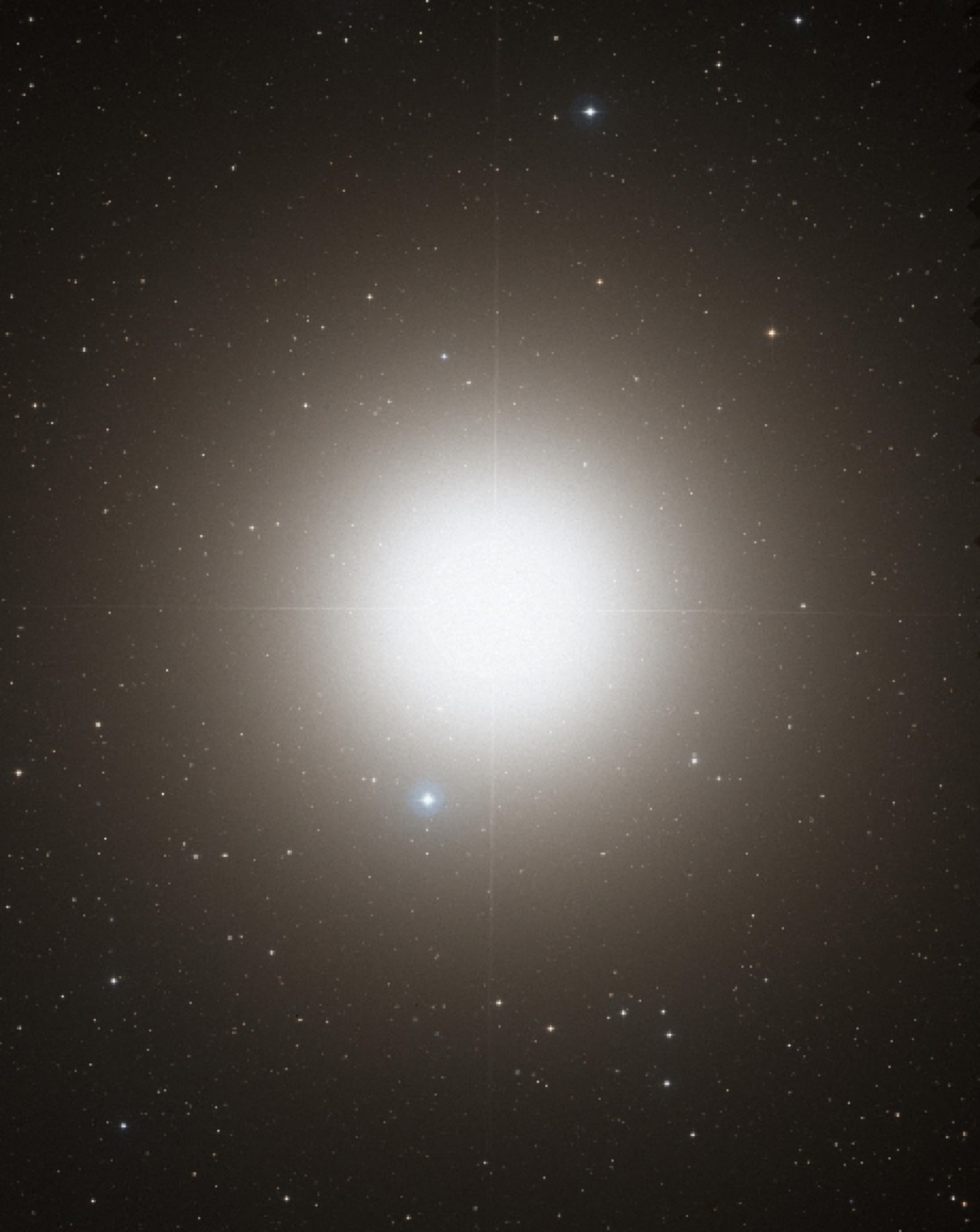
Vega burns at magnitude +0.03, making it the fifth-brightest star in the night sky and the second-brightest in the northern hemisphere. For decades it served as the photometric zero-point of the entire astronomical magnitude system, meaning every other star's brightness was calibrated against it.
Vega spins at roughly 88% of the velocity that would tear it apart — completing one rotation in about 16 hours, compared with the Sun's 25 days. This rapid spin flings material outward, making the equator 20% wider and noticeably cooler than the poles. We happen to view Vega almost directly down one of its poles, which artificially inflates its apparent size in interferometric images.
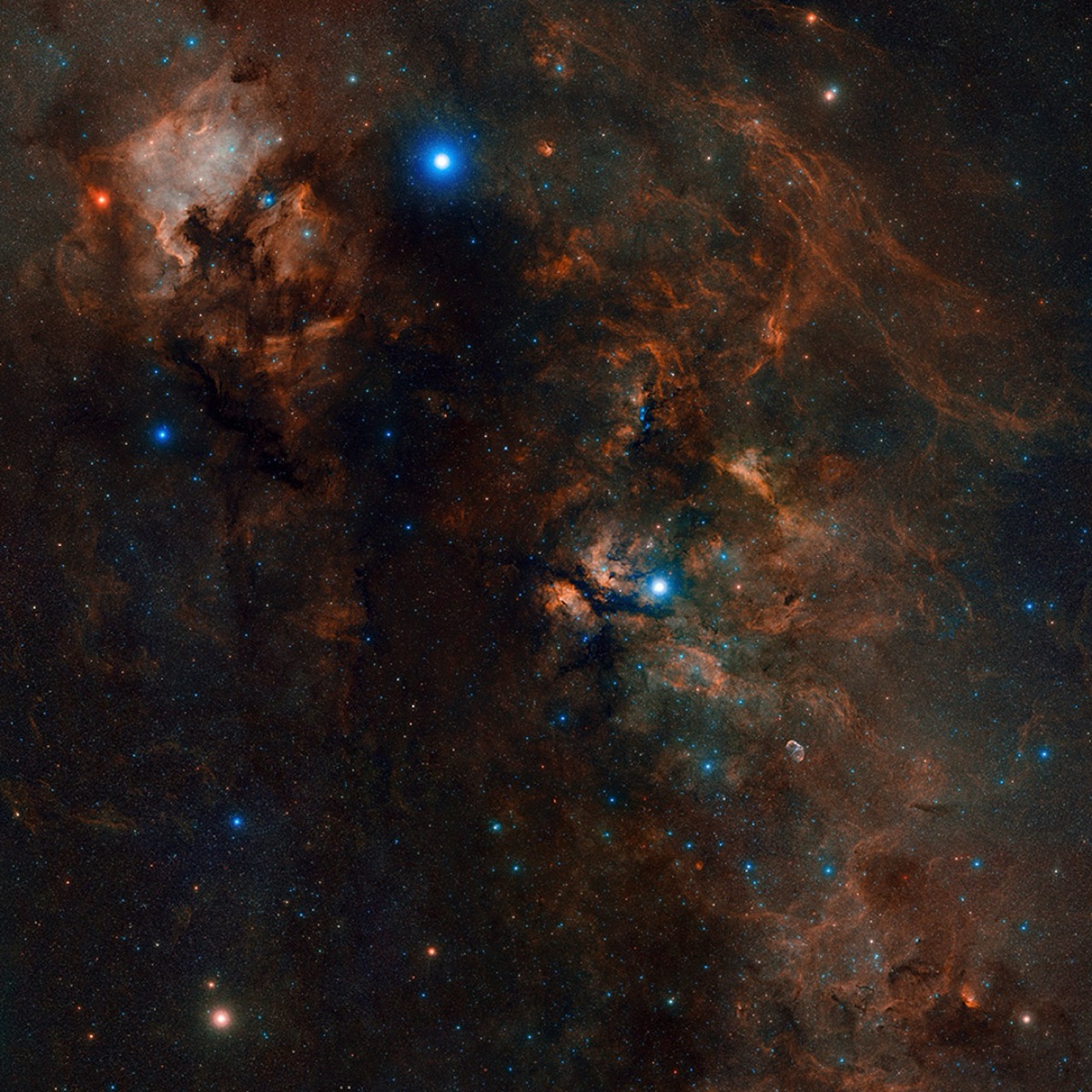
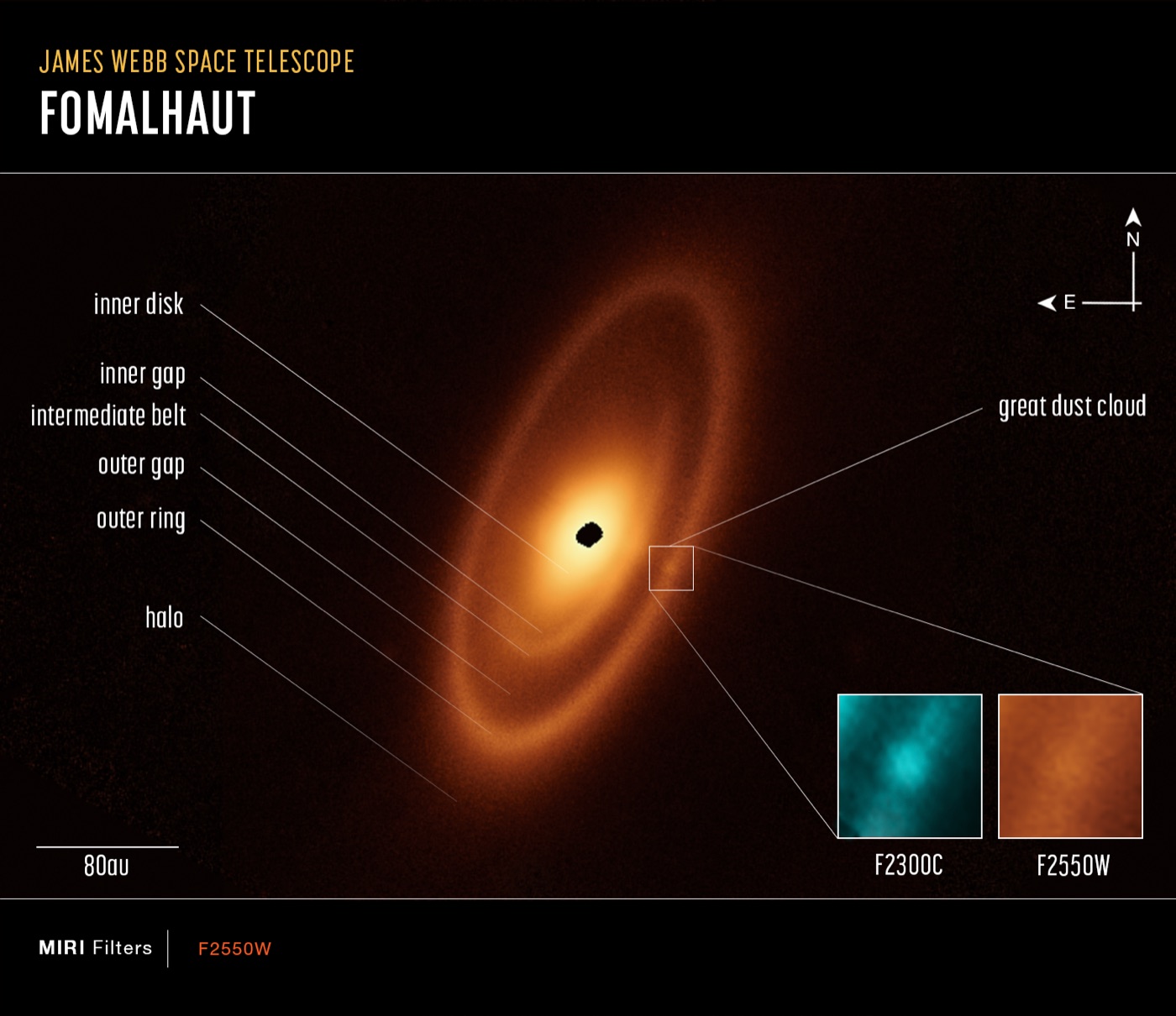
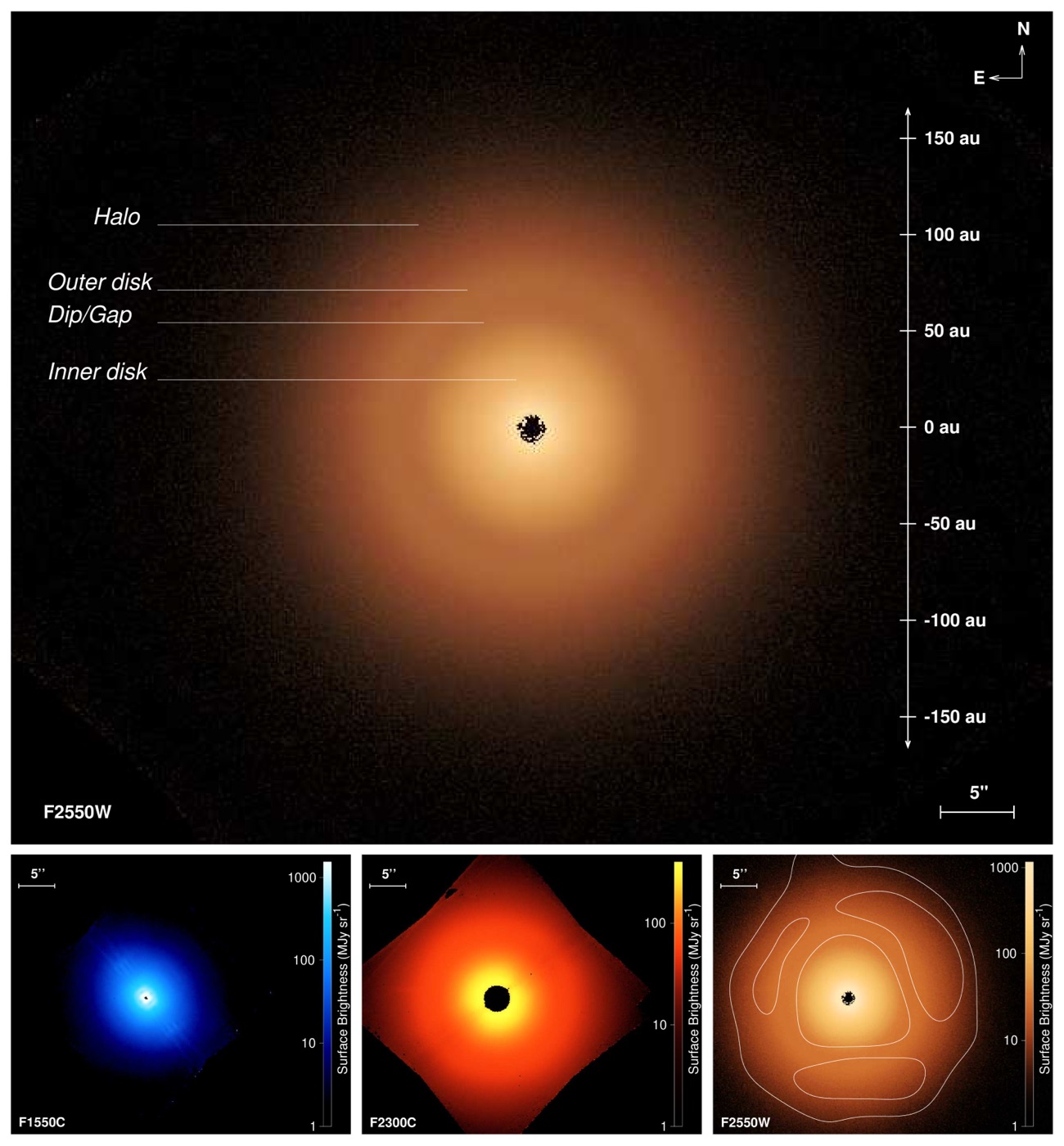
Surrounding Vega is an extensive debris disk, first detected by the IRAS satellite in 1983 and later imaged in detail by JWST/MIRI in 2024. The disk extends hundreds of AU and includes an inner warm zone, a broad outer ring analogous to the Kuiper Belt, and a smooth halo — suggesting a planetary system that actively grinds through collisions. Vega also anchors the Summer Triangle with Deneb and Altair, making it one of the most-observed stars in the northern sky each summer.
Compared to the Sun
Sun
This star · 2.73× radius
It shines about 47.2 times as bright as the Sun.
Its fate
As a 2.15-solar-mass star, Vega will remain on the main sequence for roughly another 600 million years before swelling into a giant, shedding its envelope as a planetary nebula, and ending as a white dwarf. Its debris disk and rapid rotation will not significantly alter this trajectory.
Find it in the sky
Vega is the bright blue-white star nearly overhead from northern mid-latitudes in summer evenings. It forms the brightest point of the Summer Triangle alongside Deneb (Cygnus) and Altair (Aquila). Around the year AD 13,700, Earth's precession will bring Vega back into service as the North Star.