α Scorpii
Antares
Rival of Mars · Red supergiant with blue companion
At a glance
- Distance
- 553.7 ly
- Constellation
- Scorpius
- Type
- M1.5Iab-Ib
- Apparent magnitude
- 1.06
- Mass
- 12 M☉
- Radius
- 700 R☉
- Luminosity
- 57,500 L☉
- Surface temp
- 3,500 K
The story
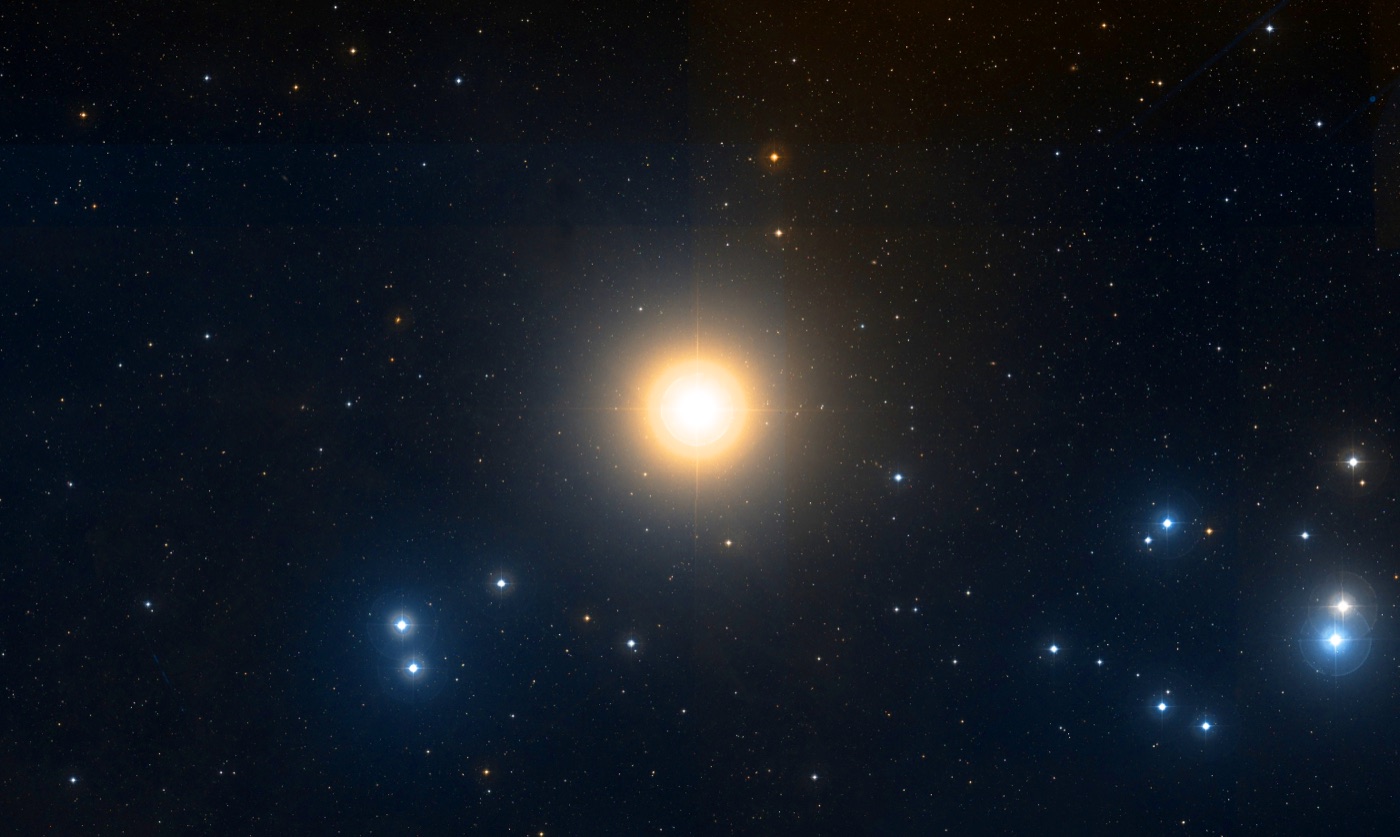
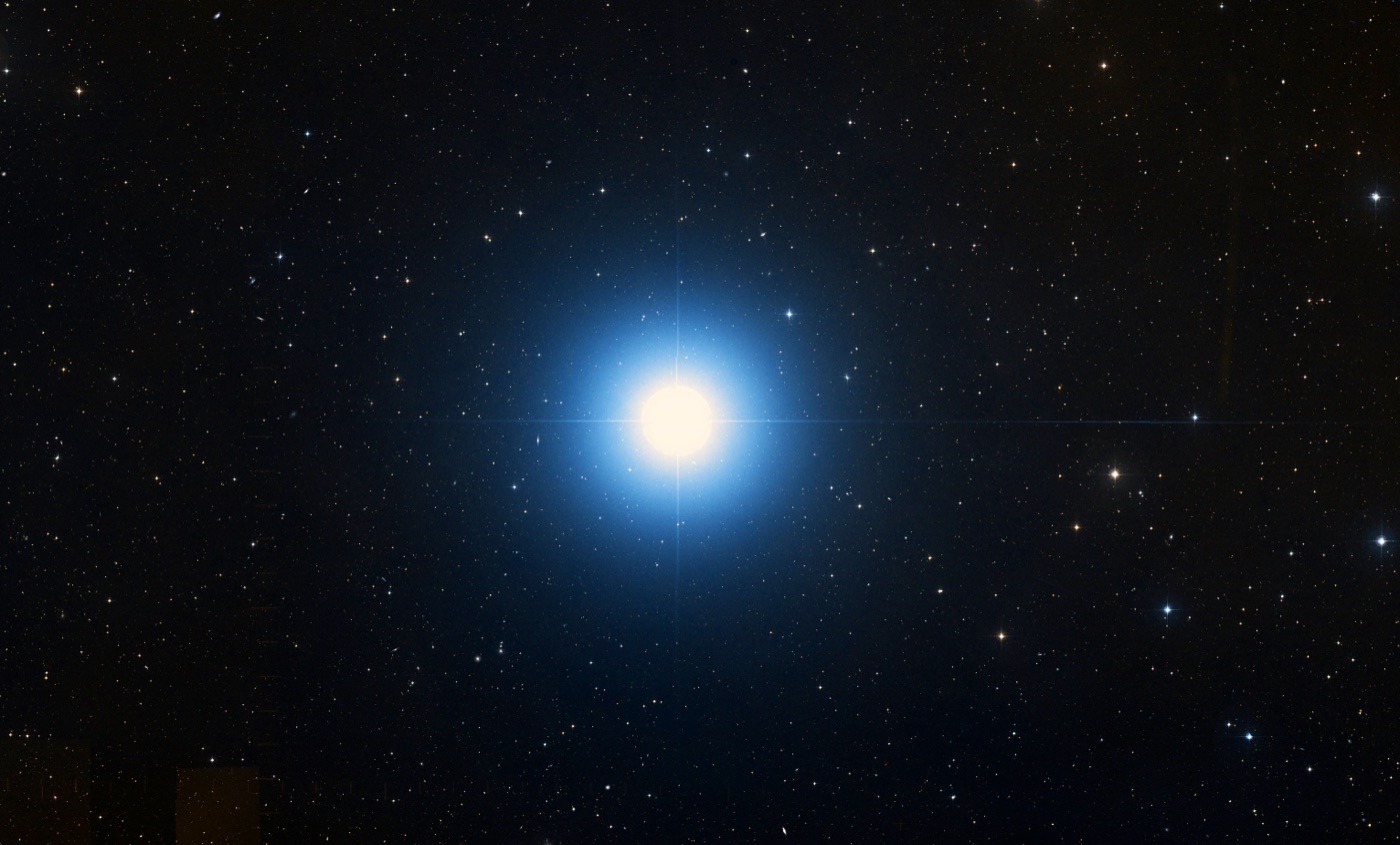
Antares — from the Greek 'anti-Arēs', meaning rival of Mars — earns its name by mimicking the red planet's ruddy hue. It is the brightest star in Scorpius and sixteenth in the sky overall, at magnitude 1.06. Were Antares placed at the centre of our solar system its photosphere would extend past the orbit of Mars, and on some estimates past Jupiter.
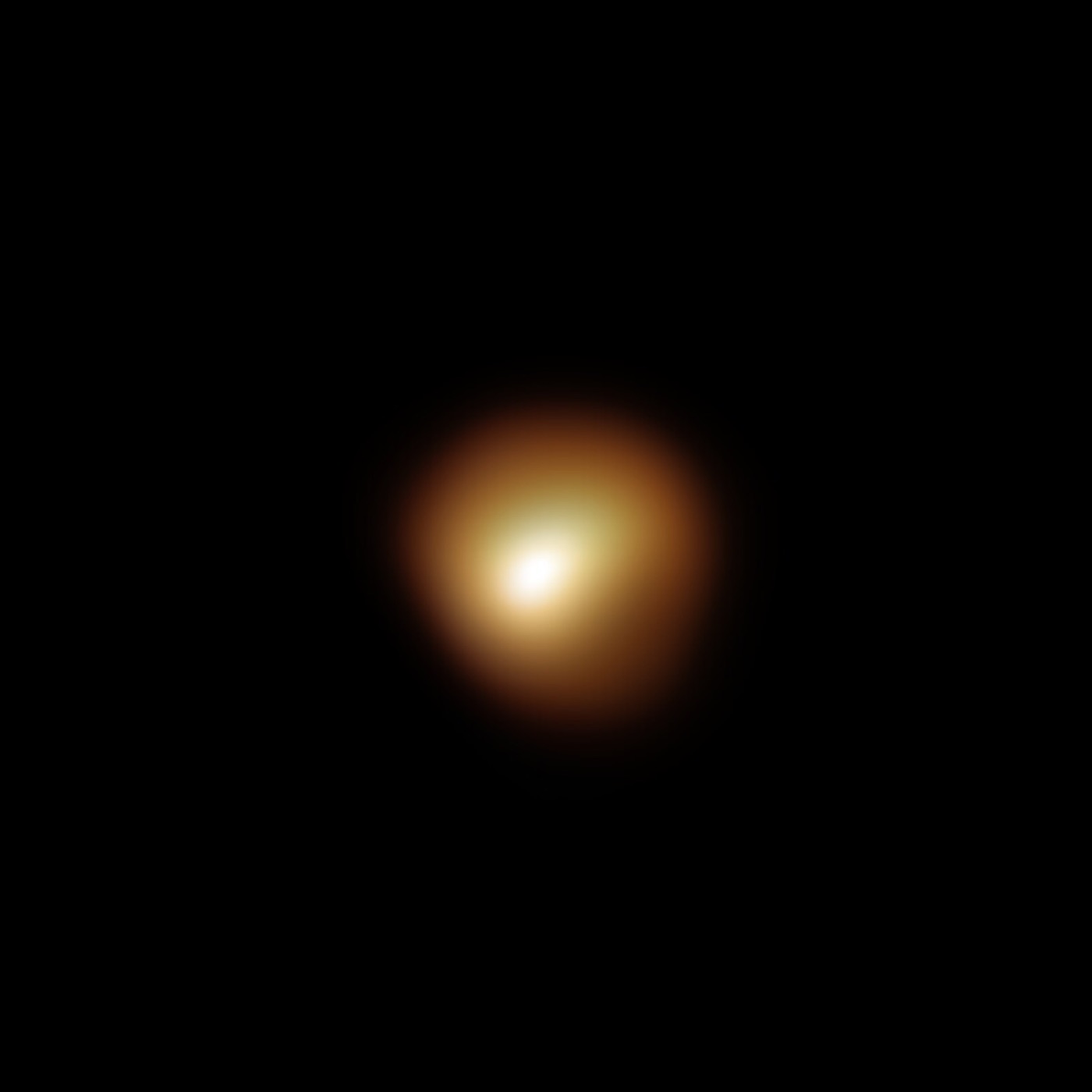
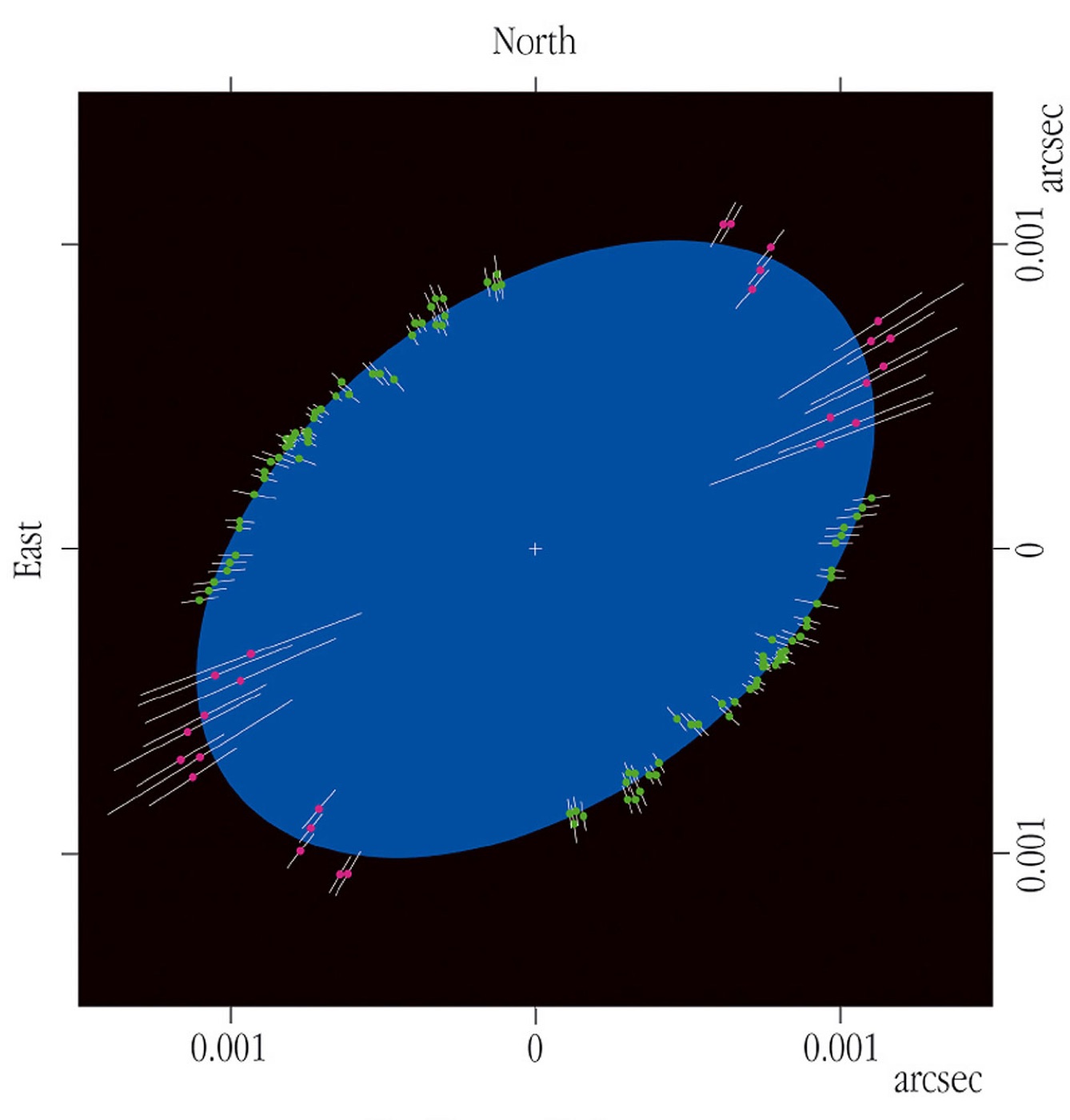
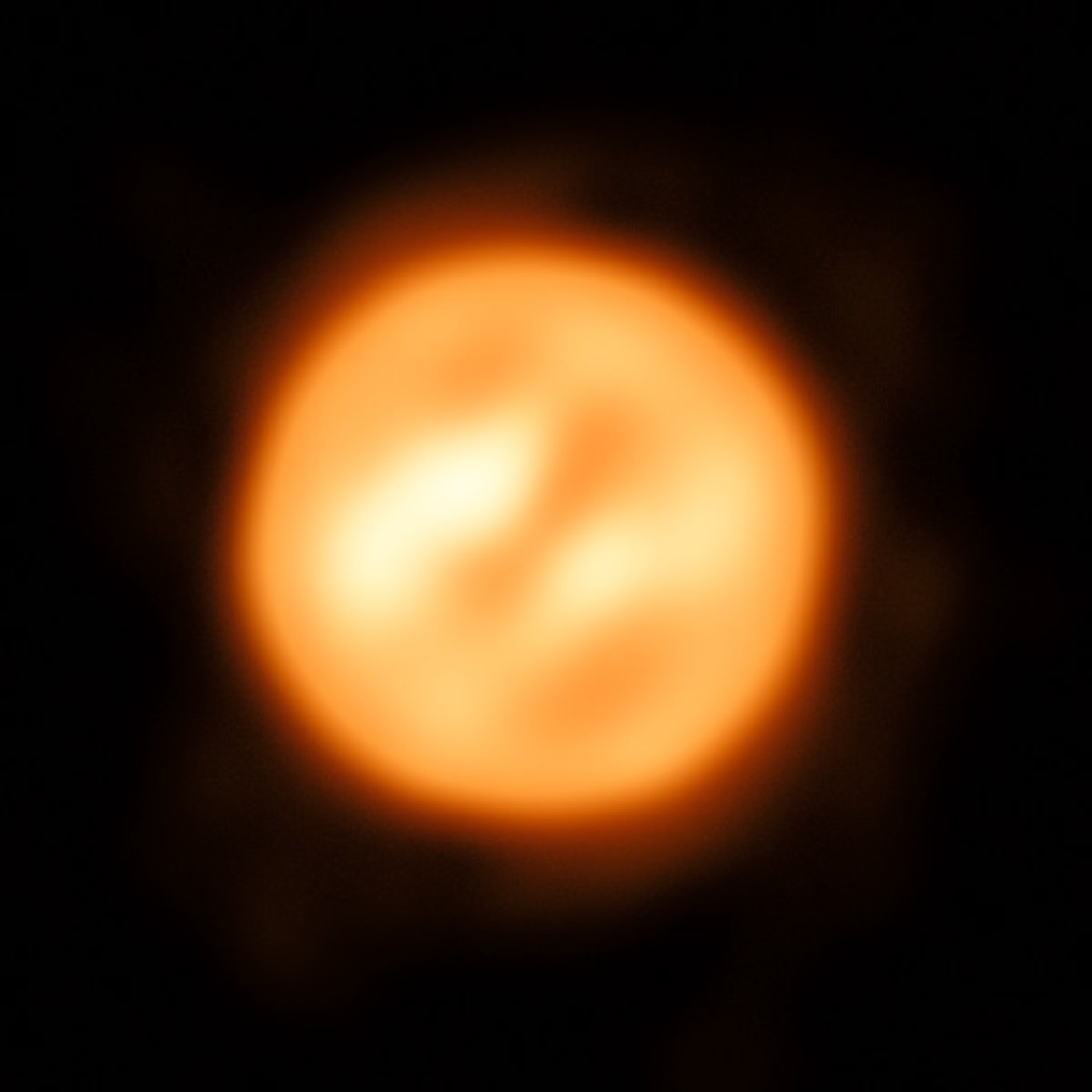
In 2017 ESO's Very Large Telescope Interferometer produced the first detailed surface image of Antares and the first velocity map of a star other than the Sun, revealing giant convective cells churning across its surface at supersonic speeds. Antares has a hot blue companion star, Antares B (spectral class B2.5V, ~5 solar masses), orbiting at roughly 550 AU — visible in small telescopes when the supergiant's glare allows. Together they form a gravitationally bound pair.
Antares was one of the four 'royal stars' of ancient Persia, appointed guardian of the west. Its deep red presence at the heart of Scorpius made it a central figure in the astronomical traditions of Babylon, India, China, and Polynesia. The Maori called it Rehua. In the southern sky it transits high in winter, a beacon for navigators throughout human history.
Compared to the Sun
Sun
This star · 700× radius
It shines about 57,500 times as bright as the Sun.
Its fate
Like Betelgeuse, Antares is burning through the last phases of its nuclear fuel. Within roughly a hundred thousand years it will collapse and detonate as a Type II core-collapse supernova, briefly visible to the naked eye in daylight. The remnant will likely be a neutron star embedded in an expanding gaseous nebula rich in heavy elements.
Find it in the sky
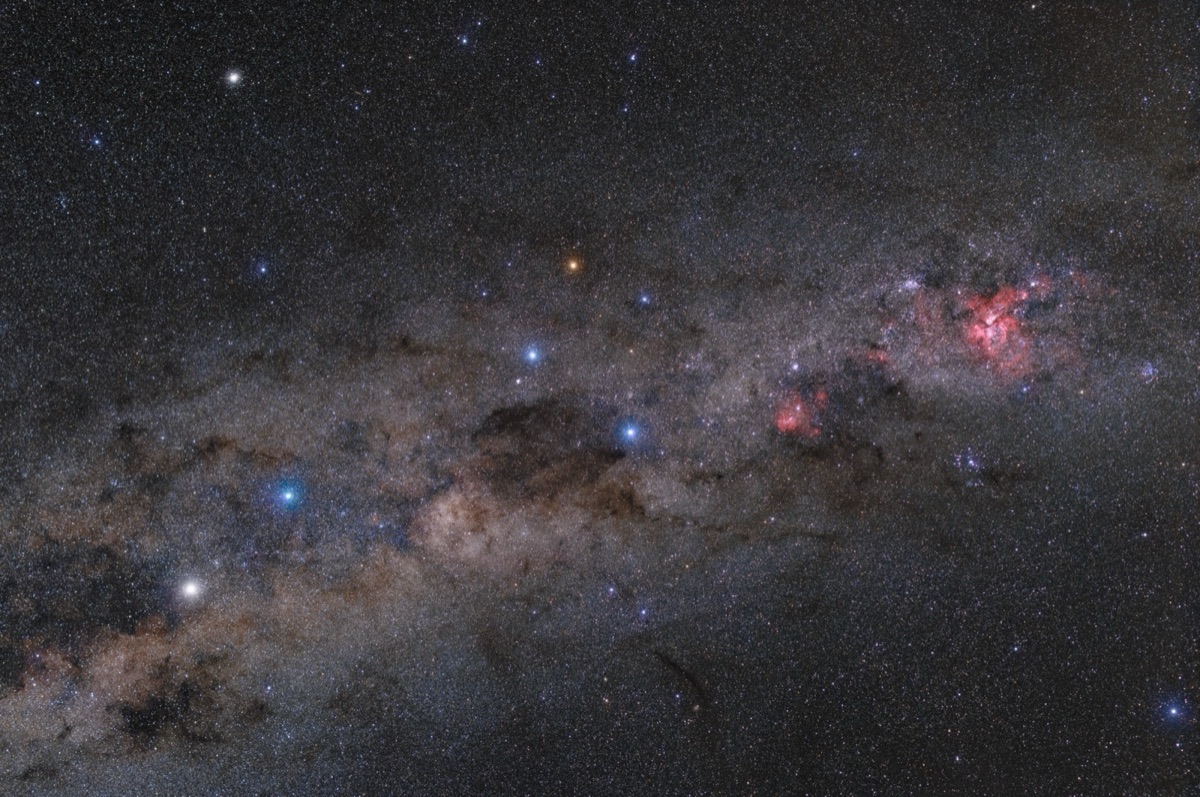
Antares lies at the heart of Scorpius, best seen from the southern hemisphere or from southern latitudes in the northern summer. Look for the obvious curved hook of Scorpius's body and its brightest, most vividly coloured star. From northern latitudes above ~60°N it skims near the horizon.