α Virginis
Spica
Virgo's Ear of Grain · Blue giant spectroscopic binary
At a glance
- Distance
- 249.7 ly
- Constellation
- Virgo
- Type
- B1III-IV + B2V
- Apparent magnitude
- 0.98
- Mass
- 10.25 M☉
- Radius
- 7.4 R☉
- Luminosity
- 12,100 L☉
- Surface temp
- 22,400 K
The story
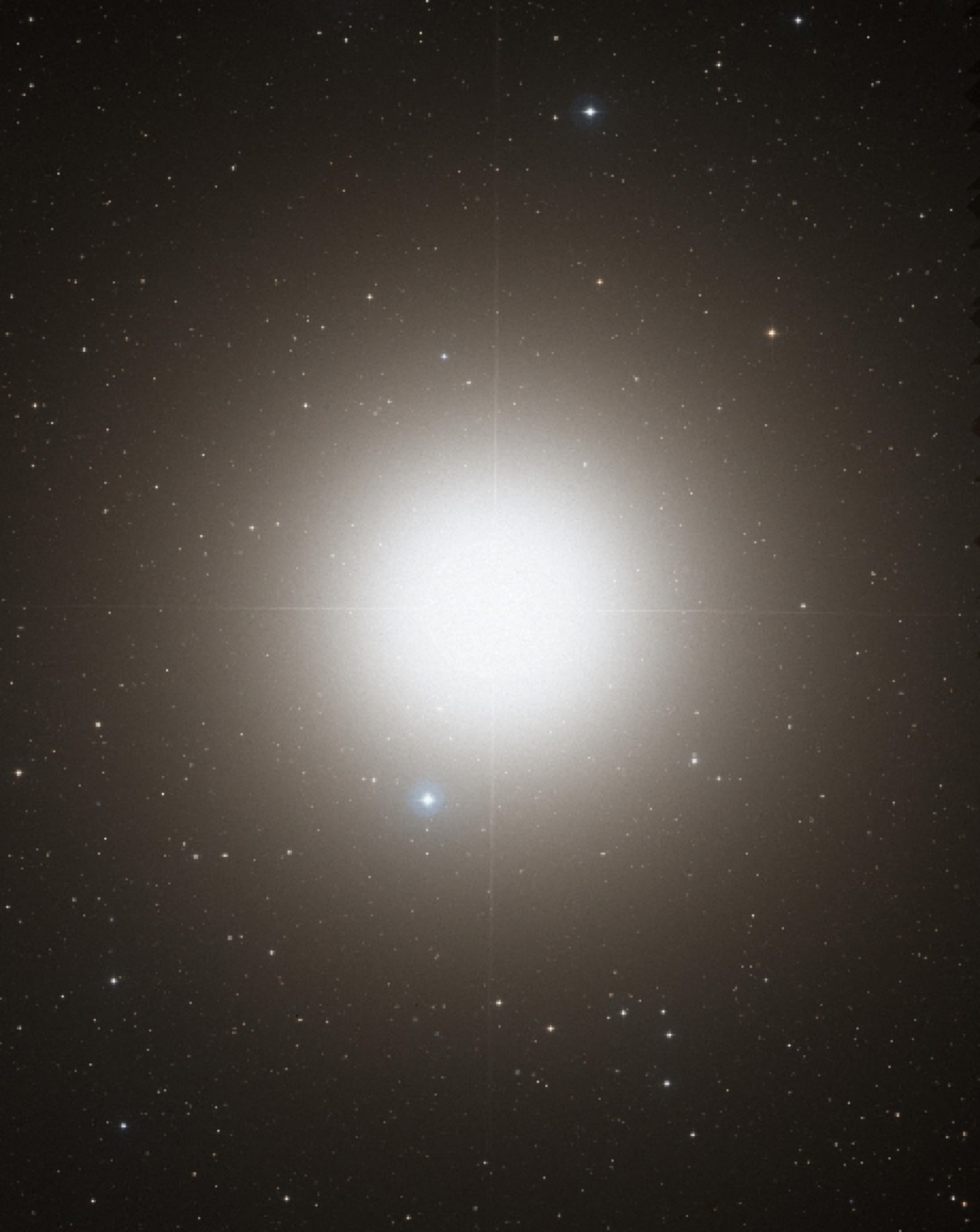
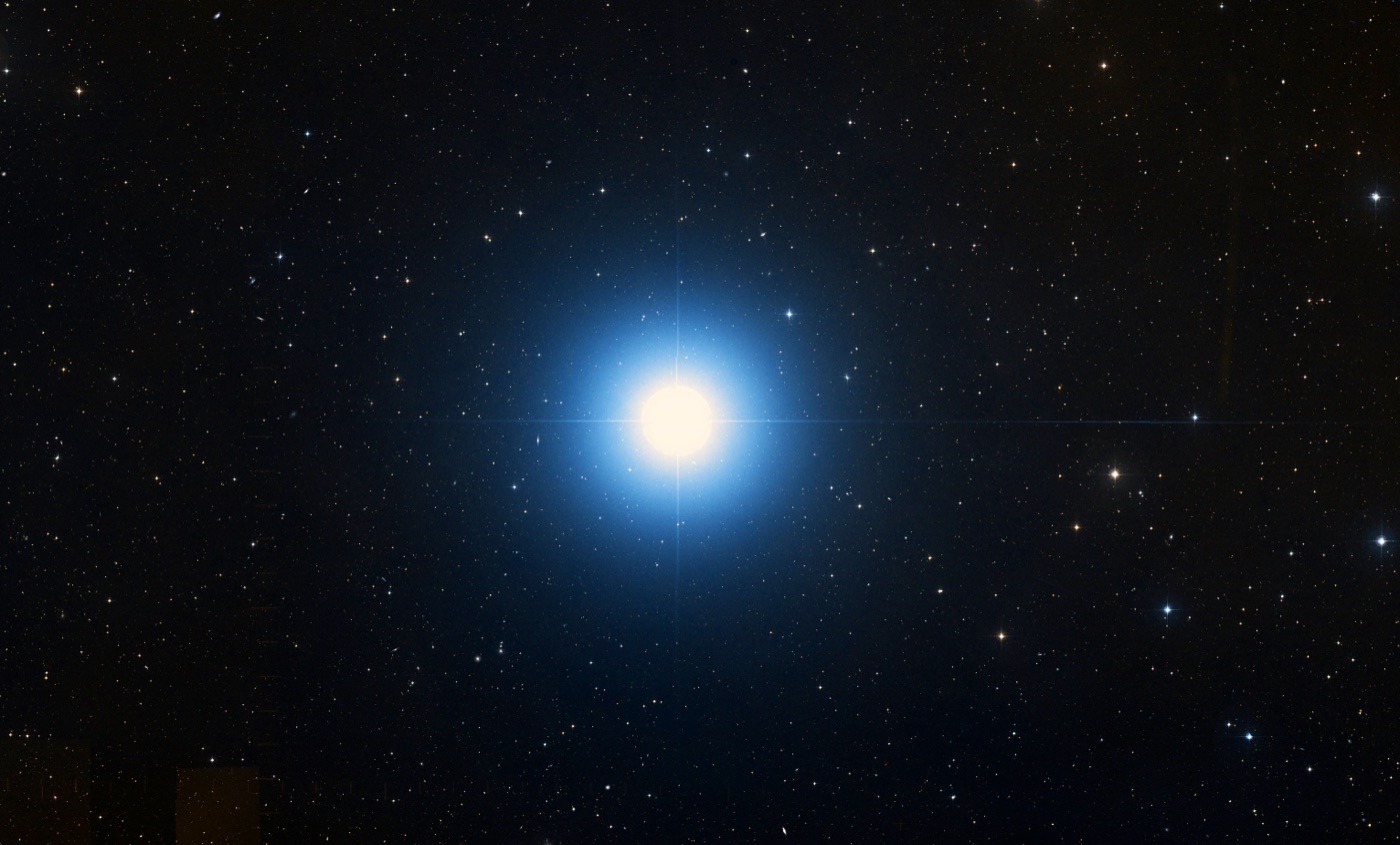
Spica blazes blue-white at magnitude 0.98, the sixteenth brightest star in the sky and the solitary bright star in the otherwise starless expanse of Virgo. Its name derives from the Latin spīca virginis, 'Virgo's ear of grain', and ancient Egyptians and Greeks used its seasonal heliacal rising to mark the harvest. Hipparchus used Spica observations around 127 BC to discover precession of the equinoxes, one of the most important astronomical discoveries of antiquity.
Spica is a close binary: two massive blue stars orbit each other in just 4.01 days, separated by only 0.12 AU. Their mutual tidal distortion pulls each star into an egg shape visible in light-curve modelling. Spica A, the primary, is classified as B1III-IV — it has already evolved slightly off the main sequence — with 10.25 solar masses, 7.4 solar radii, and a surface temperature of about 22,400 K. Spica B has roughly 7 solar masses and 18,500 K. Their combined luminosity approaches 14,000 times the Sun's. Spica A also pulsates slightly as a Beta Cephei variable.
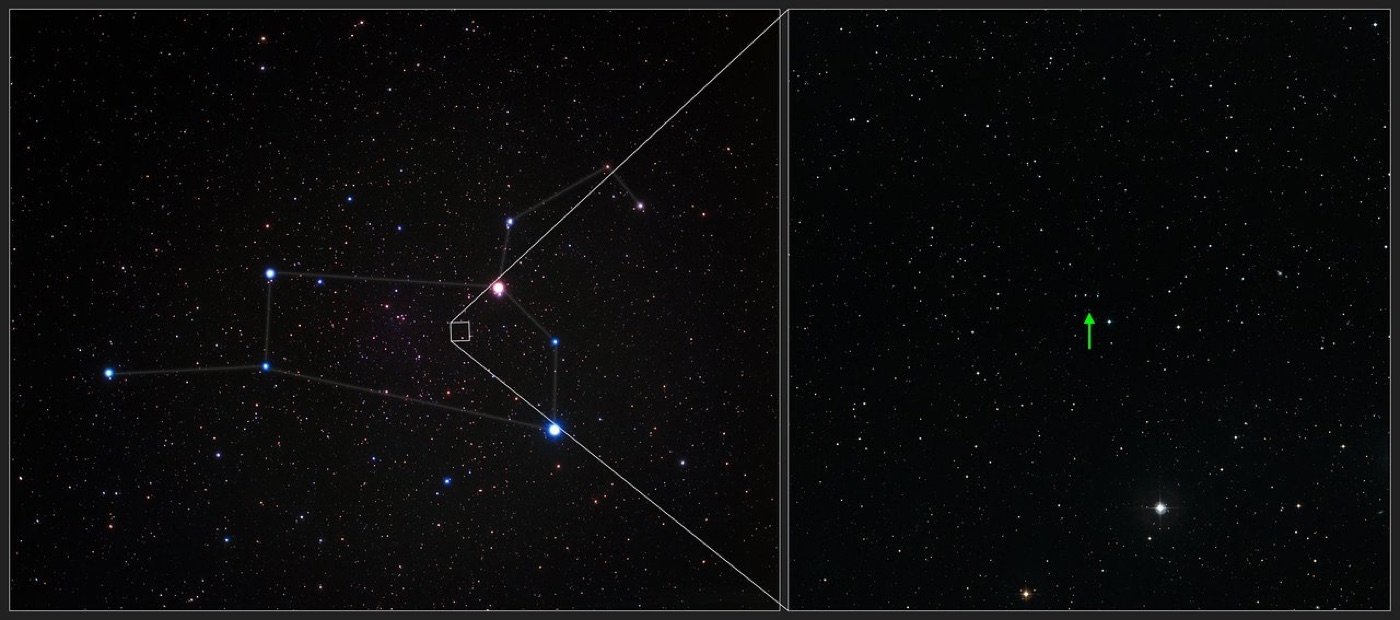
Spica's blue-white light is ideal for stellar spectroscopy, and it was one of the first stars whose radial-velocity variations betrayed a companion — measured by E.C. Pickering in 1890. It forms one vertex of the Diamond of Virgo asterism alongside Arcturus, Denebola, and Cor Caroli, and it is the standard that guides the navigational phrase 'Arc to Arcturus, speed on to Spica' when following the curve of the Big Dipper's handle southward.
Compared to the Sun
Sun
This star · 7.4× radius
It shines about 12,100 times as bright as the Sun.
Its fate
Both components of Spica are massive enough to end their lives as core-collapse supernovae. The heavier primary will exhaust its fuel first, exploding within a few million years, while the secondary will follow. The resulting system could become a double neutron star — or, if the first supernova unbinds the pair, two independent neutron stars.
Find it in the sky
Follow the handle of the Big Dipper in an arc to the bright orange Arcturus, then continue in the same curving direction to Spica — the mnemonic is 'Arc to Arcturus, speed on to Spica'. Spica is the only very bright star in an otherwise dim region of the spring/summer sky, and its blue-white colour distinguishes it from the surrounding field.