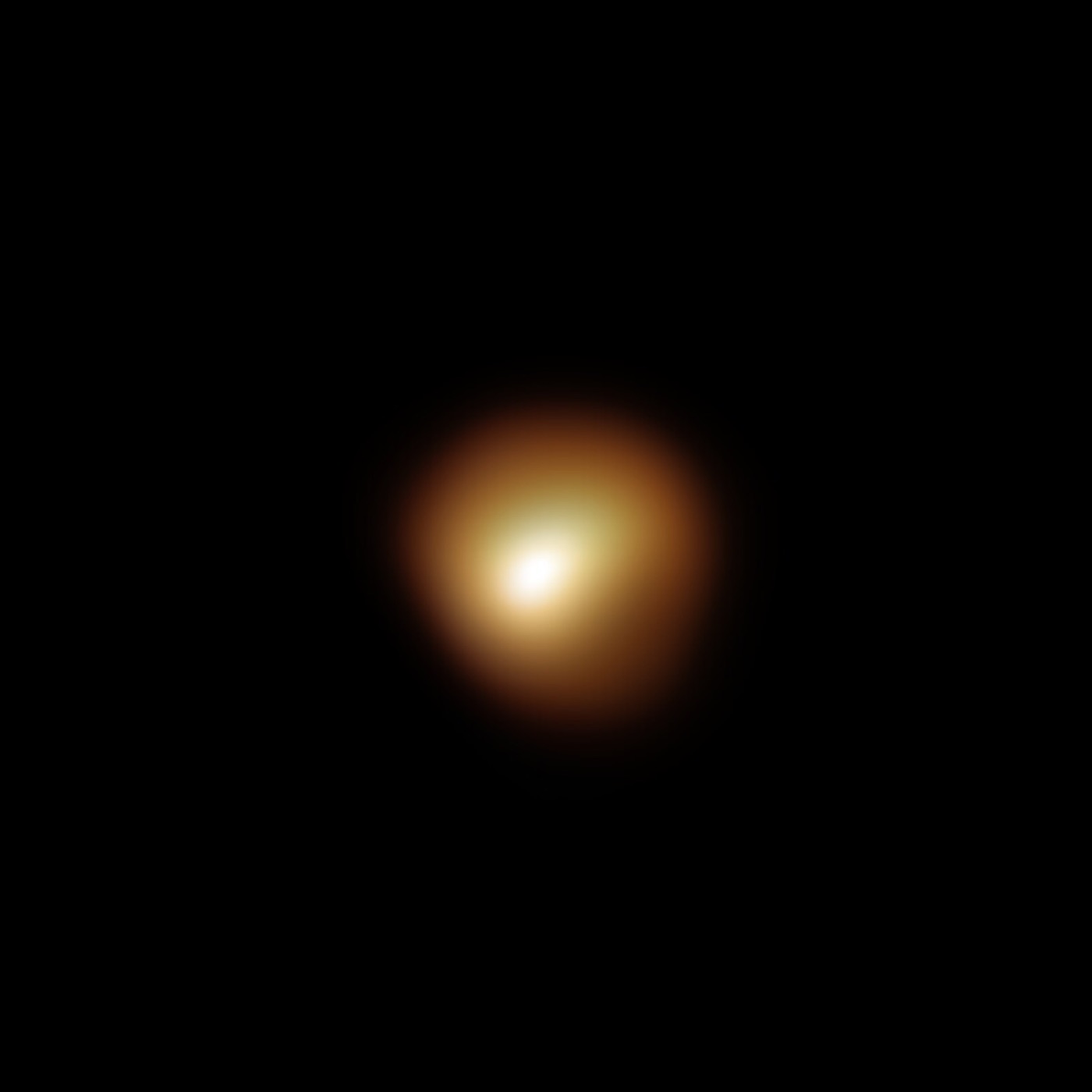
α Ursae Minoris
Polaris
The North Star · Yellow supergiant Cepheid variable (triple star system)
At a glance
- Distance
- 432.6 ly
- Constellation
- Ursa Minor
- Type
- F7:Ib-IIv SB
- Apparent magnitude
- 1.97
- Absolute magnitude
- -3.64
- Mass
- 5.1 M☉
- Radius
- 46 R☉
- Luminosity
- 2,200 L☉
- Surface temp
- 7,200 K
The story
Polaris sits within 0.7 degrees of the North Celestial Pole, making it the fixed pivot around which all other stars appear to wheel through the night. For roughly the past two thousand years no other bright star has held this role, and none will again until Gamma Cephei takes over around 3000 CE due to axial precession. This celestial constancy made Polaris the navigator's star par excellence: it indicates true north to within one degree without any calculation, and its altitude above the horizon equals the observer's geographic latitude — a fact mariners used for centuries to cross oceans.
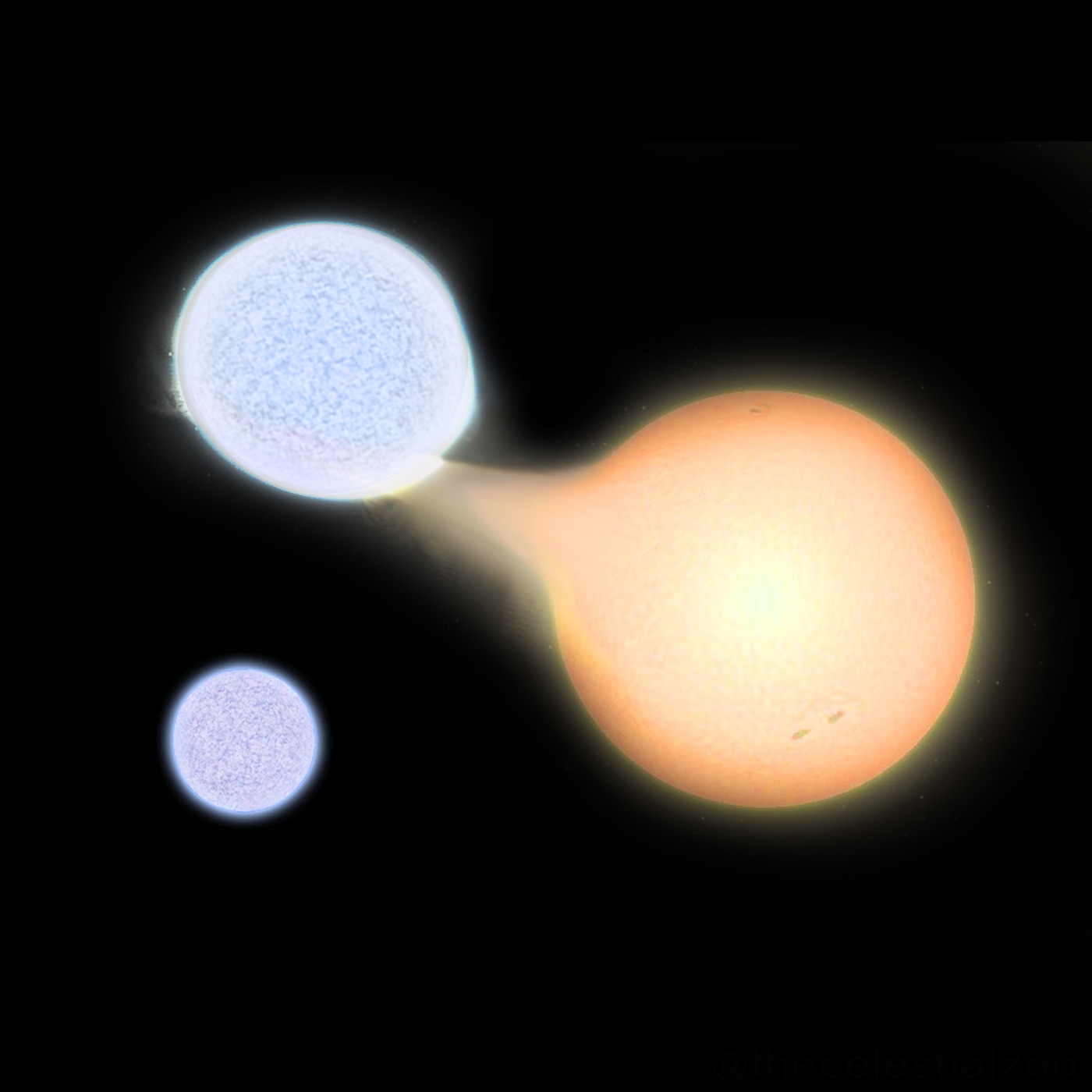
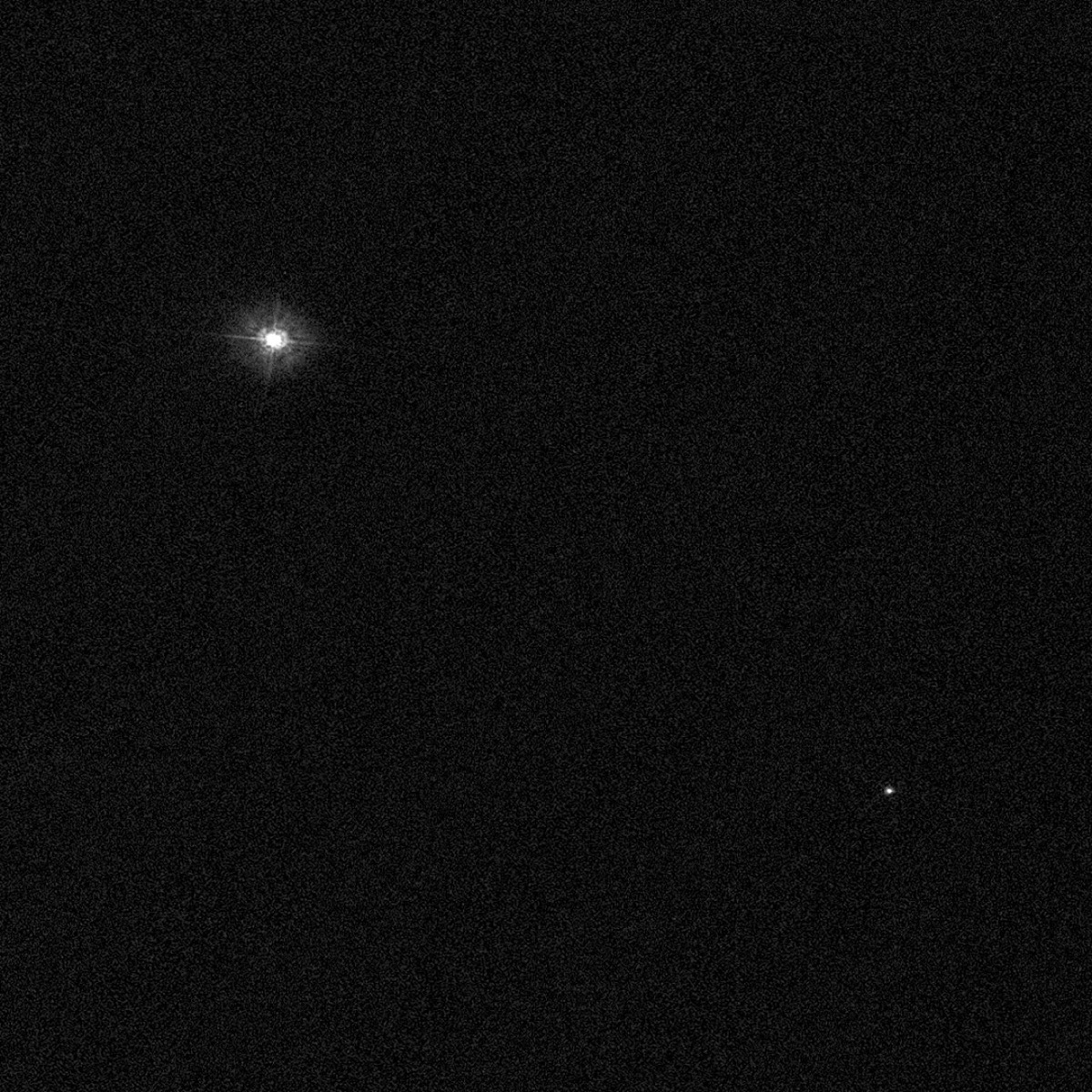
Polaris is far more than a simple beacon. It belongs to a triple system: Polaris Aa, the supergiant we see, has a close companion Polaris Ab orbiting just 18.5 AU away (detected by Hubble in 2006), and a wider companion Polaris B at roughly 2,400 AU, visible in small telescopes. Most remarkably, Polaris Aa is a Classical Cepheid variable — a supergiant that pulsates in diameter and brightness with a period of about 3.97 days. Cepheids are crucial cosmic distance ladders because their pulsation period directly reveals their intrinsic luminosity. Polaris is the nearest Cepheid to Earth.
Across cultures Polaris anchored navigation and cosmology. Viking seafarers called it the 'lodestar'; Arab astronomers named it al-Jāḥī, 'the Goat'; in Chinese tradition it was Gou Chen Yī, a celestial palace. For enslaved people in the antebellum United States, 'Follow the Drinking Gourd' led north to freedom, with the Gourd's handle pointing to Polaris. The Inuit used it to navigate across the frozen Arctic. Even today, Polaris is embedded in spacecraft attitude-control hardware as an inertial reference.
Compared to the Sun
Sun
This star · 46× radius
It shines about 2,200 times as bright as the Sun.
Its fate
At ~5.1 solar masses (2024 CHARA dynamical measurement), Polaris has already left the main sequence and is crossing the 'instability strip' in the HR diagram — the region where stars pulsate as Cepheids. After exhausting core helium it will become a red supergiant and eventually undergo a core-collapse supernova, leaving a neutron star. Its pole-star role will end well before that: precession will shift the celestial pole away within a few thousand years.
Find it in the sky
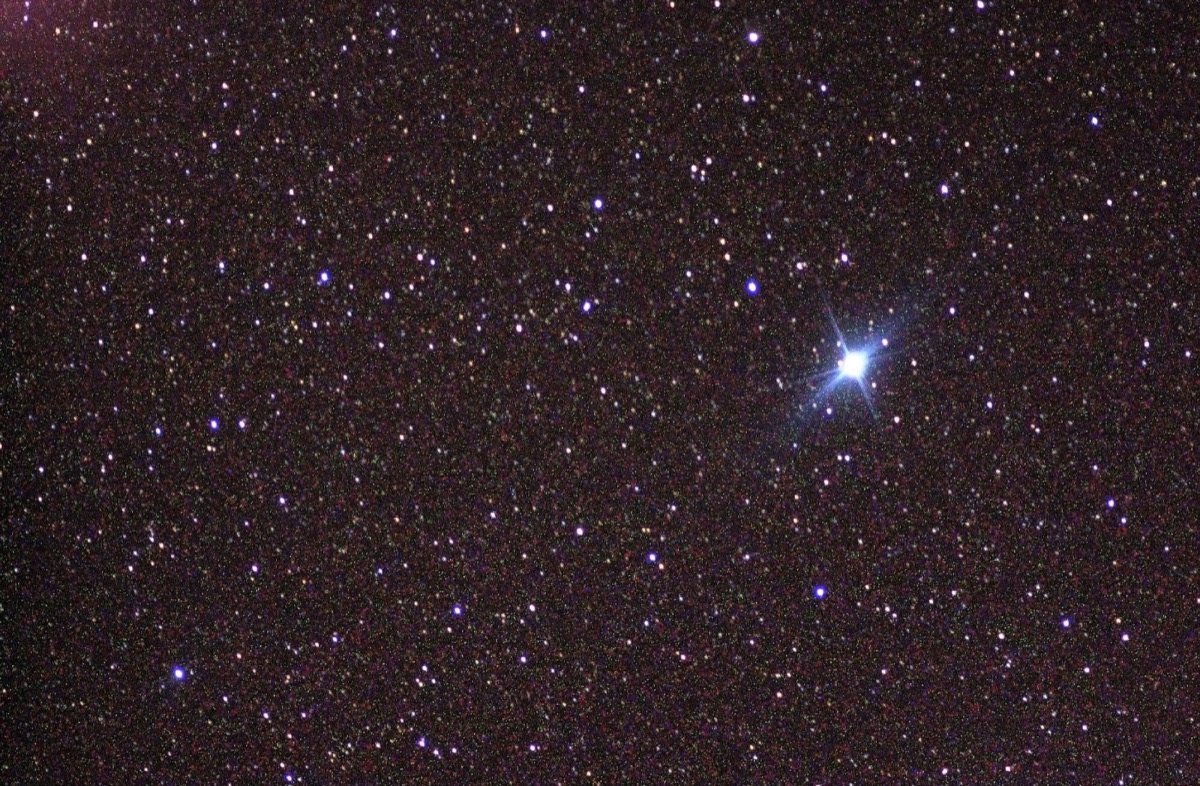
Polaris is at the end of the 'handle' of the Little Dipper (Ursa Minor). The easiest finder: extend a line from Merak through Dubhe — the outer two stars of the Big Dipper's bowl — about five times the distance between them. Polaris's altitude above the horizon always equals your latitude (within about a degree), making it a built-in latitude tool as well as a north indicator.