β Geminorum
Pollux
The Golden Twin · Orange giant (helium-fusing) with a confirmed exoplanet
At a glance
- Distance
- 33.8 ly
- Constellation
- Gemini
- Type
- K0IIIvar
- Apparent magnitude
- 1.16
- Absolute magnitude
- 1.08
- Mass
- 1.86 M☉
- Radius
- 9.1 R☉
- Luminosity
- 32 L☉
- Surface temp
- 4,865 K
The story
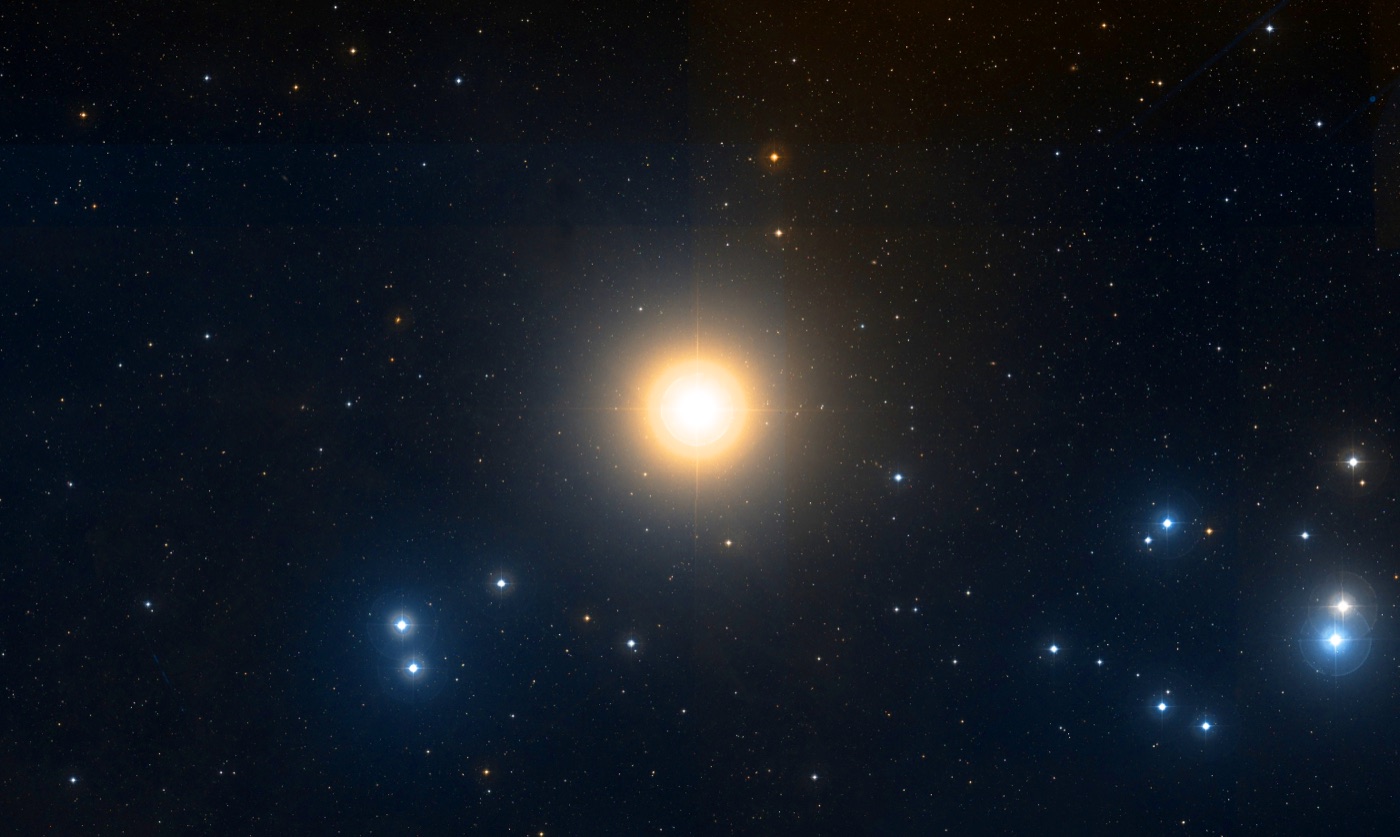
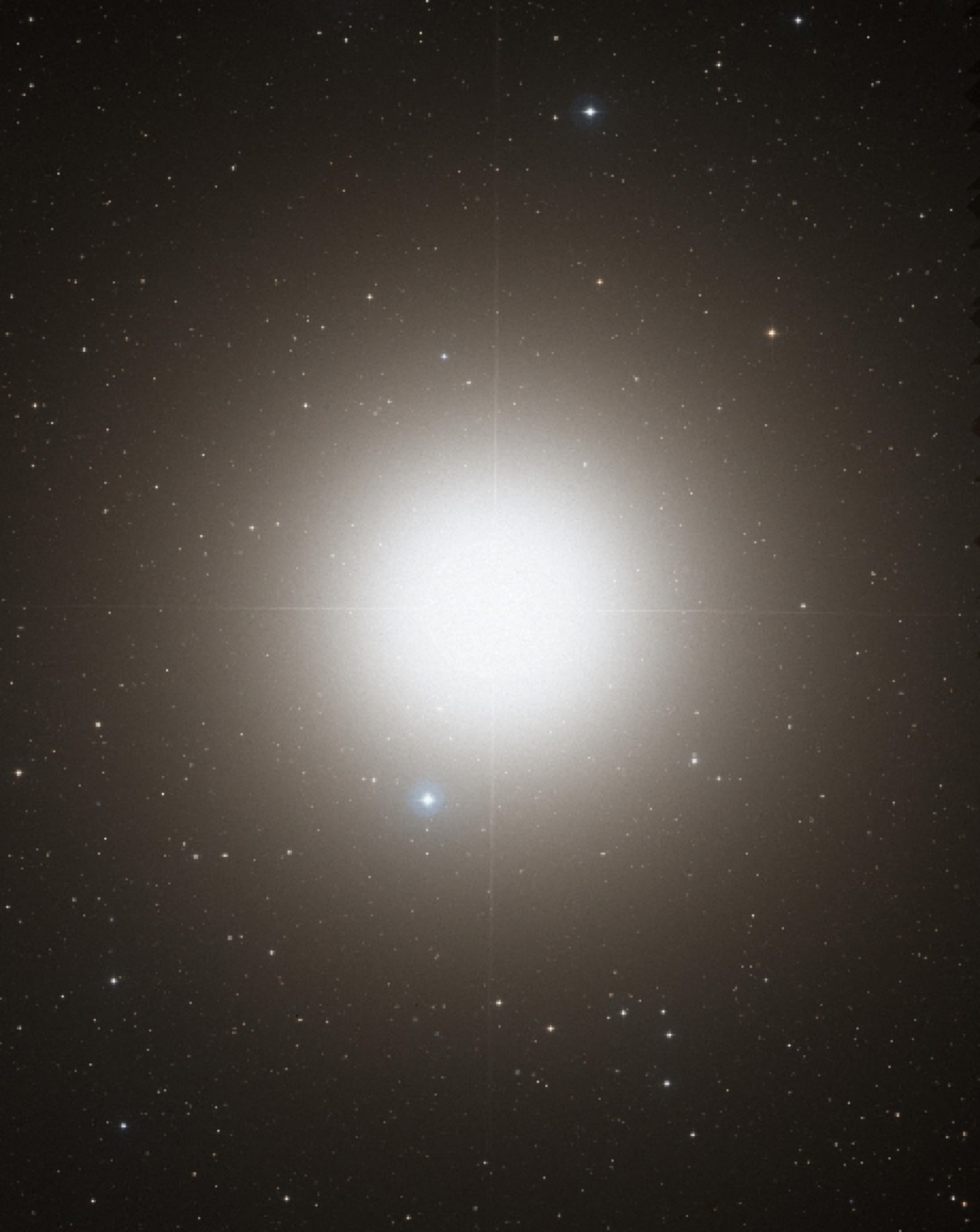
At magnitude 1.16, Pollux is the brightest star in Gemini — outshining its mythological twin Castor despite holding the 'beta' designation, a historical accident of early stellar cataloguing. Its warm amber colour marks it as an orange giant: a star that has exhausted core hydrogen and swollen to nine times the Sun's width while cooling its outer layers.
In Greek and Roman mythology Pollux was the son of Zeus, the immortal half of the twin pair born to Leda. Sailors venerated the Gemini twins as protectors against shipwreck, and the flame-like electrical discharges known as St Elmo's Fire were sometimes called 'Castor and Pollux' by ancient mariners. The star's proper name was formally ratified by the IAU in 2016.
In 2006 a planet was confirmed in orbit: Pollux b, since named Thestias, with a minimum mass of ~2.9 Jupiter masses and an orbital period of roughly 590 days at 1.69 AU (Hatzes et al. / Reffert et al. 2006, ApJ 652). It was the first exoplanet confirmed around a giant star and the brightest star in the sky known to host one. At just 33.8 light-years, Pollux is also the closest giant star to the Solar System — a neighbour that has already expanded well beyond its main-sequence self.
Compared to the Sun
Sun
This star · 9.1× radius
It shines about 32 times as bright as the Sun.
Its fate
Pollux is currently burning helium in its core, a stable 'horizontal branch' phase that will last a few hundred million years. It will eventually ascend the asymptotic giant branch, shedding its outer layers to form a planetary nebula and leaving behind a white dwarf. Its exoplanet Thestias will likely survive this transition as a distant hot survivor.
Find it in the sky
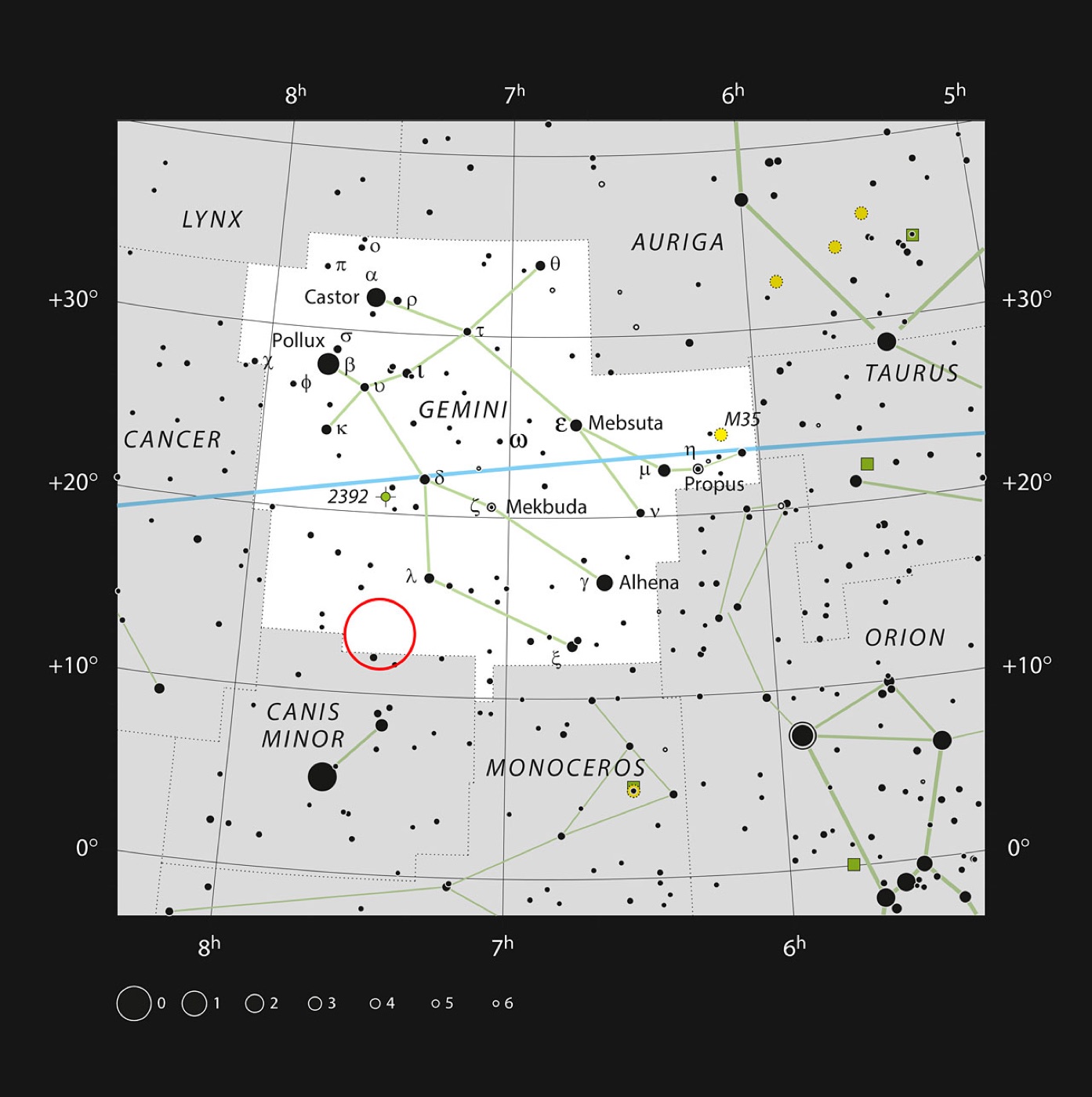
Gemini rises in the east on autumn evenings and is best placed in winter and early spring. Pollux is the slightly brighter and more orange of the two prominent heads of the twins — look for the pair standing east of Orion. From mid-northern latitudes Pollux is visible from about August to June.