α Leonis
Regulus
Heart of the Lion · Blue-white main-sequence star with gravity darkening
At a glance
- Distance
- 79.3 ly
- Constellation
- Leo
- Type
- B7V
- Apparent magnitude
- 1.36
- Absolute magnitude
- -0.52
- Mass
- 3.5 M☉
- Radius
- 3.2 R☉
- Luminosity
- 150 L☉
- Surface temp
- 10,300 K
The story
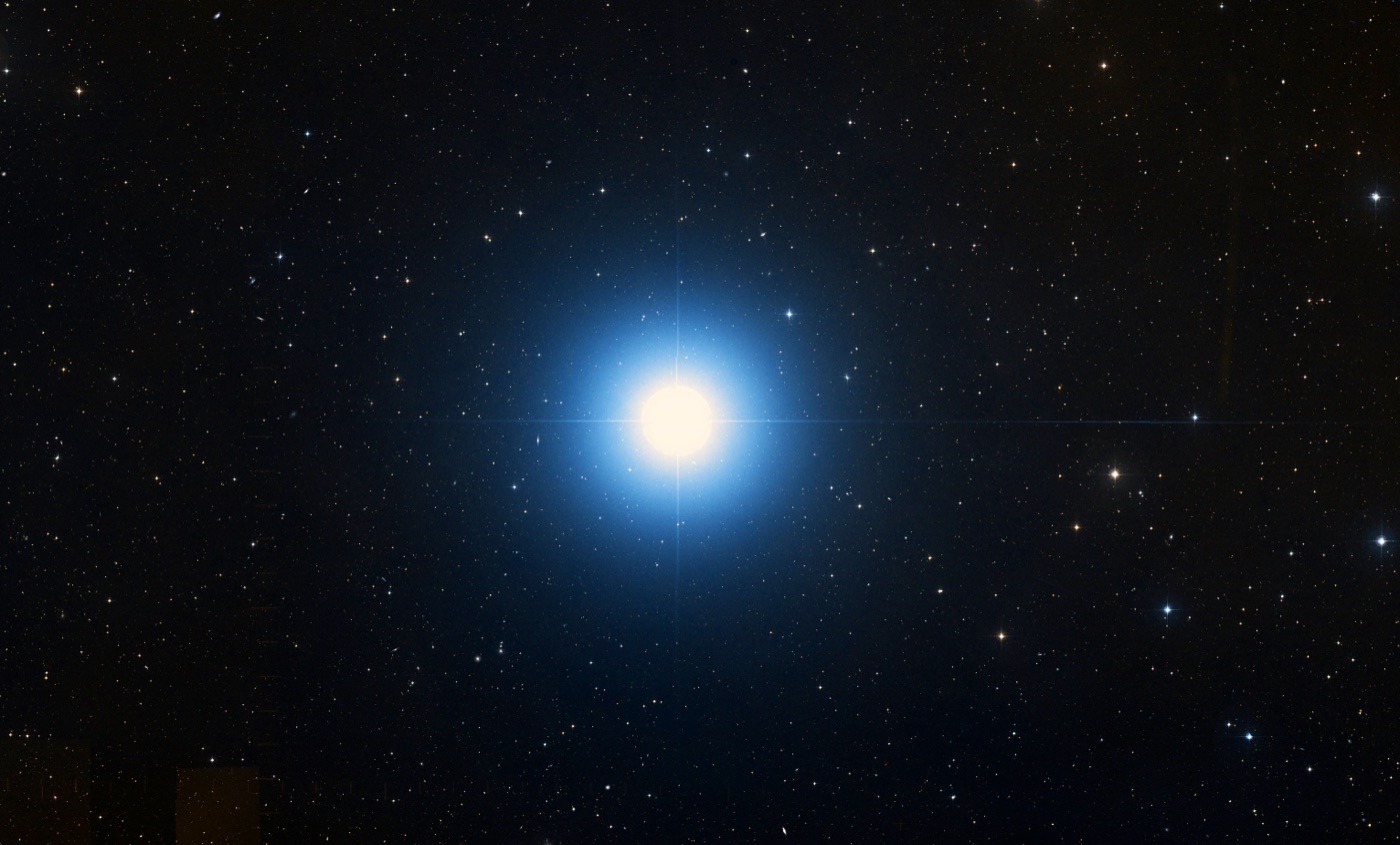
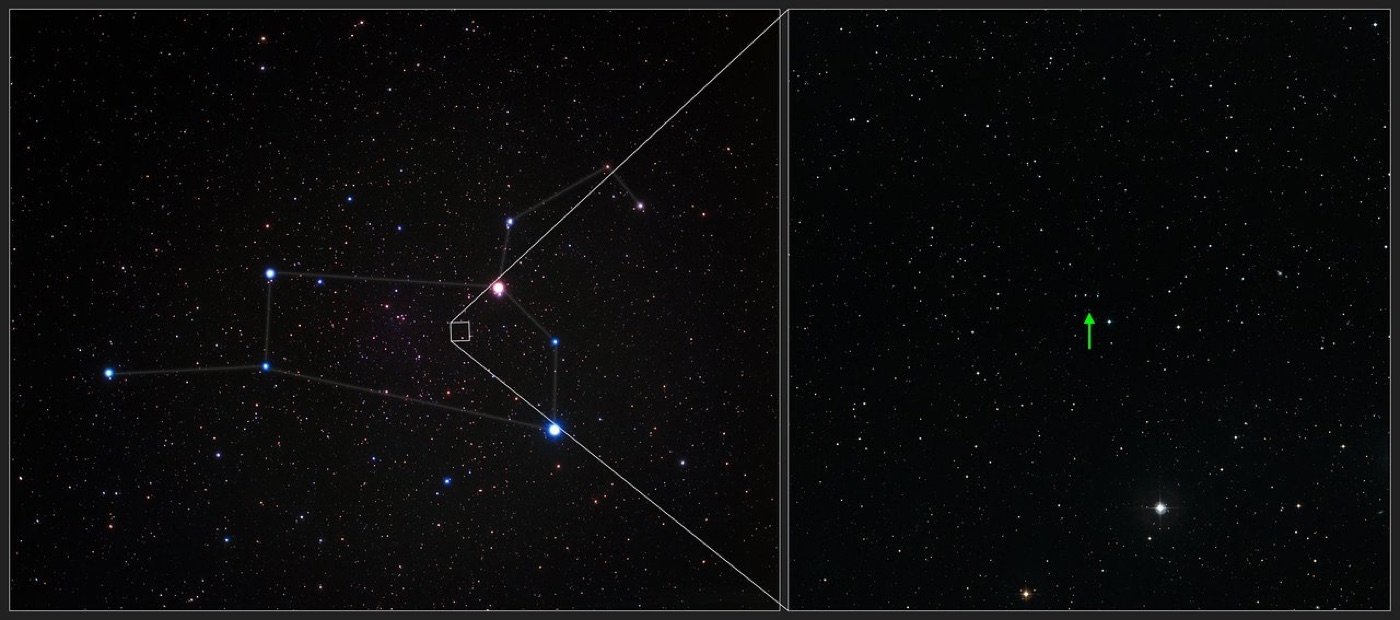
Regulus shines at magnitude 1.36 at the base of the Sickle of Leo — an asterism that traces the lion's mane and head across the spring sky. Its name means 'Little King' in Latin, a diminutive of Rex, reflecting its ancient status as one of the four Royal Stars of Persia alongside Aldebaran, Fomalhaut, and Antares. Babylonian astronomers called it Sharru ('King'); the star has marked the heart of the celestial lion in virtually every tradition for at least 2,500 years.
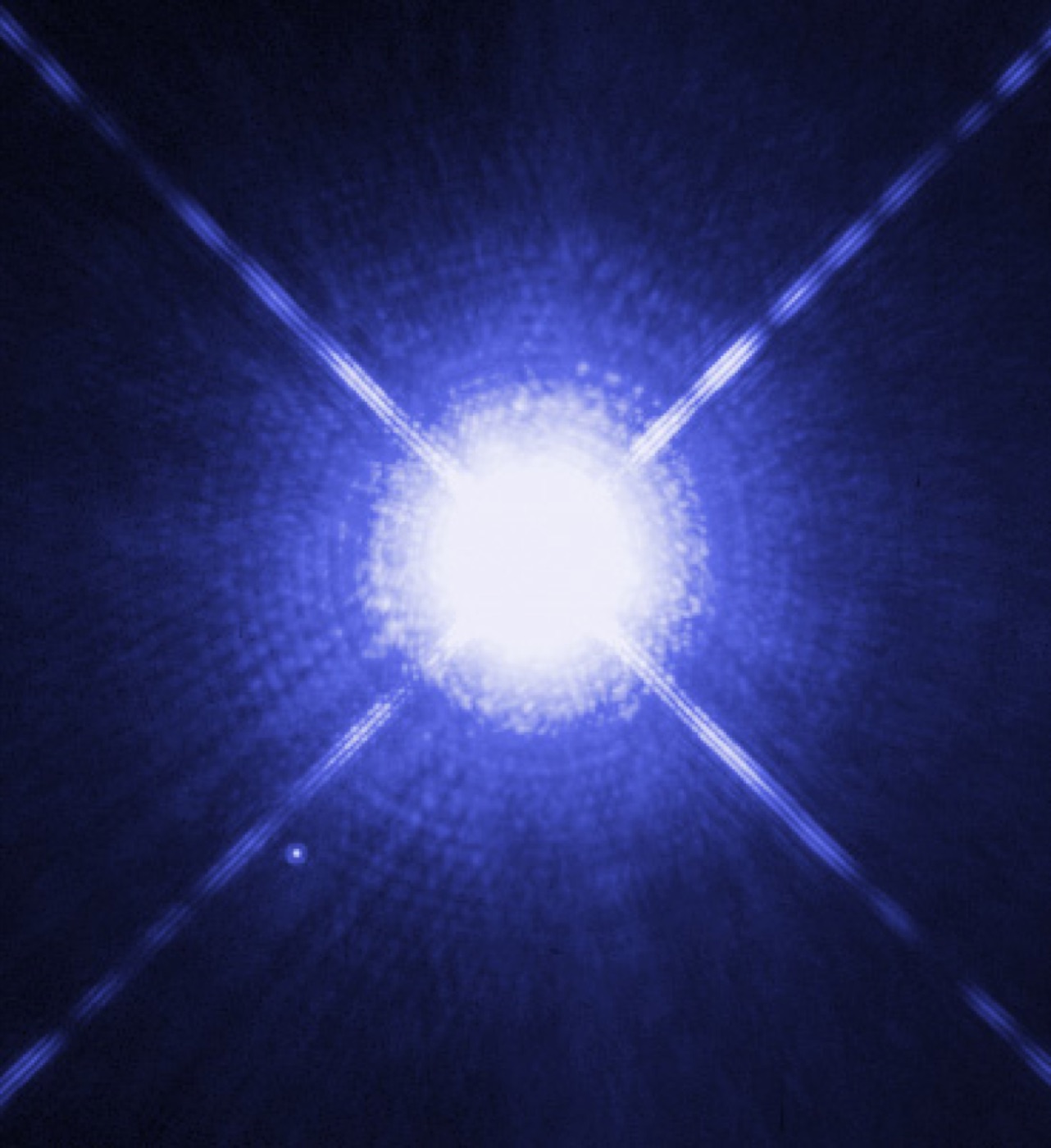
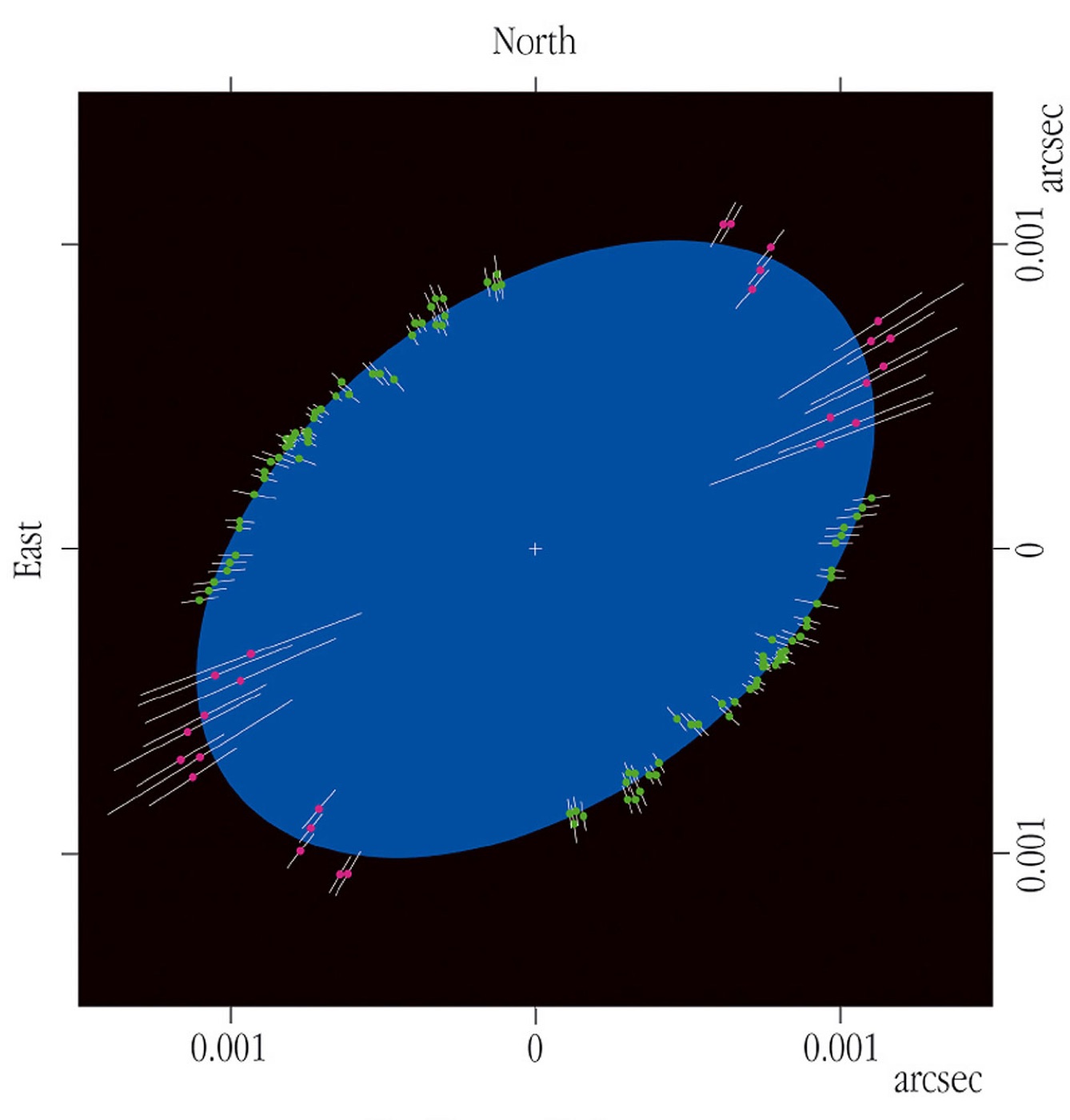
Despite appearing as a single point of light, Regulus is actually a quadruple system. The primary, Regulus A, is a B7V dwarf 3.5 times the Sun's mass blazing at 10,300 K, but with a hidden secret: it completes one rotation every 15.9 hours — near the break-up limit. This spin flattens the star into an oblate shape, causing the equatorial region to bulge outward and cool relative to the poles, a phenomenon called gravity darkening measured interferometrically. A close spectroscopic companion (likely a white dwarf) orbits within Regulus A; at much wider distances a pair of K/M dwarfs, Regulus B and C, complete the system.
Regulus sits almost exactly on the ecliptic — the Sun's apparent annual path — which means the Moon and planets regularly pass in front of it in a phenomenon called occultation. These events, predicted centuries in advance, were historically used to precisely determine the Moon's position and calibrate astronomical measurements. The star is also notable for being the only first-magnitude star that has a proper name for its exoplanet-like companion: the inner spectroscopic partner is presumed to be a white dwarf, the cooled remnant of a star that once transferred mass to Regulus itself — possibly explaining Regulus's extreme rotation.
Compared to the Sun
Sun
This star · 3.2× radius
It shines about 150 times as bright as the Sun.
Its fate
At 3.5 solar masses, Regulus will eventually leave the main sequence in a few hundred million years, expanding into a red giant and ultimately shedding its layers as a planetary nebula with a white-dwarf core. The companion system will survive, though orbital evolution over geological timescales will alter the relative spacings.
Find it in the sky
Leo is a spring constellation best placed at midnight in February–March and at dusk in May. Regulus marks the bottom of the Sickle, a backward question mark of stars. It is easily found because the two pointer stars of the Big Dipper's bowl, swung in the opposite direction from Polaris, lead to the vicinity of Leo and Regulus. Because Regulus lies so close to the ecliptic, the Moon frequently passes very close to it or occults it.