Leo
Wolf 359
The Demon of Leo · Red dwarf flare star
At a glance
- Distance
- 7.8 ly
- Constellation
- Leo
- Type
- M6V
- Apparent magnitude
- 13.45
- Absolute magnitude
- 16.61
- Mass
- 0.11 M☉
- Radius
- 0.144 R☉
- Luminosity
- 0.001 L☉
- Surface temp
- 2,749 K
The story
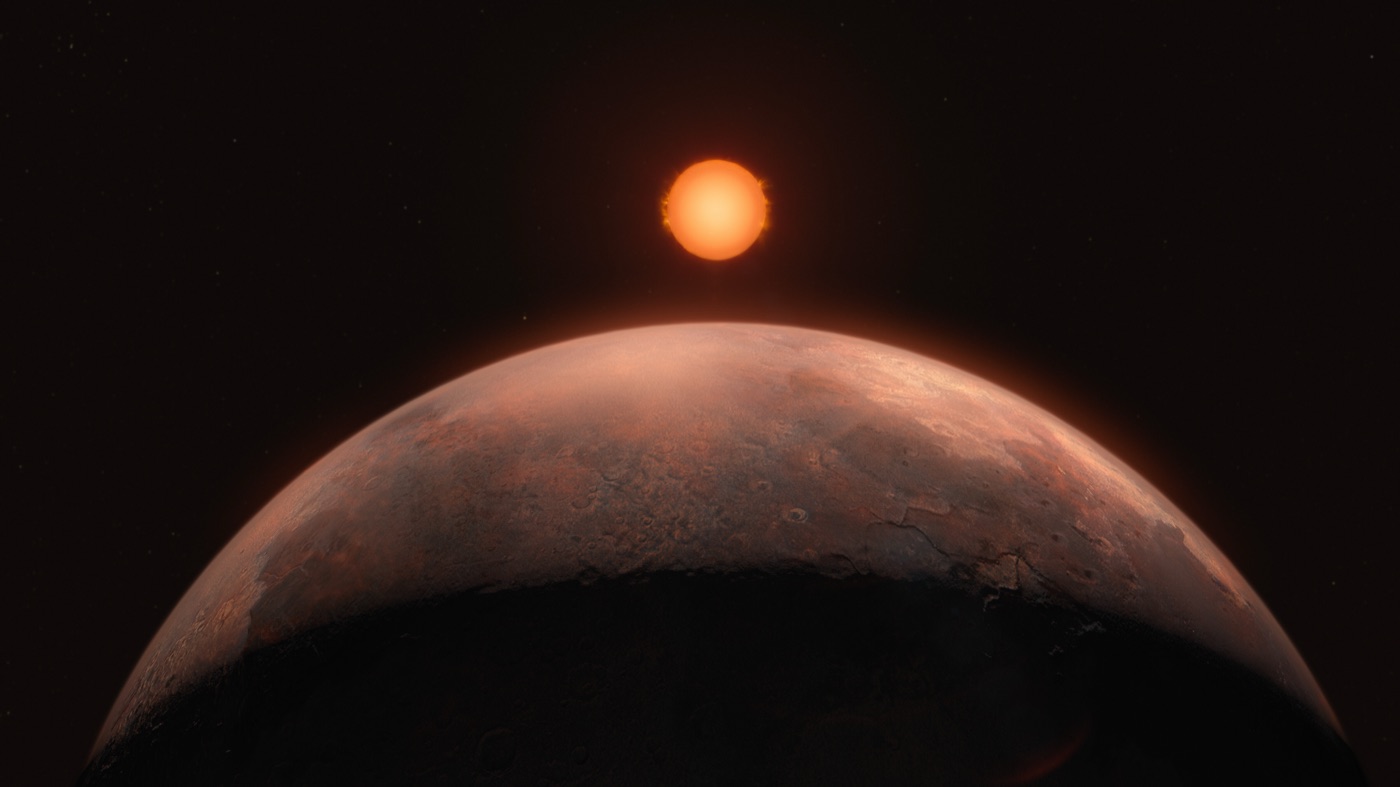
Wolf 359 is one of the least luminous stars known: at absolute magnitude 16.6, it produces only about 0.1% of the Sun's light output, making it intrinsically far fainter than even the naked eye could see at close range. Catalogued by German astronomer Max Wolf in 1919, it lies in Leo at a distance of 7.86 light-years — the fifth-nearest stellar system to the Solar System.
Despite its diminutive output, Wolf 359 is a tempestuous neighbour. Classified as a UV Ceti-type flare star (variable designation CN Leonis), it erupts in X-ray and ultraviolet bursts that momentarily multiply its brightness. A 2025 Chandra/XMM-Newton observing campaign detected 18 X-ray flares in just 3.5 days, with surface magnetic fields running hundreds of times stronger than the Sun's — bad news for any hypothetical atmosphere in its vicinity.
Culturally the star gained fame through Star Trek: The Next Generation. In the 1990 two-part episode 'The Best of Both Worlds,' a Borg fleet destroys a Starfleet task force at Wolf 359, and the battle became one of the most iconic moments in science-fiction television. The name has since appeared in numerous other sci-fi works.
Compared to the Sun
Sun
This star · 0.144× radius
It shines about 0.001 times as bright as the Sun.
Its fate
Wolf 359 will continue fusing hydrogen for many tens of billions of years — its minuscule mass ensures an extraordinarily slow burn rate. It will never reach the luminosity needed to swell into a red giant; instead it will quietly dim into a cold dwarf over cosmic timescales that far exceed the current age of the universe.
Find it in the sky
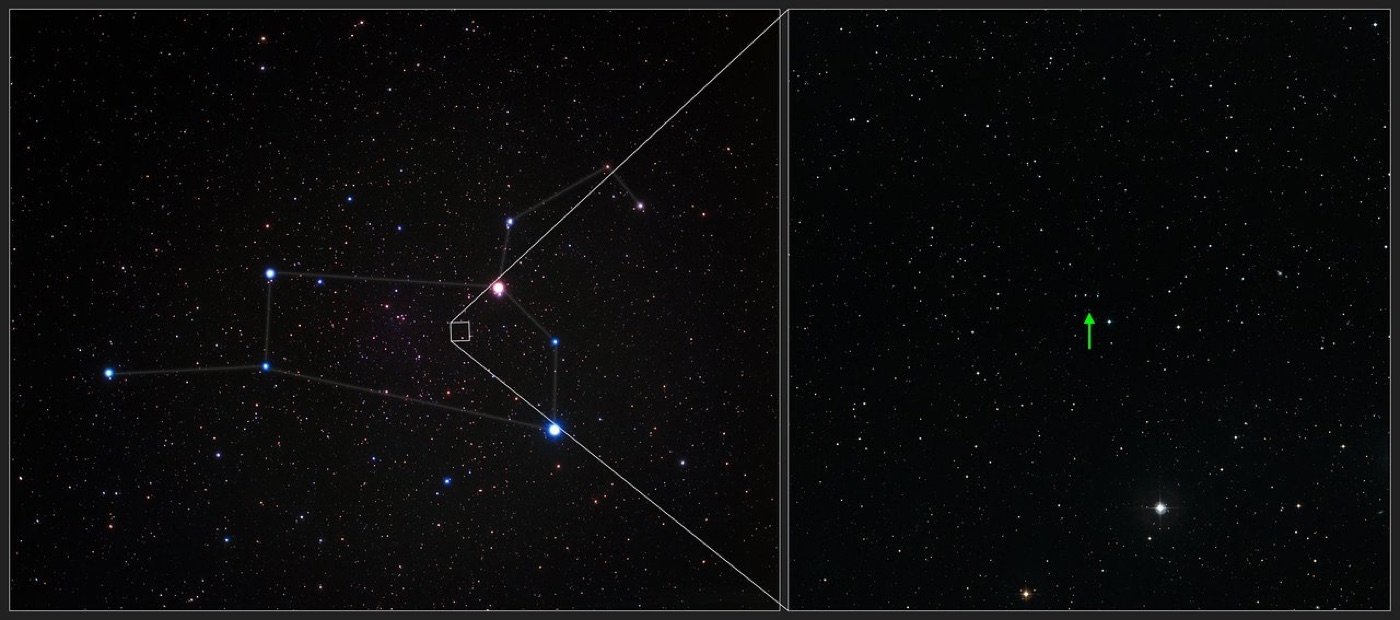
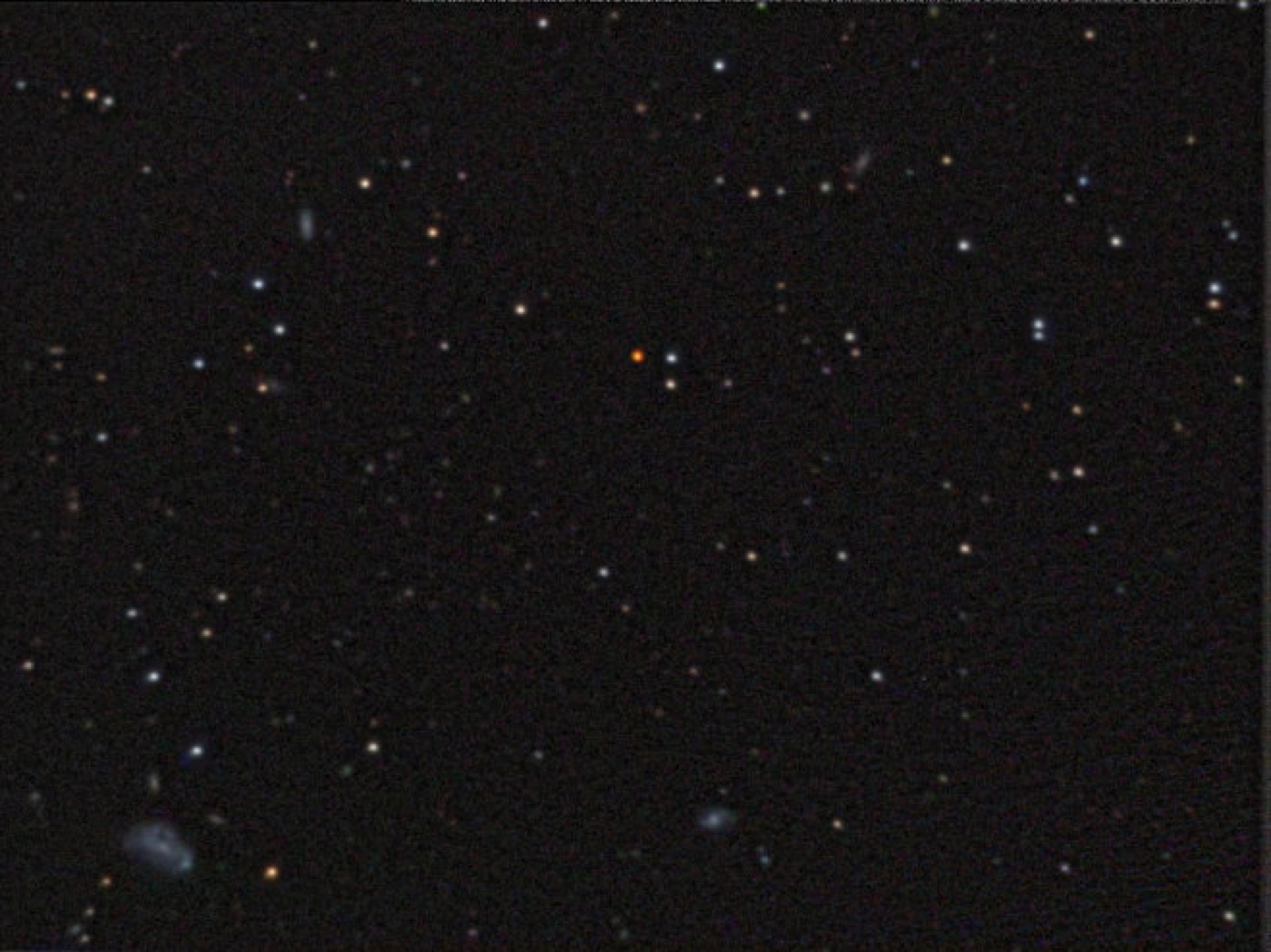
At magnitude 13.45, Wolf 359 is invisible without a telescope. It sits in Leo, roughly 1.5° southwest of the star 53 Leonis. An aperture of at least 8 inches is required to glimpse it as a faint reddish point. Best placed in the evening sky during northern-hemisphere spring.