Ophiuchus
Barnard's Star
The Runaway Star · Red dwarf subdwarf
At a glance
- Distance
- 5.9 ly
- Constellation
- Ophiuchus
- Type
- sdM4
- Apparent magnitude
- 9.54
- Absolute magnitude
- 13.21
- Mass
- 0.162 M☉
- Radius
- 0.187 R☉
- Luminosity
- 0.003 L☉
- Surface temp
- 3,195 K
- Age
- 10 billion yrs
The story
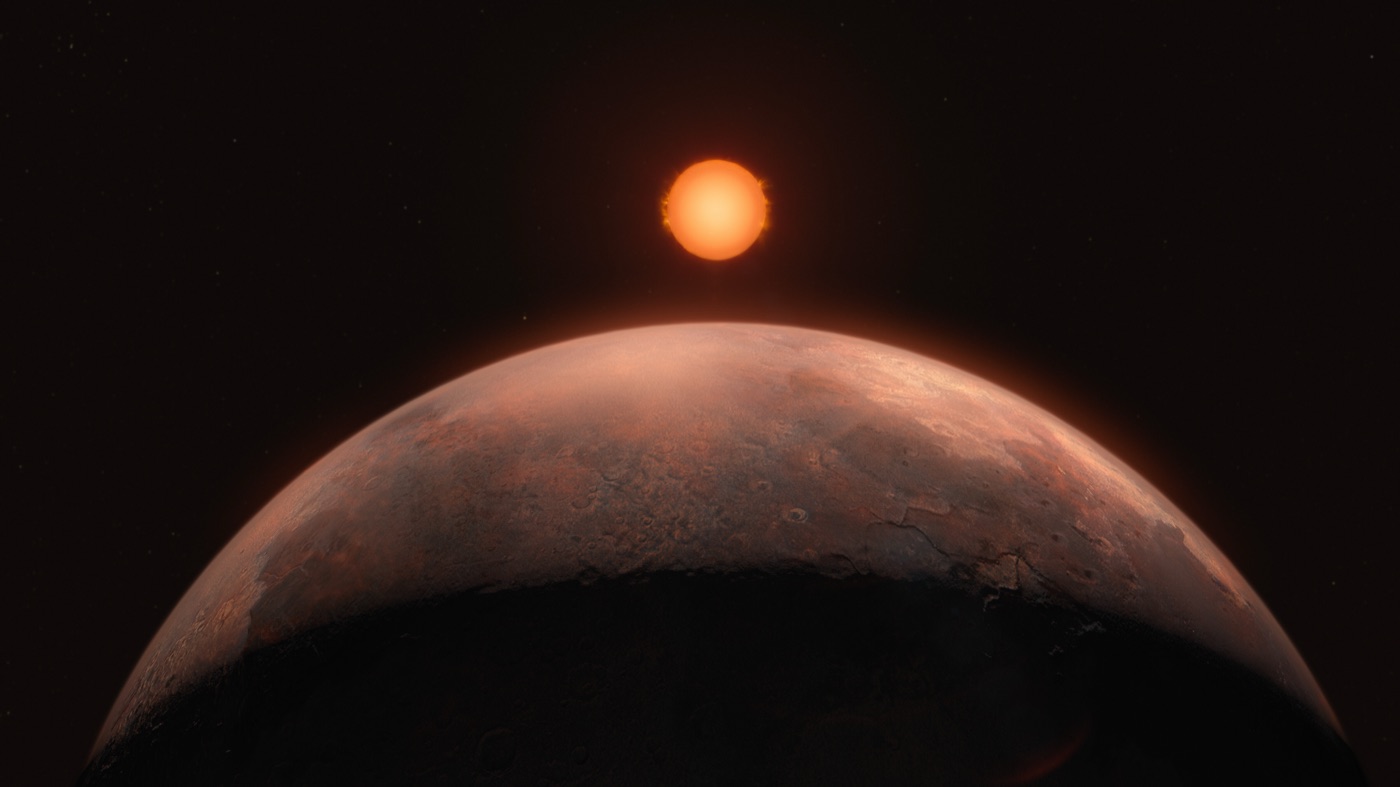
Barnard's Star holds the all-time record for proper motion: it streaks across the sky at 10.3 arcseconds per year, so that it shifts the equivalent of a full Moon's diameter roughly every 180 years. Astronomer Edward Emerson Barnard measured this staggering motion in 1916 from Yerkes Observatory, and the star bears his name as a result.
At 5.96 light-years away, it is the second-closest stellar system — after the Alpha/Proxima Centauri group — and the nearest single star to our Sun. It is a subdwarf of spectral class sdM4, meaning it is slightly metal-poor and smaller than a typical M4 dwarf. With roughly 16% of the Sun's mass and only 0.34% of its luminosity, it emits most of its feeble light in the infrared.
The search for planets around Barnard's Star has a long, tangled history. In the 1960s and 70s Peter van de Kamp claimed to detect planetary companions via astrometric wobble — claims that were later refuted. Patience was rewarded in 2024, when astronomers confirmed a sub-Earth-mass planet (Barnard b, ≥0.37 Earth masses) orbiting every 3.15 days, along with three additional sub-Earth candidates — the lowest-mass exoplanets detected around any nearby star at the time.
Its great age — around 10 billion years, more than twice the Sun's age — makes it one of the oldest red dwarfs in the solar neighbourhood. Its high velocity relative to the Sun (approximately 142 km/s) is consistent with membership in the old Population II, halo-like kinematic group of stars.
Compared to the Sun
Sun
This star · 0.187× radius
It shines about 0.003 times as bright as the Sun.
Its fate
Like all low-mass red dwarfs, Barnard's Star will remain in stable hydrogen fusion for trillions of years. Eventually it will exhaust its nuclear fuel and contract into a cool helium white dwarf. Barnard's Star will make its closest approach to the Solar System in about 9,700 years — coming within roughly 3.75 light-years — before slowly receding again.
Find it in the sky
With an apparent magnitude of 9.54, Barnard's Star requires binoculars or a small telescope to see. It lies in Ophiuchus, a few degrees north of the star 66 Ophiuchi. Its rapid proper motion means its position shifts noticeably from decade to decade; check a current star atlas for the latest coordinates.
Related stars & reading
Star
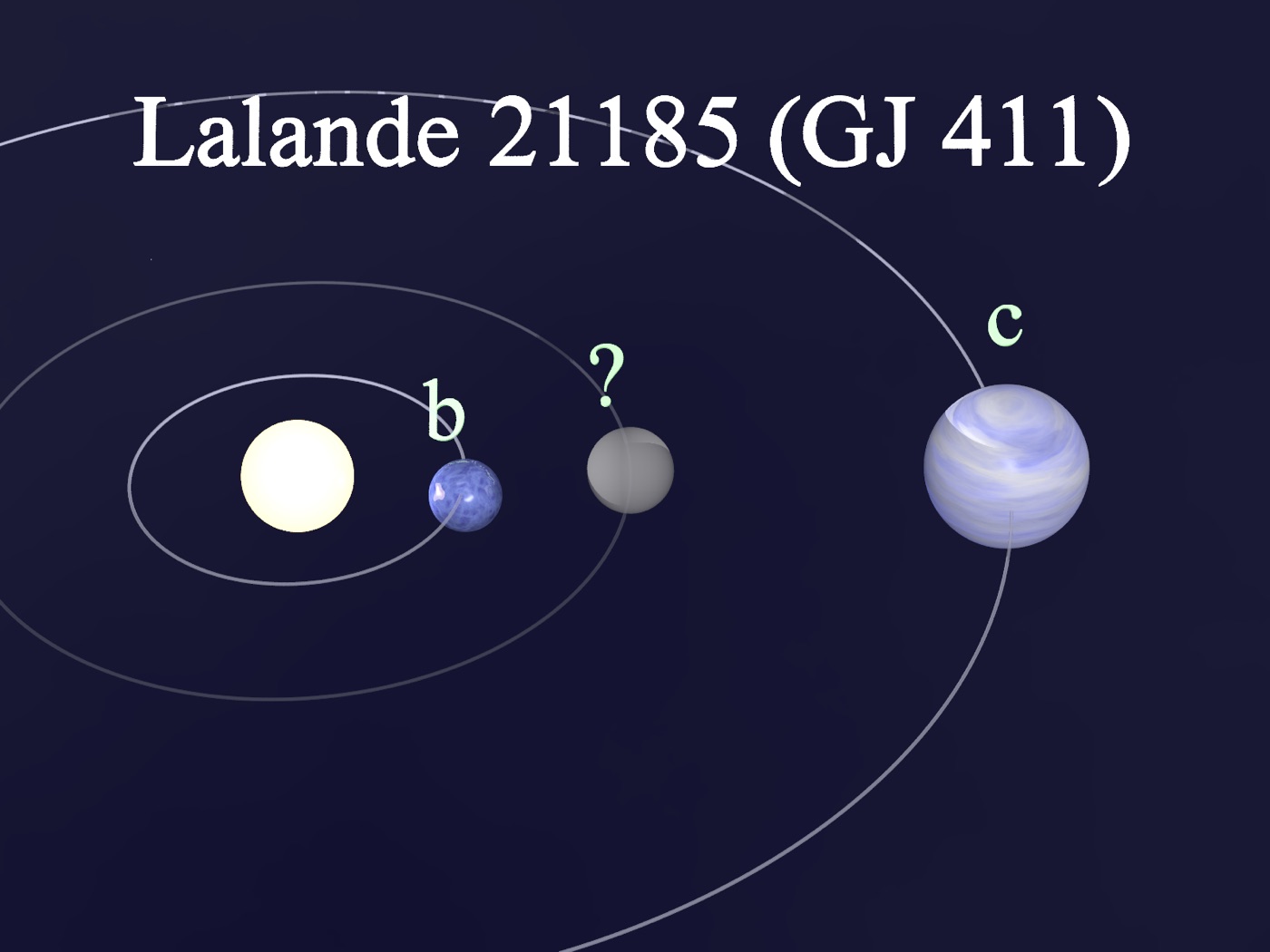
Lalande 21185
Continue your journey

Star
Proxima Centauri
Continue your journey

Story
Interstellar Travel: Could We Ever Reach Another Star?
The full story
Story
The Nearest Earth-Like Exoplanets: Habitability Ranked (2026)
The full story
Star
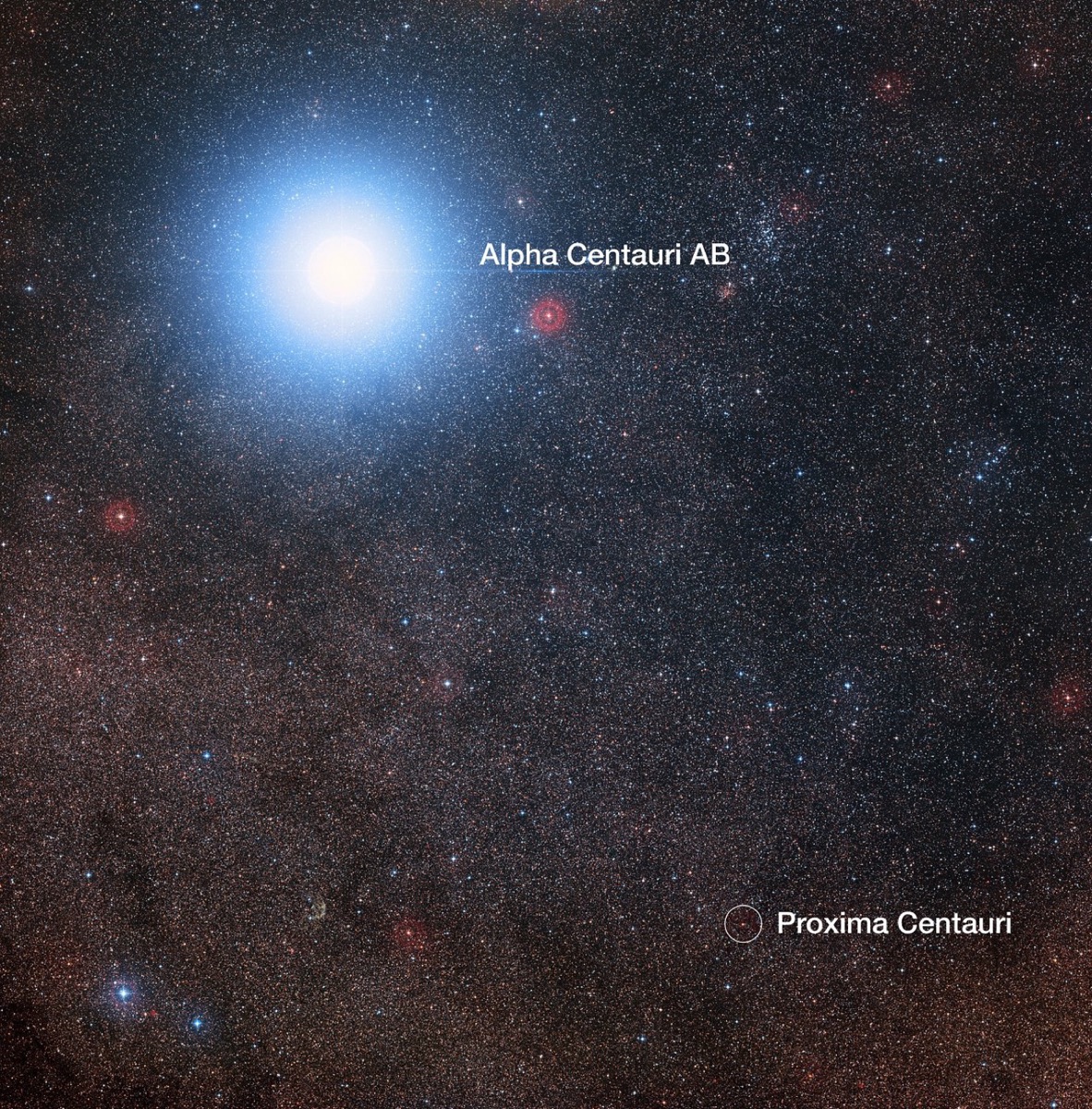
Rigil Kentaurus
Continue your journey
Star
Ross 128
Continue your journey