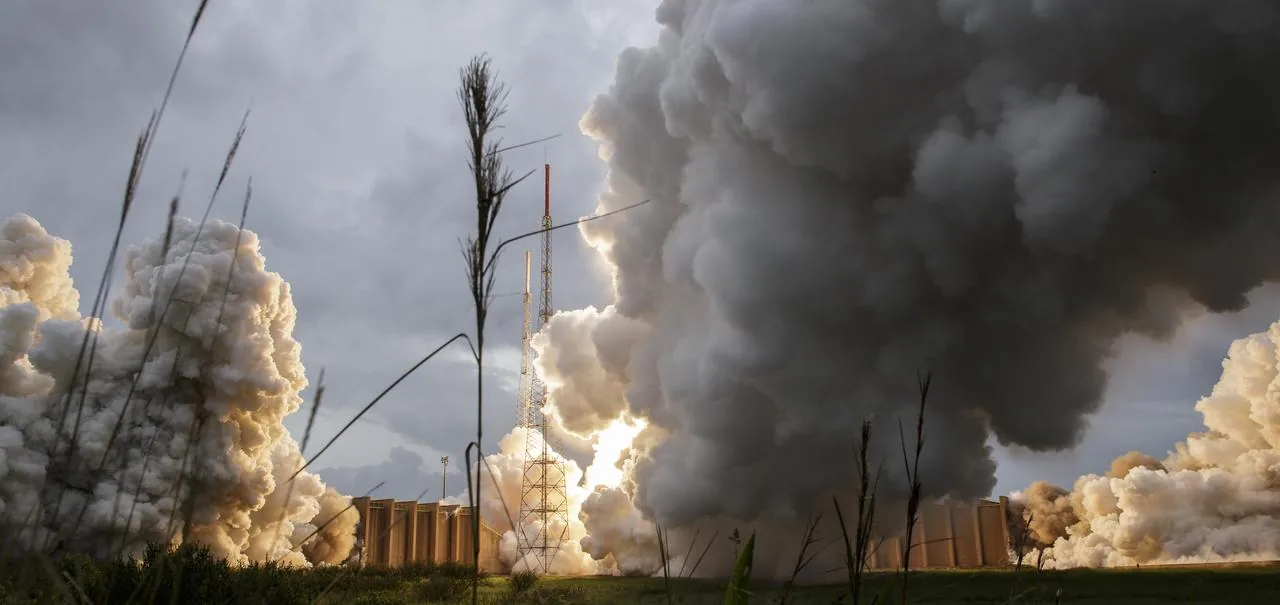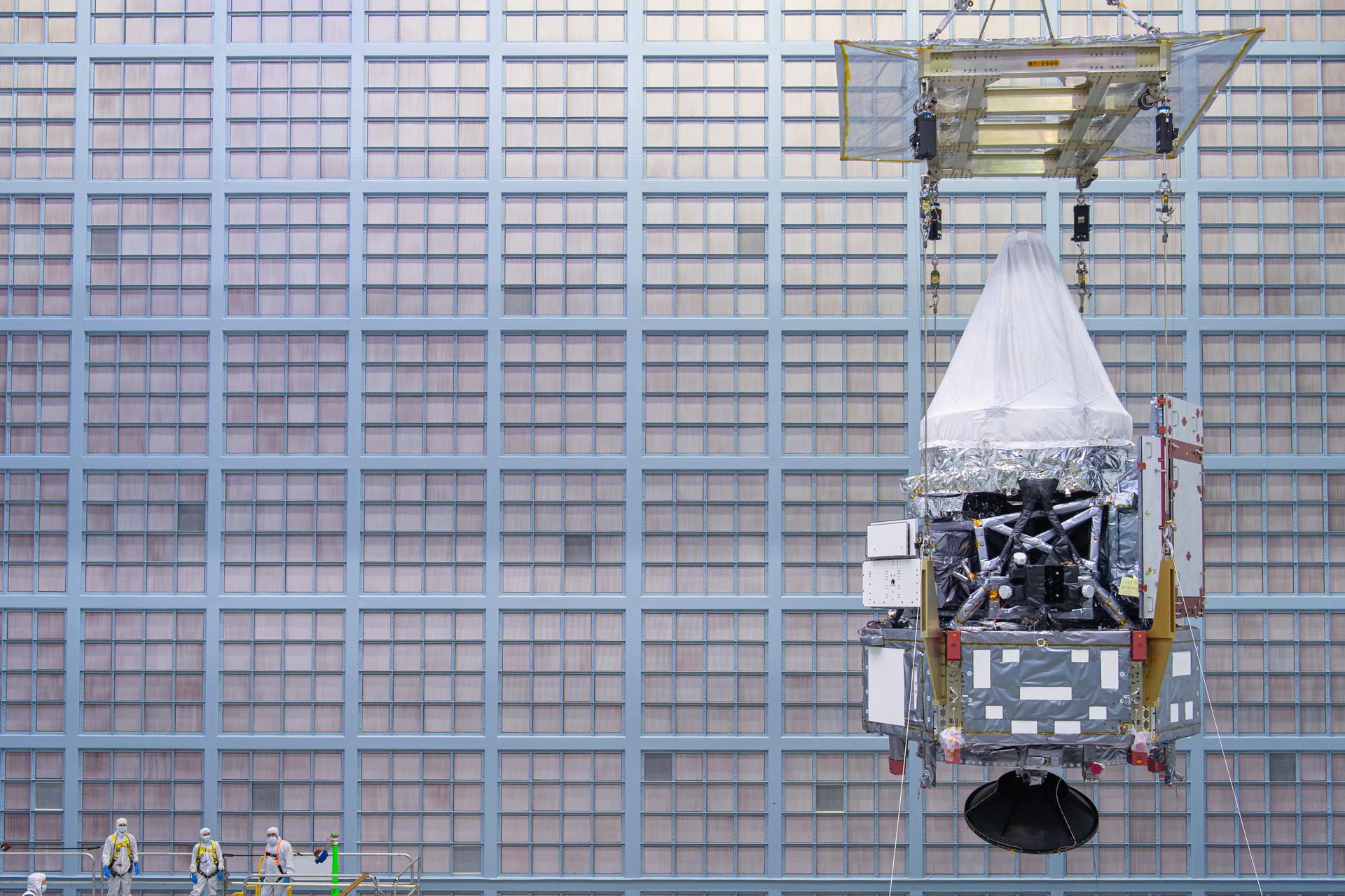
The James Webb Space Telescope is, without exaggeration, the most complex scientific instrument ever deployed in space. It took 25 years to develop, cost roughly $10 billion, required the collaboration of NASA, the European Space Agency, and the Canadian Space Agency, and demanded engineering solutions to problems that had never been solved before. When it launched on Christmas Day 2021 aboard an Ariane 5 rocket, thousands of engineers held their breath through what they called "the 344 single points of failure" -- the number of critical steps in its deployment sequence, any one of which could have ended the mission.
Every single one of them worked.
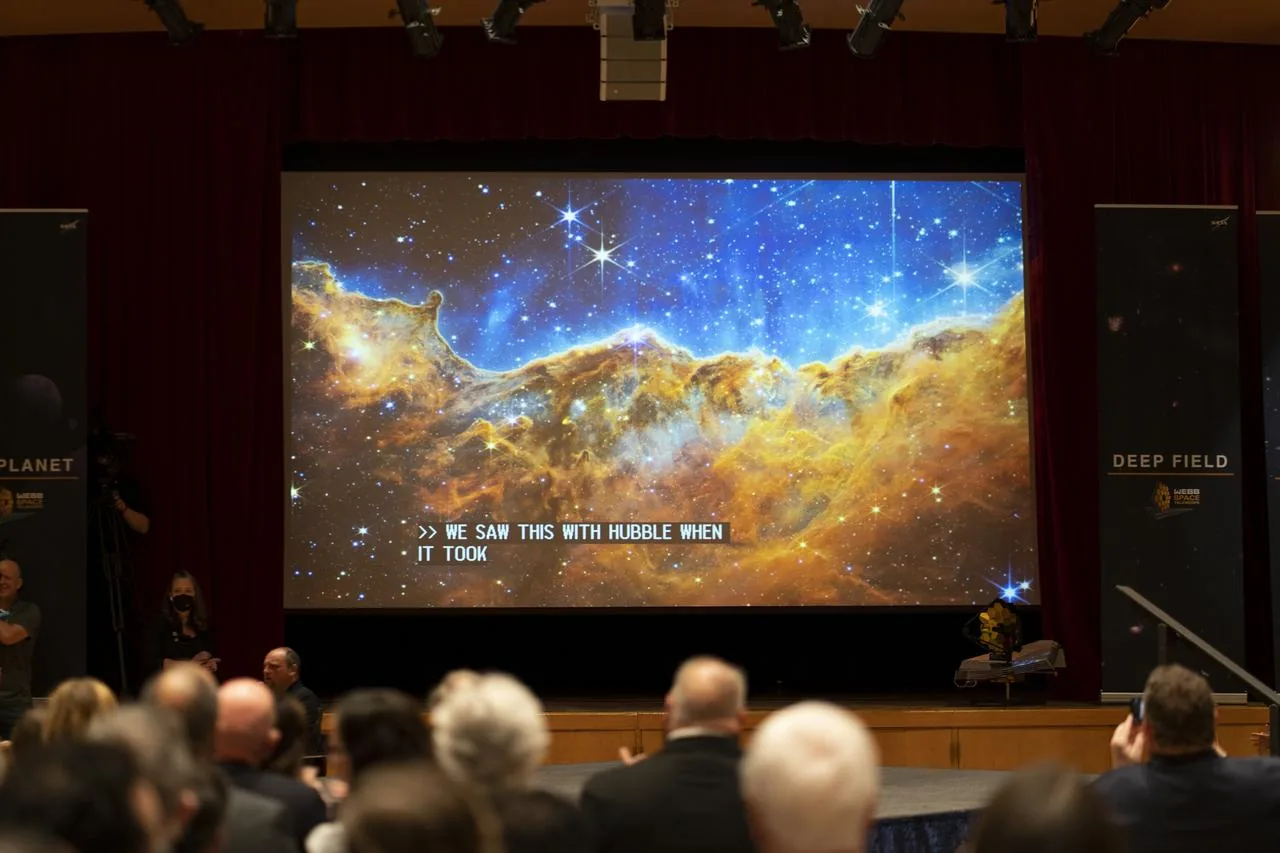
What followed has been nothing short of a scientific revolution. Webb's images have rewritten textbooks, challenged existing theories, and shown us the universe in ways we had never seen before. But today, I want to talk about the engineering -- the sheer audacity of what was built and how it works.
JWST vs Hubble: Side-by-Side
Webb did not replace Hubble -- the two observatories work in complementary parts of the spectrum, and as of May 2026, both are still returning science data. Here is how they compare on the specs that matter most:
| Spec | James Webb (JWST) | Hubble (HST) |
|---|---|---|
| Launched | Dec 25, 2021 | Apr 24, 1990 |
| First science image | Jul 12, 2022 | May 1990 |
| Operational status (May 2026) | Active, in extended mission | Active in LEO |
| Primary mirror | 6.5 m (18 hexagonal beryllium segments) | 2.4 m (single Zerodur) |
| Light-collecting area | ~25.4 m² | ~4.5 m² (~5.6× smaller than JWST) |
| Wavelengths | 0.6–28.5 µm (NIR + MIR) | 0.115–2.5 µm (UV, visible, NIR) |
| Operating temperature | ~50 K passively cooled (sunshield); MIRI ~7 K | ~290 K (room-temperature) |
| Orbit | Sun-Earth L2 halo, ~1.5 million km from Earth | LEO, ~540 km altitude |
| Servicable | No (too far for crewed missions) | Yes — 5 servicing missions completed (last 2009) |
| Mass | 6,500 kg | 11,110 kg |
| Cost (lifetime) | ~$10B (NASA + ESA + CSA) | ~$16B (with all servicing missions) |
| Mission duration | 5-year prime; 10+ years fuel for stationkeeping at L2 | 35+ years and counting |
| Key instruments | NIRCam, NIRSpec, MIRI, FGS/NIRISS | WFC3, ACS, COS, STIS, FGS |
| Best at | Distant galaxies, exoplanet atmospheres, dust-shrouded stellar nurseries | UV astronomy, wide-field surveys, sharp visible-light images |
| Headline discoveries (so far) | Earliest galaxies (z>14), CO₂ + DMS in K2-18b, sulfur dioxide on WASP-39b, Trappist-1 atmospheric study | Universe expansion rate (Hubble constant), exoplanet atmospheres, deep field, dark energy |
Why L2? The Perfect Parking Spot
Webb does not orbit Earth. It orbits the Sun, at a point called the second Lagrange point, or L2, roughly 1.5 million kilometers from Earth -- about four times the distance to the Moon. At L2, the gravitational pull of the Earth and Sun, combined with the centripetal force of the orbit, create a semi-stable point where a spacecraft can maintain its position relative to Earth with minimal fuel expenditure.
Why go so far away? Two reasons. First, L2 keeps Webb permanently on the night side of Earth, which means the Earth, Sun, and Moon are always on the same side of the telescope. This makes thermal management vastly simpler -- a single sunshield can block all three heat sources simultaneously. Second, L2 provides an unobstructed view of the deep sky in every direction away from the Sun. Hubble, in low Earth orbit, spends half of every 90-minute orbit in Earth's shadow and has its view blocked by the planet for a significant fraction of the time. Webb has no such constraints.
The journey to L2 took about 30 days. During that transit, the telescope had to unfold itself from the compact configuration required to fit inside the Ariane 5 fairing -- and that unfolding process was the most nerve-wracking part of the entire mission.
The Golden Mirror: 6.5 Meters of Precision
Webb's primary mirror is 6.5 meters in diameter, composed of 18 hexagonal segments made of beryllium and coated with a microscopically thin layer of gold. Beryllium was chosen because it is lightweight, strong, and has excellent thermal stability at cryogenic temperatures. Gold was chosen as the reflective coating because it is exceptionally efficient at reflecting infrared light -- the wavelengths that Webb is designed to observe.
Each mirror segment weighs about 20 kilograms and is roughly 1.32 meters across, point to point. The segments were polished to a precision of approximately 25 nanometers -- about one ten-thousandth the width of a human hair. After launch, actuators behind each segment adjusted their position and curvature to align all 18 segments into a single, coherent optical surface. The alignment process took months of painstaking calibration, with each actuator capable of movements as small as 10 nanometers.
The reason for the segmented design is straightforward: a 6.5-meter monolithic mirror would not fit inside any existing rocket fairing. The segments fold together for launch and unfold in space, a mechanical origami that had never been attempted at this scale. Three of the segments on each side fold inward on hinges, and the entire mirror assembly unfolds on a deployable tower structure.
The Sunshield: A Tennis Court in Space
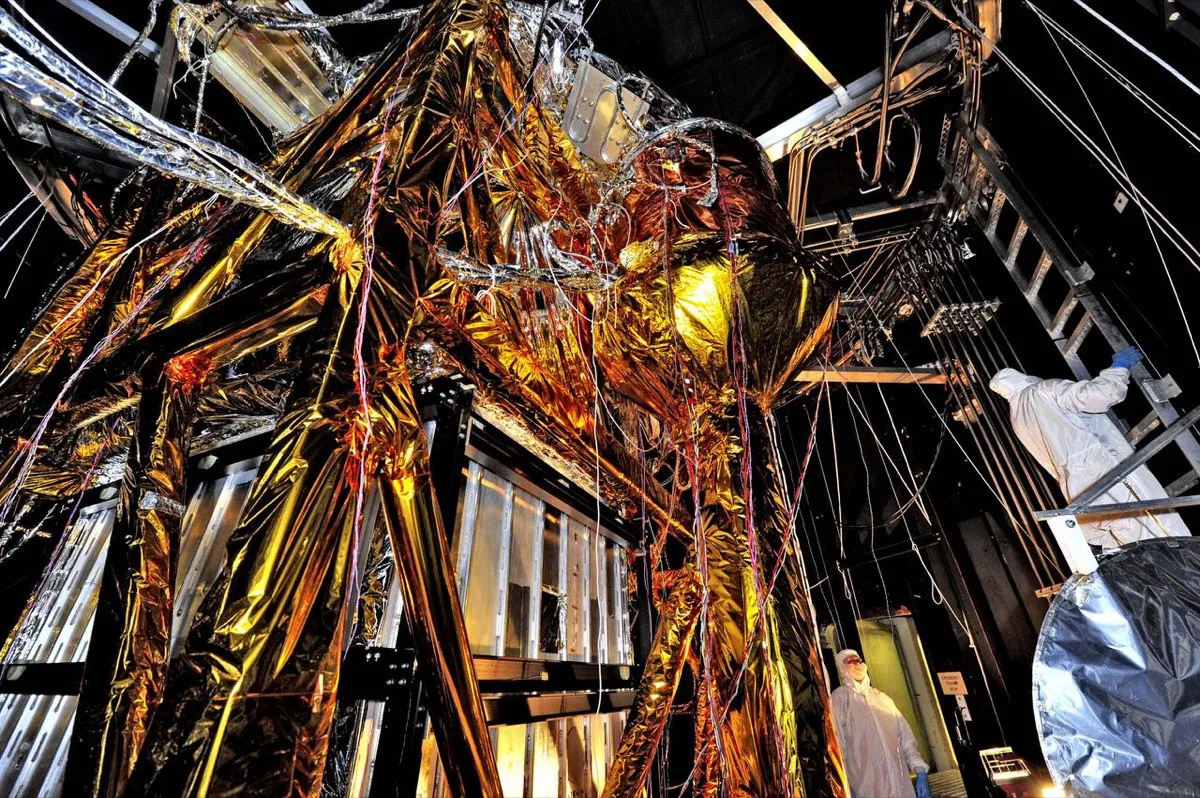
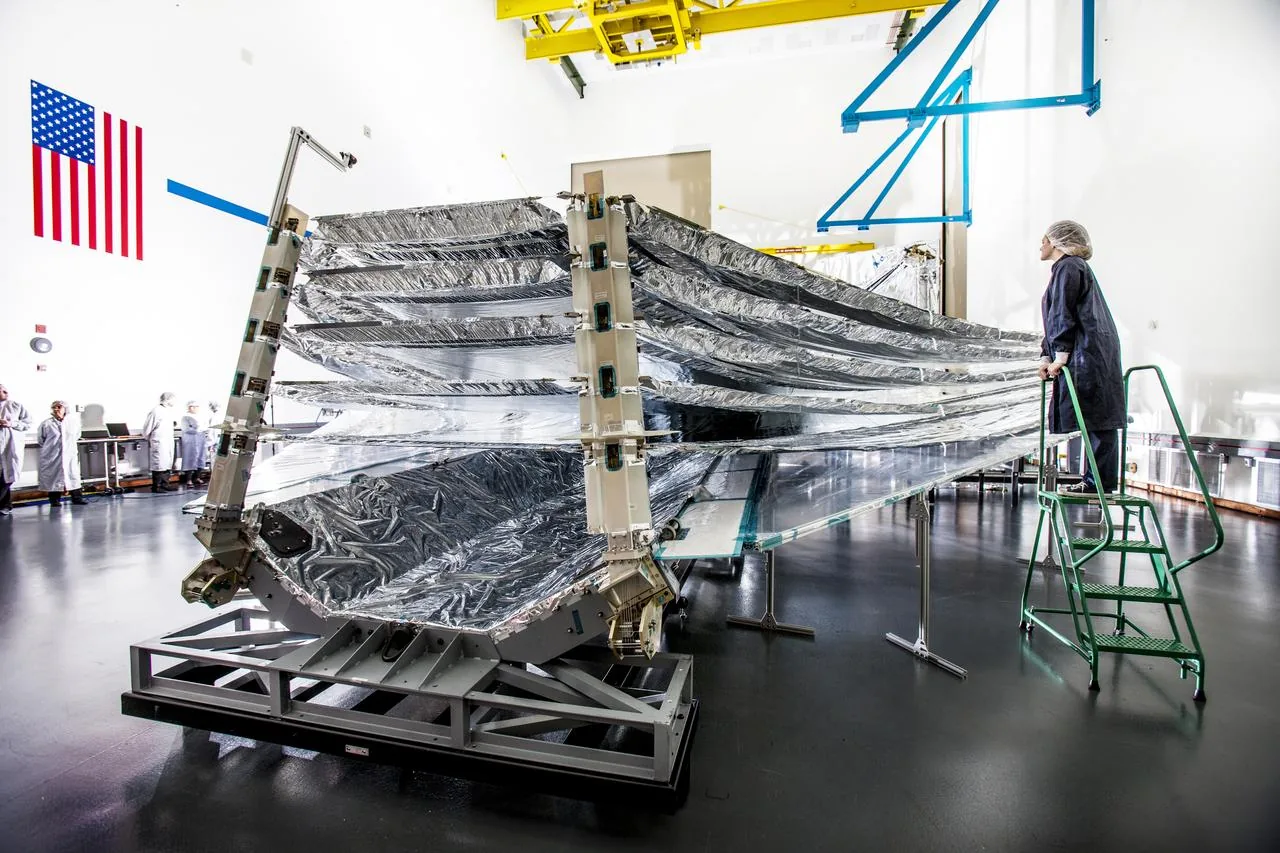
If the mirror is Webb's eye, the sunshield is its guardian. The sunshield is a five-layer structure roughly the size of a tennis court -- about 21 meters by 14 meters when deployed. Each layer is made of Kapton, a polyimide film, with the two Sun-facing layers coated in aluminum and doped silicon to reflect sunlight, and the three inner layers coated in aluminum alone.
The five layers are separated by vacuum gaps, and the design exploits a principle called radiative isolation. Each successive layer is cooler than the one before it. The Sun-facing side of the outermost layer reaches temperatures of about 110 degrees Celsius (230 degrees Fahrenheit), while the shaded side of the innermost layer cools to approximately minus 233 degrees Celsius (minus 387 degrees Fahrenheit). That is a temperature difference of over 340 degrees Celsius across a structure only a few meters thick.
This extreme cooling is essential because Webb observes in the infrared. Infrared light is essentially heat radiation, and if the telescope's optics and instruments are warm, their own thermal emission would drown out the faint signals from distant galaxies and stars. By cooling the telescope to below minus 230 degrees Celsius, the sunshield ensures that Webb can detect infrared signals billions of times fainter than what its own body heat would produce if it were warm.
Deploying the sunshield in space was one of the most anxiety-inducing phases of the mission. The five layers had to unfurl, separate, and tension properly using a system of cables, pulleys, and motors. There were 140 release mechanisms, 400 pulleys, and 90 cables involved. Any snag, any jam, any stuck mechanism could have compromised the entire mission. It worked flawlessly.
The Instruments: NIRCam, MIRI, NIRSpec, and FGS/NIRISS
Webb carries four scientific instruments, each designed to exploit a different aspect of the infrared spectrum.
NIRCam (Near-Infrared Camera) is the primary imaging instrument, operating at wavelengths from 0.6 to 5 microns. It is responsible for the stunning deep field images that have captivated the world. NIRCam also served as the wavefront sensor during mirror alignment, providing the feedback needed to adjust the mirror segments. Built by the University of Arizona, NIRCam uses mercury-cadmium-telluride (HgCdTe) detector arrays that are sensitive to near-infrared photons.
MIRI (Mid-Infrared Instrument) operates at longer wavelengths, from 5 to 28 microns, probing cooler objects and seeing through dust that is opaque at shorter wavelengths. MIRI is unique among Webb's instruments because it requires active cooling beyond what the sunshield provides. A cryocooler system chills MIRI's detectors to approximately 7 Kelvin (minus 266 degrees Celsius), making it one of the coldest operational instruments in space. MIRI was built jointly by a European consortium and NASA's Jet Propulsion Laboratory.
NIRSpec (Near-Infrared Spectrograph) is designed to spread light into its component wavelengths, revealing the chemical composition, temperature, density, and motion of observed objects. Its breakthrough feature is the micro-shutter array -- a grid of approximately 250,000 tiny shutters, each about the width of a human hair, that can be individually opened or closed. This allows NIRSpec to observe up to 100 objects simultaneously, a massive efficiency gain for large surveys. Built by ESA, NIRSpec operates at wavelengths from 0.6 to 5.3 microns.
FGS/NIRISS (Fine Guidance Sensor / Near-Infrared Imager and Slitless Spectrograph) serves a dual purpose. The Fine Guidance Sensor keeps the telescope pointed with extraordinary precision -- locking onto guide stars and holding the telescope steady to within milliarcseconds. NIRISS provides additional spectroscopic capability, including a mode optimized for detecting atmospheres of transiting exoplanets. Built by the Canadian Space Agency, it is Canada's contribution to the observatory.
Why Infrared? Seeing What Visible Light Cannot
Webb was designed as an infrared observatory for several profound scientific reasons. First, the earliest light in the universe -- emitted by the first stars and galaxies that formed a few hundred million years after the Big Bang -- has been stretched by the expansion of the universe from ultraviolet and visible wavelengths into the infrared. To see the most distant objects in the cosmos, you must observe in the infrared.
Second, infrared light penetrates dust. Star-forming regions, the centers of galaxies, and protoplanetary disks are often shrouded in dense clouds of gas and dust that block visible light entirely. Infrared passes through, allowing Webb to peer into these hidden nurseries and see the processes of star and planet formation as they happen.
Third, many of the most interesting molecules and chemical compounds -- water, carbon dioxide, methane, ammonia -- have strong spectral signatures in the infrared. Webb can detect these molecules in the atmospheres of exoplanets, in comets, and in the interstellar medium, providing critical data about the chemistry of the universe.
The Cooling Systems: Fighting Heat at Absolute Zero
Keeping Webb cold is a continuous engineering challenge. The sunshield provides passive cooling for most of the telescope, but MIRI's requirement for temperatures below 7 Kelvin demands an active cryocooler. The system uses a pulse-tube cooler combined with a Joule-Thomson loop to extract heat from MIRI's detectors and radiate it away into space.
The cryocooler must operate continuously and reliably for the duration of the mission -- at least 10 years, and hopefully longer. It has no moving parts that wear out in the traditional sense (the pulse tube uses oscillating gas rather than mechanical pistons), and it was designed with generous performance margins to ensure longevity.
The other instruments rely on the passive cooling provided by the sunshield and the natural radiation of heat into the cold of deep space. Webb's thermal architecture is a masterpiece of passive and active cooling working in concert, maintaining different temperature zones across the observatory -- from the warm sunward side at over 300 Kelvin to MIRI's focal plane at 7 Kelvin.
An Engineering Legacy
Webb was the hardest thing NASA has ever built. It pushed the state of the art in optics, cryogenics, materials science, deployment mechanisms, and systems engineering. It required a generation of engineers to dedicate their careers to a single project, knowing that a single failure during deployment could render the entire effort worthless.
That it worked -- perfectly, on the first try, with no significant anomalies -- is a testament to the thoroughness, dedication, and skill of the tens of thousands of people who built it. Webb is not just a telescope. It is proof that when we commit to our most ambitious goals and execute with discipline, we can build things that border on the miraculous.