As of early 2025, astronomers have confirmed the existence of more than 5,700 planets orbiting stars other than our Sun. That number was zero before 1992. In barely three decades, humanity went from suspecting that other planetary systems existed to cataloging thousands of them, discovering worlds that range from scorching gas giants larger than Jupiter to small, rocky planets that might, just might, resemble Earth.
But how do you find a planet orbiting a star that is light-years away? Stars are blindingly bright. Planets are vanishingly faint. The challenge has been compared to spotting a firefly next to a lighthouse from thousands of kilometers away. The answer is that astronomers have developed an ingenious toolkit of indirect and direct methods, each with its own strengths, limitations, and ideal targets. Here is how every major exoplanet detection method works.
The Transit Method: Watching for Shadows
The transit method is the most prolific planet-finder in history, responsible for the vast majority of known exoplanets. The concept is beautifully simple. If a planet's orbit happens to be aligned so that it passes between its star and Earth, the planet will block a tiny fraction of the star's light. By measuring the star's brightness over time and looking for periodic dips, astronomers can detect the planet and determine its size.
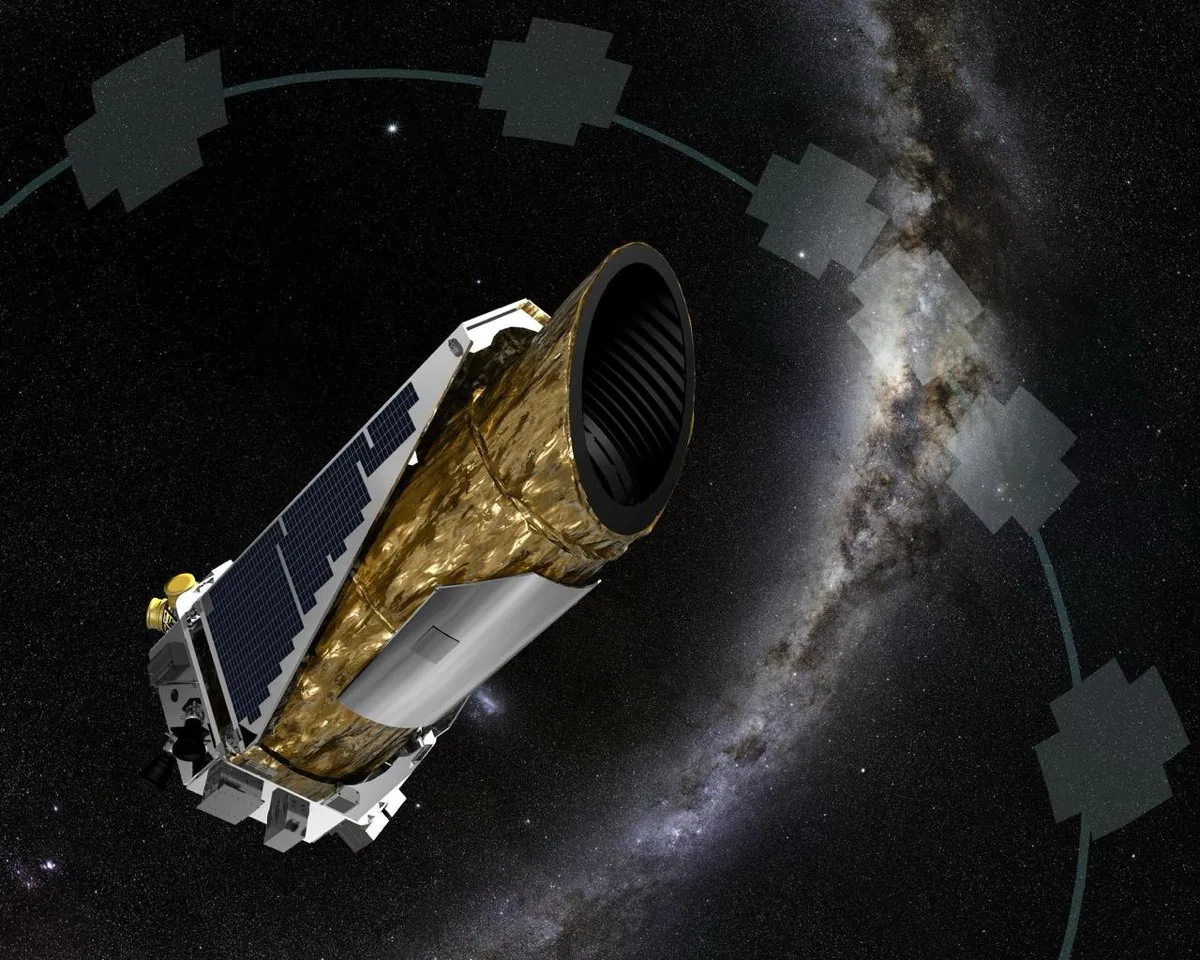
The amount of light blocked depends on the ratio of the planet's cross-sectional area to the star's. A Jupiter-sized planet transiting a Sun-like star blocks about one percent of the light. An Earth-sized planet blocks about 0.01 percent. Detecting that faint a dimming requires extraordinary photometric precision, and that is exactly what NASA's Kepler space telescope was built to achieve.
Kepler, launched in 2009, stared at a single patch of sky containing about 150,000 stars for four years, monitoring their brightness with exquisite accuracy. It discovered over 2,600 confirmed exoplanets and revealed that planets are commonplace in our galaxy. Its successor, the Transiting Exoplanet Survey Satellite (TESS), launched in 2018, is surveying nearly the entire sky, focusing on bright, nearby stars whose planets will be easier to study with follow-up observations.
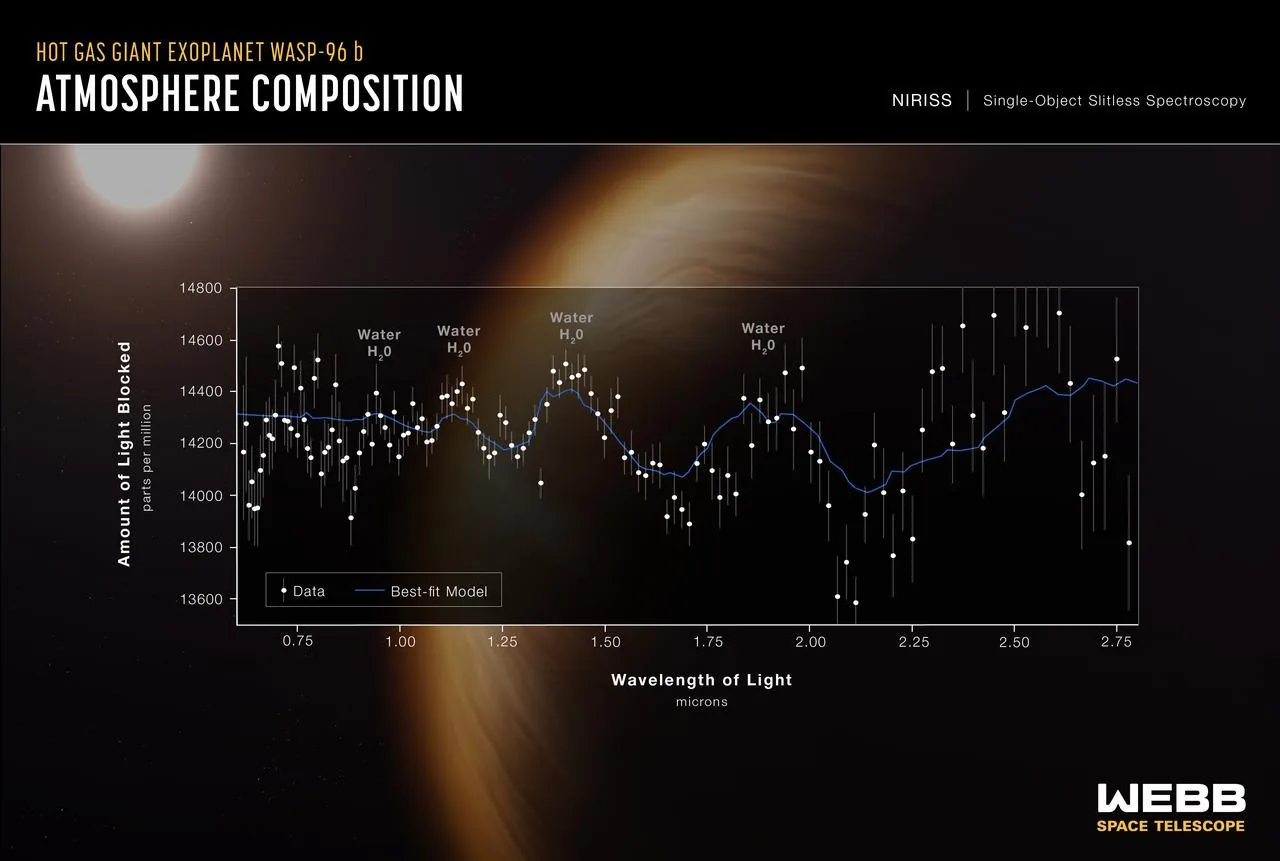
The transit method tells you the planet's size (from the depth of the dimming) and its orbital period (from the time between transits). Combined with other methods, it can also reveal the planet's atmosphere. When a planet transits, some of the starlight filters through the planet's atmosphere, and different gases absorb different wavelengths. This technique, called transmission spectroscopy, is how JWST detected methane and carbon dioxide in the atmosphere of K2-18b.
The main limitation is geometry. A transit is only visible if the planet's orbit is nearly edge-on as seen from Earth. For a randomly oriented planetary system, the probability of this alignment is small, especially for planets in wide orbits. This means the transit method is biased toward finding close-in planets, and it inevitably misses the majority of planets that exist but never cross in front of their star from our vantage point.
Radial Velocity: The Stellar Wobble
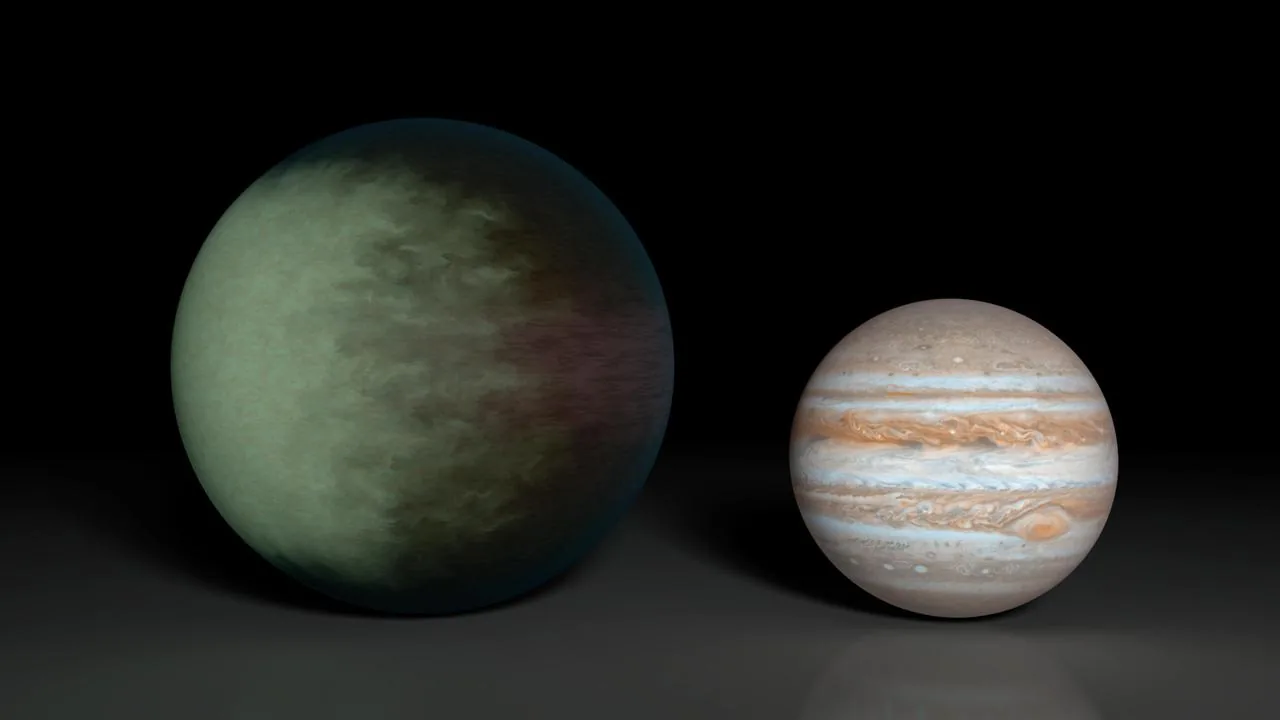
Before the transit method rose to dominance, radial velocity was the premier technique for finding exoplanets. It was the method used to discover 51 Pegasi b in 1995, the first confirmed exoplanet around a Sun-like star, a discovery that earned Michel Mayor and Didier Queloz the 2019 Nobel Prize in Physics.
The physics is Newtonian. A planet does not simply orbit a star; the star and planet both orbit their common center of mass. For a massive planet, this causes the star to wobble, moving slightly toward and away from Earth in a regular rhythm. That back-and-forth motion produces a Doppler shift in the star's light: a slight blueshift as the star moves toward us, and a slight redshift as it moves away. High-resolution spectrographs can measure these shifts with remarkable precision.
The radial velocity method reveals the planet's orbital period and a minimum mass (the true mass depends on the orbital inclination, which is usually unknown unless the planet also transits). It is particularly sensitive to massive planets in close orbits, which produce the largest stellar wobbles. A Jupiter-mass planet in a short-period orbit might cause its star to wobble at speeds of tens or hundreds of meters per second. An Earth-mass planet in an Earth-like orbit around a Sun-like star produces a wobble of only about 9 centimeters per second, a measurement that pushes the absolute limits of current technology.
Modern radial velocity instruments like ESPRESSO at the Very Large Telescope in Chile are approaching the precision needed to detect Earth-like planets. The radial velocity method remains essential because it provides mass information that the transit method alone cannot, and the two methods together yield both the size and mass of a planet, which gives its density and hints at its composition.
Direct Imaging: Seeing the Planet Itself
Direct imaging is conceptually the most straightforward method: take a picture of the planet. In practice, it is extraordinarily difficult because of the overwhelming brightness contrast between a star and its planets. A Sun-like star is roughly a billion times brighter than an Earth-like planet in reflected visible light. Separating that faint planetary signal from the stellar glare requires specialized techniques.
Coronagraphs are masks placed inside telescopes that block the star's light while allowing light from nearby planets to pass through. Starshades are separate spacecraft that fly in formation with a telescope, casting a precisely shaped shadow over the star. Both approaches are being developed for future missions.
Despite the difficulty, direct imaging has already discovered several exoplanets, mostly young, massive gas giants in wide orbits around nearby stars. These planets are still hot from their formation and glow brightly in infrared light, making them easier to detect. The iconic HR 8799 system, with four directly imaged giant planets, remains one of the most stunning achievements in exoplanet science.
Ground-based telescopes equipped with adaptive optics, which correct for atmospheric turbulence in real time, have been the primary tools for direct imaging so far. The next generation of extremely large telescopes (the ELT, TMT, and GMT) will push direct imaging sensitivity to smaller, cooler planets. In space, NASA's future Habitable Worlds Observatory is being designed with direct imaging of Earth-like planets as a primary goal, using a coronagraph or starshade to suppress starlight by a factor of ten billion.
Gravitational Microlensing: Einstein's Gift to Planet Hunters
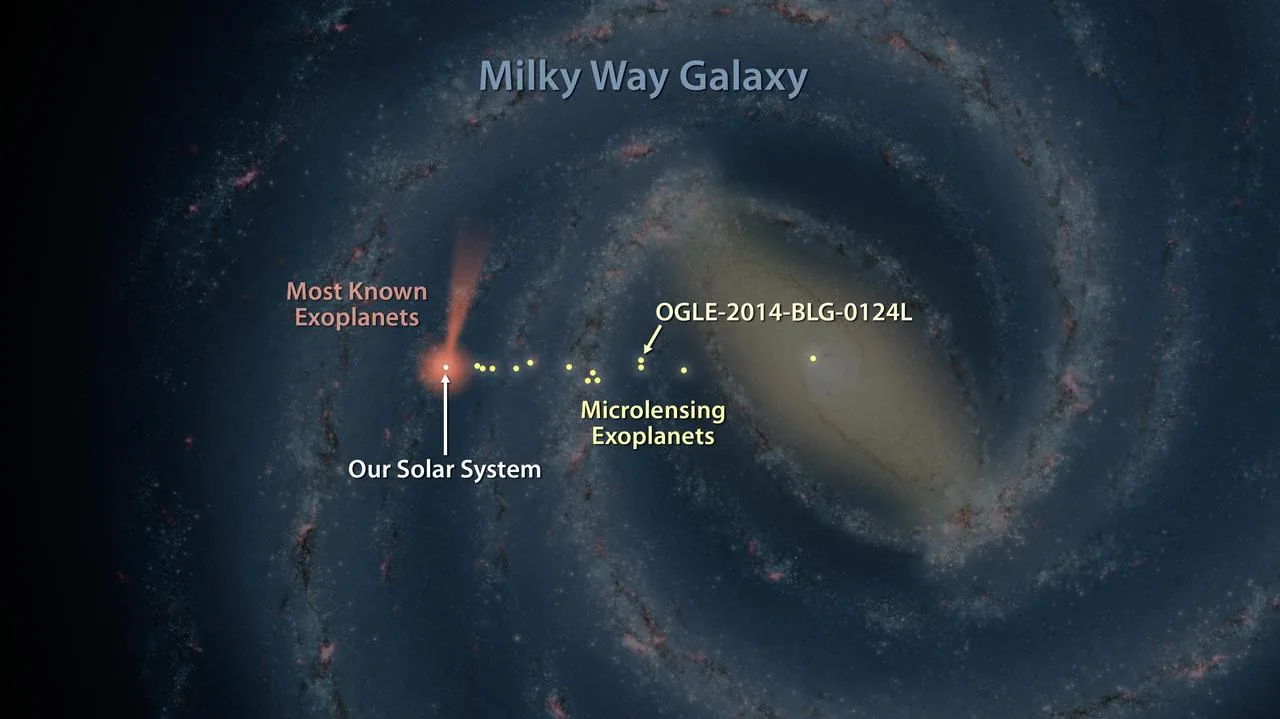
Gravitational microlensing exploits one of the most dramatic predictions of general relativity. When a massive object passes between a distant background star and Earth, its gravity bends and magnifies the background star's light, acting as a natural lens. If the lensing object is a star with a planet, the planet adds its own gravitational signature, creating a brief, sharp spike or dip in the magnification pattern.
Microlensing events are rare, unpredictable, and never repeat, since they depend on the chance alignment of two unrelated stars. But surveys that monitor millions of stars simultaneously, such as the OGLE and MOA projects, have detected dozens of planets this way. Microlensing is uniquely sensitive to planets at intermediate orbital distances (roughly where the snow line is in a planetary system) and can even detect free-floating planets that are not bound to any star.
NASA's Nancy Grace Roman Space Telescope, scheduled for launch in the mid-2020s, will conduct a large-scale microlensing survey as one of its core science programs. It is expected to discover thousands of exoplanets, including many in orbital configurations that other methods struggle to probe. This will provide a crucial statistical census of planetary systems across the galaxy.
Astrometry: Tracking Stellar Motion Across the Sky
Astrometry measures the tiny side-to-side motion of a star on the sky caused by an orbiting planet's gravitational pull. While radial velocity measures the star's motion toward and away from us, astrometry measures the motion perpendicular to our line of sight. In principle, astrometry provides both the planet's mass and its full three-dimensional orbit, with no ambiguity about inclination.
In practice, the angular shifts are minuscule. A Jupiter-mass planet orbiting a Sun-like star at 10 parsecs (about 33 light-years) distance would cause the star to shift by only about half a milliarcsecond, far smaller than the apparent diameter of a human hair seen from hundreds of kilometers away. From the ground, atmospheric distortion makes such measurements nearly impossible.
The European Space Agency's Gaia spacecraft, launched in 2013, is changing this. Gaia is mapping the positions and motions of nearly two billion stars with micro-arcsecond precision. As the mission accumulates data over its operational lifetime, it is expected to reveal thousands of exoplanets through their astrometric signatures. The first batch of astrometric exoplanet candidates appeared in Gaia's data releases, and a flood of discoveries is anticipated as the full dataset is analyzed.
Transit Timing Variations: Planets Revealing Each Other
Transit timing variations (TTVs) are a clever technique that uses deviations in transit timing to infer the presence of additional, possibly non-transiting planets. In a system with multiple planets, their mutual gravitational interactions cause their orbits to speed up and slow down slightly. This means the time between transits is not perfectly constant. By carefully measuring these variations, astronomers can determine the masses and orbits of the interacting planets.
TTVs were instrumental in confirming and characterizing the TRAPPIST-1 system, where seven Earth-sized planets orbit in a tightly packed configuration. The gravitational interactions between these planets are strong enough that TTVs provided precise mass measurements for all seven worlds, revealing their densities and hinting at their compositions.
Which Missions Use Which Methods
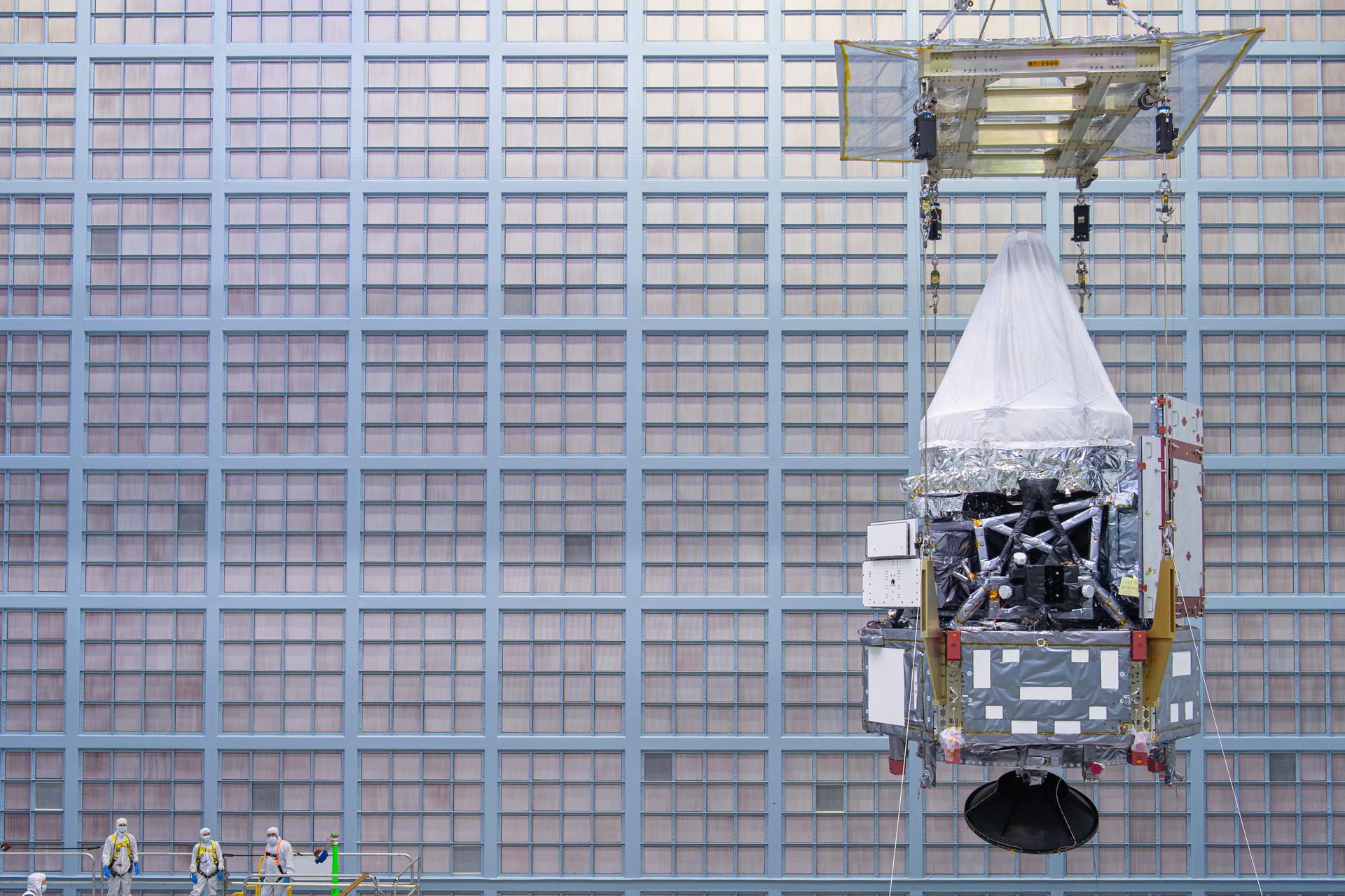
The relationship between detection methods and space missions is worth summarizing. Kepler and TESS are transit missions. The European CHEOPS mission performs precision transit follow-up. JWST uses transits for atmospheric characterization through transmission spectroscopy. Gaia is an astrometry mission with a bonus exoplanet harvest. The Roman Space Telescope will combine microlensing surveys with coronagraphic direct imaging technology demonstrations. Ground-based observatories like the VLT and Keck use radial velocity and direct imaging.
No single method tells the whole story. Transit observations reveal a planet's size. Radial velocity reveals its mass. Direct imaging can reveal its atmosphere and temperature. Microlensing provides statistical context. Astrometry gives full orbital geometry. The most completely characterized exoplanets are those studied with multiple complementary techniques.
The Road Ahead
We are living in the golden age of exoplanet discovery, and it is only accelerating. Every new telescope and every refined technique adds another dimension to our understanding of planetary systems. The ultimate goal, finding and characterizing a truly Earth-like planet orbiting a Sun-like star and searching its atmosphere for signs of life, will require the full toolkit working in concert.
The planets are out there. Finding them is no longer a question of whether we can, but of how many, how fast, and what surprises they have in store.