Blue Origin: Bezos's Long Game in Space
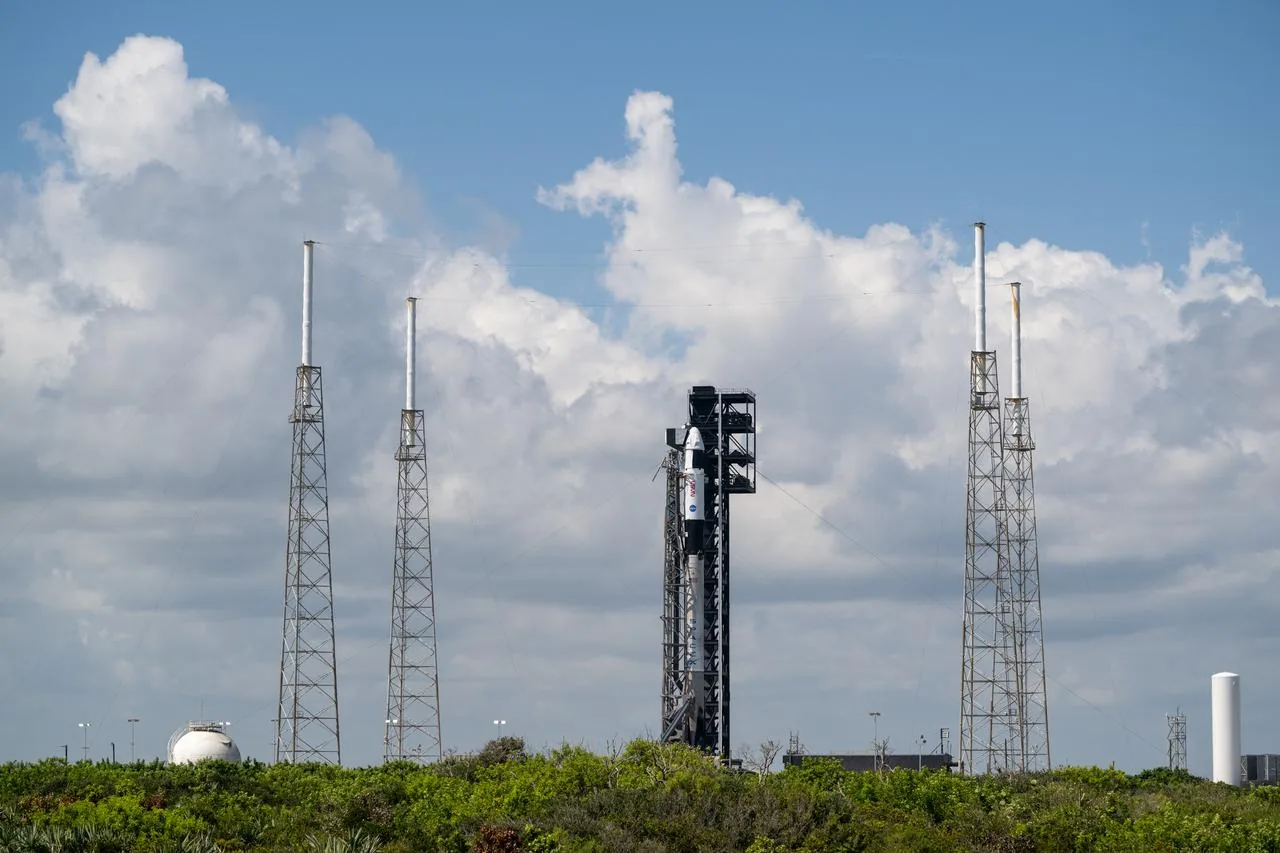
For years, Blue Origin was the butt of the industry's cruelest joke: a billionaire's vanity project that took two decades to put a rocket into orbit. The punchline faded fast in January 2025 when New Glenn lifted off from Cape Canaveral on its first flight — and the space industry had to reckon with the fact that Jeff Bezos had, in his characteristically patient and deliberate way, built a real heavy-lift rocket company. Blue Origin is no longer a footnote. It is a consequential player in the commercial launch market, the lunar economy, and the future of large-scale infrastructure in space.
Key Takeaways
- Valuation: ~$28–32B (estimated, secondary market)
- Funding Model: Jeff Bezos funds ~$1B/year via Amazon stock sales
- New Glenn flights: Three to date — NG-1 (Jan 2025), NG-2 (Nov 2025, first booster landing), NG-3 (April 19, 2026, first booster reuse but second-stage anomaly)
- Largest Contract: NASA HLS Blue Moon — $3.4B for crewed lunar lander (Artemis V)
- Key Risk: NG-3 second-stage anomaly and FAA grounding; cost structure not yet competitive with SpaceX; launch cadence still low
- Outlook: Strategic government embedded position; commercial viability still being proven
Company Overview
Founded: 2000 Founder: Jeff Bezos Headquarters: Kent, Washington Launch facilities: Launch Site One (Van Horn, Texas) — New Shepard; Launch Complex 36 (Cape Canaveral, Florida) — New Glenn Manufacturing: Kent, WA (engines, vehicles); Huntsville, AL (BE-4 engine production) Employees: ~10,000 (estimated) Valuation: ~$28–32 billion (estimated based on secondary market transactions and analyst models) Ownership: Privately held; Jeff Bezos funds the company through annual sales of Amazon stock, committing roughly $1 billion per year
Blue Origin was founded two years before SpaceX, yet reached orbit nearly two decades later. This apparent paradox reflects a deliberate philosophy — the company's Latin motto is Gradatim Ferociter, meaning "step by step, ferociously." Critics called it tortoise-paced. Bezos called it building on firm foundations. The debate continues, but New Glenn's successful debut has shifted the terms of the argument.
Mission & Vision
Blue Origin's mission: "To enable a future where millions of people are living and working in space." Unlike SpaceX's Mars-focused narrative, Blue Origin's long-term vision is rooted in the O'Neill cylinder concept — vast rotating space habitats in cislunar space, home to millions or billions of people living in manufactured environments with earth-like gravity. Bezos believes Earth should be zoned for "residential and light industrial" purposes while heavy industry moves off-planet.
"We need to go to space to save the Earth. We can move all heavy industry off Earth into space, and Earth can be zoned for residential and light industrial." — Jeff Bezos, Blue Origin founder, re-use of space infrastructure vision
"Gradatim ferociter — step by step, ferociously. That's how we do it." — Jeff Bezos, on Blue Origin's development philosophy
This is a multi-generational vision that won't materialize in any near-term investor horizon. What matters for the next decade is the company's more immediate agenda: competing for national security launch contracts, delivering payloads to the lunar surface, and establishing the BE-4 engine as a critical piece of American launch infrastructure.
Key Products & Services
New Shepard
The suborbital tourist rocket that launched Blue Origin into public consciousness.
- Type: Suborbital, fully reusable (both capsule and booster)
- Crew capacity: 6 passengers
- Apogee: ~107 km (above the Karman Line)
- Flight duration: ~11 minutes total; ~3–4 minutes of weightlessness
- Ticket price: Estimated $450,000–$500,000 per seat (not publicly confirmed)
- Flight history: Over 25 successful flights; anomaly in September 2022 (uncrewed, booster lost; capsule abort system successfully activated) before returning to flight in 2024
- Inaugural crewed flight: Jeff Bezos flew in July 2021 alongside his brother Mark, pioneering aviator Wally Funk, and paying customer Oliver Daemen
New Shepard is primarily a technology demonstrator and tourism vehicle. Its BE-3 engine and vertical-landing booster technology provided foundational engineering experience, but the business case for suborbital tourism at scale remains unproven.
New Glenn
The rocket that changed Blue Origin's narrative and competitive standing.
| Specification | Value |
|---|---|
| Type | Two-stage, partially reusable orbital launch vehicle |
| Height | 98 meters |
| Payload to LEO (expendable) | 45,000 kg |
| Payload to LEO (reusable) | ~13,000 kg |
| Payload to GTO | 13,000 kg |
| First stage propulsion | 7 BE-4 engines (LNG/LOX) |
| Second stage propulsion | 2 BE-3U vacuum engines (LH2/LOX) |
| Inaugural launch | January 16, 2025 — orbit achieved on first attempt |
| First booster landing | NG-2, November 13, 2025 (droneship "Jacklyn") |
| First booster reuse | NG-3, April 19, 2026 |
| Payload fairing | 7-meter diameter (largest in operational use) |
New Glenn's 7-meter payload fairing is the largest in operational use (tied with the SLS and exceeding Falcon Heavy's 5.2m fairing), providing a significant advantage for deploying large satellites or complex structures.
BE-4 Engine
Perhaps Blue Origin's most strategically significant product.
- Thrust: ~2.4 MN (550,000 lbf) per engine
- Fuel: Liquid natural gas / liquid oxygen
- Applications: Powers New Glenn (7 engines on first stage) and United Launch Alliance's Vulcan Centaur rocket (2 engines on first stage)
- Significance: The first new large American rocket engine in decades; eliminated US dependence on the Russian RD-180 engine for national security launches
The BE-4 is a dual-use technology in the most commercially meaningful sense. ULA paying for engines represents recurring revenue that partially offsets Blue Origin's enormous capital expenditures.
Blue Moon Lunar Lander
Blue Origin's entry into the lunar economy.
- Program: NASA's Human Landing System (HLS) — Blue Origin leads the "National Team" consortium (with Lockheed Martin, Northrop Grumman, and Draper)
- Contract value: $3.4 billion (awarded May 2023 for Artemis V and beyond)
- Lander variants: Blue Moon Mark 1 (uncrewed cargo) and Blue Moon Mark 2 (crewed)
- Propulsion: BE-7 engine (liquid hydrogen / liquid oxygen), offering high specific impulse for efficient lunar descent
- Target: Deliver astronauts to the lunar South Pole in the Artemis V mission timeframe (2029–2030)
This contract — worth $3.4 billion — represents a transformational moment for Blue Origin's government business. Combined with New Glenn national security launch contracts, Blue Origin is now embedded in NASA and DoD's long-term plans in a way that cannot easily be undone.
Revenue & Financials
Blue Origin is entirely privately funded, which means financial data is limited but estimable:
- Annual funding: Jeff Bezos committed to selling approximately $1 billion of Amazon stock annually to fund Blue Origin; this commitment has continued since the company's early days
- Total invested capital: Estimated $15–20 billion since founding
- Revenue (2024): Estimated $500M–$1B — first meaningful external revenue from BE-4 engine sales to ULA and New Glenn commercial launches
- NASA contracts: The HLS Blue Moon contract ($3.4B) is Blue Origin's largest single revenue source, drawn down over ~5 years
- Path to profitability: Unclear; the company's capital structure has never required profitability because it is personally funded
The company does not disclose financials. Unlike SpaceX, which has a commercial revenue engine in Starlink, Blue Origin's revenue base remains thin relative to its enormous cost structure.
Key Contracts & Customers
NASA:
- HLS Blue Moon contract: $3.4 billion for crewed lunar lander for Artemis V
- Various CLPS (Commercial Lunar Payload Services) task orders
- Historical contracts for engine development support
United Launch Alliance (ULA):
- BE-4 engine supply agreement for Vulcan Centaur (ongoing deliveries)
- Critical recurring revenue source
Department of Defense / USSF:
- Blue Origin qualified for Lane 1 of the National Security Space Launch (NSSL) program, competing directly with SpaceX and ULA
- First NSSL mission awarded 2024
Commercial:
- Amazon's Project Kuiper: up to 27 launches on New Glenn in a multi-year agreement worth potentially $1 billion+
- Telesat Lightspeed
- Various GEO satellite operators
The Amazon Project Kuiper launch agreement provides a guaranteed commercial customer base that removes Blue Origin's exposure to the open market for a substantial portion of its launch capacity.
Recent Milestones (2025–2026)
- NG-1 (January 16, 2025): Reached orbit on the first attempt with the Blue Ring pathfinder; booster lost during landing attempt
- NG-2 (November 13, 2025): Sent NASA's twin ESCAPADE Mars probes toward Sun–Earth L2; first successful New Glenn booster landing on droneship "Jacklyn"; NASA paid ~$20M for the mission
- NG-3 (April 19, 2026): First-ever New Glenn booster reuse — the same NG-2 stage flew again and landed successfully — but the second stage malfunctioned and left AST SpaceMobile's BlueBird 7 in a degraded 265 × 465 km orbit; FAA grounded New Glenn pending mishap investigation
- Blue Moon Mk1: Uncrewed lunar lander cleared to fly to the Moon on a future New Glenn; two missions planned (early 2026 / late 2027) carrying the Mk1 from a 185 km × ~1,800 km parking orbit before trans-lunar injection
- NSSL Lane 1 award: Blue Origin received its first national security space launch contract in 2024
- BE-4 production ramp: Engine production in Huntsville scaled to support both New Glenn and ULA Vulcan Centaur demand
Competitive Position
Blue Origin occupies a distinct competitive niche — too expensive for small satellite operators, too unproven for risk-averse large customers, but uniquely positioned in a few key areas:
- Against SpaceX: New Glenn's 45-tonne LEO capacity (expendable) matches Falcon Heavy in the same approximate class, but Blue Origin lacks SpaceX's price competitiveness and launch frequency; reusability economics need to improve significantly
- Against ULA: Blue Origin is now a direct NSSL competitor to ULA, yet simultaneously supplies ULA with BE-4 engines — a complex and somewhat awkward relationship
- Against international providers: New Glenn's large fairing is a genuine differentiator for large commercial GEO satellites, where European and American providers have historically competed on even terms
- In the lunar market: Blue Origin is one of only two companies (with SpaceX) with NASA contracts for human lunar landing — a strategic position worth far more than the contract value suggests
Future Roadmap (2026–2030)
- New Glenn cadence: Dave Limp publicly targets 8–12 New Glenn flights in 2026 with 30-day booster reuse turnaround — a stretch goal now complicated by the NG-3 second-stage anomaly investigation
- BE-4 production: Scaling to support both internal and ULA demand
- Blue Moon Mark 1: Uncrewed lunar lander targeting first flight as soon as late 2026, with a second mission in 2027 — the precursors to crewed Mark 2 landings under HLS
- New Glenn Block 2: Next-generation upper stage with improved performance for deep space missions
- Orbital Reef: Blue Origin is co-prime on a NASA Commercial Low Earth Orbit Destinations (CLD) study contract for a commercial space station; targeting operational capability late 2020s in partnership with Sierra Space, Boeing, and others
- Long-term: O'Neill cylinder habitats — a multi-decade vision rather than a near-term program
Key Risks & Challenges
- Cadence and reliability: New Glenn needs to demonstrate consistent, rapid turnaround; a second anomaly after the 2022 New Shepard incident would be damaging to customer confidence
- Cost structure: Blue Origin's vehicles have not achieved Falcon 9's cost-per-kg economics; price-sensitive commercial customers will default to SpaceX until they do
- Management depth: Blue Origin has cycled through multiple CEOs (Bob Smith departed 2023; Dave Limp took over late 2023); leadership continuity remains a question mark
- Bezos dependency: The company's financial lifeline is entirely tied to Bezos's personal wealth and commitment, both of which are subject to change
- Amazon Kuiper risk: If Project Kuiper underperforms commercially, the guaranteed launch demand it represents for New Glenn could shrink
- Starship effect: If Starship reaches its $10M/launch cost ambition, it renders every other rocket economically obsolete — Blue Origin faces existential risk from a fully operational Starship
Sources & References
- Blue Origin News & Updates — Official press releases and mission announcements
- SpaceNews Blue Origin Coverage — Industry reporting on New Glenn and Blue Moon development
- NASA HLS Contract Announcements — Blue Moon lander contract details
- Ars Technica Space Coverage — Technical reporting on New Glenn launches
- Payload Space Industry Analysis — Launch market data and competitive analysis
- Space Capital Quarterly Reports — Investment and valuation tracking
- ULA Press Releases — BE-4 engine delivery and Vulcan Centaur updates
- SEC EDGAR — Blue Origin Related — Secondary market and regulatory filings
- Jonathan McDowell's Orbital Launch Statistics — Authoritative global launch database
- SpaceNews NSSL Coverage — National security launch contract awards