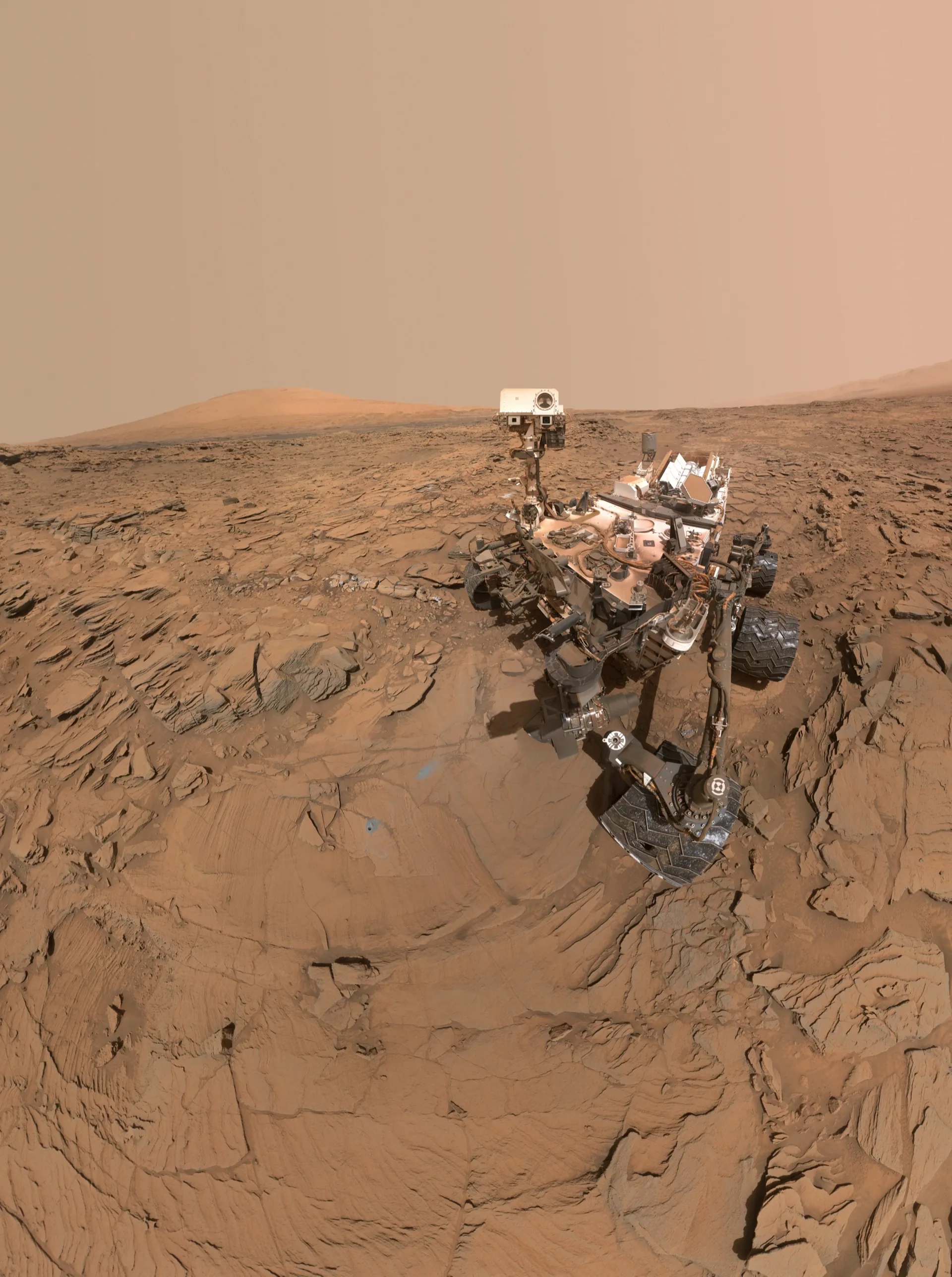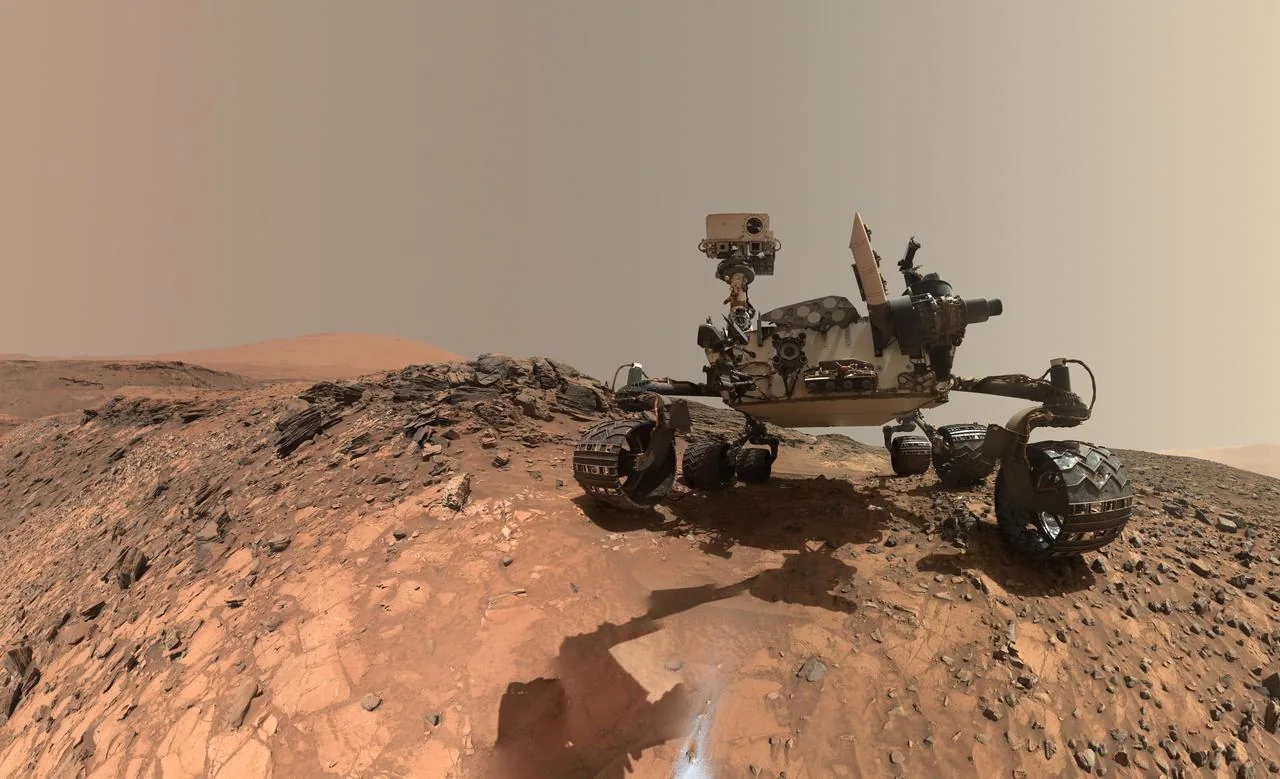
On August 6, 2012, a one-ton nuclear-powered robot the size of a small car was lowered onto the surface of Mars by a rocket-powered sky crane in what remains the most audacious landing sequence ever attempted on another planet. The rover's name was Curiosity, and its mission was to answer a single, enormous question: was Mars ever capable of supporting life? More than thirteen years later, Curiosity is still rolling, still drilling, still discovering — and the answer it has found is a resounding yes.
Mars Rovers Compared (1997–2026)
Eight robotic vehicles from three countries have driven on Mars over nearly three decades. Here is the full lineup, with current status:
| Rover | Agency | Landed | Landing Site | Mass | Power | Status (May 2026) | Distance Driven | Key Achievement |
|---|---|---|---|---|---|---|---|---|
| Sojourner | NASA | Jul 1997 | Ares Vallis | 11.5 kg | Solar | Lost contact Sep 1997 | 100 m | First wheels on Mars |
| Spirit (MER-A) | NASA | Jan 2004 | Gusev Crater | 185 kg | Solar | Stuck 2009, ended 2010 | 7.7 km | Found ancient hot springs |
| Opportunity (MER-B) | NASA | Jan 2004 | Meridiani Planum | 185 kg | Solar | Lost in 2018 dust storm | 45.2 km | Confirmed past surface water |
| Curiosity (MSL) | NASA | Aug 2012 | Gale Crater | 899 kg | Nuclear (RTG) | Active, climbing Mount Sharp | ~33 km | Confirmed habitable lakebed; organics |
| Zhurong (祝融号) | CNSA | May 2021 | Utopia Planitia | 240 kg | Solar | Stuck in dust since 2022 | 1.9 km | First Chinese rover on Mars |
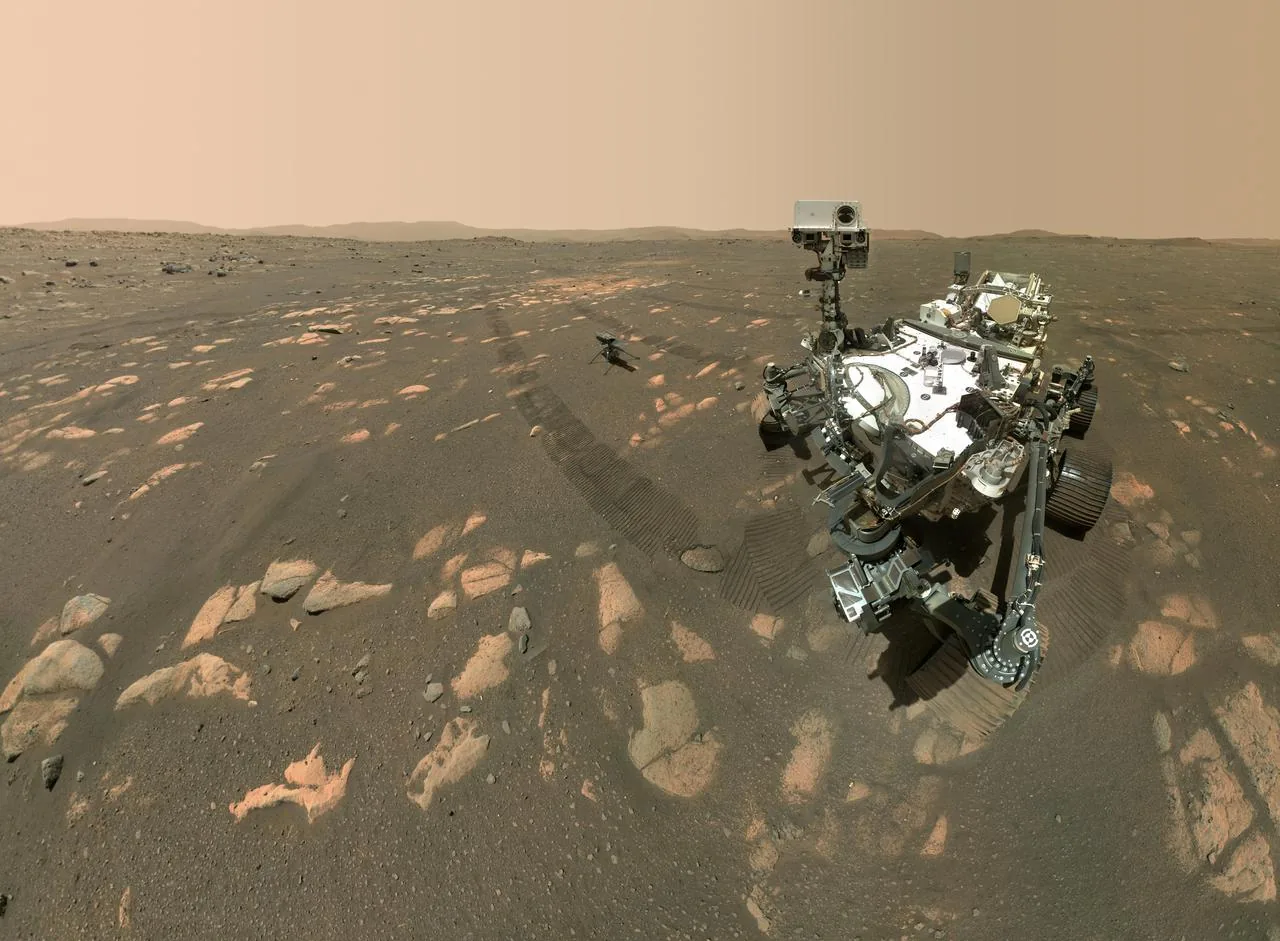
| Perseverance (M2020) | NASA | Feb 2021 | Jezero Crater | 1,025 kg | Nuclear (RTG) | Active, caching samples | ~31 km | First rock cache for Mars Sample Return |
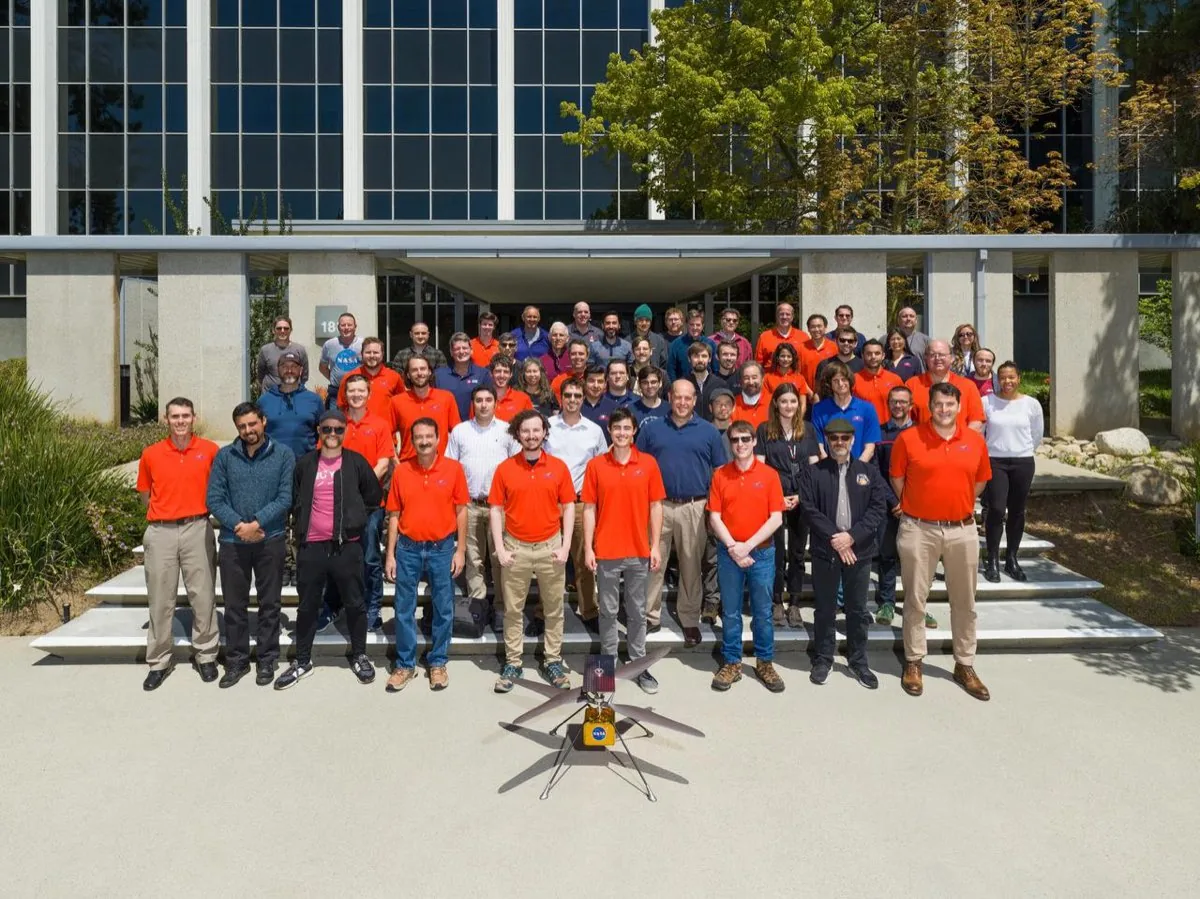
| Ingenuity (helicopter) | NASA | Apr 2021 | Jezero Crater | 1.8 kg | Solar | Retired Jan 2024 (rotor damage) | 17.0 km flight | First powered flight on another world |
| Rosalind Franklin | ESA / NASA | 2028 (planned) | Oxia Planum | 310 kg | Solar | In storage; relaunch on NASA-provided ride | — | Will drill 2 m below surface |
NASA's Mars Sample Return remains under restructured architecture review, with Perseverance continuing to seal pristine drill core samples for eventual retrieval. Distances reflect the most recent published odometer values from each agency.
Seven Minutes of Terror
Getting Curiosity to the surface of Mars was, by itself, an engineering miracle. The Mars Science Laboratory spacecraft entered the Martian atmosphere at approximately 13,200 miles per hour. Over the next seven minutes -- a period NASA engineers dubbed "seven minutes of terror" -- the spacecraft had to decelerate to zero velocity and place the rover gently on the ground. The entire sequence was autonomous; the 14-minute communication delay between Mars and Earth meant that by the time ground controllers received the signal that atmospheric entry had begun, the rover would already be on the surface or destroyed.
The entry, descent, and landing sequence used a heat shield, a supersonic parachute 51 feet in diameter, and finally, the sky crane -- a rocket-powered descent stage that hovered above the surface and lowered Curiosity on nylon tethers to a gentle touchdown at approximately 1.7 miles per hour. When the rover's wheels touched down, explosive bolts severed the tethers, and the sky crane flew away to crash at a safe distance.
At 10:32 p.m. PDT on August 5 (1:32 a.m. EDT on August 6), the signal reached Earth: Curiosity had landed successfully in Gale Crater, a 96-mile-wide impact basin near the Martian equator. At the Jet Propulsion Laboratory in Pasadena, California, the control room erupted. Engineers wept, embraced, and pumped their fists. Lead engineer Adam Steltzner, who had designed the sky crane system, later said: "We have just done something that is incredibly hard. And it worked."
Why Gale Crater
Gale Crater was chosen from a field of more than sixty candidate landing sites for one compelling reason: rising from its center is a layered mountain of sedimentary rock approximately 3.4 miles high, taller than any mountain in the contiguous United States. NASA named it Aeolis Mons; informally, it is known as Mount Sharp, after geologist Robert Sharp.
The layers of Mount Sharp are a geological history book. The lowest layers are the oldest, laid down billions of years ago when Mars was a very different world -- warmer, wetter, with a thicker atmosphere. By driving up the mountain's slopes and analyzing successive rock layers, Curiosity could read the story of Mars's transformation from a potentially habitable world to the cold, dry desert it is today.
It was a brilliant scientific strategy: instead of drilling in one spot, the rover would drive through geological time.
Ancient Lakes and Habitable Environments
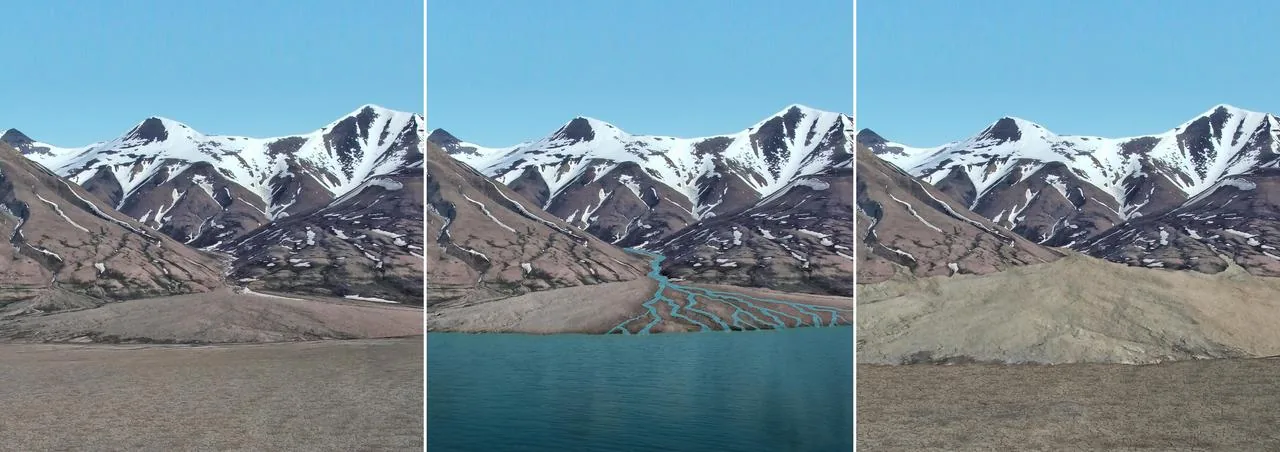
Within months of landing, Curiosity made its first major discovery. At a site called Yellowknife Bay, roughly half a mile from the landing site, the rover drilled into a fine-grained mudstone and analyzed it with its onboard laboratory. The results, published in March 2013, were remarkable: the rock contained clay minerals, evidence of neutral-pH water, and the key chemical elements necessary for life -- carbon, hydrogen, nitrogen, oxygen, phosphorus, and sulfur. The sample represented an ancient freshwater lake environment that could have supported microbial life.
This was the mission's primary finding, delivered within its first year: Gale Crater once held a lake. Not a briefly ephemeral pool, but a substantial body of water that persisted for millions of years -- long enough, potentially, for life to arise and evolve.
As Curiosity drove toward Mount Sharp over the following years, the evidence accumulated. The rover found cross-bedded sandstones indicating flowing rivers. It identified mineral veins deposited by water percolating through cracks in rock. It mapped the shorelines of an ancient lake system that may have filled and emptied repeatedly over tens of millions of years. Gale Crater was not merely damp in the distant past. It was soaked.
Organic Molecules: The Building Blocks
In June 2018, NASA announced two blockbuster findings from Curiosity. The first was the detection of organic molecules -- complex carbon-containing compounds -- in 3-billion-year-old mudstone at a site called Mojave. The rover's Sample Analysis at Mars (SAM) instrument detected thiophenes, benzene, toluene, and small carbon chains. These are not proof of life -- organic molecules can be produced by geological processes or delivered by meteorites -- but they are the building blocks from which biology is constructed. Finding them preserved in ancient rock meant that the raw materials for life were present on early Mars, and that they had survived three billion years of radiation bombardment.
The discovery was profoundly important. It established that the harsh Martian surface had not completely destroyed the organic chemistry of the ancient past. If microbial life ever existed on Mars, its chemical signatures might still be detectable.
Subsequent drilling campaigns found organic molecules at multiple locations and in multiple rock types, including in samples with sulfur compounds that may have helped preserve the organics over geological time. By 2022, Curiosity's instruments had detected the most diverse suite of organic molecules ever found on Mars.
The Methane Mystery
The second major finding announced in June 2018 was even more tantalizing: Curiosity's instruments had detected seasonal variations in methane in Mars's atmosphere. Background levels of roughly 0.41 parts per billion by volume peaked at approximately 0.65 parts per billion in late northern summer. Occasional spikes reached as high as 7 parts per billion.
On Earth, roughly 95 percent of atmospheric methane is produced by biological processes. On Mars, the source is unknown. The methane could be geological -- produced by water-rock chemistry deep underground. It could be ancient, slowly seeping from subsurface reservoirs. Or it could, conceivably, be biological, produced by methanogenic microorganisms living beneath the surface.
The seasonal pattern is particularly intriguing. Something is releasing methane on a cycle tied to Martian seasons, and something else is destroying it far faster than ultraviolet radiation alone can account for. The mystery remains unsolved and is one of the most compelling open questions in planetary science.
Climbing Mount Sharp
Since arriving at the base of Mount Sharp in September 2014, Curiosity has been steadily ascending, reading the geological record layer by layer. The journey has revealed a dramatic story. The lowest layers, rich in clay minerals, record the lake period. Above them, sulfate-bearing minerals indicate an era of increasing aridity, as the lakes evaporated and the climate shifted. Higher still, the transition to oxidized, iron-rich rocks suggests a final transformation to the cold, barren environment of modern Mars.
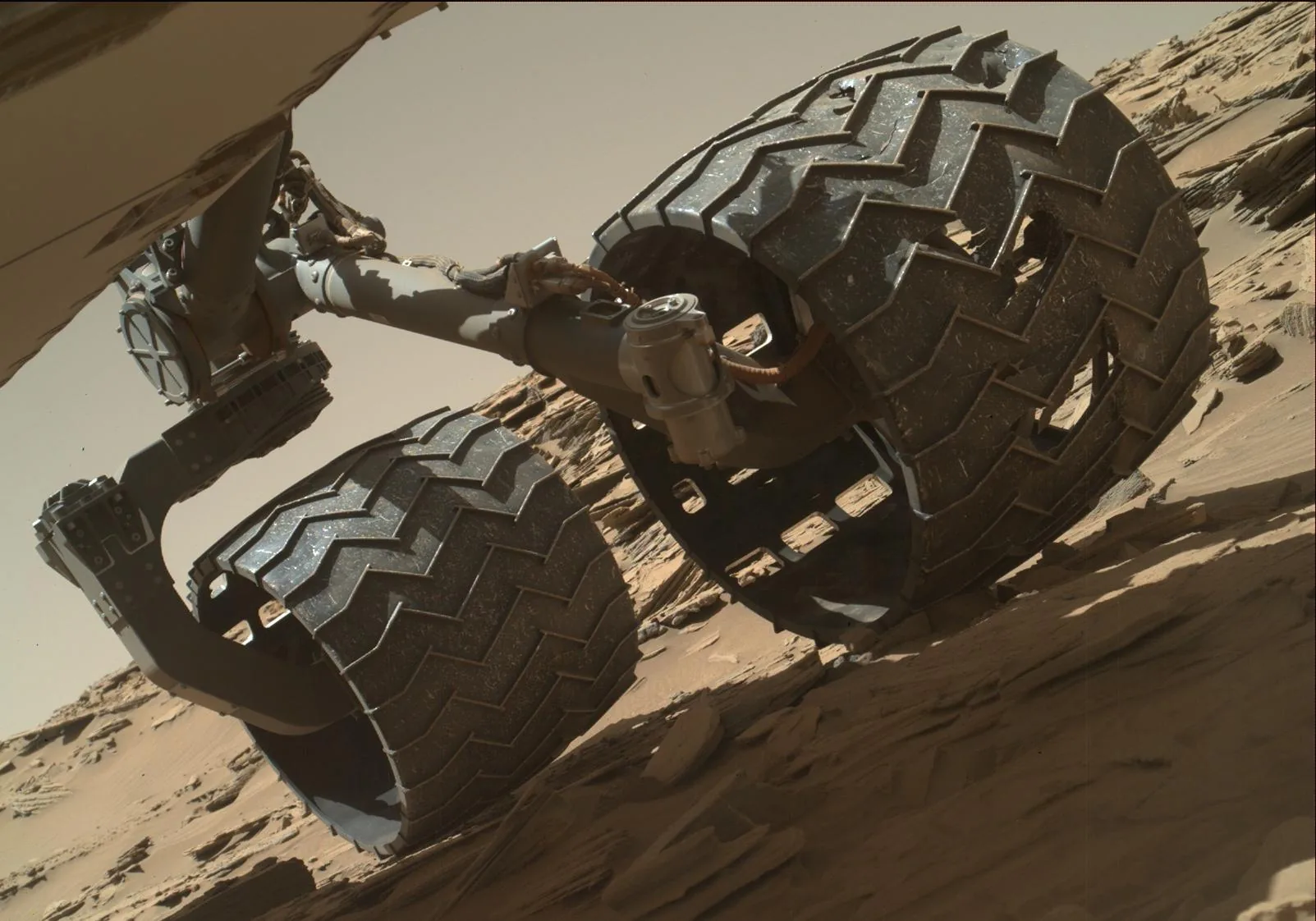
By 2024, Curiosity had climbed more than 2,300 feet above the crater floor, traversing terrain that grew progressively more rugged. The rover navigated steep slopes, sharp rocks, and fields of sand that threatened to trap its wheels. The aluminum wheels themselves became a concern early in the mission when sharp rocks punched holes in them -- a problem mission planners addressed by altering driving strategies and selecting smoother routes.
As of mid-2026, Curiosity has driven more than 33 kilometers (20+ miles) across the Martian surface. Its nuclear power source — a Multi-Mission Radioisotope Thermoelectric Generator containing 10.6 pounds of plutonium-238 — produces electricity from the heat of radioactive decay and is expected to provide sufficient power for the rover to operate well into the late 2020s, and possibly beyond.
Thirteen Years and Still Going
Curiosity was designed for a primary mission of two Earth years. It has now been operating for more than thirteen. Its instruments, though aging, continue to function. Its drill, which suffered a mechanical problem in late 2016 that took over a year to resolve through a creative workaround called "feed-extended drilling," has since collected dozens of additional samples. Its cameras have taken hundreds of thousands of images, including sweeping panoramas of the Martian landscape that convey, more powerfully than any data table, the stark, haunting beauty of another world.
The rover has weathered Martian dust storms, including the planet-encircling storm of 2018 that killed its younger sibling, the solar-powered Opportunity rover. Curiosity's nuclear power source made it immune to the darkness that starved Opportunity's solar panels -- a design choice that proved prescient.
The Legacy of a Rolling Laboratory
Curiosity fundamentally changed our understanding of Mars. Before the mission, the question was whether Mars had ever been habitable. After Curiosity, the answer is definitively yes -- at least one location on Mars had the water, chemistry, and energy sources necessary to support microbial life, and those conditions persisted for millions of years.
The rover also demonstrated that organic molecules survive on Mars, that methane is actively cycling through the atmosphere, and that the Martian geological record is accessible and readable by robotic explorers. Each of these findings shaped the design and objectives of subsequent missions, including the Perseverance rover and its Ingenuity helicopter companion, which landed in Jezero Crater in February 2021.
Perhaps most remarkably, Curiosity proved that a complex, car-sized laboratory could be landed on Mars using a sky crane and then operated remotely for over a decade across terrain that would challenge a human hiker. The engineering achievement is staggering: a robot, controlled from 140 million miles away with a 14-minute signal delay, has autonomously navigated hazards, drilled into rocks, analyzed their chemistry, and transmitted the results back to Earth -- every single day for twelve years.
Somewhere on the slopes of Mount Sharp, as you read this, Curiosity is still working. Its cameras are still scanning the horizon. Its drill is still biting into rock. Its laboratory is still analyzing samples from a world that was once warm, wet, and possibly alive. The little rover that was designed to last two years shows no intention of stopping. And the red planet, patient and ancient, still has secrets to reveal.