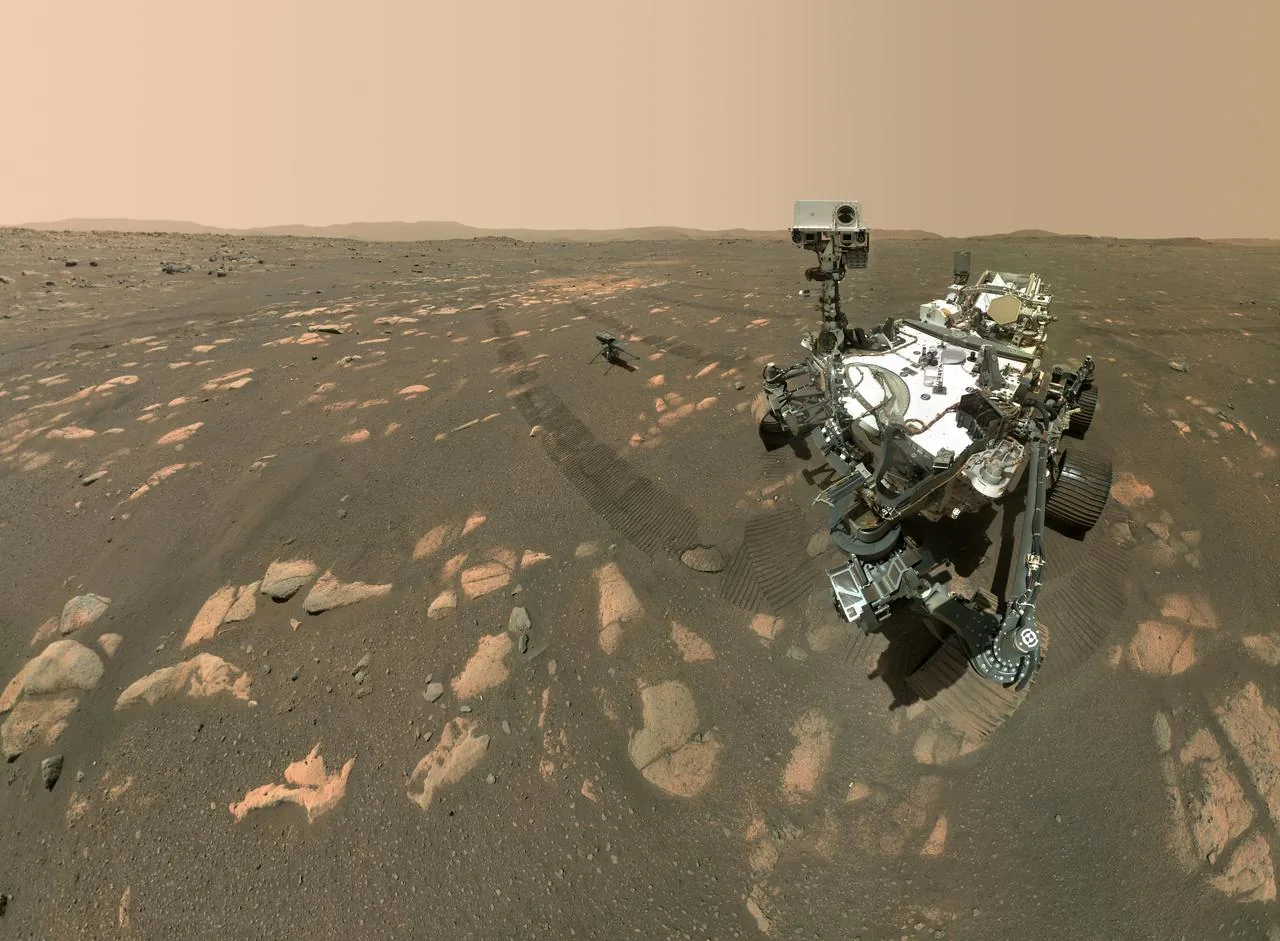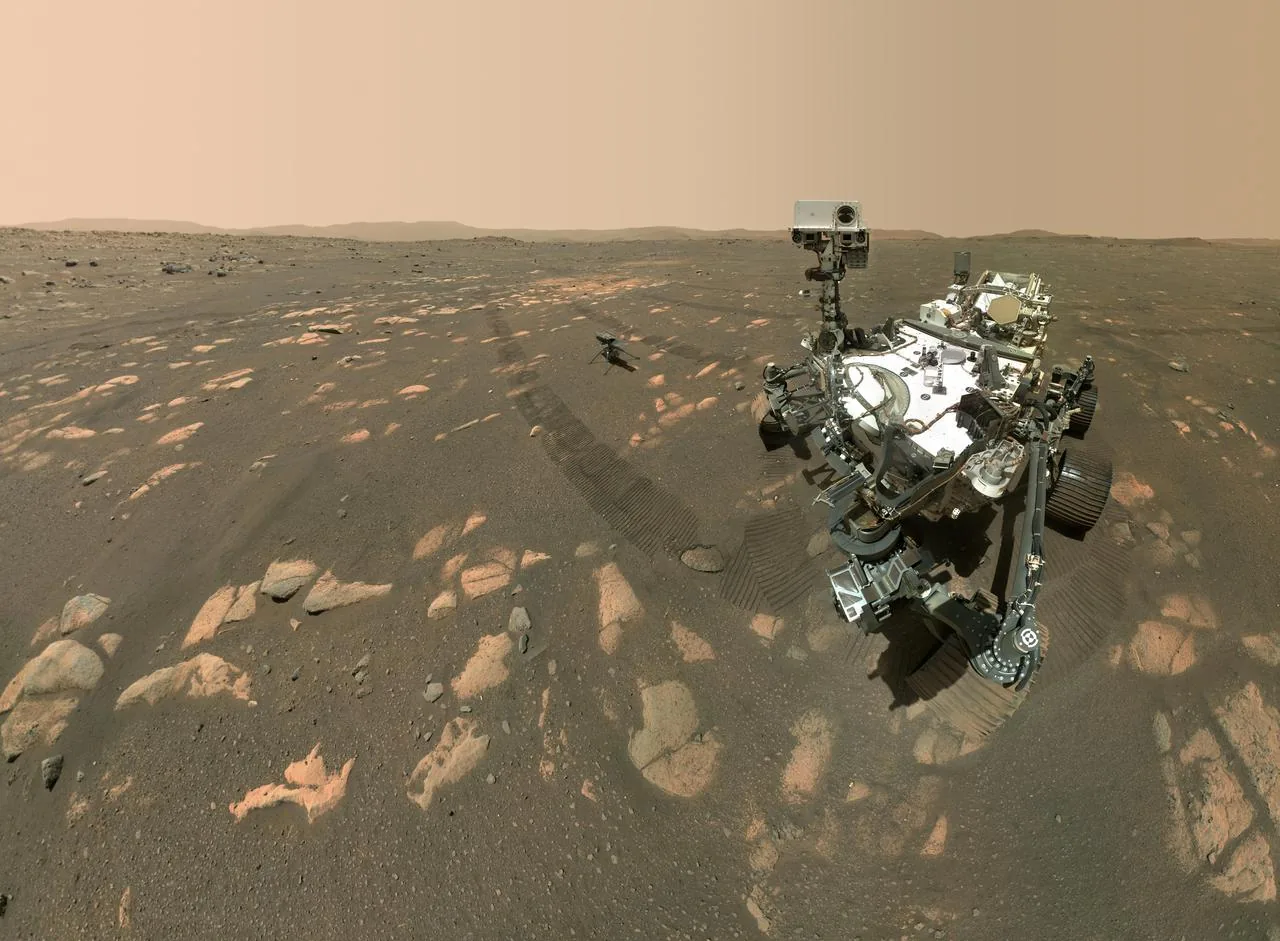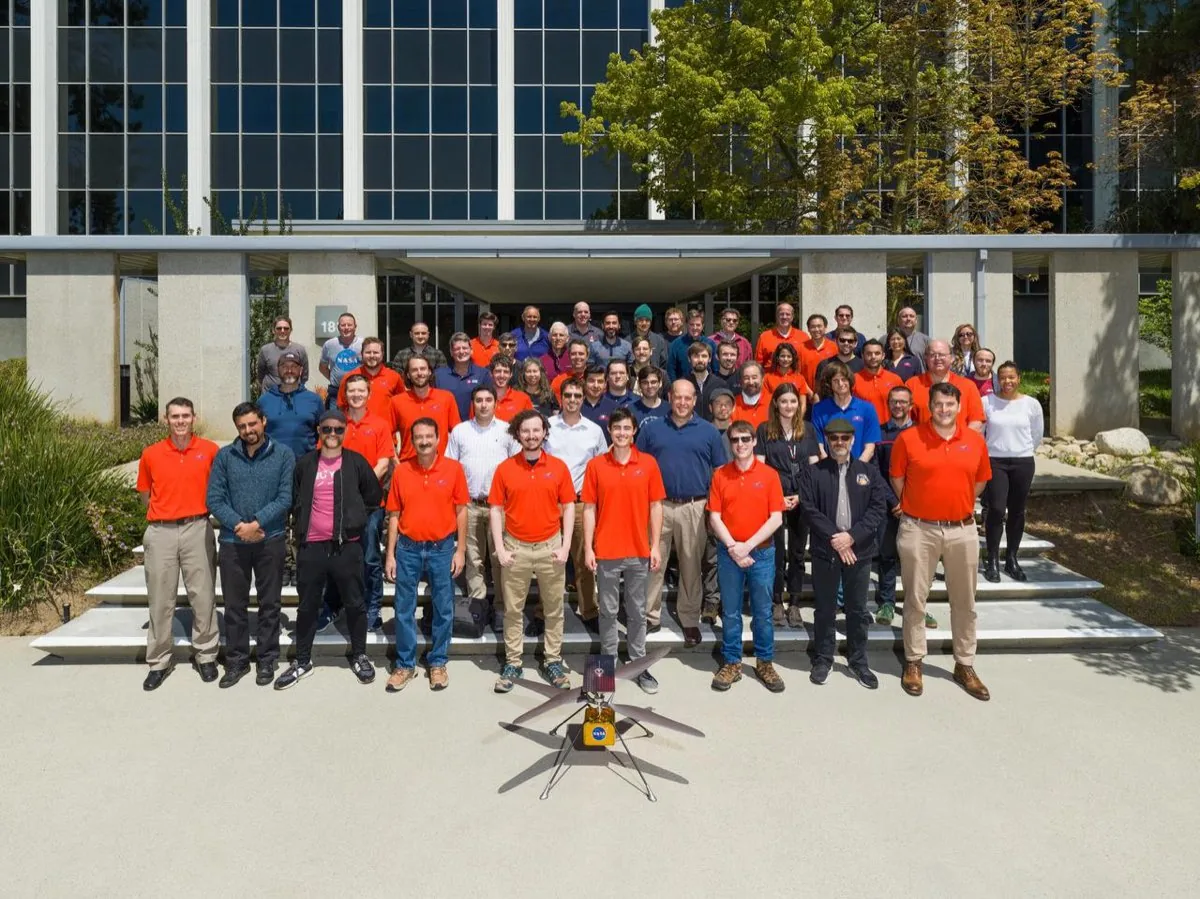
On April 19, 2021, a four-pound helicopter lifted off from the dusty surface of Mars, hovered at three meters for about 30 seconds, and gently set itself back down. It was the first powered, controlled flight on another planet. The engineers at NASA's Jet Propulsion Laboratory in Pasadena, California erupted in cheers. The Wright Brothers moment of the space age had arrived -- and it happened on a world where the atmosphere is less than 1% as dense as Earth's, where temperatures plunge to minus 90 degrees Celsius at night, and where every command from mission control takes between 5 and 20 minutes to arrive.
That little helicopter was Ingenuity. And what it accomplished over the next three years is one of the most remarkable stories in the history of space exploration.
Designed for Five Flights. It Flew Seventy-Two.
Let me put this in perspective. Ingenuity was classified as a technology demonstration -- essentially an experiment bolted to the belly of the Perseverance rover. NASA gave it a 30-day operational window and expected five flights. Five. The engineering team hoped to prove that rotorcraft flight was possible in the thin Martian atmosphere and then move on.
Ingenuity had other plans.
After those first five flights, each more ambitious than the last, NASA extended its mission. And then extended it again. And again. Over the next 33 months, Ingenuity flew 72 times, covering a total distance of over 17 kilometers and reaching altitudes of up to 24 meters. Some flights lasted less than a minute. Others stretched beyond two and a half minutes, covering over 700 meters in a single sortie. Flight 25, in April 2022, set a speed record of 10 meters per second -- roughly 36 kilometers per hour.
To understand why this matters, you need to appreciate the engineering challenge. Mars's atmosphere has a surface pressure of about 610 pascals -- less than 1% of sea-level pressure on Earth. Flying a helicopter on Mars is roughly equivalent to flying a helicopter at 30,000 meters altitude on Earth, far above the ceiling of any conventional aircraft. Ingenuity's twin counter-rotating carbon-fiber rotor blades, each 1.2 meters long, had to spin at approximately 2,400 revolutions per minute -- about five times faster than a typical helicopter on Earth -- just to generate enough lift to get airborne.
And it did this with a flight computer running a Qualcomm Snapdragon processor, the same chip found in some smartphones. On Mars.
From Scout to Pathfinder
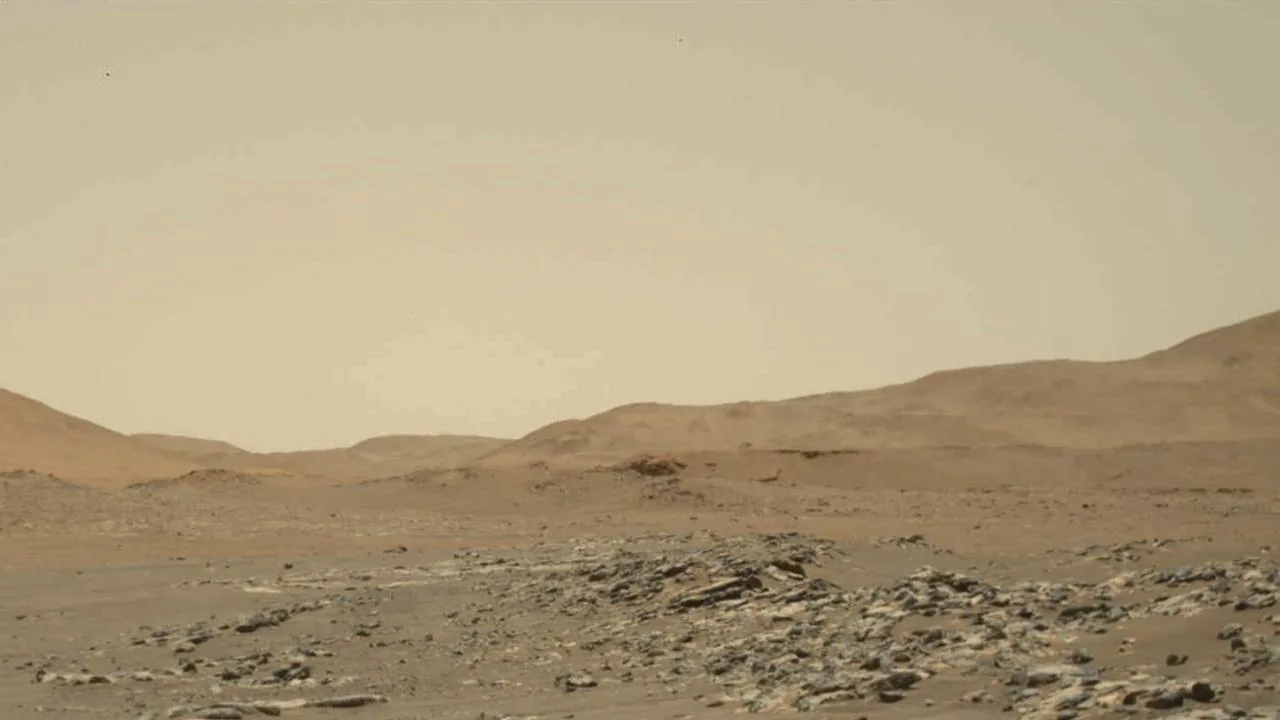
What transformed Ingenuity from a technology demo into a mission-critical asset was its evolution into an aerial scout for Perseverance. Starting around Flight 10, the helicopter began flying ahead of the rover to photograph terrain from above, giving the Perseverance navigation team aerial imagery that was far more useful than orbital photographs for planning drive routes.
This changed everything. Perseverance could see obstacles, sand traps, and scientifically interesting rock formations from a bird's-eye view before committing to a route. During the rover's approach to the Jezero Crater delta in early 2022, Ingenuity surveyed multiple potential paths and helped the team select the safest and most scientifically productive route up the delta front.
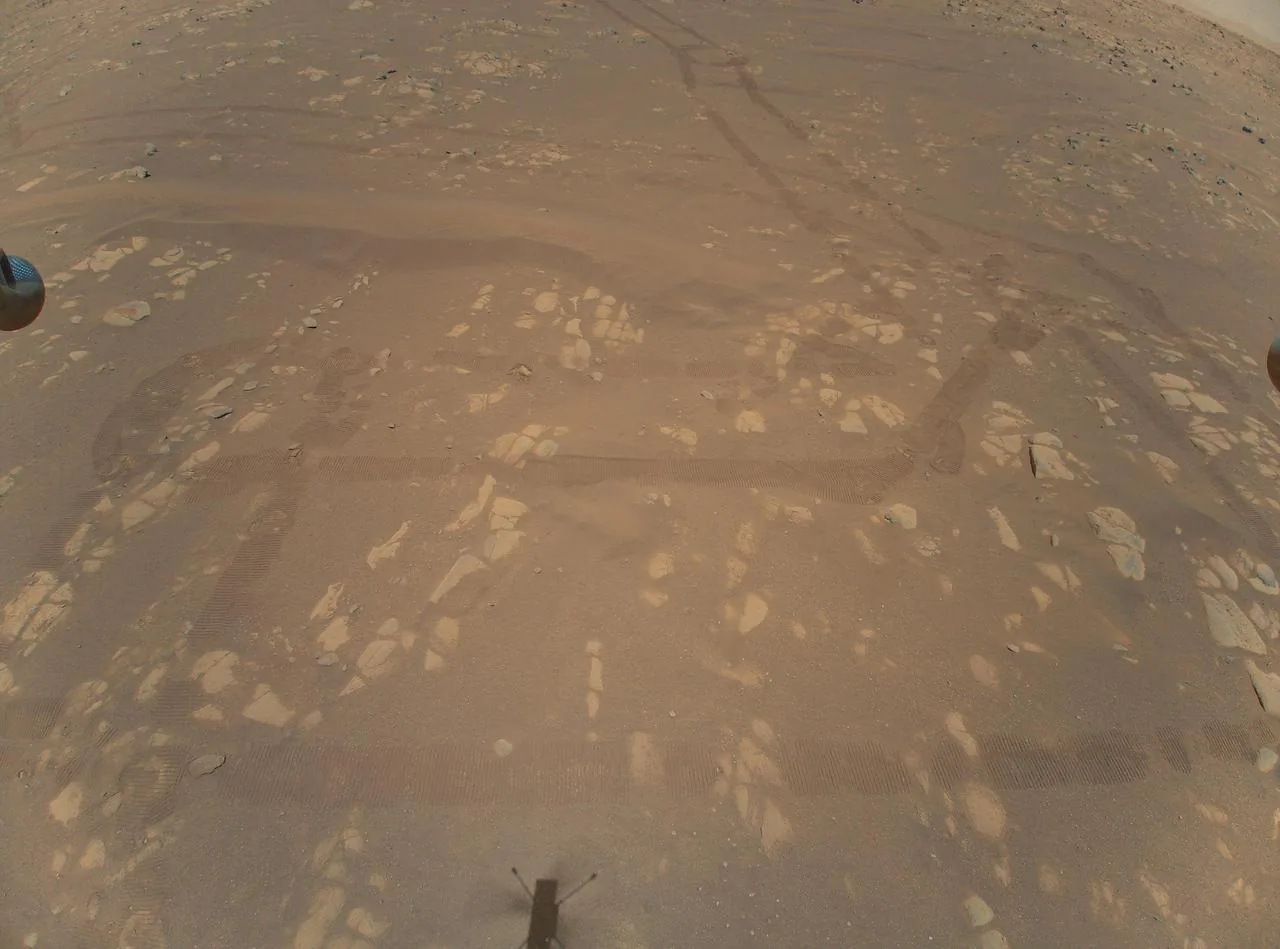
The helicopter's color camera captured images of stunning detail -- rippled sand dunes, fractured bedrock, even the parachute and backshell from Perseverance's own landing. Those images of the landing hardware, taken during Flight 26 in April 2022, were more than just cool photographs. Engineers used them to study how the parachute performed during descent, gathering data that will inform the design of future Mars landing systems.
Ingenuity was not just flying. It was doing science. It was enabling better science by the rover. And it was writing the playbook for every future Mars rotorcraft mission.
Surviving the Impossible
The Martian environment is brutal, and Ingenuity was never designed for a long campaign. Its solar panel, perched atop the rotor mast, had to generate enough power each day to keep the helicopter's electronics warm through the frigid nights, when temperatures at Jezero Crater can drop below minus 80 degrees Celsius. As Martian dust accumulated on the solar panel over the months, power margins shrank. There were periods when the helicopter could not fly for weeks, waiting for wind gusts to clear some of the dust.
Ingenuity also survived a Martian winter, a communications blackout during solar conjunction (when Mars passes behind the Sun as seen from Earth), and a harrowing incident in 2022 when a navigation error caused the helicopter to wobble dangerously during flight. The team diagnosed the issue -- a timing discrepancy in the navigation camera images caused by terrain that did not match the helicopter's expectations -- and uploaded a software patch across 200 million kilometers of space.
Through all of this, Ingenuity's systems held. The helicopter that was supposed to last 30 days lasted nearly three years.
The Final Flight: January 18, 2024
Every great mission has an ending, and Ingenuity's came on January 18, 2024, during its 72nd flight. The helicopter was performing a brief vertical ascent to survey its surroundings when contact was lost during descent. When communications were reestablished the following day, the data told a sobering story: one or more of Ingenuity's rotor blades had been damaged during landing.
Images taken by Perseverance from a distance, and later by Ingenuity's own camera, confirmed the damage. At least one blade had lost a section of its tip, likely from striking the ground during what appears to have been a hard landing on uneven terrain. The damage was irreparable. Ingenuity would never fly again.
On January 25, 2024, NASA officially announced the end of Ingenuity's mission. JPL Director Laurie Leshin called it "an iconic moment." NASA Administrator Bill Nelson said Ingenuity's legacy would "inspire fleets of aircraft on Mars and other worlds for decades to come."
I will admit that I felt a genuine pang of sadness when the news came. Ingenuity had become a character in the story of Mars exploration -- plucky, resilient, always exceeding expectations. Knowing it would sit alone on the Martian surface, grounded forever, felt like the end of something beautiful.
The Numbers Tell the Story
Here is Ingenuity's final scorecard, and every number is remarkable:
- 72 flights (designed for 5)
- Over 17 kilometers of total distance flown
- 128.8 minutes of total flight time
- Maximum altitude: 24 meters
- Maximum speed: 10 meters per second
- Maximum distance in a single flight: 704 meters
- Operational duration: 1,042 days (designed for 30)
These are not just numbers. They are proof that the impossible is often just the untried.
A Legacy That Will Shape Decades of Exploration
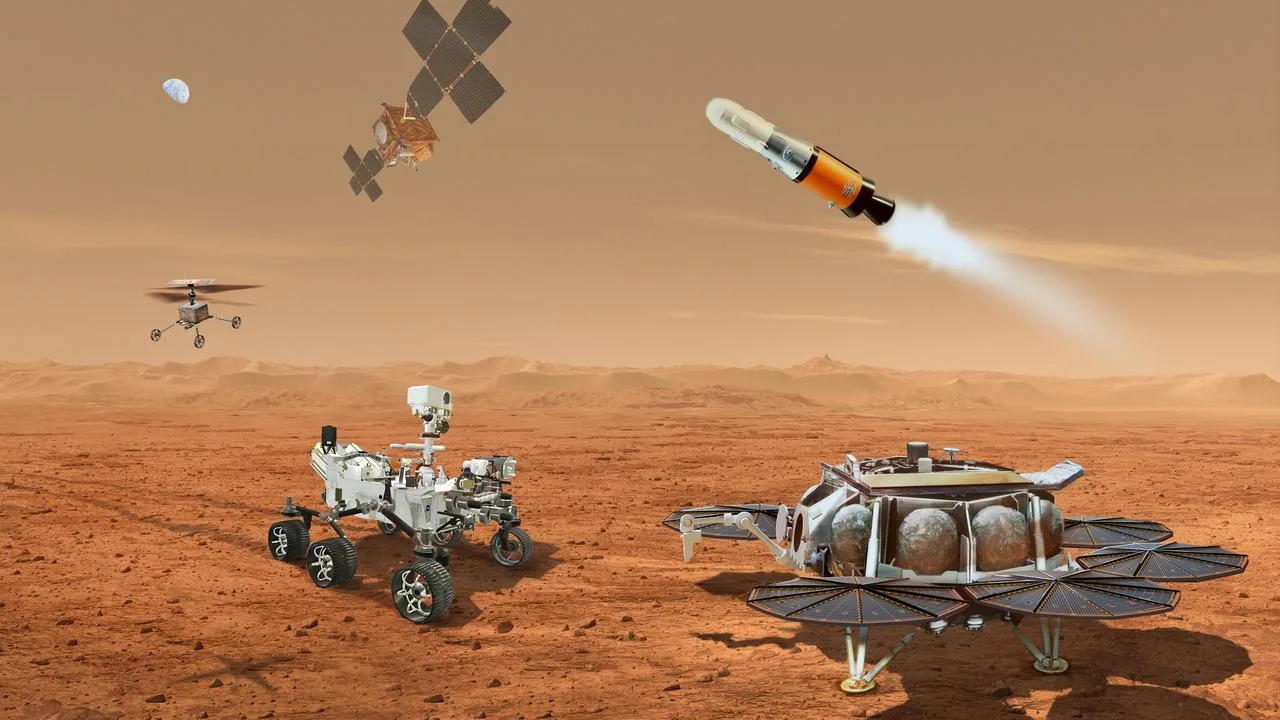
Ingenuity's impact extends far beyond its own flights. NASA is already developing its successor: the Mars Science Helicopter concept, which would be roughly the size of the Curiosity rover and capable of carrying up to 5 kilograms of science instruments. Imagine a helicopter on Mars that can fly into canyons, land on clifftops, explore cave entrances, and reach terrain that no wheeled rover could ever access. That mission is possible because of what Ingenuity proved.
The European Space Agency and other national space programs have also taken notice. Rotorcraft concepts are being studied for Titan (Saturn's moon, which has a thick atmosphere ideal for flight), Venus, and even as survey vehicles for lunar exploration.
Beyond the technical legacy, Ingenuity accomplished something harder to quantify but equally important: it captured the public imagination. The little helicopter became a symbol of what space exploration is at its best -- audacious, creative, and joyful. The images it sent back from Mars, showing its own shadow gliding across the alien landscape, were some of the most shared space photographs since the Apollo missions.
Ingenuity sits now on the floor of Jezero Crater, its blades still, its mission complete. But its legacy is already airborne. The next generation of Mars helicopters, drones, and aerial explorers will trace their lineage directly back to that 30-second hover on April 19, 2021.
The little helicopter did not just conquer Mars. It opened the skies of other worlds.