For decades, India had exactly one astronaut. Rakesh Sharma flew to the Soviet Salyut 7 station in 1984, spent eight days in orbit, and gave his country a phrase it never forgot — when Prime Minister Indira Gandhi asked how India looked from space, he answered, "Saare Jahan Se Achha," better than the whole world. Then, for forty years, nothing. No Indian left the planet again.
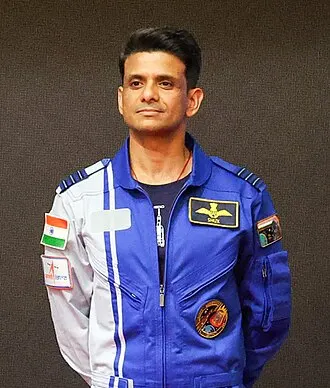
That drought is ending. On February 27, 2024, on a stage at the Vikram Sarabhai Space Centre in Kerala, Prime Minister Narendra Modi pinned golden astronaut wings on the chests of four Indian Air Force officers and, for the first time, told the nation their names. These are the men training to fly Gaganyaan, India's first home-grown crewed mission — and one of them has already been to space.
The Long Silence Since Rakesh Sharma
Sharma's 1984 flight was a guest seat, arranged with the Soviet Union at the height of Indo-Soviet friendship. It was extraordinary, but it was borrowed — an Indian aboard a Russian rocket, in a Russian capsule, launched from Kazakhstan. Gaganyaan is meant to be different. When these four fly, they will ride an Indian-built crew module atop an Indian rocket from Indian soil at Sriharikota.
That distinction is why the four astronauts-designate carry a weight Sharma never did. They are not passengers on someone else's program; they are the first faces of a national capability being built from scratch. Whoever flies first will not just follow Sharma into orbit — he will open a door that stays open, the first name in what India hopes becomes a long roster.
How Four Were Chosen From Hundreds
The path to that Kerala stage ran through the cockpits of fighter jets. ISRO deliberately drew its first astronaut pool from Indian Air Force test pilots — a natural fit, because test pilots already do what astronauts must: fly unfamiliar and dangerous machines, stay calm when systems misbehave, and make split-second decisions with lives riding on them.
The screening began in earnest around 2019, run by the Institute of Aerospace Medicine (IAM) in Bengaluru. From an initial field of Air Force pilots, candidates were put through punishing rounds of physical, psychological, and medical evaluation — everything from clinical exams to stress tests designed to find hidden weaknesses. The IAM shortlist narrowed to twelve, and then, after further assessment, to a final four. Their identities were kept secret for years, a deliberate choice that let them train without the glare of national celebrity.
Group Captain Prasanth Balakrishnan Nair
The senior figure of the group, Prasanth Balakrishnan Nair was born on August 26, 1976, in Kerala, and spent part of his childhood in Kuwait, where his father worked as an engineer. He was commissioned into the Air Force's fighter stream in December 1998 and did it in style, earning the Sword of Honour as the top cadet of his course at the Air Force Academy.
Nair went on to log more than 3,000 flight hours across a formidable list of aircraft — the Sukhoi Su-30MKI, MiG-21, MiG-29, Jaguar, and Hawk — and commanded an operational Su-30 squadron. A category-A flying instructor and test pilot, he is also a graduate of the US Air Force Air Command and Staff College. In one of the quieter human details of the crew, he is married to the Malayalam film actress known professionally as Lena.
When India needed a backup pilot for its ISS flight in 2025, it chose Nair. He trained shoulder-to-shoulder with Shubhanshu Shukla, ready to step in at a moment's notice — a role that made him one of only two Indians fully prepared to fly that mission, even though he ultimately stayed on the ground.
Group Captain Ajit Krishnan
Ajit Krishnan, born April 19, 1982, in Chennai, is a product of India's Kendriya Vidyalaya school system, finishing his schooling at the KV attached to Air Force Station Yelahanka in 1999. From there he took the classic officer's route — the National Defence Academy, then the Air Force Academy at Dundigal, where, like Nair, he graduated at the very top, winning both the President's Gold Medal and the Sword of Honour.
Commissioned as a fighter pilot in 2003, Krishnan accumulated some 2,900 hours across the Su-30MKI, MiG-21, MiG-29, Jaguar, Dornier, and An-32, and trained as both a flying instructor and a test pilot. He is a graduate of the Defence Services Staff College at Wellington. Among the four, he is often described as the quiet perfectionist — a pilot whose record is defined less by dramatic episodes than by an unbroken pattern of finishing first.
Group Captain Angad Pratap
Angad Pratap is the crew's dedicated flying instructor and test pilot, a specialist in the craft of teaching others to fly the most demanding machines. He has logged roughly 2,000 hours on a wide spread of aircraft — the Su-30MKI, MiG-21, MiG-29, Jaguar, Hawk, Dornier, and An-32 — and rose steadily through the ranks, making wing commander in 2017 before his promotion to group captain.
Like the others, he was pulled into the Gaganyaan pipeline through the IAM's 2019 selection round in Bengaluru. Pratap is the least publicly documented of the four, which in a way suits the program's early ethos: for years these men were meant to be capabilities, not celebrities. What is on the record is a career built on the unglamorous, high-stakes work of test flying — precisely the temperament ISRO wanted in the seat of an unproven spacecraft.
Group Captain Shubhanshu Shukla — The One Who Already Flew
Then there is Shubhanshu Shukla, the "Lucknow boy" who has become the most famous of the four for a simple reason: he has already been to space. Born October 10, 1985, in Uttar Pradesh, he was commissioned into the IAF fighter wing in June 2006 and built up around 2,000 hours across the Su-30MKI, MiG-21, MiG-29, Jaguar, Hawk, Dornier, and An-32. He was promoted to wing commander in 2019 and to group captain in March 2024, days after his selection was announced.
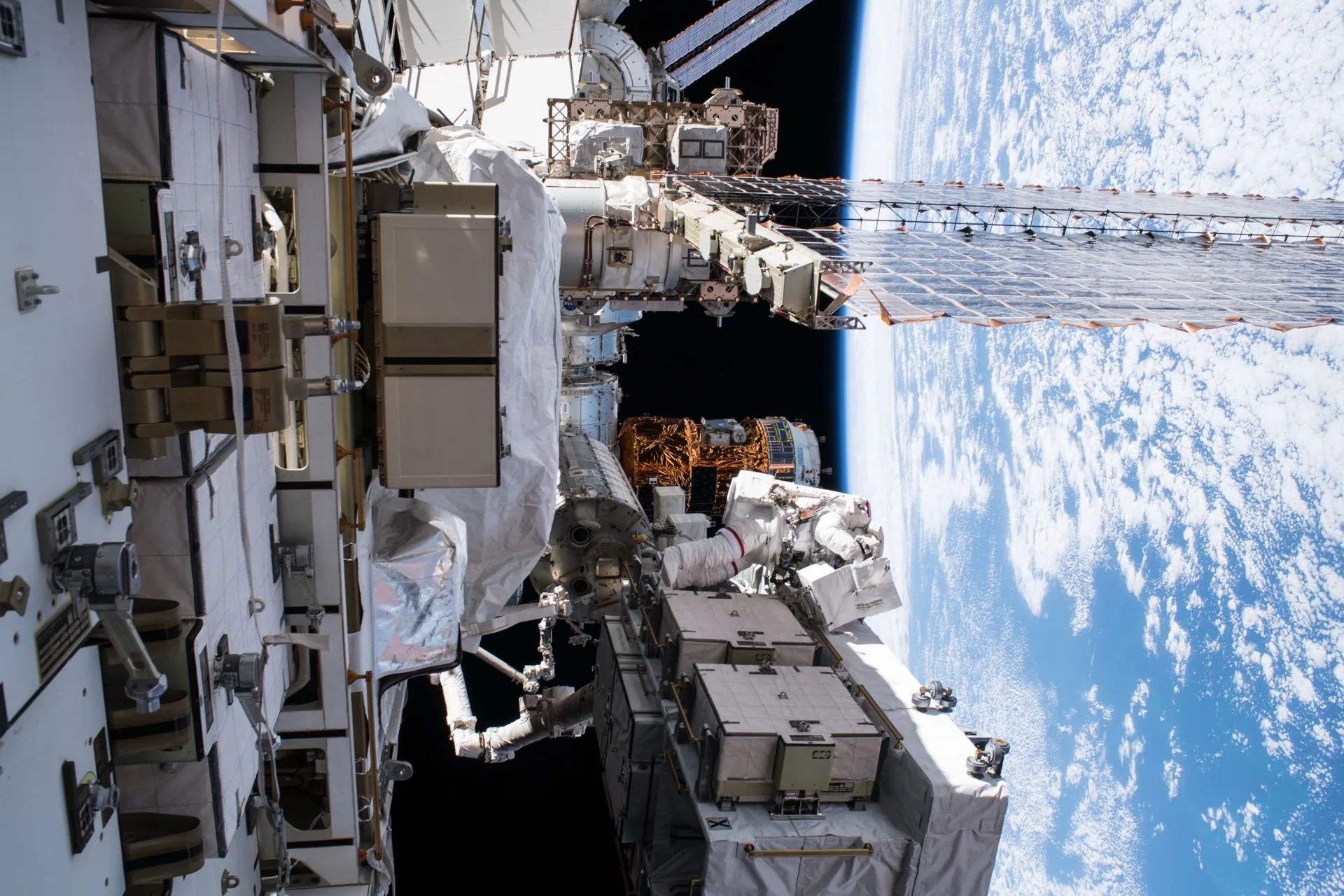
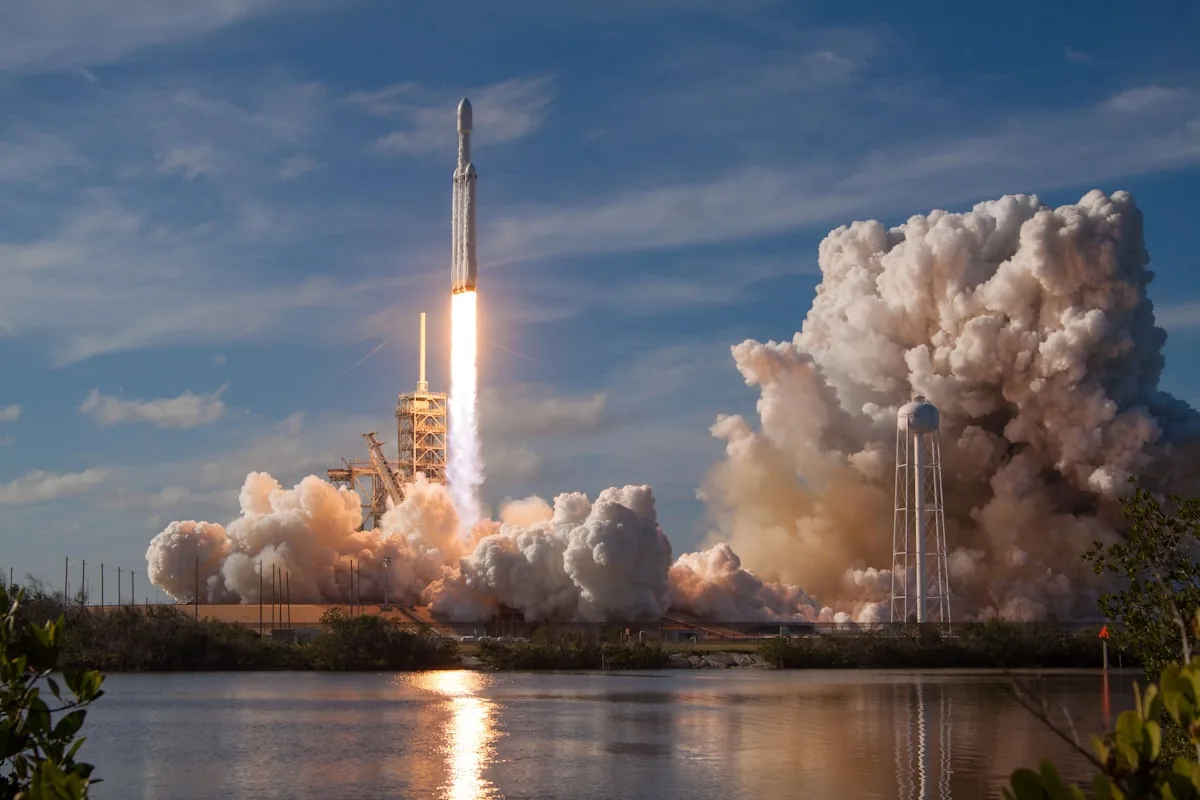
On June 25, 2025, Shukla lifted off from Florida as the pilot of Axiom Mission 4 (Ax-4), a private flight aboard a SpaceX Dragon commanded by the legendary Peggy Whitson, alongside crewmates from Poland and Hungary. When Dragon docked, Shukla became the first Indian ever to board the International Space Station — and only the second Indian in space, four decades and change after Rakesh Sharma.
His roughly eighteen days aboard were not a sightseeing trip. Shukla worked through a demanding slate of experiments — the crew supported around sixty investigations in total — including studies with direct relevance to long-duration spaceflight: growing edible microalgae as a candidate space food, examining how microbes and seeds behave in orbit, and the Cancer-in-LEO study probing how aggressive cancer cells behave in microgravity. He also spoke directly with Prime Minister Modi from orbit, telling millions of watching Indians what their country looked like from 400 kilometers up. The mission wrapped after about 12 million kilometers and roughly 282 orbits, splashing down safely on July 15, 2025.
For Gaganyaan, Ax-4 was worth more than the sum of its experiments. ISRO treated it as a live rehearsal — a chance to watch one of its own astronauts adapt to microgravity, run a research program, and handle the rhythms of orbital life, then feed every lesson back into planning for India's own flight. Shukla himself has described the learning from Ax-4 as being directly compared against Gaganyaan's mission design. India didn't just get an astronaut in orbit; it got a debriefing no textbook could provide.
Training: Star City, Bengaluru, and a Robot Named Vyommitra
Before any of this, all four went through a shared crucible. In early 2020 they traveled to the Yuri Gagarin Cosmonaut Training Centre in Star City, outside Moscow, for foundational cosmonaut training — a roughly year-long program covering spacecraft systems, high-G centrifuge runs, zero-gravity flights, and rugged survival training for the possibility of landing far off course, in snow, water, or wilderness. Russia has trained astronauts for more than sixty years, and for a nation building its first program, that inheritance of experience was invaluable.
Back home, the training moved to ISRO's dedicated astronaut facility in Bengaluru, where the men shifted from generic spaceflight skills to Gaganyaan-specific work: rehearsing in crew-module simulators, drilling parachute and water-survival routines for the Bay of Bengal splashdown, maintaining brutal physical conditioning, and living under constant medical monitoring. Yoga and Indianized flight-food regimens were folded in — a program shaped to Indian bodies and Indian conditions.
They will not be the first to ride the capsule, though. That honor goes to Vyommitra, a half-humanoid robot built by ISRO whose name fuses the Sanskrit words for "space" and "friend." She is slated to occupy the crew seat on the uncrewed test flights, monitoring the cabin, mimicking human responses, and validating life-support systems before any of the four trusts them with his life. In a sense, Vyommitra is the fifth member of the corps — the crash-test astronaut who flies so the humans don't have to guess.
Who Flies First — and What It Means
ISRO has not named the crew for the first flight. Officially, all four remain in contention, and the pilots have publicly downplayed the question, insisting the mission matters more than the seating chart. But the subtext is unavoidable. Shukla's Ax-4 experience makes him the obvious frontrunner for a prominent role; Nair's seniority and his backup posting for Ax-4 keep him firmly in the picture; Krishnan and Pratap carry the spotless records that got them here in the first place.
Whoever it is, the first Indian to fly an Indian spacecraft will step into history beside Rakesh Sharma — no longer a lone footnote from 1984, but the start of a line. As of mid-2026, the crewed flight is targeted for 2027, pending the uncrewed G1 test and its successors. Four test pilots who once spent their days wringing out fighter jets over Indian skies are now waiting for a rocket. One of them has already seen the Earth turn beneath him. Soon, if all goes to plan, he'll do it again — this time flying home.