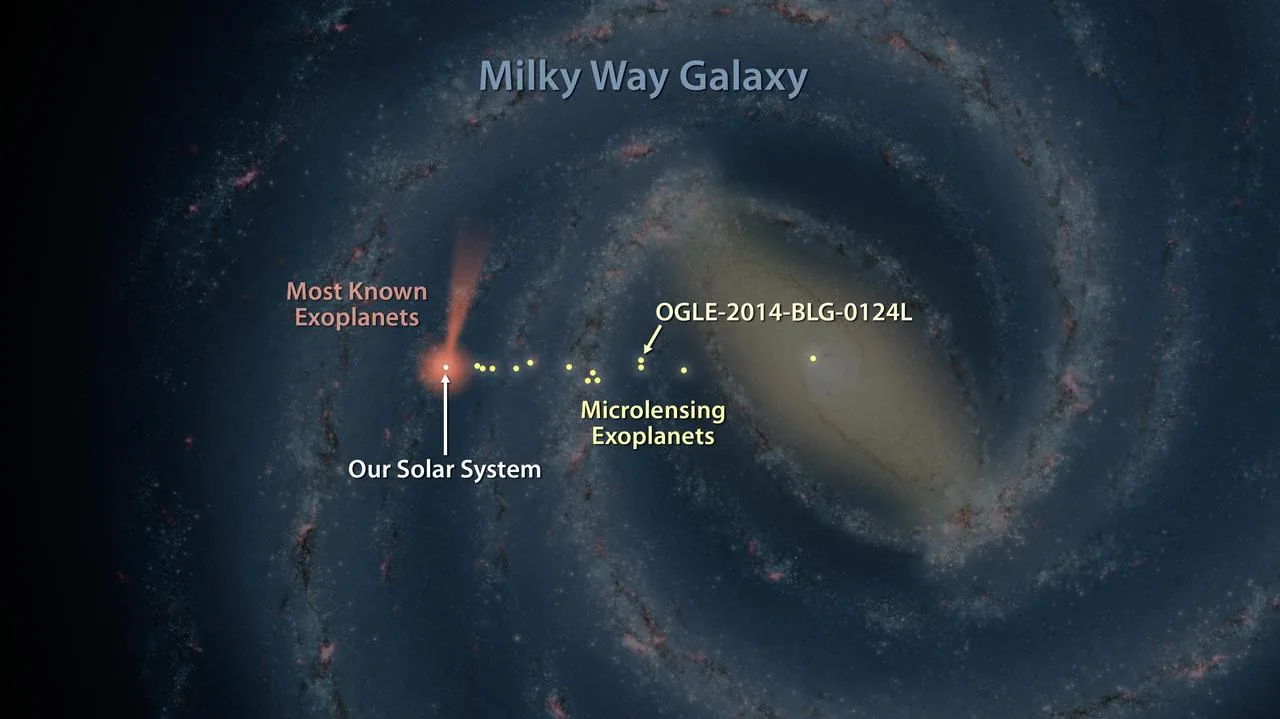
In September 2023, a wave of cautious excitement rippled through the astronomy community. The James Webb Space Telescope had peered across 124 light-years of interstellar space, dissected the starlight filtering through an alien atmosphere, and found something that made headlines around the world: possible hints of a molecule that, on Earth, is produced almost exclusively by living organisms. The planet was K2-18b. The molecule was dimethyl sulfide. And the debate that followed reminded us all how thrilling, and how humbling, the search for extraterrestrial life truly is.
A Strange World in the Habitable Zone
K2-18b was first discovered in 2015 by NASA's Kepler space telescope during its extended K2 mission. Orbiting a red dwarf star in the constellation Leo, the planet is roughly 8.6 times the mass of Earth and about 2.6 times its radius. That puts it in an awkward category: too big to be a rocky super-Earth in the traditional sense, but too small to be a gas giant like Neptune. Astronomers call planets in this size range "sub-Neptunes," and they are actually the most common type of planet in our galaxy, even though our own solar system has nothing quite like them.
What made K2-18b stand out from the thousands of other known exoplanets was its location. It orbits squarely within its star's habitable zone, the region where temperatures could theoretically allow liquid water to exist on the surface. For a planet orbiting a cool, dim red dwarf, that habitable zone sits much closer to the star than Earth's does to the Sun. K2-18b completes an orbit every 33 days, but its star is so much cooler than ours that the planet receives roughly the same amount of energy that Earth receives from the Sun.
The question that consumed researchers was: what is K2-18b actually like? Is it a miniature Neptune wrapped in thick hydrogen gas with no real surface? Or could it be something far more interesting?
Enter the Hycean World Hypothesis
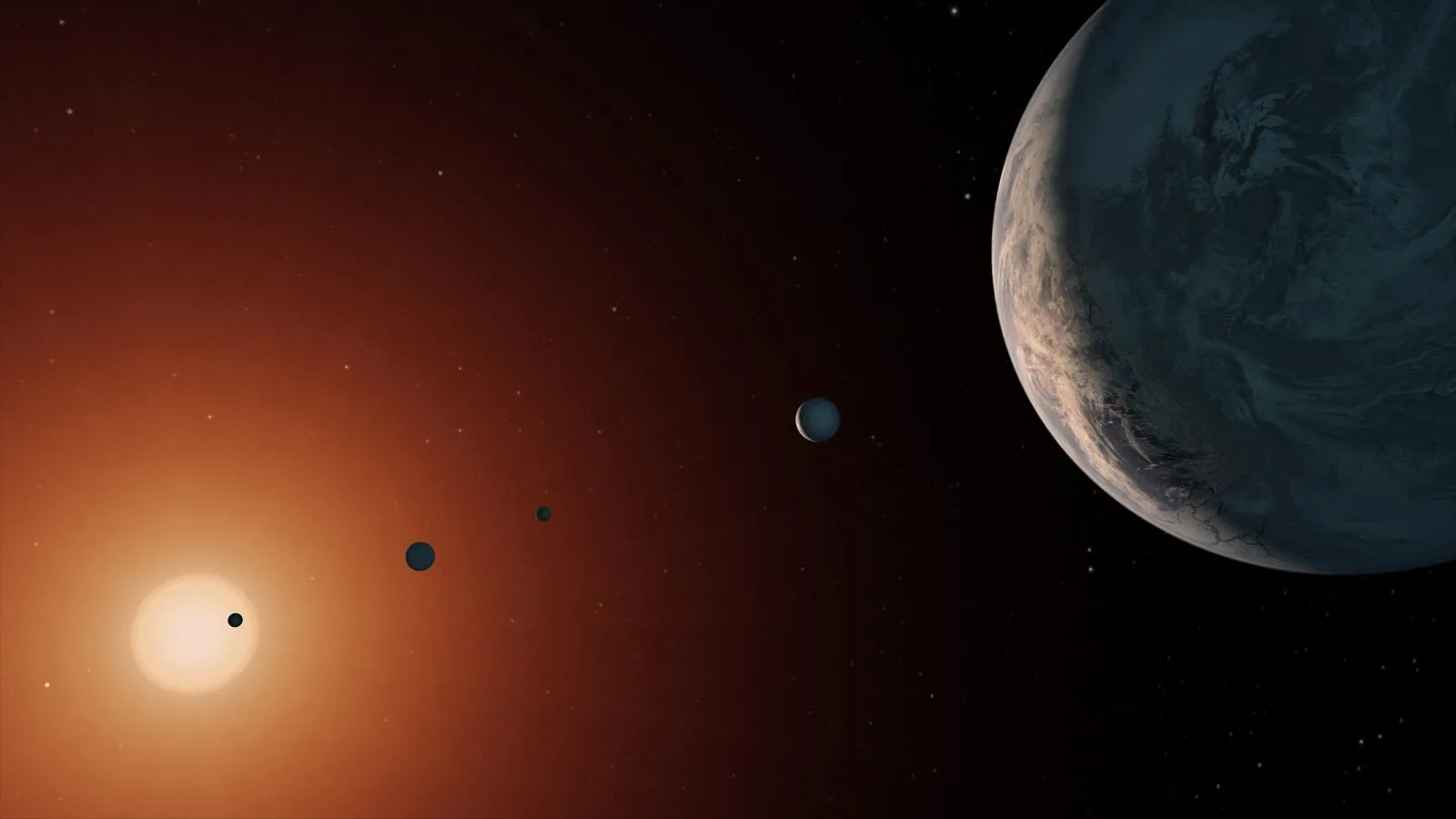
In 2021, a team led by Cambridge astronomer Nikku Madhusudhan proposed a tantalizing idea. Some sub-Neptune exoplanets, they argued, might belong to an entirely new class: "Hycean worlds." The name combines hydrogen and ocean. Picture a planet with a thick hydrogen-rich atmosphere sitting above a vast, globe-spanning liquid water ocean, with temperatures and pressures that could, in principle, support life.
The Hycean hypothesis was exciting because it dramatically expanded the kinds of planets where we might search for biosignatures. Rocky planets in the habitable zone are relatively rare and hard to study. But if water worlds with hydrogen envelopes could also harbor life, the number of promising targets would skyrocket. K2-18b, with its size, mass, and orbital position, became the poster child for this new class.
Not everyone was convinced. Some atmospheric modelers argued that a planet of K2-18b's mass would likely have such a deep, dense atmosphere that surface pressures would be crushing and temperatures scorching, regardless of what the top of the atmosphere looked like. Others pointed out that a hydrogen-rich atmosphere would create a powerful greenhouse effect that could turn any ocean into a supercritical steam bath. The Hycean concept was elegant, but nature does not always cooperate with elegant ideas.
What JWST Actually Found
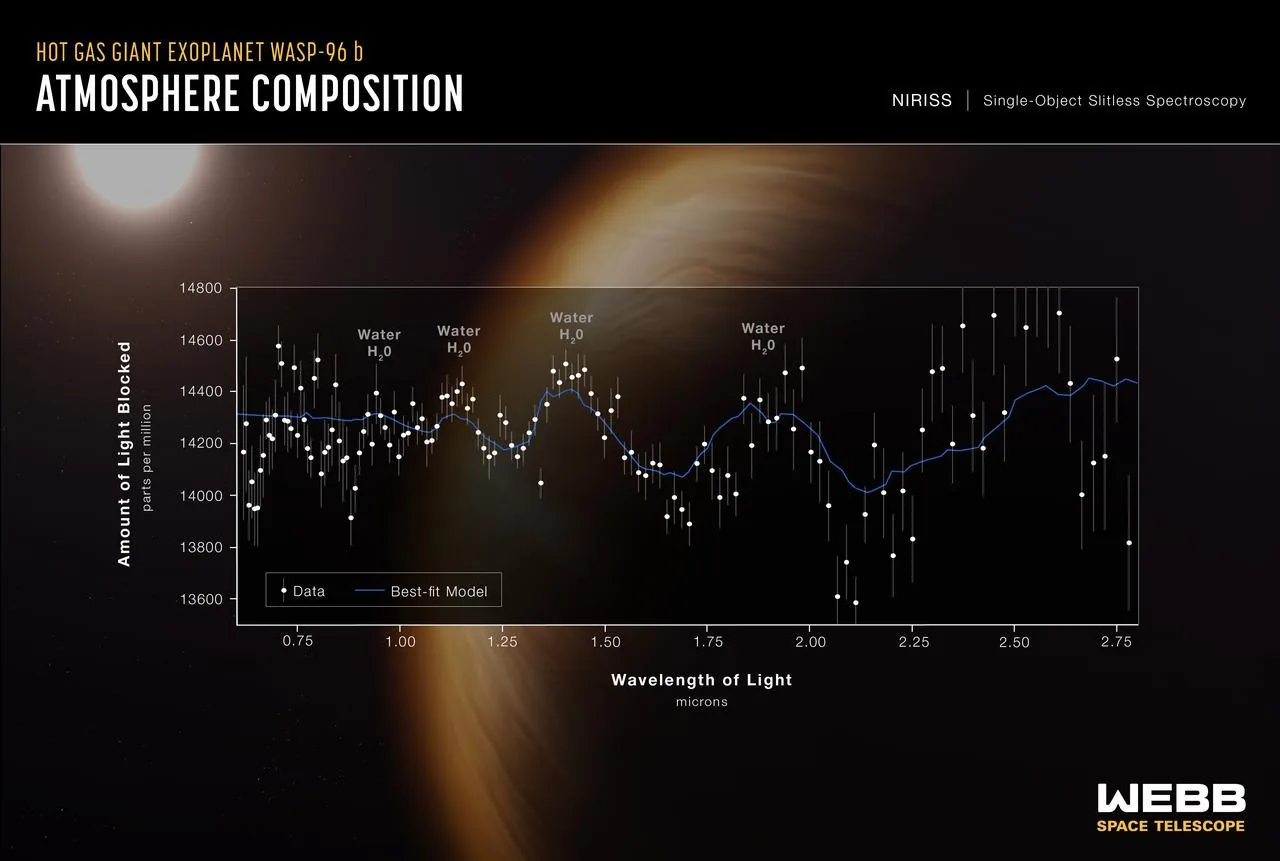
When the James Webb Space Telescope turned its infrared gaze on K2-18b in early 2023, it observed two transits of the planet across its host star. As K2-18b passed in front of the star, a thin ring of its atmosphere was backlit, and JWST's Near-Infrared Spectrograph (NIRSpec) captured the resulting spectrum with unprecedented precision.
The results, published by Madhusudhan's team, were striking. The spectrum showed clear signatures of methane (CH4) and carbon dioxide (CO2) in the atmosphere, while showing a notable absence of ammonia (NH3). This particular combination matters because it is consistent with a theoretical prediction: if K2-18b has a water ocean beneath its hydrogen atmosphere, chemical reactions between the ocean and the atmosphere would produce exactly this pattern. Methane and CO2 would be present. Ammonia would be dissolved into the ocean and depleted from the atmosphere.
And then there was the tentative detection of dimethyl sulfide (DMS). On Earth, this molecule is produced by phytoplankton in the oceans. It is the compound largely responsible for the characteristic smell of the seaside. No known geological or chemical process produces DMS in significant quantities without biology. If confirmed on K2-18b, it would be extraordinary.
But extraordinary claims require extraordinary evidence, and the DMS signal was right at the edge of statistical significance. The researchers themselves were careful to describe it as a "potential" detection requiring further observation. A single, marginal signal in a noisy spectrum is a starting point, not a conclusion.
The Scientific Debate
The reaction from the broader scientific community was a masterclass in how science actually works. Some researchers were cautiously optimistic, noting that the methane-CO2-no-ammonia combination was genuinely interesting and consistent with an ocean world scenario. Others raised important objections.
One major concern came from atmospheric chemists who pointed out that photochemistry in a hydrogen-rich atmosphere could produce DMS-like spectral features from purely non-biological processes. When ultraviolet radiation from the host star hits a thick hydrogen atmosphere laden with sulfur compounds, complex chemistry ensues. Disentangling biological signals from abiotic chemistry in an alien environment, with alien atmospheric composition, around an alien star, is profoundly difficult.
Another group of researchers questioned whether the Hycean interpretation was even necessary to explain the data. They suggested that K2-18b might simply be a small Neptune with a deep atmosphere, no ocean, and no surface. The methane and CO2 could exist in such an atmosphere without requiring liquid water at all. The absence of ammonia, they argued, could have alternative explanations.
There was also debate about the DMS detection itself. Independent analyses of the same JWST data produced mixed results. Some teams could reproduce the signal; others could not. The difference often came down to the choices made in data reduction, how you handle the noise, which models you compare the data against, and what priors you assume. This is not a flaw in the process. It is the process. Science advances through exactly this kind of rigorous back-and-forth.
Why Biosignatures Are So Hard
The K2-18b debate illuminates a fundamental challenge in astrobiology. A biosignature is not a direct detection of life. It is the detection of something that might be caused by life but could also be caused by something else. On Earth, oxygen is a biosignature because photosynthetic organisms produce it in vast quantities. But oxygen can also be produced by ultraviolet light splitting water molecules. Context matters enormously.
For a molecule to be a convincing biosignature, scientists need to demonstrate that no plausible abiotic process can explain its abundance in the observed environment. That requires understanding the planet's atmosphere, surface, interior, host star, and history in enough detail to rule out false positives. For an exoplanet 124 light-years away that we have never visited and can only study through the faint light filtering through its upper atmosphere, that is a tall order.
This is why astrobiologists talk about "biosignature gases in context." A single molecule is never enough. What matters is the full ensemble of atmospheric gases, their relative abundances, and whether the overall picture makes sense without invoking biology. The K2-18b data is a first step in building that picture, not the final word.
What Comes Next
The good news is that JWST is not done with K2-18b. Additional observations have been approved, and more transit data will dramatically improve the signal-to-noise ratio of the atmospheric spectrum. If DMS is truly present, a stronger detection will emerge. If it was a statistical artifact, it will fade away. Either outcome is valuable.
Beyond JWST, future telescopes will push biosignature science even further. The Extremely Large Telescope (ELT) under construction in Chile, with its 39-meter mirror, may be able to directly image the atmospheres of nearby exoplanets. NASA's Habitable Worlds Observatory, currently in the planning stages, is being designed specifically to characterize Earth-like planets around Sun-like stars and search for signs of life.
K2-18b has also inspired a broader rethinking of where to look. If Hycean worlds are real, they are far easier to study than small rocky planets because their larger size and extended atmospheres produce stronger spectral signals during transits. Even if K2-18b itself turns out not to host life, it may have opened a new and fruitful avenue of investigation.
The Bigger Picture
Standing back from the technical details, there is something deeply moving about what happened with K2-18b. Humans built a telescope, launched it to a point a million miles from Earth, aimed it at a star barely visible to the naked eye, and detected individual molecules in the atmosphere of a world no human eye has ever seen. The fact that we can even have this debate, that we can argue about whether a whiff of dimethyl sulfide on a Hycean world 124 light-years away is biological or not, represents one of the great intellectual achievements of our species.
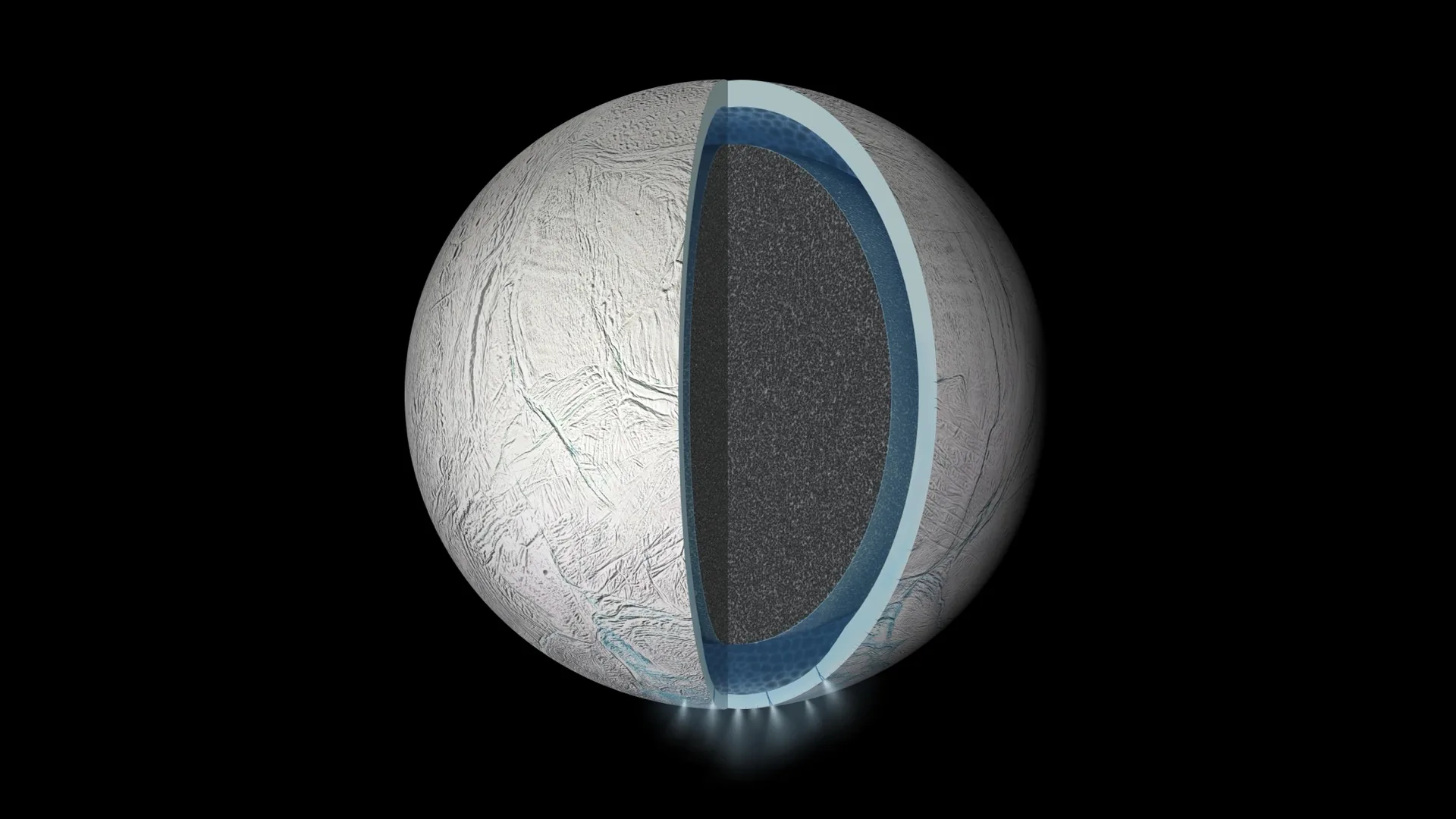
The answer to "are we alone?" may not come from K2-18b. It may come from Europa or Enceladus or a planet we have not yet discovered. But K2-18b has shown us that we are finally building the tools and developing the methods to ask the question seriously. And in science, asking the right question is often more important than having the right answer.
The debate continues. The telescopes keep watching. And somewhere out in the constellation Leo, a strange world 8.6 times the mass of Earth continues its 33-day orbit, keeping its secrets for now, but perhaps not forever.