What if the future of humanity is not on any planet at all? What if, instead of clinging to the surface of rocky worlds, we build our own worlds from scratch -- vast rotating structures floating in space, each one a self-contained civilization with forests, rivers, weather, and room for millions?
This is not a fever dream from a science fiction novel. It is the carefully reasoned conclusion of one of the twentieth century's most respected physicists, and it may be the most important idea about humanity's future that almost nobody talks about.
Gerard O'Neill's Radical Question
In 1969, Princeton physicist Gerard K. O'Neill posed a deceptively simple question to his freshman physics students: "Is the surface of a planet really the right place for an expanding technological civilization?"
The answer his students reached, after rigorous analysis, was no.
Planets are wonderful for evolving life, but they are terrible real estate for a spacefaring species. You are stuck at the bottom of a gravity well, burning enormous energy to get anything into orbit. You are limited to the fraction of the planet's surface that is habitable. You are subject to earthquakes, hurricanes, and volcanic eruptions. And you cannot adjust the gravity, atmosphere, or day length to suit your preferences.
O'Neill spent the next several years developing an alternative. His 1976 book, The High Frontier: Human Colonies in Space, laid out detailed engineering plans for free-floating space habitats that would provide Earth-like living conditions for populations ranging from ten thousand to several million people. The work was not hand-waving. It was grounded in known physics, existing materials, and technologies that were either available or foreseeable.
The Designs: Cylinders, Toruses, and Spheres
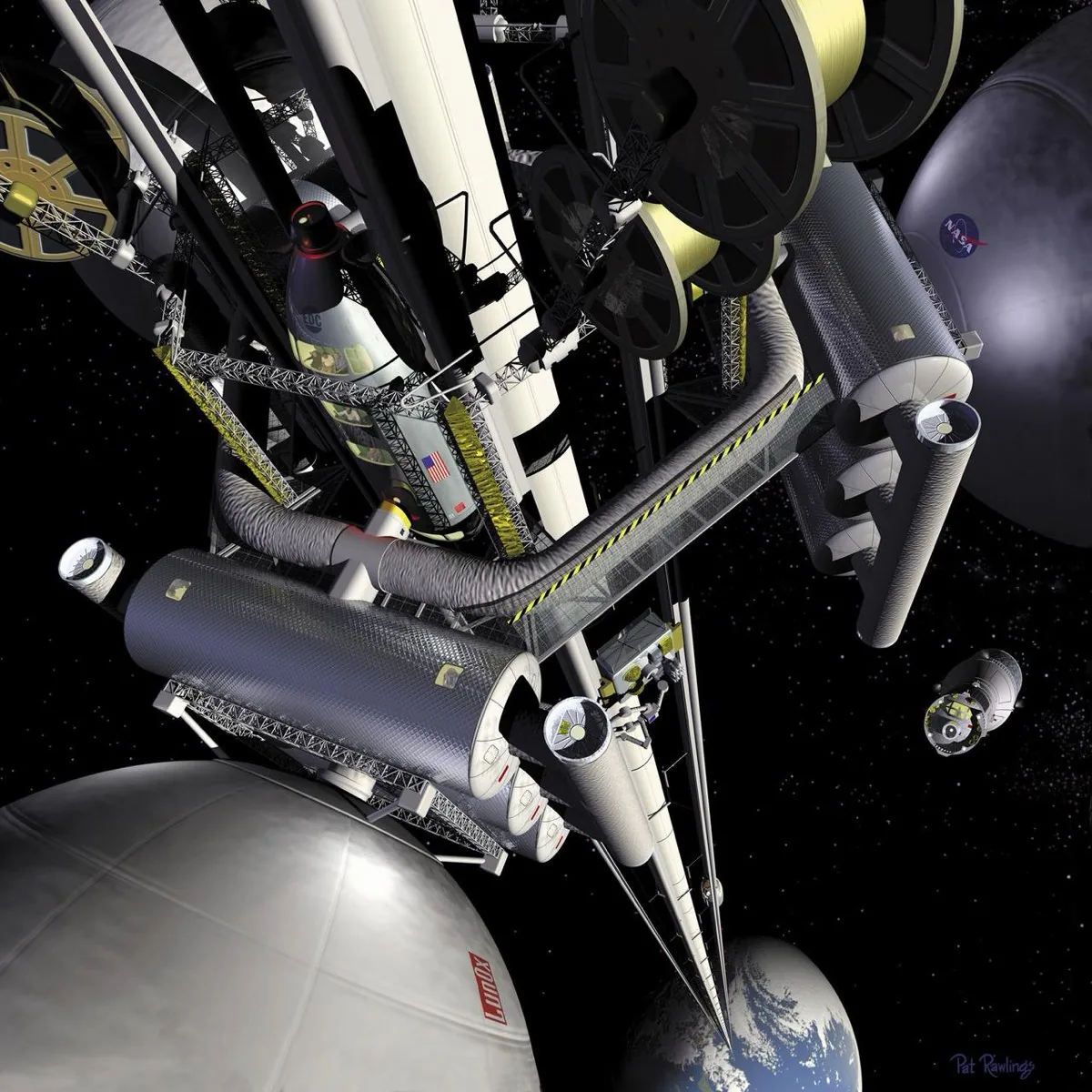
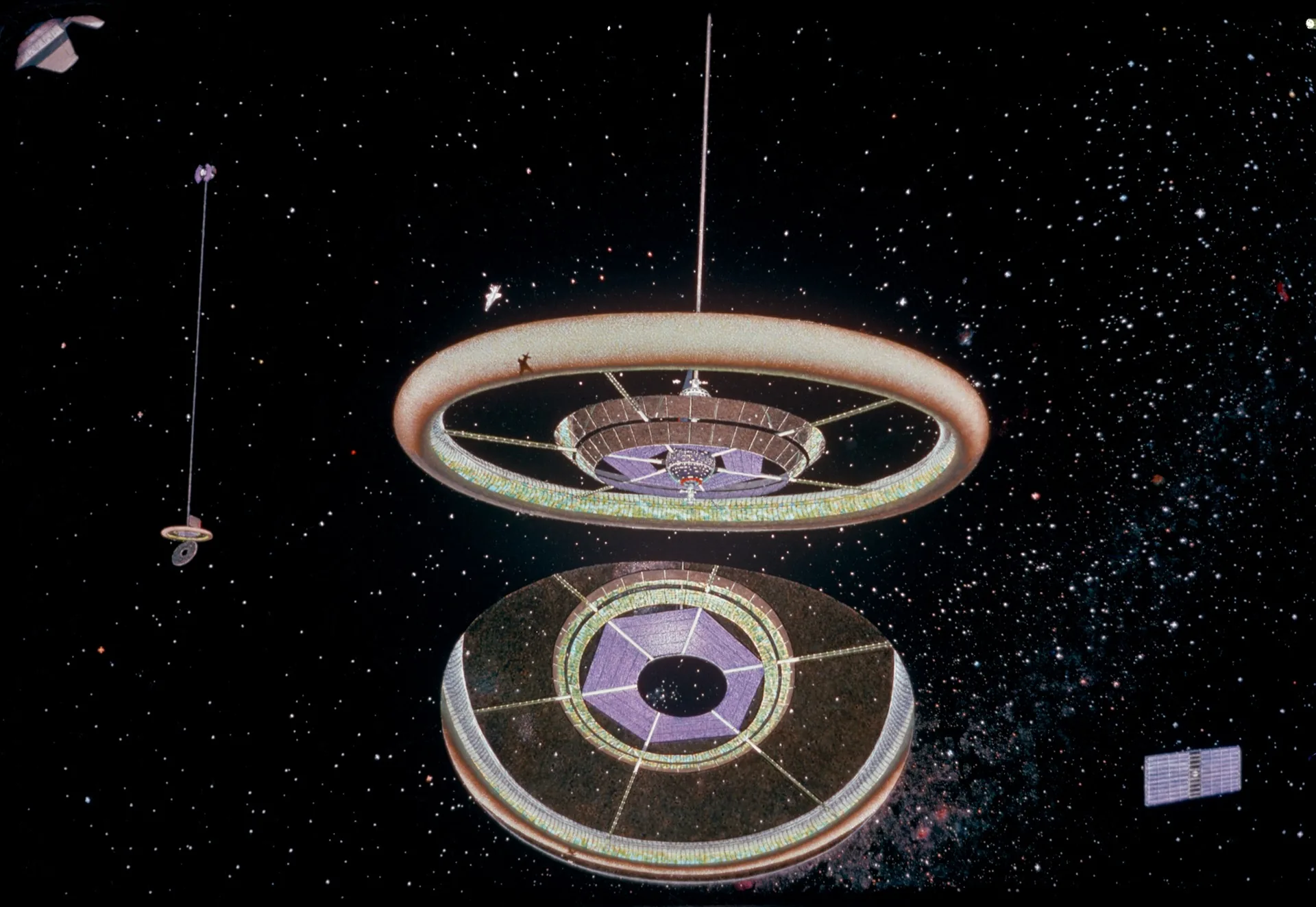
O'Neill proposed several habitat designs of increasing scale. The most iconic is the O'Neill Cylinder, formally designated "Island Three." It consists of two counter-rotating cylinders, each roughly 32 kilometers long and 6.4 kilometers in diameter. The cylinders rotate to produce artificial gravity on their inner surfaces -- about one full rotation every two minutes generates a comfortable 1g at the rim.
The interior of each cylinder is divided into alternating strips of land and window. The land strips hold soil, vegetation, rivers, and human settlements. The windows admit sunlight, directed inward by enormous external mirrors. The counter-rotation of the paired cylinders cancels out gyroscopic effects that would otherwise make the station difficult to orient.
The result is an interior landscape that curves upward in all directions. Stand in the middle of an O'Neill Cylinder and you would see land and sky wrapping around you, with the opposite side of the habitat visible overhead, kilometers away. It would look like living inside a vast, gently curving valley that has no horizon, only a distant continuation of itself.
Before O'Neill's cylinder, two other designs entered the canon of space habitat engineering:
The Bernal Sphere, proposed by physicist J.D. Bernal in 1929, is a rotating spherical shell roughly 16 kilometers in diameter. The habitable area is concentrated in a band around the equator, where rotation provides the most consistent artificial gravity. It is elegant and structurally efficient but offers less usable area than a cylinder.
The Stanford Torus, designed during a 1975 NASA summer study that O'Neill helped lead, is a donut-shaped habitat about 1.8 kilometers in diameter. It rotates once per minute to produce 1g on the inner surface of the ring. A system of mirrors directs sunlight through windows in the roof. The Stanford Torus was designed for a population of about 10,000 and was the first space habitat concept subjected to serious, NASA-funded engineering analysis. The study concluded it was buildable with 1970s-era technology, given sufficient launch capacity and funding.
Where Do the Materials Come From?
This is the question that separates daydreaming from engineering. An O'Neill Cylinder would require millions of tons of structural material, shielding, soil, water, and atmosphere. Launching all of that from Earth's surface would be prohibitively expensive and energetically absurd.
O'Neill's answer was the same one that modern space industrialization advocates champion: asteroid mining and lunar resources.
The Moon's surface is rich in aluminum, titanium, silicon, oxygen (locked in oxides), and iron. Lunar regolith can be processed into structural metals, glass, and even breathable oxygen. Crucially, the Moon's low gravity (one-sixth of Earth's) makes it far cheaper to launch material from the lunar surface to orbit than from Earth.
Near-Earth asteroids offer an even more enticing resource base. Many contain nickel-iron alloys ideal for structural steel, along with water ice that can be split into hydrogen and oxygen for rocket fuel and life support. A single kilometer-wide metallic asteroid contains more usable metal than humanity has mined in all of recorded history.
The key insight is that once you have an industrial base in space -- mining operations on the Moon or asteroids, smelting and manufacturing in orbit -- building large structures becomes a matter of scaling up established processes, not performing miracles.
Jeff Bezos and the Modern Revival
For decades after O'Neill's work, space habitats languished as an academic curiosity while Mars colonization captured the popular imagination. Then Jeff Bezos, who studied under O'Neill's influence at Princeton, began publicly championing the concept.
In a 2019 presentation, Bezos described O'Neill colonies as the long-term future of human civilization, arguing that the solar system's resources could support a trillion people living in millions of space habitats. He explicitly framed Blue Origin's mission -- reducing the cost of access to space -- as a prerequisite for making O'Neill's vision achievable.
Bezos's advocacy matters not because billionaire endorsement makes physics more valid, but because it signals serious private capital flowing toward the enabling technologies: reusable launch vehicles, in-space manufacturing, and resource extraction.
Baby Steps: Vast Haven-1 and Commercial Stations
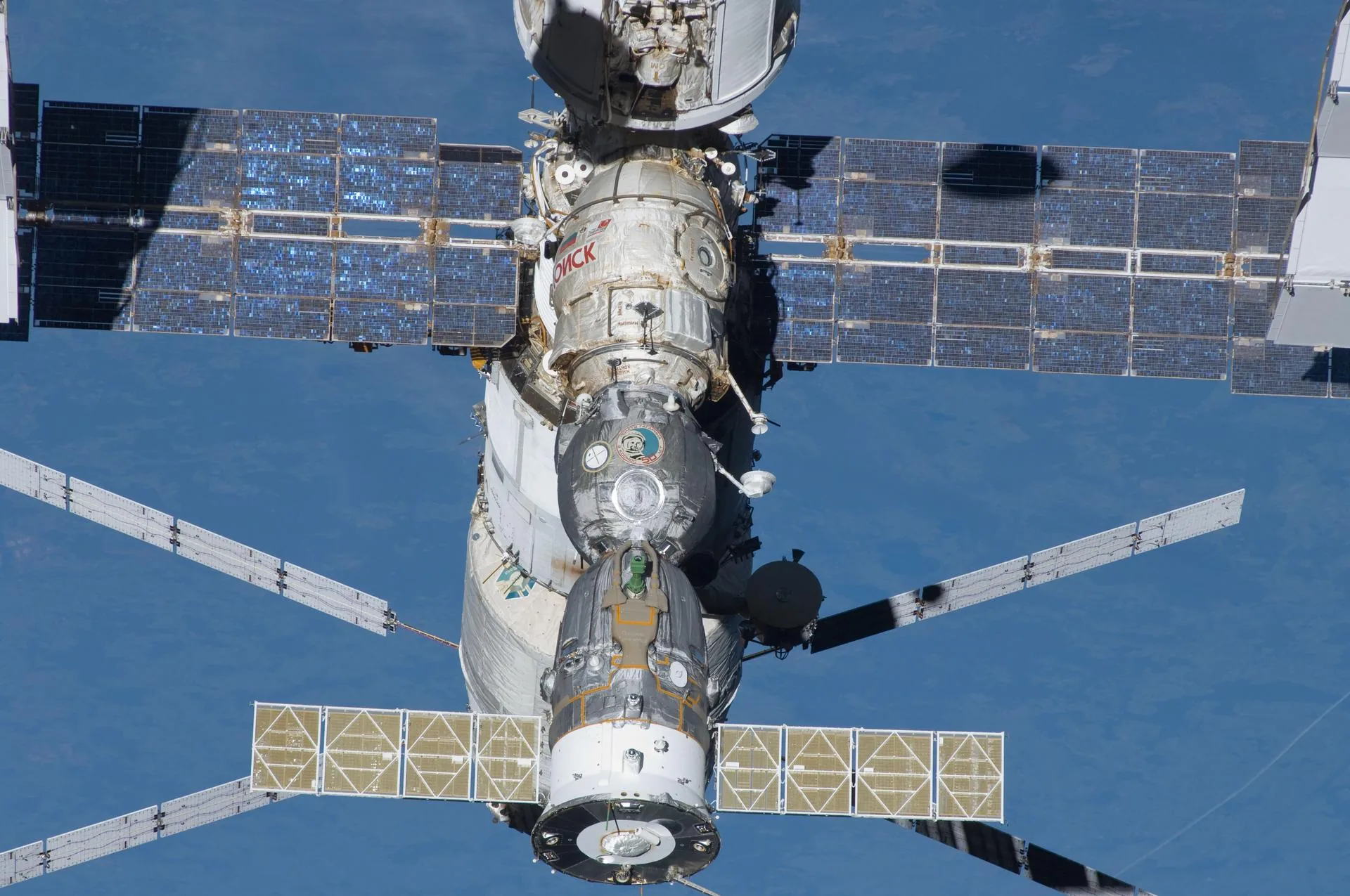
We are not going to jump from the International Space Station to an O'Neill Cylinder overnight. The path runs through progressively larger commercial space stations.
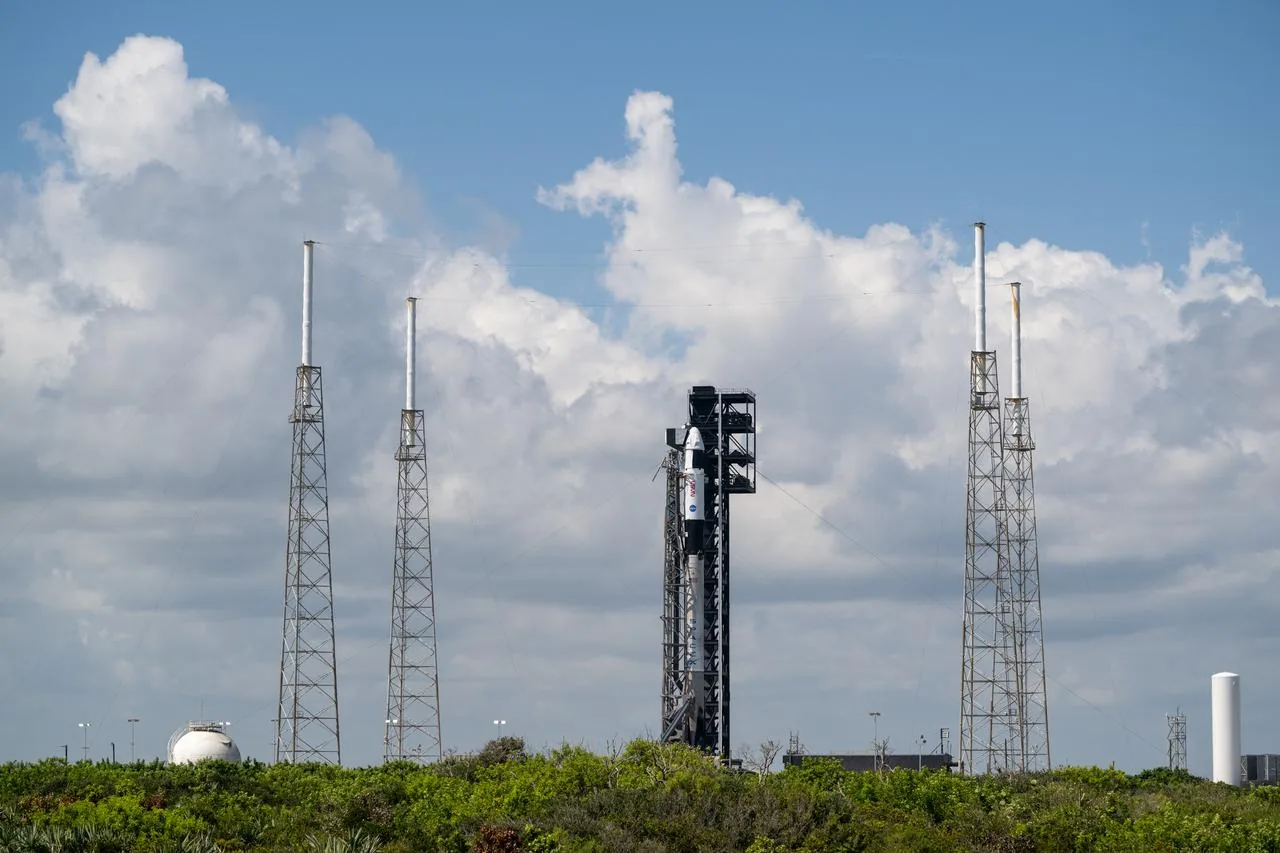
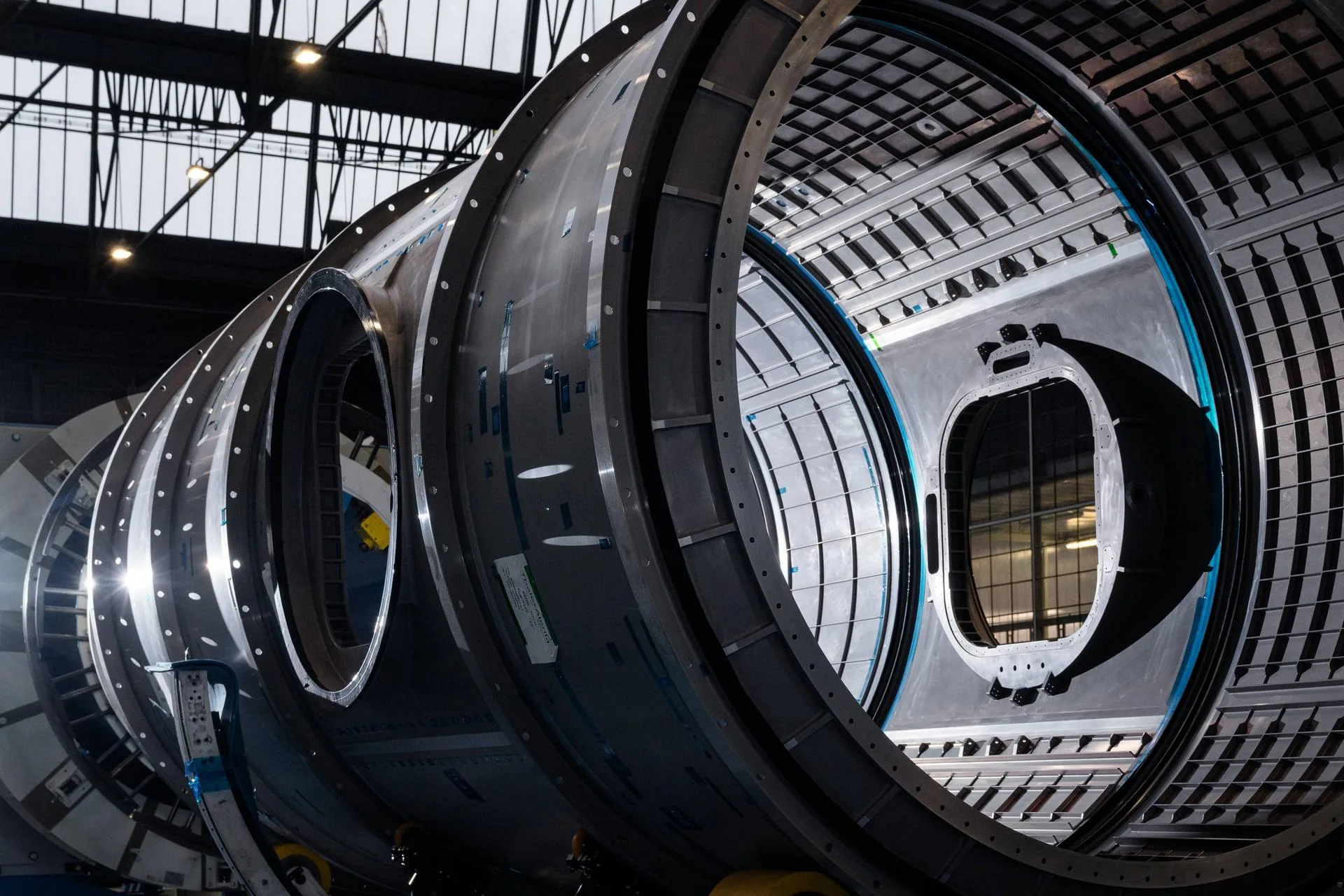
Vast, a company founded by former SpaceX engineer Jed McCaleb, is developing Haven-1, intended to be one of the first commercial space stations. Haven-1 is a single-module station designed for crew visits, planned for launch in the mid-2020s. It is modest by O'Neill standards -- a single pressurized module rather than a rotating city -- but it represents a critical step in the commercial space station ecosystem.
Other companies, including Axiom Space, Orbital Reef (a Blue Origin-Sierra Space partnership), and Starlab (Voyager Space-Airbus), are pursuing similar near-term station concepts. Each one builds institutional knowledge about long-duration habitation, life support recycling, and in-space assembly.
The progression from ISS to commercial stations to larger rotating habitats to full-scale O'Neill Cylinders is a spectrum, not a cliff. Each step is larger and more ambitious than the last, but none requires physics we do not already understand.
The Technology Gaps
Being honest about what we cannot yet do is as important as celebrating what we can. Several critical technologies need significant maturation before O'Neill-scale habitats become feasible:
In-space manufacturing at scale. We can 3D print small objects on the ISS. Manufacturing structural beams kilometers long from asteroid-derived metals is a different proposition entirely. The basic metallurgy is understood, but the automated systems to perform it in microgravity or low gravity do not yet exist.
Closed-loop life support. The ISS recycles about 90% of its water and a smaller fraction of its atmosphere. An O'Neill Cylinder housing millions would need near-perfect recycling -- a complete artificial ecosystem. We have theoretical frameworks for this (Biosphere 2 taught us painful lessons about the complexity involved), but building a reliable, self-sustaining biosphere remains an unsolved engineering challenge.
Radiation shielding. Outside Earth's magnetosphere, cosmic rays and solar particle events pose serious health risks. O'Neill's original designs incorporated several meters of lunar regolith as passive shielding, which works but adds enormous mass. Active magnetic shielding is an alternative under research, but no system has been demonstrated at habitat scale.
Robotics and automation. Building a structure the size of an O'Neill Cylinder would require millions of construction-hours in space. Human labor in spacesuits is slow, expensive, and dangerous. The construction would need to be overwhelmingly robotic, directed by AI systems far more capable than current industrial automation.
Timeline: Patience Required
When might we see the first true rotating space habitat? Honest estimates vary widely.
Small rotating stations demonstrating artificial gravity -- essentially proof-of-concept centrifuges in orbit -- could appear within the next two to three decades. These would house perhaps a dozen people and rotate slowly enough to test human adaptation to artificial gravity at various levels.
A Stanford Torus-scale habitat housing 10,000 people is plausibly a late-21st-century project, assuming robust asteroid mining and in-space manufacturing develop on schedule. It would require a space economy orders of magnitude larger than today's, but there is no physical law preventing it.
A full-scale O'Neill Cylinder is a 22nd-century proposition at the earliest. It demands a mature, multi-trillion-dollar space industrial base, breakthrough automation, and closed-loop biosphere engineering that we are only beginning to theorize about.
Why It Matters
The deeper significance of O'Neill's vision is not about any particular habitat design. It is about the realization that humanity's long-term future need not be tied to the surface of any single world. Planets are fragile. Asteroids strike them. Stars evolve. Ecosystems collapse. A species distributed across thousands of independent habitats, each one a complete world, is a species that is extraordinarily difficult to extinguish.
O'Neill Cylinders are not predictions. They are possibilities -- carefully engineered, physically sound possibilities that await only the maturation of our industrial capabilities and the expansion of our ambition. The blueprints exist. The physics is settled. The resources are floating in the asteroid belt, waiting.
The only question is whether we choose to reach for them.