The International Space Station has been continuously occupied since 2 November 2000 — more than a quarter of a century of unbroken human presence in low Earth orbit. That streak is now on a clock. NASA's current plan calls for the ISS to be deorbited around 2030, broken up over the South Pacific Ocean by a purpose-built SpaceX vehicle. And yet, as of May 2026, the station is showing its age in ways that have engineers worried sooner rather than later: persistent cracking in the Russian segment, repeated air-leak investigations, and an emerging gap between when the ISS retires and when its commercial successors are ready to take over.
This is the comprehensive story of how the world's most expensive engineering project — roughly $150 billion across its partners — is preparing to die, who is competing to replace it, and what is genuinely at stake if the handover slips.
The Cracking That Won't Stop: Inside the Zvezda Air Leaks
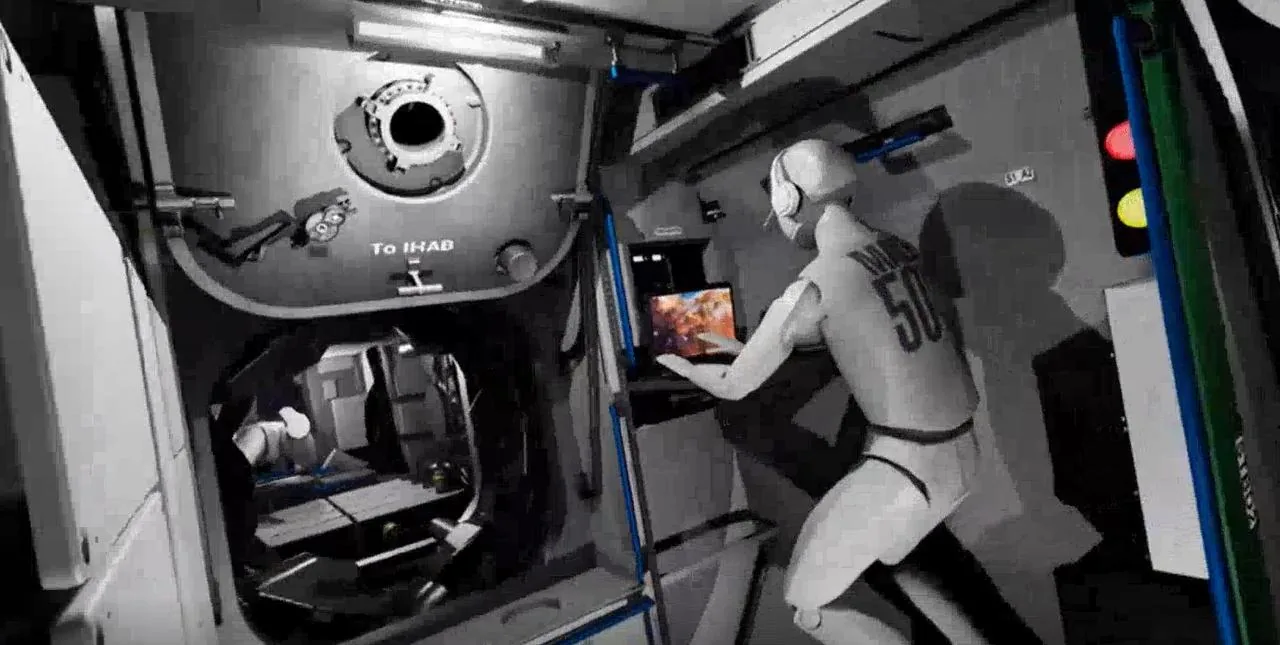
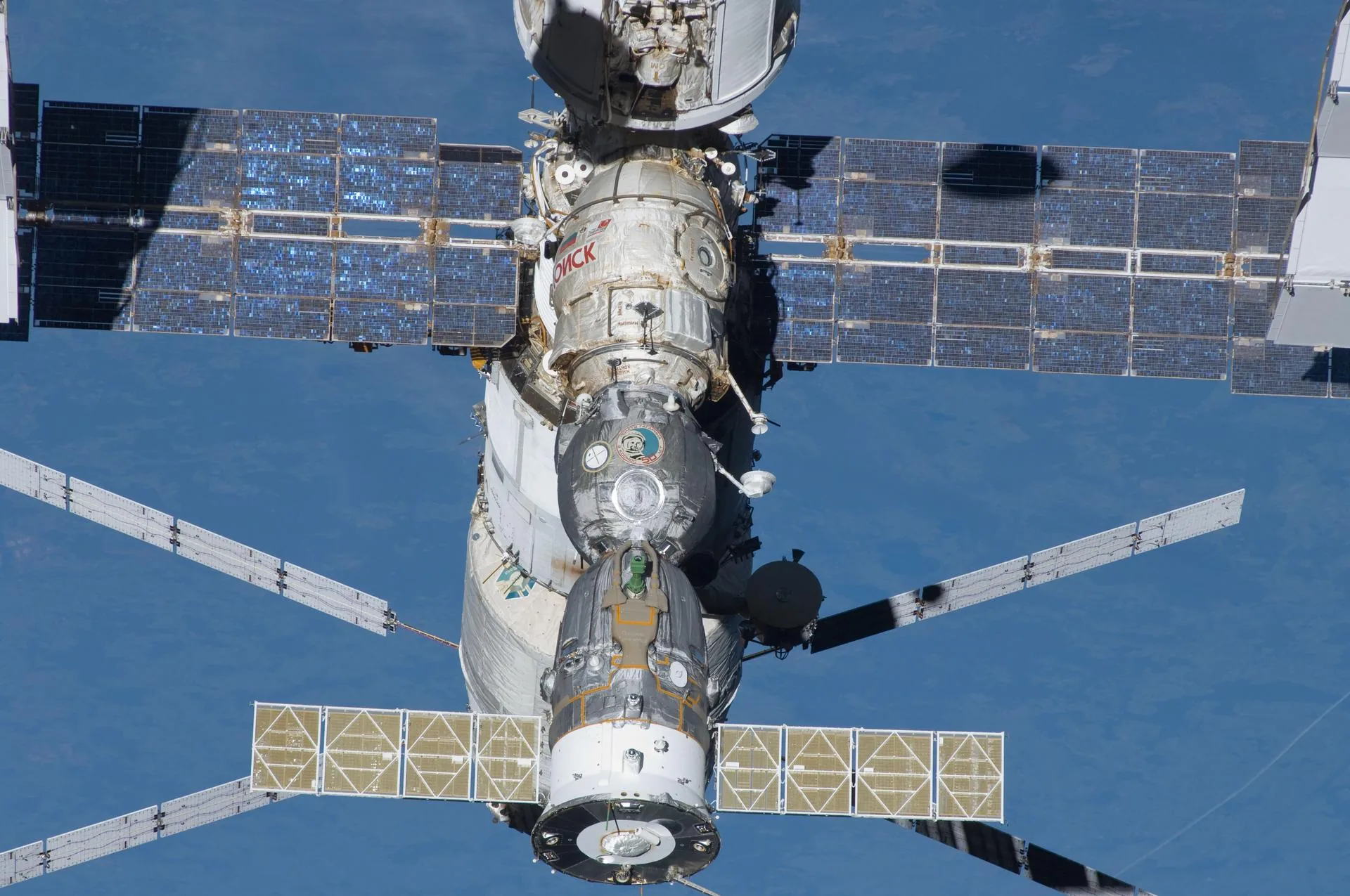
The ISS's most stubborn problem lives inside a small Russian transfer tunnel called the PrK, the vestibule between the Zvezda service module and a Russian docking compartment. Slow air leaks from the PrK were first identified in September 2019. By 2021, NASA and Roscosmos engineers had isolated several hairline cracks in the welded aluminium pressure shell. The leaks waxed and waned — sometimes losing under a kilogram of air per day, sometimes much more — and the Russian segment crew began closing the PrK hatch when the area was not in active use.
In late April 2026, NASA confirmed that air leakage had effectively been stopped after Roscosmos applied additional sealants and reinforcing patches. But the agency was unusually direct about what that does and does not mean. Stopping the leak is not the same as fixing the underlying cause. NASA's Office of Inspector General has flagged the Russian-segment structural cracks as one of the station's top safety risks for three years running, alongside increasing micrometeoroid and orbital-debris exposure. The cracks themselves remain. They are propagating slowly, and the engineering theories about why range from manufacturing-era stress concentrations to long-term fatigue from thermal cycling and docking loads.
The bottom line is that the Russian segment — Zvezda in particular, which provides primary attitude control thrusters, life support, and crew quarters for the Russian crew — is the part of the station whose retirement schedule is least flexible. Russia has formally committed to ISS operations through 2028; NASA, ESA, JAXA, and CSA committed to 2030. If structural deterioration accelerates, those dates compress.
The 2030 Deorbit: How NASA Plans to Bring Down 925,000 Pounds
Decommissioning the ISS is not like decommissioning a satellite. The fully assembled station weighs roughly 420,000 kilograms — about 925,000 pounds — and stretches 109 metres end-to-end, larger than an American football field. It cannot simply be allowed to drop on its own. Without active reboosts the station's orbit decays from atmospheric drag, and an uncontrolled re-entry would scatter surviving debris across hundreds of kilometres of unpredictable ground track. Some hardened components — like the truss segment fittings, gyroscopes, and high-pressure tanks — would almost certainly survive to the surface.
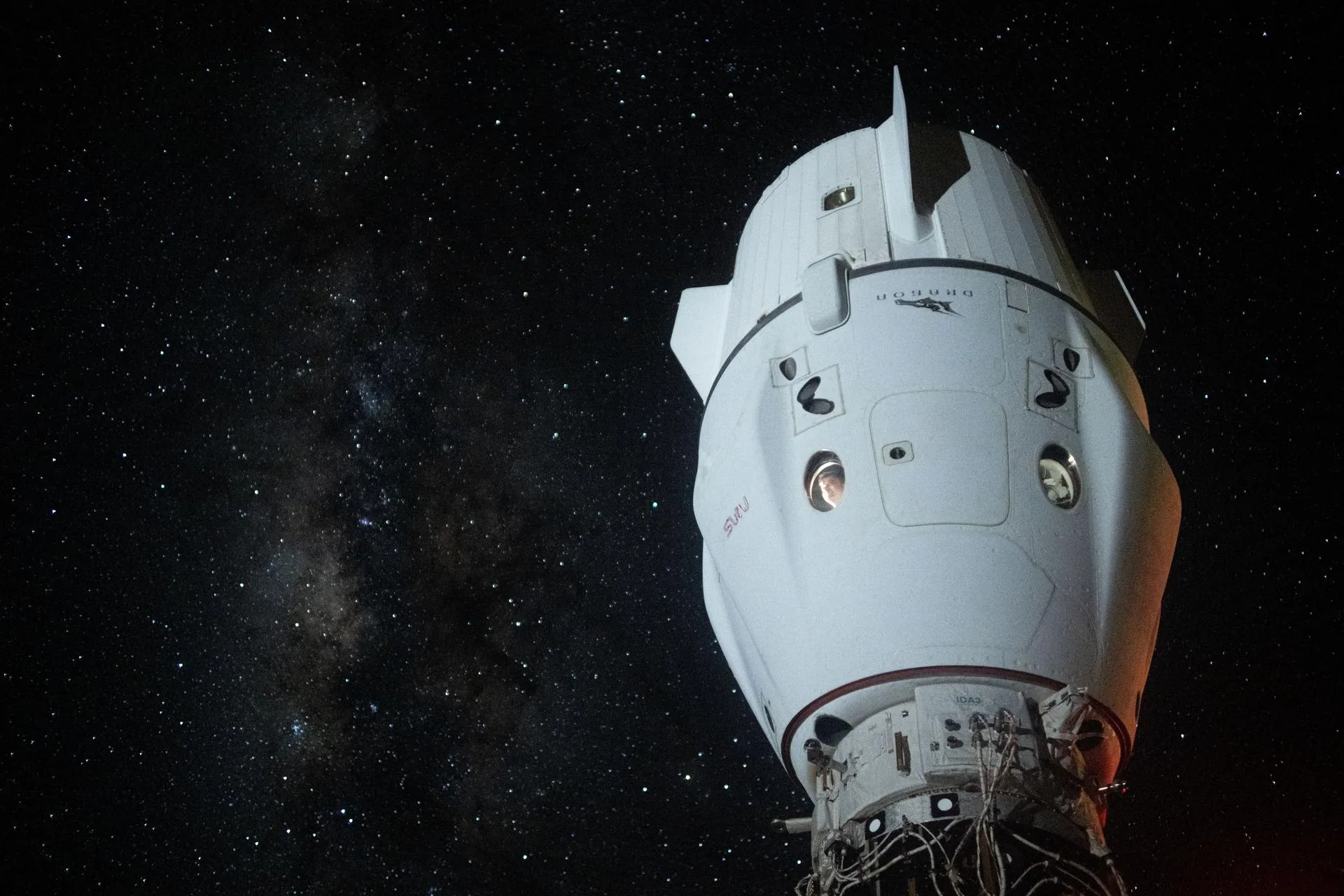
NASA's plan is to drive the entire station into the so-called Spacecraft Cemetery, a remote stretch of the South Pacific near Point Nemo, the most isolated point in the world's oceans. The maneuver demands a vehicle capable of delivering a precise, hours-long final burn while attached to a station that was never designed to be deorbited. In June 2024, NASA awarded SpaceX an $843 million contract to build that vehicle: the U.S. Deorbit Vehicle, or USDV. It is based on an enhanced Dragon spacecraft, but heavily modified — significantly more propellant capacity, a new trunk section, and additional Draco thrusters to provide the delta-v required to lower the entire ISS through the upper atmosphere.
Operationally, the USDV will dock at the ISS's forward port years before deorbit and remain in standby. Once the final crew has departed and any remaining retrievable hardware has been removed, controllers will execute a sequence of progressively lower reboost burns, draining the station's altitude until atmospheric drag does the rest. The final destructive entry burn happens at roughly 220 kilometres, with breakup beginning around 80 kilometres and remaining debris splashing down across a target area roughly 2,000 kilometres long. NASA has not finalised the exact deorbit date — the agency typically refers to it as "around 2030" — and current planning leaves room to extend ISS operations by a year or two if a commercial successor is not yet certified.
Why the Replacement Race Is Tighter Than It Looks
The premise behind retiring the ISS is simple: NASA wants to stop spending roughly $3 billion per year operating its own station and instead become an anchor tenant — one of many customers — on commercially owned platforms. The agency's vehicle for that transition is called Commercial LEO Destinations, or CLD. Phase 1 of CLD, awarded in late 2021, funded preliminary design work for three station concepts. Phase 2, expected to begin awarding in 2026, will fund certification and the first multi-year service contracts.
The economics matter because they shape the timeline. NASA's own studies suggest the agency needs at least one certified commercial station online before ISS deorbit, ideally with a second on track. Without that overlap, the United States risks ceding continuous human presence in low Earth orbit to China — whose Tiangong station, fully assembled in late 2022, will continue operating regardless of ISS status. The political stakes of that gap are part of why NASA's 2026 budget request prioritised CLD funding even as other lines were cut.
There are now four serious contenders racing for the post-ISS market.
The Successors: Four Commercial Stations Competing for the LEO Crown
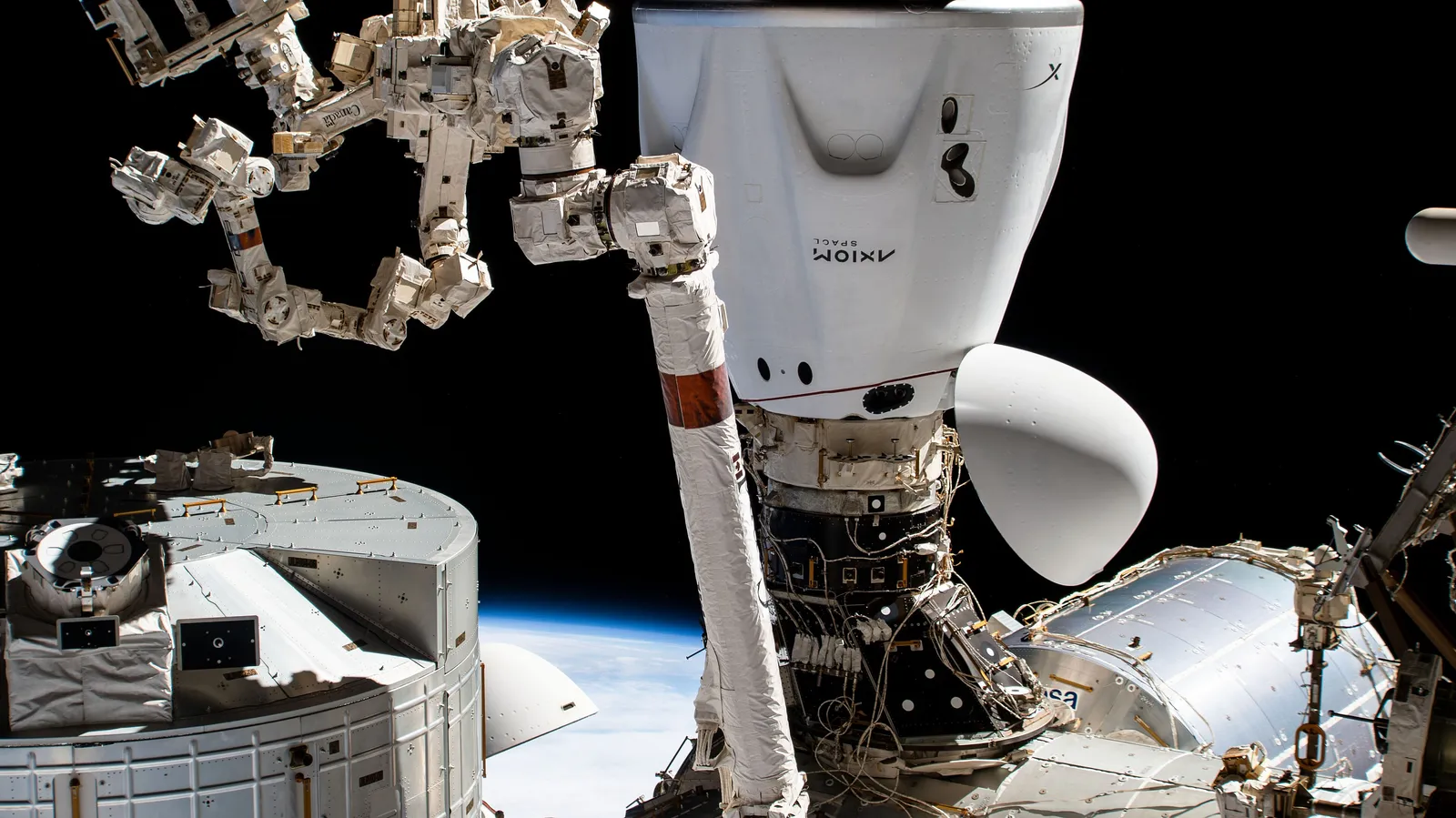
Axiom Station is the only project pursuing a hybrid path. Axiom Space plans to launch its first module — Axiom Hab One — and dock it directly to the ISS, then add additional modules over time. Once the cluster is large enough to operate independently, Axiom will detach it and fly free. Originally targeted for first-module launch in 2026, the schedule has slipped, with Axiom now publicly targeting 2027 for its first module and free-flight separation later in the decade. Axiom benefits from operational momentum: the company has already flown four private astronaut missions to the ISS (Ax-1 through Ax-4), giving it real revenue and real flight heritage.
Starlab is the opposite approach: a single, large station launched in one piece. Voyager Technologies, Airbus, MDA Space, Mitsubishi, and Hilton are partners. Starlab is roughly half the habitable volume of the ISS but engineered for a much smaller crew of four researchers, with a 450-cubic-metre habitation volume designed around a single laboratory called the George Washington Carver Science Park. The station is sized to launch on a single SpaceX Starship — a bet that will only be cashed once Starship is human-rated for cargo deployment, which itself is dependent on Starship's broader certification path. Starlab targets a late-decade launch and has signed an agreement with the European Space Agency for guaranteed access, providing a non-NASA revenue base.
Orbital Reef has had the bumpiest path. Originally a four-way partnership between Blue Origin, Sierra Space, Boeing, and Redwire, it lost Boeing as an active development partner in 2024, and the remaining team has restructured the design to use Sierra Space's expandable LIFE habitats as primary pressure volumes. Sierra Space ground-tested LIFE to burst pressure in 2023, validating the inflatable architecture, and Blue Origin's New Glenn rocket — which flew its first three operational missions between 2025 and 2026 — provides the heavy-lift launch capability. Orbital Reef remains the most ambitious concept, marketing itself as a "mixed-use business park" with substantial dedicated tourism volume.
Vast Haven-1 is the dark-horse entrant. Vast Space, founded by crypto entrepreneur Jed McCaleb, is privately funded and has aggressively skipped the CLD funding pipeline, betting that being first to orbit beats being first to a NASA contract. Haven-1 is small — a single module built around a recycled propellant tank architecture, supporting three-person crews on 30-day stays — and Vast targets it as a stepping stone to the much larger Haven-2 station that the company is positioning explicitly as a CLD Phase 2 contender. Haven-1 remains on track for a 2026 Falcon 9 launch as of the company's most recent public updates, though space-industry watchers note that no commercial station has ever made its first announced launch date.
What Could Go Wrong: The Gap Year Problem
The single biggest scheduling risk in the ISS-to-commercial transition is what NASA staff call "the gap." In a smooth scenario, at least one commercial station is operational and crewed by 2029, NASA shifts research aboard, ISS deorbits in 2030, and continuity is preserved. In a less smooth scenario — and history suggests this is the more likely one for any large aerospace program — commercial certifications slip into the early 2030s while the ISS is genuinely no longer safe to operate.
In that case, NASA has only unattractive options. It can extend ISS operations at significant cost while structural margins keep eroding. It can deorbit on schedule and accept a temporary gap with no American-led continuous human presence in LEO. Or it can negotiate emergency arrangements to fly NASA astronauts on commercial flights to a partially-operational private station, accepting reduced research throughput. None of these are policy disasters on their own, but each forecloses options. China's Tiangong, by contrast, faces no such transition — it was designed as an end-state station and its operational trajectory is independent of the ISS's fate.
The 2026 status reports tell a cautious but not alarmist story. The ISS leaks are stopped. Most station hardware is performing within design margins. The commercial successors are funded, building hardware, and signing customers. But every program is behind its original schedule, and the cracking in Zvezda is the kind of problem that does not get easier with time.
Why It Matters: A Quarter-Century of Continuous Presence Hangs in the Balance
The ISS is not just hardware. It is the longest continuously inhabited human outpost off Earth — by an enormous margin — and the institutional infrastructure built around it represents thousands of person-years of operational expertise. Mission controllers in Houston and Moscow, biomedical researchers studying long-duration spaceflight effects, the supply-chain partners that build everything from spacesuits to galley equipment, and the international diplomatic framework that has kept Russia and the United States cooperating on a single project through three Russian invasions of foreign territory — all of it is anchored to a particular orbiting object that will, in the next handful of years, be deliberately destroyed.
The replacement stations are smaller, more specialised, and operated by private companies whose primary loyalty is to shareholders, not to a multinational science partnership. That is not necessarily worse — competition has a track record of driving costs down in spaceflight, as SpaceX has demonstrated repeatedly — but it is meaningfully different. NASA will become a customer rather than the orchestrator. International partners will negotiate access as buyers rather than as co-owners. Research institutions will compete for limited rack space across multiple stations rather than coordinating on one.
Whether continuous human presence in low Earth orbit survives the 2030 transition will be one of the defining stories of the late 2020s in spaceflight — quieter than Mars headlines and Moon landings, but arguably more consequential for what humanity routinely does in space over the next half-century. The cracks in Zvezda, the burn profile of the U.S. Deorbit Vehicle, and the launch dates of four commercial stations are not separate stories. They are the same story, told from four different angles, about the end of an era and the uncertain beginning of the next one.
The transition is also reshaping who gets to participate. The Artemis Accords framework signed by more than fifty nations now governs much of how partner countries access lunar and cislunar activities, but there is no equivalent multilateral architecture for commercial LEO stations — every successor will negotiate access bilaterally with private operators. And the broader satellite economy that the ISS shares orbital space with — including Amazon's rapidly expanding Project Kuiper constellation and SpaceX's Starlink — means the LEO environment the next generation of stations enters will be far more crowded than the one the ISS launched into in 1998.