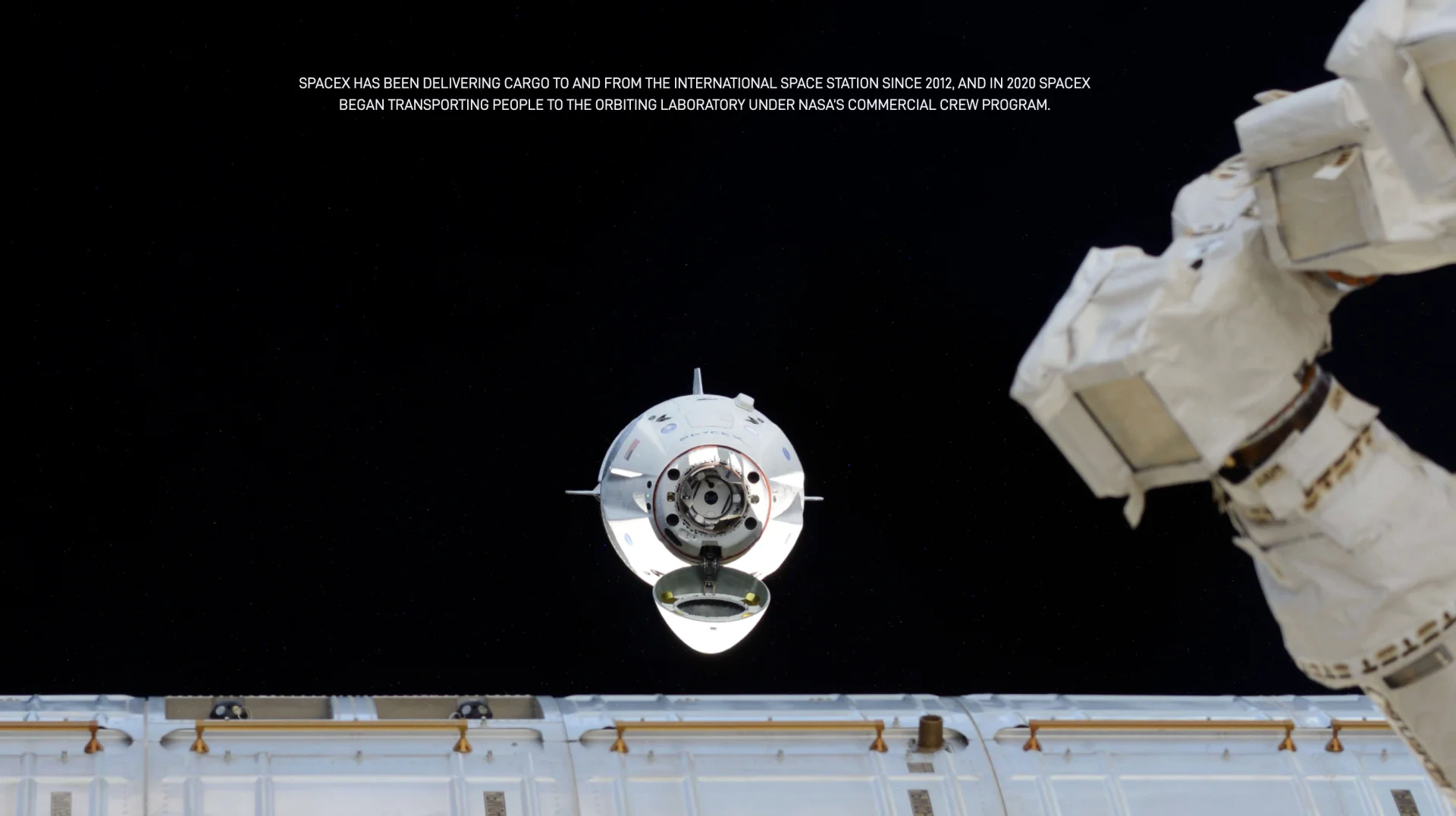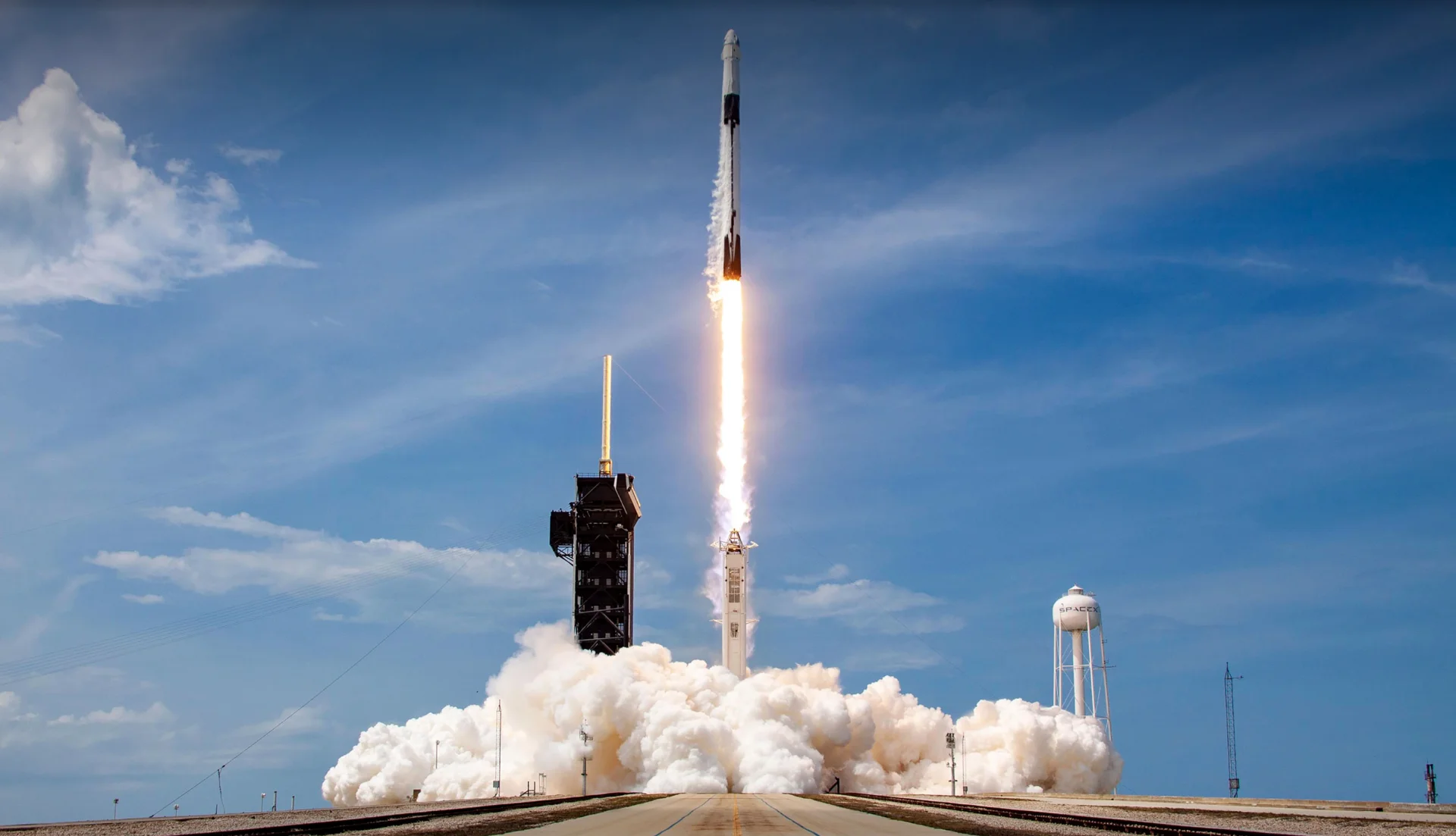
The next frontier of cloud computing is not on any cloud at all — it is in orbit. A wave of companies from Silicon Valley startups to aerospace giants are racing to build data centers in space, driven by the insatiable power demands of artificial intelligence and the plummeting cost of getting hardware into orbit. In the first three months of 2026 alone, SpaceX filed plans for a million-satellite orbital data center, Starcloud became a unicorn with a $1.1 billion valuation, and NVIDIA announced purpose-built chips for space computing. The orbital data center industry has gone from science fiction to serious business.
This article covers every major company pursuing orbital data centers, their timelines and technical plans, how they compare to one another, the feasibility challenges they face, and the regulatory landscape shaping this emerging industry.
Why Move Data Centers Off-Planet?

Global data center electricity consumption is projected to exceed 1,000 terawatt-hours per year by 2028, according to the International Energy Agency — roughly equivalent to Japan's entire electricity demand. The explosion of generative AI workloads has made this crisis acute. Training a single large language model can consume as much electricity as 100 American homes use in a year, and inference demand is growing even faster.
Water consumption compounds the problem. Traditional data centers use millions of gallons of water annually for cooling, creating tensions in regions facing water scarcity. Microsoft, Google, and Amazon have all reported rising emissions in recent years despite net-zero pledges, driven largely by data center growth.
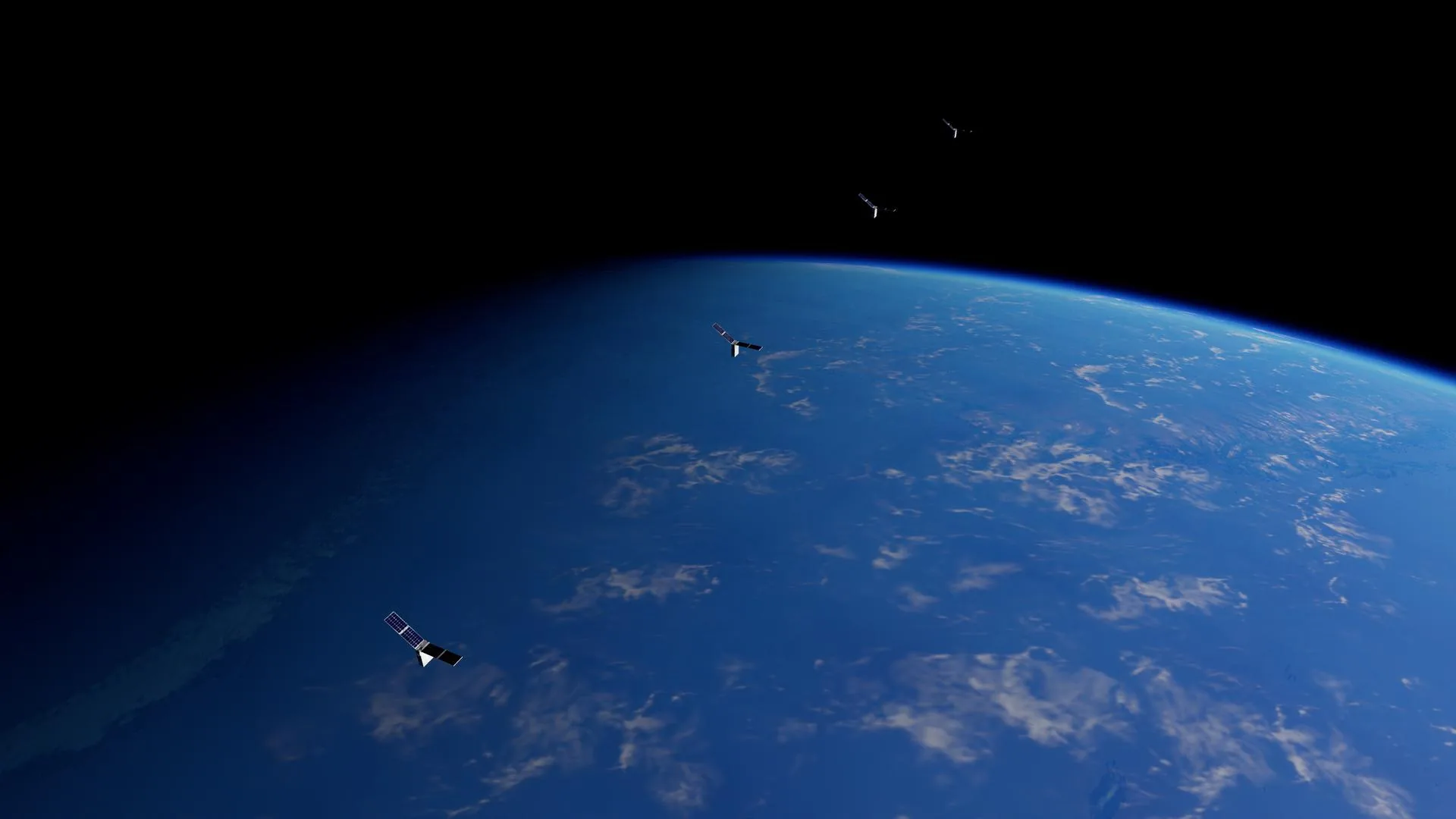
Space offers a fundamentally different environment. In orbit, the vacuum provides natural cooling through radiative heat dissipation — no water required. Solar energy is abundant, uninterrupted in certain orbital configurations, and up to eight times more efficient to collect than on Earth's surface. Satellites in sun-synchronous orbits can receive near-continuous sunlight, eliminating the need for massive battery systems or grid connections.
The economic equation is also shifting. SpaceX's Falcon 9 has driven the cost per kilogram to orbit below $3,000, and Starship promises to reduce that by another order of magnitude. Combined with advances in radiation-hardened electronics, the cost gap between terrestrial and orbital computing is narrowing faster than anyone expected.

Every Company Building Orbital Data Centers
Starcloud (formerly Lumen Orbit) — The Unicorn
Headquarters: Bellevue, Washington (founded 2024, Luxembourg-incorporated) Funding: $200 million total ($170M Series A at $1.1B valuation, March 2026) Investors: Benchmark, EQT Ventures, Y Combinator Constellation size: Up to 88,000 satellites (FCC application filed February 2026)
Starcloud is the most visible player in orbital computing and the fastest company in Y Combinator history to reach unicorn status, achieving the milestone just 17 months after completing the accelerator. The company was originally known as Lumen Orbit before rebranding.
In November 2025, Starcloud launched Starcloud-1, a satellite carrying an NVIDIA H100 GPU — nearly 100 times more powerful than any GPU previously operated in space. The company successfully trained an AI model in orbit, an industry first. Its second satellite, Starcloud-2, will launch in October 2026 with multiple GPUs including an NVIDIA Blackwell chip, an AWS server blade, and a bitcoin mining computer. Starcloud-2 will have 100 times the power generation of the first satellite.
The company's long-term vision is a five-gigawatt orbital hypercluster powered by a solar array four square kilometers across, with the full 88,000-satellite constellation forming a distributed computing network for AI training and inference. Each next-generation Starcloud-3 spacecraft will weigh approximately three tons, a massive jump from the 60-kilogram Starcloud-1.
SpaceX — The Million-Satellite Moonshot
Headquarters: Hawthorne, California Constellation size: Up to 1,000,000 satellites (FCC filing January 30, 2026) Orbit: 500–2,000 km, 30-degree and sun-synchronous inclinations
SpaceX filed the most ambitious orbital data center proposal ever on January 30, 2026: a constellation of up to one million satellites in low Earth orbit. The FCC's Space Bureau accepted the application for filing on February 4, with a public comment period through March 2026.
The proposed system would use intersatellite optical links to communicate among data center satellites and with existing Starlink spacecraft, which would relay data to the ground. Satellites in higher sun-synchronous orbits would remain in sunlight more than 99 percent of the time for constant computing capacity, while lower-inclination satellites would handle demand spikes.
SpaceX has not disclosed a deployment timeline or cost estimate. The company requested a waiver of standard FCC milestones that require half-constellation deployment within six years and full deployment within nine. Pilot testing of on-orbit compute nodes on Starlink V3 hardware is expected to begin in late 2026. SpaceX's unique advantage is its own launch capability — it can put hardware in orbit at a fraction of the cost competitors face.
Aetherflux — The Solar Power Pioneer
Headquarters: San Francisco, California Founded by: Baiju Bhatt (co-founder of Robinhood) Funding: $50M Series A (April 2025); pursuing $250–350M Series B at ~$2B valuation Investors: Index Ventures, Interlagos
Aetherflux takes a fundamentally different approach: space-based solar power as the foundation for orbital computing. The company plans to build satellites that collect solar energy and transmit it to ground stations via infrared lasers, while simultaneously using that power for onboard AI processing.
The company launched a power-beaming demonstration satellite in early 2026, testing transmission of one kilowatt of energy from orbit to ground stations. In December 2025, Aetherflux announced its "Galactic Brain" project — an orbital data center targeting commercial operation by Q1 2027. The system will use NVIDIA Space-1 Vera Rubin modules for autonomous operations, and the company has opened a new satellite development hub in Seattle.
Axiom Space — The Space Station Approach
Headquarters: Houston, Texas First orbital data center nodes: Launched January 11, 2026 Partners: Kepler Communications, Skyloom, Spacebilt, Microchip Technology, Phison Electronics
Axiom Space has taken the most incremental and arguably most practical approach. Rather than proposing massive constellations, the company launched its first two orbital data center (ODC) nodes into low Earth orbit in January 2026. These nodes are part of the Kepler Communications optical relay network, featuring high-speed 2.5 Gbps optical links to other satellites.
An additional Axiom ODC node will be delivered to the International Space Station in 2027, developed with Spacebilt. The ISS-based node will enable satellites and spacecraft in LEO to store data, run AI and machine learning workloads, and process information in orbit rather than downlinking everything to Earth.
Axiom's longer-term plan involves expanding its ODC network from kilowatts to megawatts of processing power on-orbit, integrated with its planned commercial space station that will eventually replace the ISS.
Google — Project Suncatcher
Headquarters: Mountain View, California Status: Research phase; prototype satellite launch planned early 2027 (with Planet Labs)
Google's Project Suncatcher, announced in late 2025, envisions compact constellations of solar-powered satellites carrying the company's custom Tensor Processing Unit (TPU) chips, connected by free-space optical links. The satellites would operate in dawn-dusk sun-synchronous low Earth orbit for near-continuous sunlight exposure.
Google's research concluded that the core concepts of space-based ML compute "are not precluded by fundamental physics or insurmountable economic barriers," though engineering challenges remain in thermal management, high-bandwidth ground communications, and on-orbit reliability. The company plans to launch two prototype satellites in collaboration with Planet Labs by early 2027.
Google's entry signals that orbital computing has moved beyond startup territory into serious big-tech strategic planning.
OrbitsEdge — The Edge Computing Specialist
Headquarters: Florida First orbital demonstration: Planned for 2026 Partners: Syntilay, Hewlett Packard Enterprise
OrbitsEdge occupies a different niche: rather than building massive computing constellations, the company provides compact edge computing modules that plug into existing satellites. Its Edge1 platform packs 15 TOPS (trillion operations per second) of AI processing into a 0.5U unit weighing under 2 kilograms and consuming just 10 watts.
The company's SatFrame satellite bus features a standardized 19-inch server rack with 5U of available hardware volume. OrbitsEdge's business model focuses on data thinning and analysis — processing the enormous volume of data generated by next-generation Earth observation satellites in orbit, rather than downlinking raw data.
Lonestar Data Holdings — The Lunar Outpost
Headquarters: St. Petersburg, Florida Target: Data centers on the Moon Commercial services: Targeted for 2026
Lonestar Data Holdings is pursuing the most ambitious location of all: the lunar surface. The company successfully tested a small data storage device on the Moon via Intuitive Machines' Odysseus lander mission, marking the first commercial data center hardware to operate on another celestial body.
Lonestar plans to offer off-planet disaster recovery services, with a roadmap to place increasingly sophisticated data centers in the Moon's lava tubes, where temperatures remain a constant approximately minus 20 degrees Celsius — ideal for cooling. The company targets 50 petabytes of storage capacity with 15 Gbps data rates by 2026, though its lunar timeline depends heavily on the cadence of commercial lunar lander missions.
International Programs: China and Europe
China — Three-Body Computing Constellation
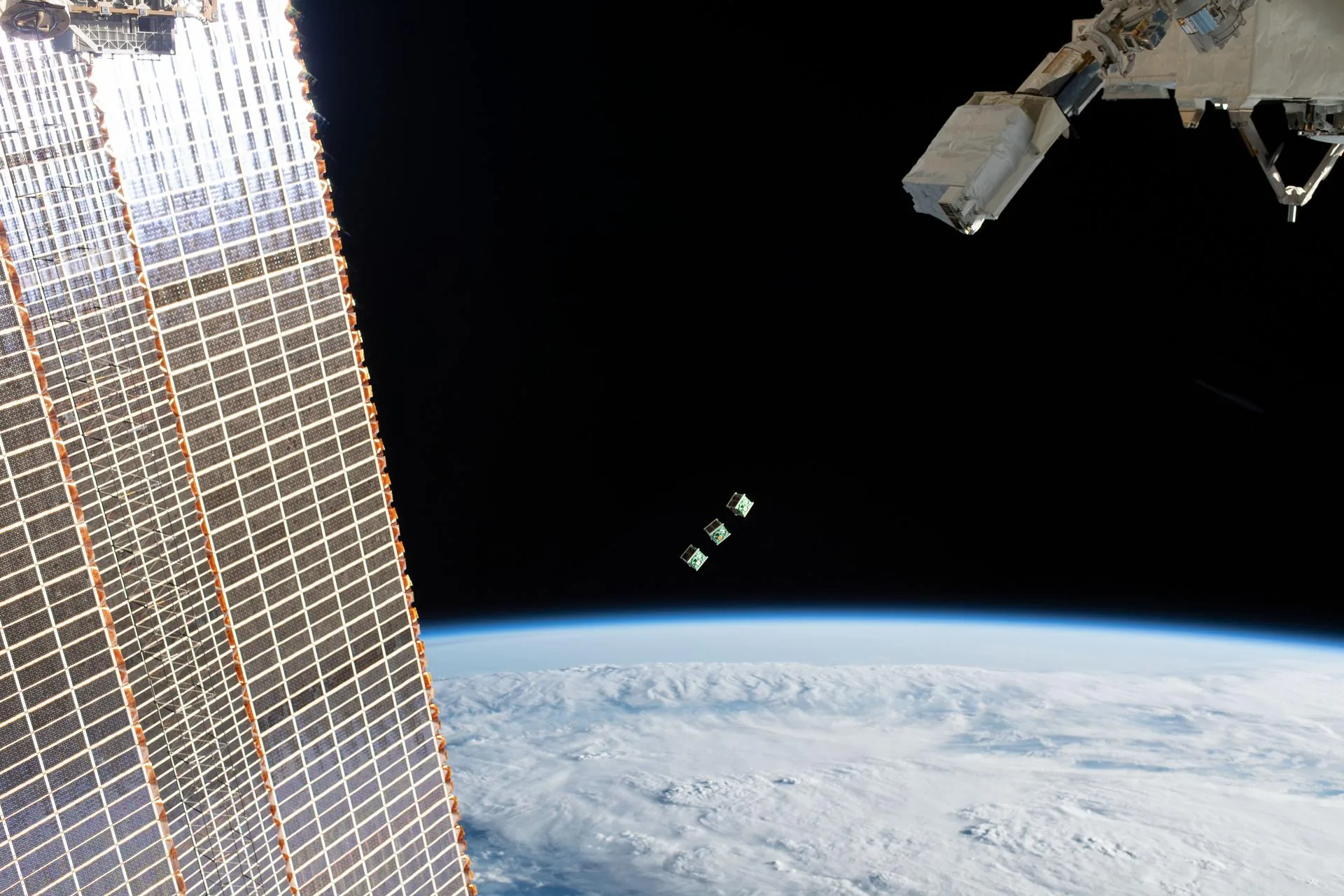
China has moved aggressively into orbital computing. Zhejiang Lab launched 12 satellites in May 2025 as the first phase of its "Three-Body Computing Constellation." Each satellite performs up to 744 trillion operations per second, and the 12-satellite cluster collectively delivers approximately five quadrillion operations per second with 30 terabytes of storage.
The constellation carries two 8-billion-parameter AI models — one for remote sensing and one for astronomical time-domain analysis — among the largest AI models currently operating in space. The program has 39 satellites under development and expects to reach 100 satellites by 2027. The full constellation of more than 1,000 satellites would deliver approximately 100 quintillion operations per second.
Separately, a Beijing-based institute is preparing to launch high-computing-power experimental satellites by early 2026, planning a constellation of 16 centralized space data centers in dawn-dusk orbit 700 to 800 kilometers above Earth, with an estimated 16 gigawatts of power supply.
Europe — ESA ASCEND Program
The European Space Agency's ASCEND (Advanced Space Cloud for European Net Zero Emissions and Data Sovereignty) program represents Europe's approach, led by Thales Alenia Space with partners including ArianeGroup, Airbus Defence and Space, Hewlett Packard Enterprise, and Orange.
ASCEND is funded with 300 million euros through 2027 and envisions a 32-tonne, 800-kilowatt orbital data center that could be operational by the 2030s. The program will use robotic orbital assembly technology from the EROSS IOD (European Robotic Orbital Support Services In Orbit Demonstrator), with a first robotic mission scheduled for 2026 and an in-orbit demonstration data center module targeted for 2028.
ASCEND's focus on data sovereignty — keeping European data in European-controlled infrastructure — adds a geopolitical dimension to the technical and environmental motivations.
Company Comparison: How They Stack Up
| Company | Constellation Size | Orbit | Computing Power | Timeline | Funding | Unique Angle |
|---|---|---|---|---|---|---|
| SpaceX | 1,000,000 | LEO (500–2,000 km) | Not disclosed | Pilot 2026; full TBD | Self-funded | Own launch vehicles; Starlink relay |
| Starcloud | 88,000 | LEO (sun-synchronous) | 5 GW hypercluster (goal) | Starcloud-2 Oct 2026; Starcloud-3 scaling | $200M raised | First AI trained in orbit; NVIDIA H100 |
| Aetherflux | Not disclosed | Sun-synchronous LEO | NVIDIA Vera Rubin | ODC operational Q1 2027 | ~$50M+ (Series B pending) | Solar power beaming + computing |
| Axiom Space | Modular nodes | LEO (ISS orbit) | Kilowatts → Megawatts | Nodes launched Jan 2026 | Multi-billion (total company) | ISS integration; most operational |
| Small constellation | Dawn-dusk sun-sync LEO | Custom TPUs | Prototypes early 2027 | Internal R&D | TPU chips; Planet Labs partnership | |
| OrbitsEdge | Plug-in modules | Host satellite orbits | 15 TOPS per unit | Demo 2026 | Undisclosed | Edge computing; satellite plug-in |
| Lonestar | N/A (lunar surface) | Moon | 50 PB storage target | Commercial 2026 | Undisclosed | Only lunar data center company |
| China (Zhejiang Lab) | 1,000+ | LEO | 100 ExaOPS (full) | 100 sats by 2027 | State-funded | Largest AI models in orbit |
| ESA ASCEND | Single large platform | LEO | 800 kW | Demo 2028; operational 2030s | €300M | Robotic orbital assembly |
NVIDIA's Role: The Arms Dealer
No discussion of orbital computing is complete without NVIDIA, which is positioning itself as the essential chipmaker for the industry. At GTC 2026 in March, NVIDIA announced three space computing platforms:
- NVIDIA Space-1 Vera Rubin Module: Delivers up to 25 times more AI computing performance than the H100 for space-based inferencing. Aetherflux and Starcloud are early adopters.
- NVIDIA Jetson Orin: Ultra-compact, energy-efficient module for real-time AI on satellites — image recognition, navigation, and sensor processing.
- NVIDIA IGX Thor: Energy-efficient AI inference and data processing for true edge computing on orbit.
NVIDIA-backed Starcloud trained the first AI model in orbit using an H100, and companies including Aetherflux, Axiom Space, Kepler Communications, Planet Labs, Sophia Space, and Starcloud are all building on NVIDIA platforms. Just as NVIDIA became the backbone of terrestrial AI infrastructure, the company is positioning itself to dominate space computing hardware.
Blue Origin TeraWave: The Connectivity Layer
While not an orbital data center itself, Blue Origin's TeraWave constellation announced in January 2026 is a critical piece of the infrastructure puzzle. The system consists of 5,408 optically interconnected satellites — 5,280 in LEO and 128 in medium Earth orbit (MEO) — capable of delivering up to 6 terabits per second of bandwidth.
TeraWave targets enterprise, data center, and government customers with deployment beginning in Q4 2027. For orbital data centers, high-bandwidth connectivity to the ground is one of the hardest technical challenges. TeraWave could serve as the data highway connecting orbital computing to terrestrial users.
Feasibility: Can It Actually Work?
The technical challenges facing orbital data centers are substantial but not insurmountable.
Radiation remains the most fundamental obstacle. In low Earth orbit, cosmic rays and charged particles from the Van Allen belts can flip bits in memory, corrupt data, and degrade hardware. Radiation-hardened processors are slower and more expensive than commercial equivalents, though NVIDIA's new space-grade chips are closing the performance gap significantly.
Thermal management is more nuanced than "space is cold." While the vacuum of space provides excellent radiative cooling, spacecraft in direct sunlight can overheat dramatically. Thermal design must handle extreme temperature swings — from minus 150 degrees Celsius in shadow to over 120 degrees Celsius in full sun. This requires sophisticated radiator systems and thermal control.
Latency is a constraint for some applications. Low Earth orbit introduces 2 to 12 milliseconds of one-way latency, acceptable for AI training and batch processing but problematic for real-time trading or interactive gaming. Most orbital data center companies are wisely targeting AI workloads, which are latency-tolerant.
Bandwidth between orbit and ground is improving but remains limited compared to fiber optic connections. Laser inter-satellite links can achieve multi-gigabit speeds, and Blue Origin's TeraWave promises 6 Tbps, but this is still far below what terrestrial data centers consume.
Maintenance is the most sobering challenge. On Earth, a failed server is swapped in minutes. In orbit, hardware failures are permanent unless serviced — and orbital servicing is still rare and expensive. Orbital data centers must be designed with extreme redundancy and lifespans of years without human intervention.
Launch costs are the wildcard. If SpaceX's Starship achieves its cost targets of under $100 per kilogram to orbit, the economics of orbital computing shift dramatically. At current Falcon 9 prices, orbital data centers are economically marginal. At Starship prices, they could become genuinely competitive for power-hungry AI workloads.
Regulation: A Patchwork of Rules
The regulatory landscape for orbital data centers is fragmented and struggling to keep pace with the technology.
In the United States, the FCC is the primary gatekeeper for satellite constellations. SpaceX's million-satellite filing and Starcloud's 88,000-satellite application are both undergoing review, with public comment periods. The FCC's 5-year deorbit rule — adopted in 2022 and requiring operators to deorbit satellites within five years of mission completion — applies to orbital data centers and adds operational cost. SpaceX has requested milestone waivers, signaling potential friction between regulatory timelines and the scale of planned deployments.
The International Telecommunication Union (ITU) coordinates orbital slots and spectrum allocation globally. Massive new constellations will compete for limited spectrum, particularly in the Ka-band and optical frequencies used for high-bandwidth communications.
Space debris is the elephant in the room. There are already approximately 36,000 tracked objects larger than 10 centimeters in orbit. Proposals to add tens of thousands to a million additional satellites raise serious concerns about collision risk and the long-term sustainability of orbital space. The Kessler syndrome — a cascade of collisions that could render certain orbits unusable — is a theoretical risk that becomes more real with every mega-constellation proposal.
Data sovereignty adds geopolitical complexity. The ESA's ASCEND program explicitly aims to keep European data in European-controlled space infrastructure. China's state-funded programs serve both computing and strategic objectives. As orbital data centers mature, questions about jurisdiction, data protection, and cross-border data flows in space will require new legal frameworks that do not yet exist.
Environmental review is another emerging concern. While orbital data centers promise environmental benefits (zero water, solar power), the environmental cost of launching thousands of rockets to build them is significant. A single Falcon 9 launch produces approximately 336 tonnes of CO2 equivalent. Launching a million satellites would require extraordinary numbers of flights.
Why It Matters
The orbital data center race sits at the intersection of the two most powerful technological forces of the 21st century: the commercialization of space and the insatiable demand for AI computing. The outcome will reshape the geography of computing itself.
Today, data centers cluster near cheap power, cool climates, and fiber hubs — northern Virginia, the Nordics, Singapore. In a future where significant computing happens in orbit, those geographic advantages diminish. Any country with a ground station and spectrum allocation could access orbital computing, potentially democratizing AI infrastructure in ways terrestrial data centers never could.
For the space industry, orbital computing represents a potentially transformative new revenue stream. If even a fraction of global computing workloads migrated to orbit, it would dwarf existing space economy revenues and create entirely new supply chains — from space-grade processors to orbital servicing robots to laser communication terminals.
The road ahead is long and uncertain. No company has yet demonstrated a commercially viable orbital data center at scale. The economics depend on continued reductions in launch costs, advances in space-grade electronics, and the development of multi-terabit space-to-ground links. But with SpaceX, Google, NVIDIA, Blue Origin, and a constellation of well-funded startups all converging on the same vision, the question is no longer whether computing will move to space — but when, at what scale, and who will control it.