Sierra Space: Dream Chaser, LIFE Habitat, and the Path to Orbit
Sierra Space is building something that hasn't existed since the Space Shuttle era: a winged spaceplane that lands on a runway. Dream Chaser is not just a nostalgic callback to the Shuttle's aesthetic — it's a genuine engineering bet that reusable, airplane-style reentry represents a better long-term economics model for cargo delivery than capsules. Paired with the company's ambitious LIFE commercial space station habitat program, Sierra Space is positioning itself at the intersection of the two most commercially significant near-term markets in space: resupply logistics and post-ISS habitation. Whether it can execute on both simultaneously, while managing a challenging financial structure, is the defining question of the next five years.
Key Takeaways
- Valuation: ~$8.0B (Series C, March 2026, $550M raised)
- Total External Funding: ~$2.5B+ across all rounds
- Primary Contract: NASA CRS-2 — minimum 7 ISS cargo missions, estimated ~$2.4B value
- Key Differentiator: Dream Chaser lands on a runway — intact cargo return no other CRS vehicle offers
- Key Risk: Dream Chaser first flight slipped to Q4 2026; Vulcan Centaur cadence; defense diversification execution
- Outlook: Tenacity completed acoustic testing at KSC (April 2026); Sierra Space Defense launched 2025; positioned for post-ISS era
Company Overview
Founded: 2021 (as an independent company; previously Sierra Nevada Corporation's Space Systems division) Parent company heritage: Sierra Nevada Corporation (SNC), a defense and aerospace company founded in 1963 CEO: Tom Vice Headquarters: Louisville, Colorado Additional facilities: Huntsville, Alabama; Madison, Wisconsin; Kennedy Space Center, Florida Employees: ~1,800–2,000 (post-2025 Sierra Space Defense expansion) Valuation: ~$8 billion (based on $550M Series C closed March 2026) Ownership: Privately held; majority owned by the Fatih and Eren Ozmen family (owners of Sierra Nevada Corporation)
Sierra Nevada Corporation had been developing Dream Chaser for over a decade before spinning off its Space Systems division as Sierra Space in 2021. The spinoff was a deliberate move to give the space business access to commercial capital markets and the flexibility to pursue a broader mission than was possible inside a defense contractor structure. The Ozmen family — CEO Fatih Ozmen and her husband Eren Ozmen — are among the wealthiest private individuals in Nevada, and their long-term commitment to this program has kept Dream Chaser alive through multiple competitive setbacks.
Mission & Vision
Sierra Space's mission is "to build an ecosystem for a sustained human presence in space." The company frames itself not just as a hardware provider but as an infrastructure company for the low Earth orbit economy — building the vehicles to get cargo there, the habitats to live there, and the systems to support human activity at orbital scale.
"Dream Chaser is the workhorse of the new space economy. Nothing else brings cargo back from orbit intact on a runway. That capability matters enormously for the science and commercial communities." — Tom Vice, Sierra Space CEO
The vision encompasses two related but distinct markets:
- Cargo and crew transport to and from low Earth orbit — where Dream Chaser competes directly with SpaceX Dragon and Northrop Grumman Cygnus as an ISS resupply vehicle and eventually a commercial station taxi
- Commercial space station habitation — where the LIFE habitat module would be the cornerstone of the Orbital Reef commercial station consortium, targeting customers who need to do research, manufacturing, or tourism in a post-ISS environment
These markets are complementary, not redundant. A company that owns both the transport vehicle and the destination has a vertically integrated position that no single competitor can easily replicate.
Key Products & Services
Dream Chaser Spaceplane
The most distinctive commercial spacecraft currently in development — and the only winged orbital vehicle in the world being built today.
| Specification | Value |
|---|---|
| Type | Reusable, partially autonomous lifting-body spaceplane |
| Pressurized cargo to ISS | 5,500 kg |
| Unpressurized cargo to ISS | 500 kg |
| Return cargo (intact) | 1,750 kg pressurized down-mass |
| Crew capacity | Up to 7 (future crew version); current contract is cargo |
| Landing | Runway — KSC Shuttle Landing Facility (or any sufficient runway worldwide) |
| Reusability | Orbiter designed for 15 missions |
| Launch vehicle | United Launch Alliance Vulcan Centaur |
| NASA contract | CRS-2 — minimum 7 ISS missions |
| Contract value | ~$2.4 billion |
| First flight target | Q4 2026 (Tenacity demo mission) |
Why a spaceplane matters:
The unique value proposition of Dream Chaser is its landing mode. SpaceX Dragon and Northrop Grumman Cygnus splash down in the ocean — a benign experience for bulk cargo but problematic for time-sensitive biological experiments, sensitive instruments, or materials that can't be exposed to sea water and rough recovery conditions.
Dream Chaser lands like an airplane, meaning cargo is in the same condition on landing as it was on launch. For pharmaceutical companies conducting microgravity research, biotech firms, and high-value materials experiments, this is a meaningful differentiator. The runway landing also opens up recovery operations to any major airport globally — no naval recovery ships required, no weather window coordination with ocean-going vessels.
Shooting Star Cargo Module
The expendable cargo attachment to Dream Chaser that significantly increases payload capacity.
- Unpressurized cargo carrier attached to the aft of Dream Chaser
- Carries cargo to station; on return it is packed with waste, separates from the orbiter, and burns up in the atmosphere
- Allows Dream Chaser to deliver significantly more mass than it could land back with, while solving the trash disposal problem simultaneously
LIFE Habitat (Large Integrated Flexible Environment)
Sierra Space's long-term bet on inflatable space station architecture.
- Type: Inflatable habitat module for use as a commercial space station element
- Design: Soft-goods construction that launches in compact form and inflates to operational size on orbit — similar in concept to Bigelow Aerospace's BA-330 modules
- Volume: Primary module targets ~300 cubic meters of usable volume — comparable to a large portion of the entire ISS habitable volume
- Burst test milestone (2023): Sierra Space conducted a full-scale "ultimate burst pressure" test on a LIFE module at Marshall Space Flight Center, achieving pressures well in excess of operational requirements — a critical risk-reduction milestone
- Applications: Commercial research, manufacturing, tourism, national lab presence in orbit
- Role in Orbital Reef: LIFE is the habitat backbone of the Orbital Reef commercial station concept
"The LIFE module is the cornerstone of what comes after the ISS. Inflatable architecture isn't a novelty — it's the only way to deliver the volume of habitable space that commercial station customers are going to need." — Tom Vice, Sierra Space CEO, on the LIFE habitat program
Orbital Reef (Commercial Space Station Consortium)
Sierra Space is not building a standalone space station — it's leading a consortium.
- Prime contractor consortium: Sierra Space + Blue Origin (co-prime); Boeing (module development); Redwire Space (research facilities); Genesis Engineering (single-person spacecraft); Arizona State University (research operations)
- NASA contract type: Commercial Low Earth Orbit Destinations (CLD) — Phase 1 study contract worth $130 million to Sierra Space + Blue Origin
- Target operational date: Late 2020s
- Station architecture: LIFE habitat modules + Blue Origin's cislunar transport nodes + research modules; New Glenn launches for logistics
- Business model: Sell time, space, and services to NASA, international partners, commercial research customers, and space tourists
Revenue & Financials
Sierra Space's financial structure reflects its unusual heritage as a corporate spinoff rather than a venture-backed startup:
- March 2026 Series C: $550 million raised at an $8 billion valuation — the company's largest funding round, completed despite a tough late-stage market for capital-intensive space companies
- 2022 Series B funding: $1.4 billion raised at a $5.3 billion valuation (investors included General Atlantic, Moore Strategic Ventures, Coatue Management, and others)
- Total external funding: ~$2.5+ billion across all rounds
- Parent company support: Sierra Nevada Corporation has historically provided significant financial backstop; the degree to which this continues post-spinoff is not fully transparent
- Primary revenue stream: CRS-2 NASA contract (~$2.4B), disbursed over 7+ missions across multiple years as milestone-based payments
- New defense revenue line: Sierra Space Defense, stood up in June 2025, with the new Victory Works manufacturing facility — broadens the revenue profile beyond NASA cargo
- Current revenue: Predominantly milestone-based payments from NASA and development contracts; not yet launching commercially
- Path to profitability: Dependent on successful Dream Chaser operational missions, repeat customers for CRS-2 follow-ons, Orbital Reef development contracts, and growth in defense space
- Cash burn: Significant, as multiple complex vehicle programs are in simultaneous development
The company's financial profile is unlike SpaceX or Rocket Lab — it has substantial committed government revenue but needs to execute on Dream Chaser's first flight to unlock the bulk of that revenue.
Key Contracts & Customers
NASA Commercial Resupply Services 2 (CRS-2):
- Minimum 7 cargo delivery missions to the ISS
- Estimated total value: ~$2.4 billion
- Tenacity demo mission slipped from 2025 into Q4 2026 after additional pre-flight testing
- The company's most critical near-term revenue source
NASA Commercial Low Earth Orbit Destinations (CLD):
- Phase 1 study contract: $130 million (shared with the Orbital Reef team)
- Ongoing milestone-based funding to develop commercial station design
Department of Defense:
- Various DoD research and technology development contracts through parent SNC's extensive defense relationships
Research customers (future):
- Pharmaceutical companies conducting microgravity research
- Materials science companies
- Universities and national laboratories seeking ISS successor access
- Space tourism operators
Recent Milestones (2024–2026)
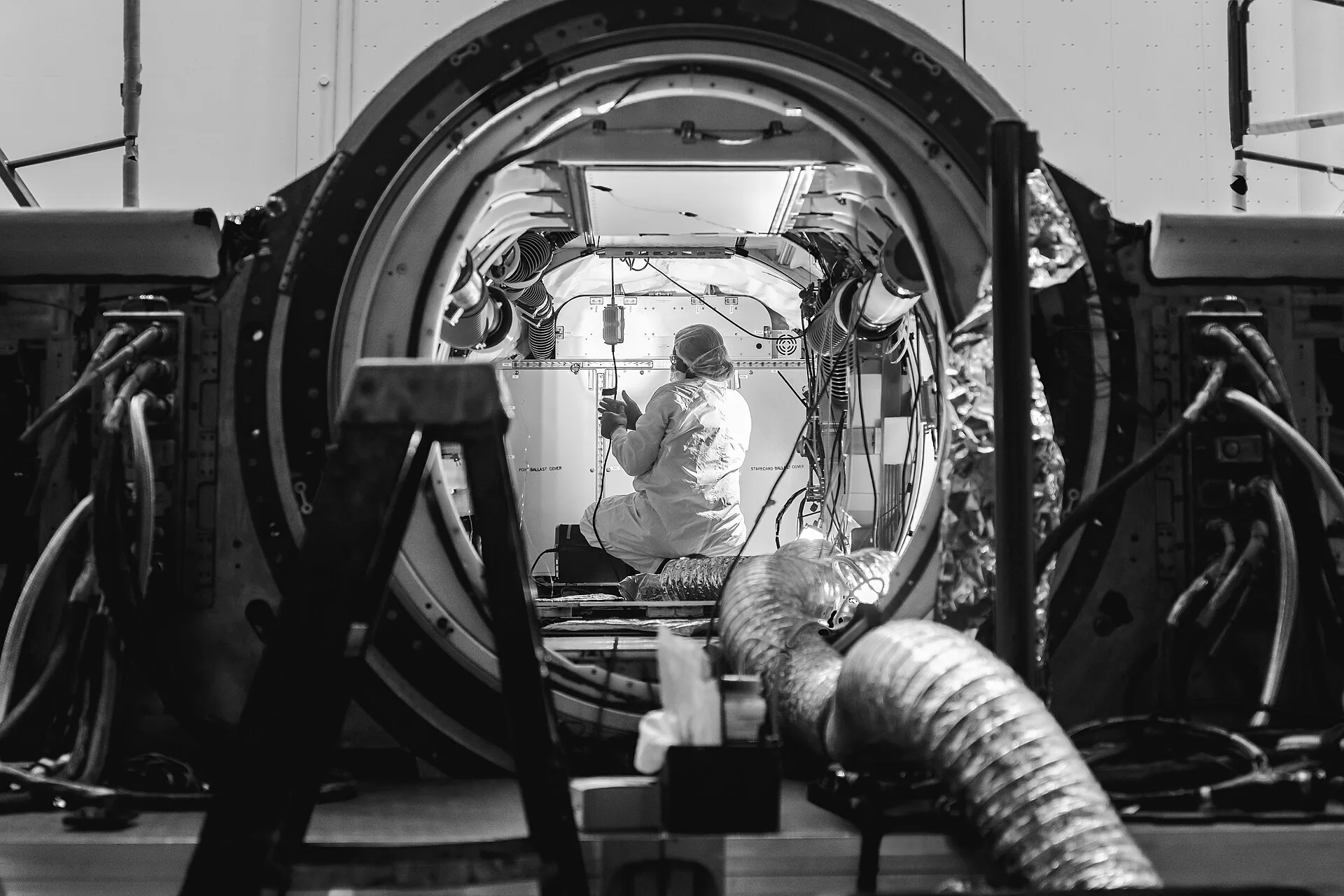
- Tenacity acoustic testing complete (April 2026): Dream Chaser orbiter passed an acoustic environmental test campaign at NASA's Kennedy Space Center, clearing one of the final pre-flight gates
- Pre-flight tow tests (November 2025): Sierra Space completed Dream Chaser tow testing and a series of "critical pre-flight milestones" toward Tenacity's first flight
- September 2025 multi-use update: The company publicly outlined Dream Chaser's evolution beyond CRS-2, including national security, science, and free-flyer mission profiles
- Sierra Space Defense launch (June 2025): Stood up a dedicated defense business and opened the Victory Works manufacturing facility for national security space hardware
- Power Station Technology Center (June 2025): $45M facility opened in Colorado for advanced power systems and habitat-grade subsystems
- Series C close (March 2026): $550M raised at an $8B valuation, the company's largest single round
- LIFE burst test success (2023): Full-scale ultimate burst pressure test at Marshall Space Flight Center demonstrated structural integrity far exceeding requirements
- KSC processing facility: Dedicated Dream Chaser processing hangar at Kennedy Space Center Space Station Processing Facility operational
Competitive Position
Sierra Space operates across two markets with different competitive dynamics:
In cargo resupply:
- Direct competitor to SpaceX Dragon (CRS-2) and Northrop Grumman Cygnus (CRS-2)
- Dream Chaser's differentiator is runway landing and intact return capability — no other current CRS vehicle offers this
- SpaceX Dragon has a significant operational track record (20+ ISS missions); Dream Chaser has none yet, which creates customer risk perception
In commercial stations:
- Direct competition with Axiom Space (the current frontrunner, already attaching modules to ISS) and Starlab (Nanoracks/Voyager/Airbus consortium)
- Orbital Reef's advantage is the consortium's depth — Blue Origin's launch capability, Boeing's station operations heritage, and Sierra Space's habitat technology
- Axiom has the early-mover advantage with its ISS modules; Orbital Reef is more ambitious but further behind schedule
LIFE vs. traditional pressure vessels:
- Inflatable habitats offer dramatically more volume per launch mass than metal-walled modules
- Technology is proven in concept (Bigelow's BEAM module has operated on ISS since 2016) but has never been used for primary station architecture
- If LIFE works at scale, it's a genuine architectural advantage
Future Roadmap (2025–2030)
- Dream Chaser first flight (Q4 2026): Tenacity's CRS-2 demo mission to ISS, now expected in the second half of 2026 — the defining near-term milestone
- CRS-2 operational missions: Seven minimum missions through the late 2020s
- Orbital Reef funding: Competing for NASA CLD Phase 2 contracts, which will be substantially larger and move from study to hardware development
- LIFE module demonstration: Potential flight demonstration of a LIFE module, either attached to ISS or as a standalone demonstration mission
- Dream Chaser crew version: Long-term development of a crew-carrying variant — transformational if achieved
- Post-ISS: If ISS is decommissioned in 2030 as currently planned, the commercial station market opens immediately; Sierra Space aims to be operational before the gap between ISS retirement and new station availability
Key Risks & Challenges
- Development delays: Dream Chaser has been in development since approximately 2004; it has survived multiple program restructurings, a NASA HLS competition loss, and a transition from Atlas V to Vulcan Centaur; further delays could strain the NASA CRS relationship
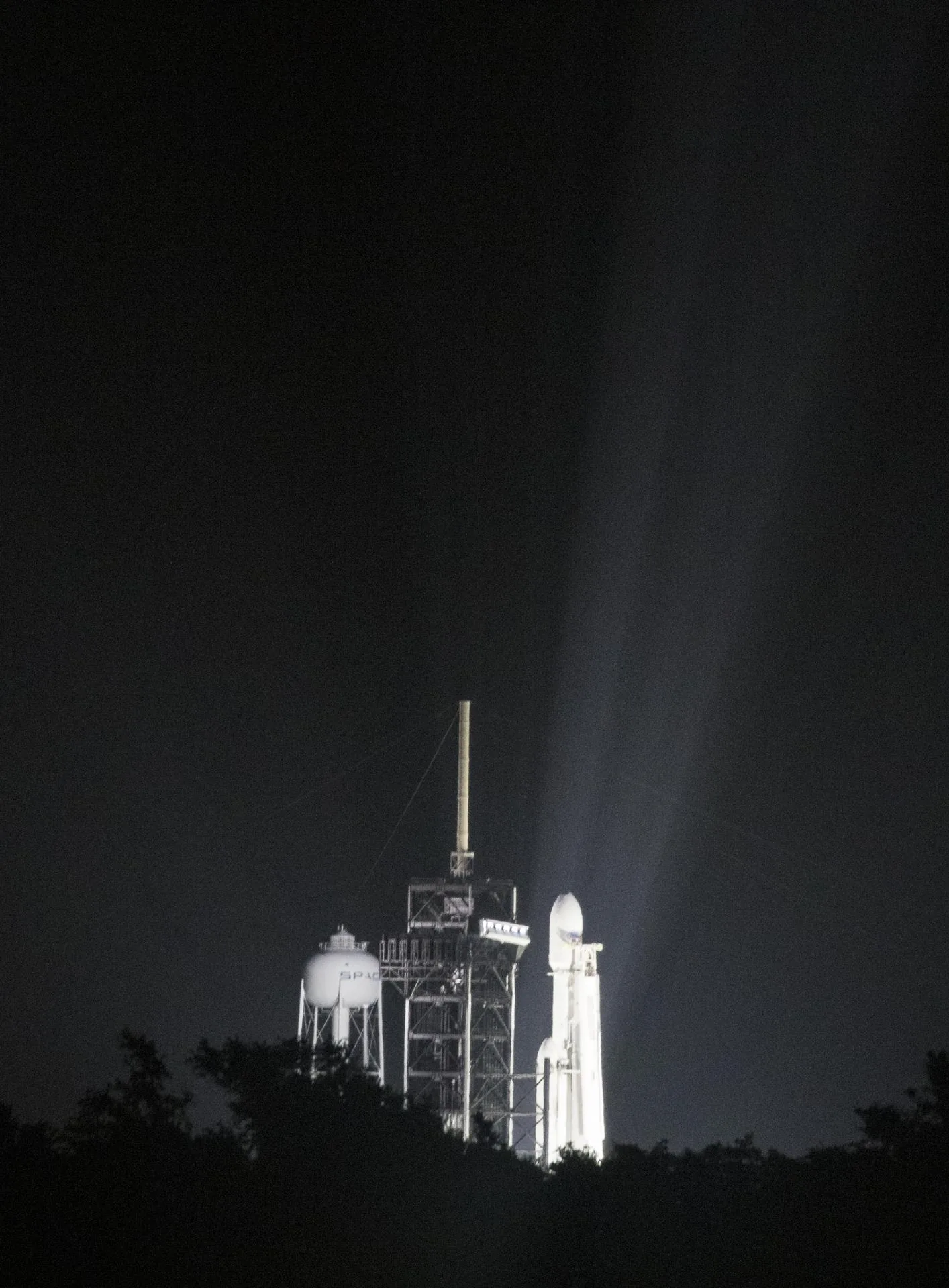
- Vulcan Centaur dependency: Dream Chaser flies on ULA's Vulcan Centaur — a new rocket that has only recently entered operational service; a Vulcan anomaly or certification delay would directly impact Dream Chaser's schedule
- Funding concentration: Even with the March 2026 Series C, Sierra Space remains heavily reliant on private capital and a single anchor customer (NASA); future raises depend on Dream Chaser flying on schedule
- LIFE technology maturity: While burst tests are encouraging, LIFE has never been flown in space; the gap between ground testing and orbital operation can surface unexpected failure modes
- Orbital Reef competition: Axiom Space has real hardware on ISS today; Starlab has the backing of Airbus; Orbital Reef is more conceptually ambitious but operationally less mature
- Post-ISS timing uncertainty: The NASA schedule for ISS decommissioning could accelerate or delay, changing the commercial station market timing in ways that affect Sierra Space's planning
Sources & References
- Sierra Space Official Website — Dream Chaser specs, LIFE habitat, and Orbital Reef program details
- NASA CRS-2 Contract Announcements — Commercial Resupply Services 2 contract details and mission planning
- NASA CLD Program Documentation — Commercial Low Earth Orbit Destinations program updates
- SpaceNews Dream Chaser Coverage — Development milestones, schedule updates, and industry analysis
- Ars Technica Orbital Reef Coverage — Commercial station program reporting
- ULA Vulcan Centaur Updates — Launch vehicle certification and flight history
- Payload Space Industry Analysis — Commercial cargo and station market analysis
- Space Capital Quarterly Reports — Private company valuation and investment tracking
- Crunchbase Sierra Space Funding — Funding round details and investor information
- SpaceNews Axiom & Commercial Stations — Competitive landscape for commercial space stations