On February 10, 2009, something happened in low Earth orbit that had never happened before: two intact satellites slammed into each other at roughly 11.7 kilometers per second. The collision between Iridium 33, an active American communications satellite, and Cosmos 2251, a defunct Russian military satellite, occurred about 790 kilometers above northern Siberia. In an instant, the two spacecraft were transformed into more than 2,000 pieces of trackable debris -- and countless smaller fragments too small to track but still lethal at orbital velocities.
The 2009 collision was a wake-up call. But more than fifteen years later, the problem of space debris is worse than ever, and the question of who bears responsibility remains frustratingly unresolved.
The Scale of the Problem
There are currently more than 30,000 objects larger than 10 centimeters being tracked in Earth orbit by the U.S. Space Surveillance Network. Below that size threshold, estimates suggest there are roughly 500,000 pieces of debris between 1 and 10 centimeters, and over 100 million particles smaller than 1 centimeter. Even a fleck of paint traveling at orbital velocity -- around 7.5 kilometers per second in low Earth orbit -- carries enough kinetic energy to damage a spacecraft window. The International Space Station has had to perform debris avoidance maneuvers dozens of times.
The nightmare scenario is what physicist Donald Kessler predicted in 1978: a cascading chain reaction in which collisions produce debris that causes more collisions, eventually rendering entire orbital bands unusable. The Kessler Syndrome, as it is known, is no longer theoretical. Many experts believe certain orbital altitudes are already approaching this threshold.
The Legal Framework: Who Pays When Things Go Wrong?
International space law does address liability, but the framework was designed for a much simpler era.
The Liability Convention of 1972 establishes that a launching state is absolutely liable for damage caused by its space object on the surface of the Earth or to aircraft in flight. For damage caused in outer space, the standard shifts to fault-based liability -- meaning the injured party must prove that the damage resulted from the launching state's negligence.
This distinction matters enormously. If a piece of Chinese rocket debris falls on a farmhouse in Texas, China is liable regardless of whether it was at fault. But if a Chinese satellite collides with an American satellite in orbit, the United States would have to prove that China was negligent -- a much higher legal bar, especially when it can be difficult to determine exactly what happened.
The Cosmos 954 Precedent. The most significant real-world test of the Liability Convention came in 1978, when the Soviet nuclear-powered satellite Cosmos 954 broke apart during reentry and scattered radioactive debris across a vast stretch of northern Canada. Canada filed a claim against the Soviet Union for $6 million Canadian dollars to cover the cost of the cleanup operation, known as Operation Morning Light. The Soviets eventually paid $3 million in a diplomatic settlement -- without formally accepting liability. It remains the only time a state has paid damages for space debris, and it took years of negotiation.
The Iridium-Cosmos Collision. The 2009 collision was a far more complex case. Iridium was an active, maneuverable satellite operated by an American company. Cosmos 2251 was a dead Russian military satellite, drifting uncontrolled. Russia had no obligation under existing law to deorbit the defunct satellite, and Iridium could theoretically have maneuvered to avoid the collision (though the company stated it had no warning). No liability claim was ever filed. The debris from both satellites remains in orbit today, slowly spreading and posing ongoing risks.
The New Rules: FCC and ESA Take Action
Frustrated by the slow pace of international negotiations, some regulatory bodies have begun acting on their own.
In September 2022, the U.S. Federal Communications Commission adopted a landmark rule requiring satellites in low Earth orbit to deorbit within five years of completing their mission -- down from the previous guideline of 25 years. The rule, which took effect in 2024, applies to all satellites licensed by the FCC, including those operated by foreign companies seeking to serve the U.S. market. This gives the FCC significant leverage, since the American market is essential for most satellite operators.
The five-year rule is a significant step, but it only addresses future debris generation. It does nothing about the thousands of dead satellites and rocket bodies already in orbit. And enforcement is an open question -- what happens if a satellite's propulsion system fails and it cannot deorbit on time?
The European Space Agency has taken a complementary approach with its Zero Debris Charter, unveiled in 2023. ESA member states and partner organizations have committed to the goal of generating zero new space debris by 2030. This is aspirational rather than legally binding, but it signals a shift in European space policy toward treating debris mitigation as a core requirement rather than an afterthought.
The Starlink Factor
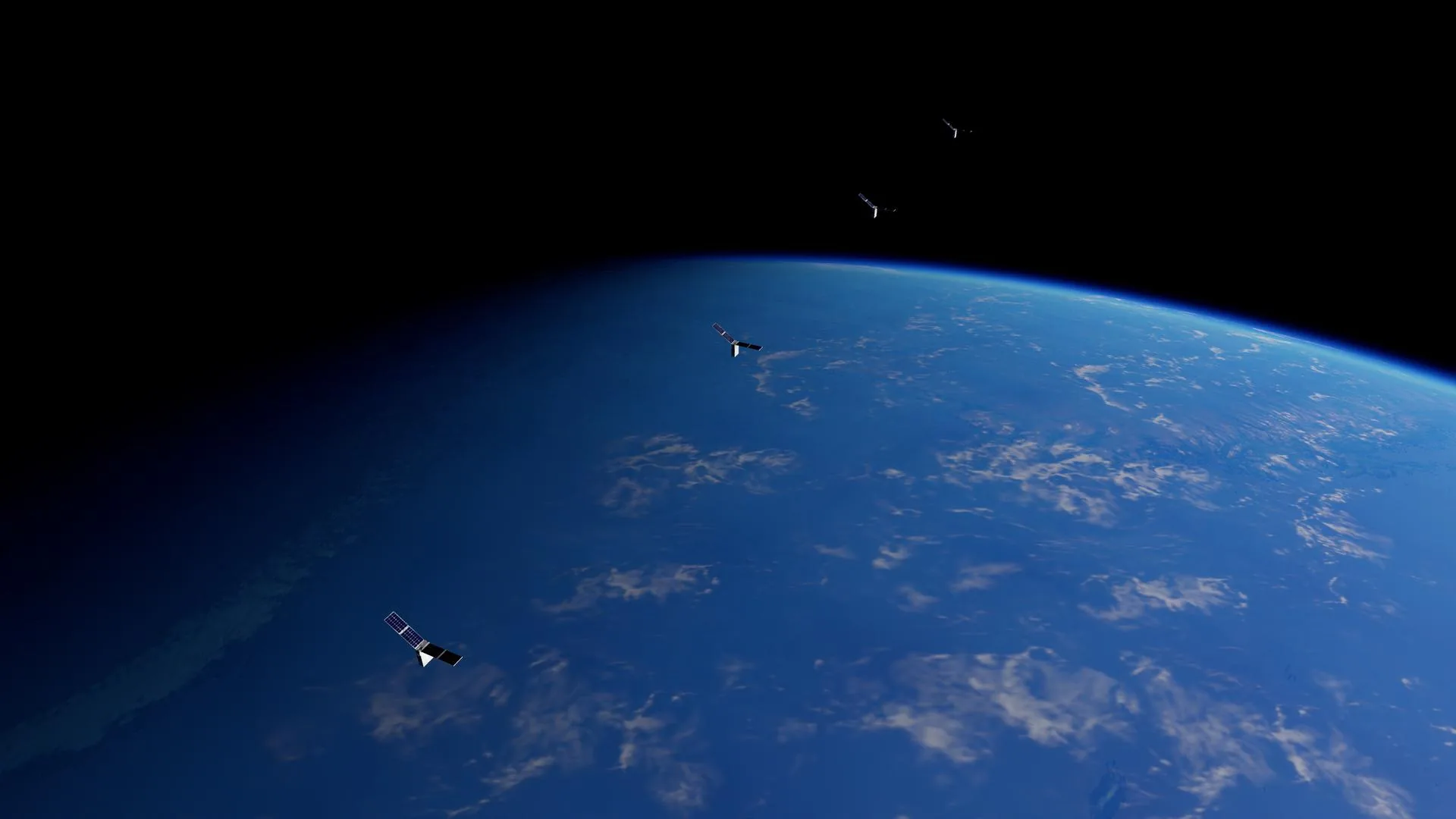
Any discussion of space debris in the 2020s must grapple with the elephant in the room: mega-constellations. SpaceX's Starlink network alone consists of more than 6,000 active satellites as of early 2025, with plans to grow to over 40,000. Amazon's Project Kuiper, OneWeb, and other constellations will add thousands more.
These constellations have changed the fundamental arithmetic of orbital debris. Even with a very low failure rate, the sheer number of satellites means that some will fail and become debris. SpaceX reports that the vast majority of its satellites can actively deorbit, and the company equips them with autonomous collision avoidance systems. But the scale is unprecedented, and the consequences of getting it wrong are severe.
Starlink satellites already account for a large and growing share of close approaches and conjunction warnings in low Earth orbit. Other satellite operators and astronomers have raised concerns about the burden this places on the rest of the space community. Every time another operator has to maneuver to avoid a Starlink satellite -- whether active or dead -- it costs fuel, time, and operational attention.
The International Telecommunication Union (ITU), which coordinates radio frequency use to prevent interference, has seen its workload explode with the filing of mega-constellation applications. But the ITU's mandate is limited to spectrum management; it has no authority over orbital debris or collision risk. This gap in governance is a growing problem.
Insurance and the Market
The commercial space insurance market offers another lens on the debris problem. Satellite operators routinely purchase launch insurance and in-orbit insurance, but the policies are becoming more expensive as the orbital environment grows more hazardous. Insurers are beginning to factor debris risk into their pricing models, and some are pushing for operators to demonstrate debris mitigation plans as a condition of coverage.
This market-driven pressure is a useful complement to regulation. If it becomes prohibitively expensive to insure a satellite that lacks a credible deorbit plan, the financial incentive to comply with debris mitigation guidelines becomes very real -- even in the absence of international enforcement.
The Case for Space Traffic Management
Perhaps the most important concept to emerge from the debris debate is Space Traffic Management (STM) -- the idea that orbital space needs something analogous to air traffic control.
Currently, tracking objects in orbit is primarily done by the U.S. military through the 18th Space Defense Squadron (formerly the 18th Space Control Squadron), which shares conjunction warnings with satellite operators worldwide. This is a valuable service, but it was never designed to be a global traffic management system. The data has limitations, the warnings are sometimes imprecise, and the system was built for national security purposes rather than civil coordination.
Several proposals for a more comprehensive STM system have been floated. These range from a civilian U.S. agency taking over conjunction assessment from the military (the Department of Commerce has been suggested) to an international body under the UN or a new multilateral organization. Europe has invested in its own Space Surveillance and Tracking (SST) capability, and private companies like LeoLabs offer commercial tracking services.
The challenges are significant. A true STM system would require global participation, shared data standards, agreed-upon rules for right-of-way in orbit, and some form of enforcement authority. Achieving this level of international coordination is difficult under the best of circumstances, and the current geopolitical climate -- with competing U.S.-led and China-Russia blocs in space -- makes it even harder.
Russia's 2021 ASAT Test: A Stark Reminder
In November 2021, Russia conducted a direct-ascent anti-satellite (ASAT) weapons test, destroying its own defunct satellite Cosmos 1408. The test created more than 1,500 pieces of trackable debris in an orbit that directly threatened the International Space Station. ISS crew members, including Russian cosmonauts, were forced to shelter in their docked spacecraft as the debris cloud passed nearby.
The test was widely condemned, including by nations not typically critical of Russia. It demonstrated in the starkest possible terms that debris is not just an environmental problem -- it is a security problem. And it underscored the inadequacy of existing legal frameworks, which have no effective mechanism to penalize a nation for deliberately creating debris in a critical orbital zone.
What Comes Next
The space debris problem is solvable, but solving it requires action on multiple fronts simultaneously: stronger national regulations, international agreements on debris mitigation standards, investment in active debris removal technology, a functional space traffic management system, and market incentives that reward responsible behavior.
The technical solutions exist or are in development. ESA's ClearSpace-1 mission, planned to launch in the coming years, aims to demonstrate active debris removal by capturing and deorbiting a piece of rocket debris. Several private companies are developing similar capabilities.
What has been lacking is the political will to match the technical ambition. Space debris does not respect national boundaries, and no single nation can solve the problem alone. The satellites that provide weather forecasts, GPS navigation, internet access, and national security intelligence for billions of people depend on a usable orbital environment. Protecting that environment is not optional -- it is essential.
The question is whether we will act before the Kessler Syndrome makes the choice for us.