It sounds like a question a child might ask, but "who owns the Moon?" has become one of the most consequential legal puzzles of the 21st century. As NASA prepares to build a sustained presence at the lunar south pole, as China constructs its own International Lunar Research Station, and as private companies draw up plans to mine water ice and rare minerals from the surface, the answer to this seemingly simple question will determine who profits from space -- and who gets left behind.
The short answer is: nobody owns the Moon. The longer answer is considerably more complicated.
The Foundation: The 1967 Outer Space Treaty
The cornerstone of space law is the Treaty on Principles Governing the Activities of States in the Exploration and Use of Outer Space, mercifully shortened to the Outer Space Treaty, or OST. Opened for signature in 1967 and now ratified by over 110 countries including every major spacefaring nation, it remains the constitution of outer space.
Article II of the treaty states it plainly: "Outer space, including the Moon and other celestial bodies, is not subject to national appropriation by claim of sovereignty, by means of use or occupation, or by any other means."
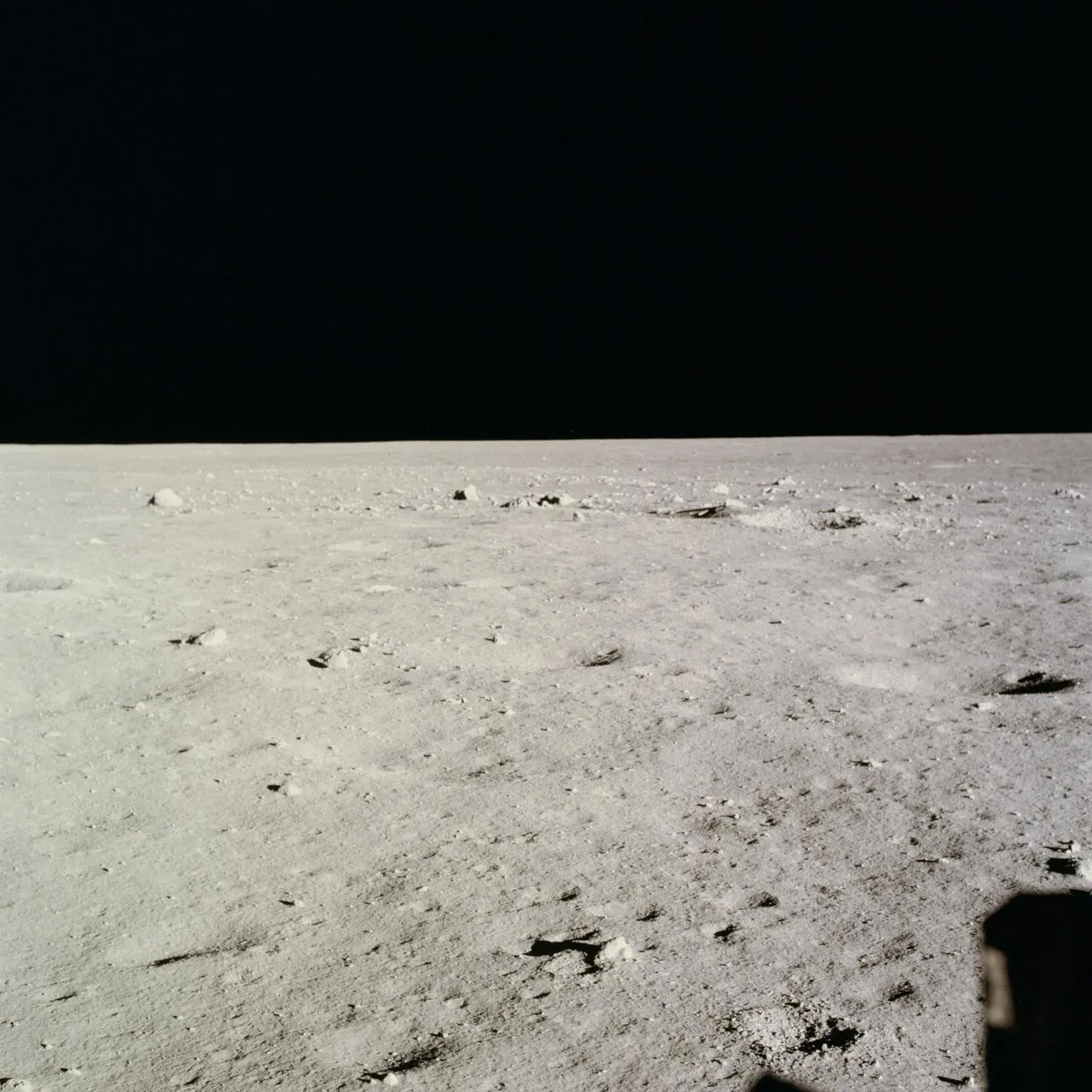
That language is broad and unambiguous. No country can plant a flag on the Moon and declare, "This is ours." The United States did plant a flag during Apollo 11, of course, but it was a symbolic gesture, not a legal claim. The same applies to China's flag deployed by the Chang'e 5 lander.
But here is where it gets interesting. The treaty prohibits national appropriation. It says nothing explicit about private appropriation -- a distinction that some legal scholars and entrepreneurs have seized upon. And it says nothing clear about whether extracting and using resources from a celestial body constitutes a form of appropriation.
The Moon Agreement: The Treaty Nobody Wanted
In 1979, the United Nations tried to address these gaps with the Agreement Governing the Activities of States on the Moon and Other Celestial Bodies, known as the Moon Agreement. This treaty went further than the OST, declaring the Moon and its resources to be the "common heritage of mankind" and calling for an international regime to govern resource extraction once it became feasible.
On paper, it sounded reasonable. In practice, it was a non-starter. The Moon Agreement has been ratified by only 18 countries, and none of them are major spacefaring nations. The United States, Russia, China, Japan, India, and the European space powers all declined to sign. The "common heritage" language was seen as potentially requiring countries to share the profits of space resource extraction with nations that had contributed nothing to the effort -- a concept that the United States and Soviet Union both found unacceptable, for once agreeing on something during the Cold War.
The Moon Agreement is technically in force for its signatories, but its practical relevance is negligible. It stands as a cautionary tale about the difficulty of negotiating space governance through traditional multilateral treaty processes.
The U.S. Approach: You Can Use It, Even If You Cannot Own It
In 2015, the United States took a dramatically different approach. The U.S. Commercial Space Launch Competitiveness Act, signed by President Obama, included a groundbreaking provision: U.S. citizens who extract resources from asteroids or other celestial bodies have the legal right to possess, own, transport, use, and sell those resources.
The law was careful to specify that this did not constitute a claim of sovereignty over any celestial body -- consistent with the Outer Space Treaty. Instead, it drew a distinction between owning the land and owning what you take from it. Think of it like fishing in international waters: no country owns the ocean, but the fish you catch are yours.
This analogy is not perfect, and critics have challenged it. Some legal scholars argue that extracting resources from the Moon is a form of appropriation, even if you are not claiming the land itself. Others contend that the Outer Space Treaty's framers never intended to prohibit resource use -- after all, astronauts have been collecting lunar samples and bringing them back to Earth since 1969 without anyone raising legal objections.
Luxembourg: The European Pioneer
The United States was not alone for long. In 2017, Luxembourg passed its own Space Resources Act, becoming the first European country to establish a legal framework for space mining. The tiny nation positioned itself as a hub for space resource companies, offering not just legal clarity but also investment and a favorable regulatory environment.
Luxembourg's approach was similar to the American model: companies operating under Luxembourg law would have the right to own resources they extract from space, without claiming sovereignty over the celestial body. The law attracted companies like Planetary Resources and ispace, and established Luxembourg as an outsized player in space governance despite its small size.
Since then, the United Arab Emirates, Japan, and other countries have enacted or are developing similar legislation. A pattern is emerging: nations are establishing domestic legal frameworks for space resource use without waiting for a comprehensive international agreement.
The ISS Model: Cooperation Without Ownership
For a practical example of how property and jurisdiction work in space, look no further than the International Space Station. The ISS is not owned by any single nation. Instead, it operates under a 1998 intergovernmental agreement that gives each partner nation jurisdiction over its own modules and equipment. NASA controls the U.S. modules, Roscosmos controls the Russian segment, and so on.
This model works because the partners agreed on it in advance and built the legal framework before the hardware went into orbit. The challenge for the Moon is that no comparable agreement exists -- at least not yet. The Artemis Accords represent one attempt to create norms, but they are not legally binding, and major players like China and Russia have not signed on.
How This Plays Out: Artemis, ILRS, and Commercial Mining
The theoretical debates about space property rights are about to become very practical.
NASA's Artemis program aims to establish a sustained human presence at the lunar south pole, a region prized for its deposits of water ice in permanently shadowed craters. That water ice is not just scientifically interesting -- it is a potential source of drinking water, breathable oxygen, and rocket propellant. Whoever can extract and process it gains an enormous strategic advantage for deeper space exploration.
Under the Artemis Accords and U.S. law, American companies contracted to extract these resources would own what they mine. NASA has already demonstrated this principle by awarding small contracts to companies to collect lunar regolith samples and transfer ownership to the agency -- a symbolic but legally significant transaction.
Meanwhile, China and Russia are developing the International Lunar Research Station, their own long-term lunar base. China has not established a domestic law comparable to the U.S. Space Resource Utilization Act, but Chinese officials have spoken about the importance of lunar resource development. How China approaches property rights for extracted resources -- and whether it develops a framework compatible or incompatible with the Artemis Accords model -- will be a defining question for space governance.
Private companies add another layer of complexity. Firms like SpaceX, Blue Origin, ispace, and Astrobotic are all pursuing lunar activities. Some envision themselves as service providers, delivering payloads and operating equipment for government clients. Others have more ambitious plans, including commercial mining operations. For these companies, legal clarity about resource ownership is not an academic question -- it is fundamental to their business models. No investor will fund a billion-dollar lunar mining operation if the legal right to sell the product is uncertain.
The Fundamental Tension
At its core, the question of who owns the Moon reflects a deeper tension in how humanity thinks about shared resources.
One perspective holds that space resources, like deep-sea minerals or Antarctic ice, belong to all of humanity and should be governed by an international regime that ensures equitable access and benefit-sharing. This is the philosophy behind the Moon Agreement and the "common heritage" concept. It appeals to a sense of fairness, particularly for developing nations that lack the technology to reach space on their own.
The other perspective holds that the right to use resources should belong to those who invest the capital, develop the technology, and take the risks to extract them. Requiring benefit-sharing with nations that contributed nothing, this argument goes, would eliminate the incentive to invest in space resource development in the first place -- and would ultimately slow down the progress that could benefit everyone.
The truth, as usual, probably lies somewhere in between. A framework that allows resource extraction while including provisions for transparency, environmental protection, and some form of benefit-sharing with the broader international community might be the most sustainable path forward. But building that framework requires diplomacy, trust, and a willingness to compromise that is in short supply in today's geopolitical environment.
Looking Ahead
Nobody owns the Moon today, and that is unlikely to change in a formal legal sense. But the question of who controls access to lunar resources -- and who profits from them -- is being answered right now, through a combination of national legislation, bilateral agreements, and the simple reality of who shows up and starts digging.
The next decade will be decisive. As boots and robots return to the lunar surface, the abstract principles of the Outer Space Treaty will collide with the concrete demands of commerce and competition. Whether the result is cooperation or conflict will depend on choices being made today by lawmakers, diplomats, and space agencies around the world.
The Moon belongs to no one. But its resources are up for grabs. How we manage that fact will say a great deal about what kind of spacefaring civilization we intend to become.