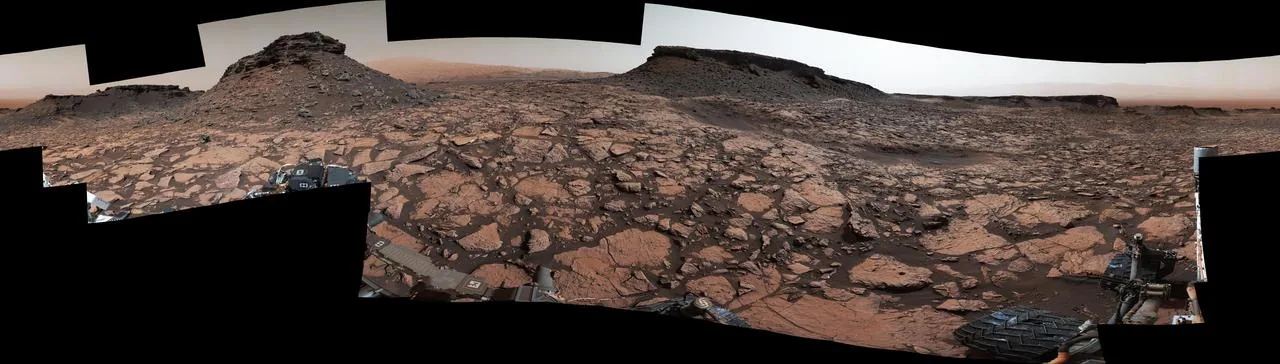
Mars is a frozen desert with an atmosphere thinner than what you would find on top of Mount Everest. Its surface temperature averages minus 60 degrees Celsius. It has no global magnetic field, so solar radiation strips away atmospheric particles and bombards the ground with ionizing radiation. There is no liquid water on the surface. By any reasonable standard, Mars is hostile to life as we know it.
And yet, a growing number of scientists, engineers, and visionaries believe we might one day transform it into a world where humans could walk outside without a spacesuit. The idea is called terraforming, and while it remains one of the most ambitious concepts ever seriously discussed, it is grounded in real physics and increasingly detailed engineering proposals.
What Terraforming Actually Requires
To make Mars habitable for unprotected humans, you would need to accomplish three monumental tasks, roughly in order:
Warm the planet. Mars needs to be at least 60 degrees Celsius warmer on average for liquid water to exist on its surface. This is not a small adjustment. It requires fundamentally altering the planet's energy balance.
Thicken the atmosphere. Mars's current atmospheric pressure is about 0.6% of Earth's -- roughly equivalent to an altitude of 35 kilometers on Earth. Humans need at least 10-20% of Earth's sea-level pressure to survive without a pressure suit (though they would still need supplemental oxygen). Ideally, you would want something approaching Earth-normal pressure.
Create radiation protection. Without a global magnetic field, Mars's surface receives far more cosmic radiation and solar particle bombardment than Earth's. Any terraforming plan must address this, either by regenerating a magnetosphere or by thickening the atmosphere enough that it provides adequate shielding on its own (Earth's atmosphere provides the equivalent of about 10 meters of water shielding).
Each of these tasks is individually staggering. Together, they represent planetary-scale engineering on timescales measured in centuries to millennia.
Proposed Methods: The Toolbox
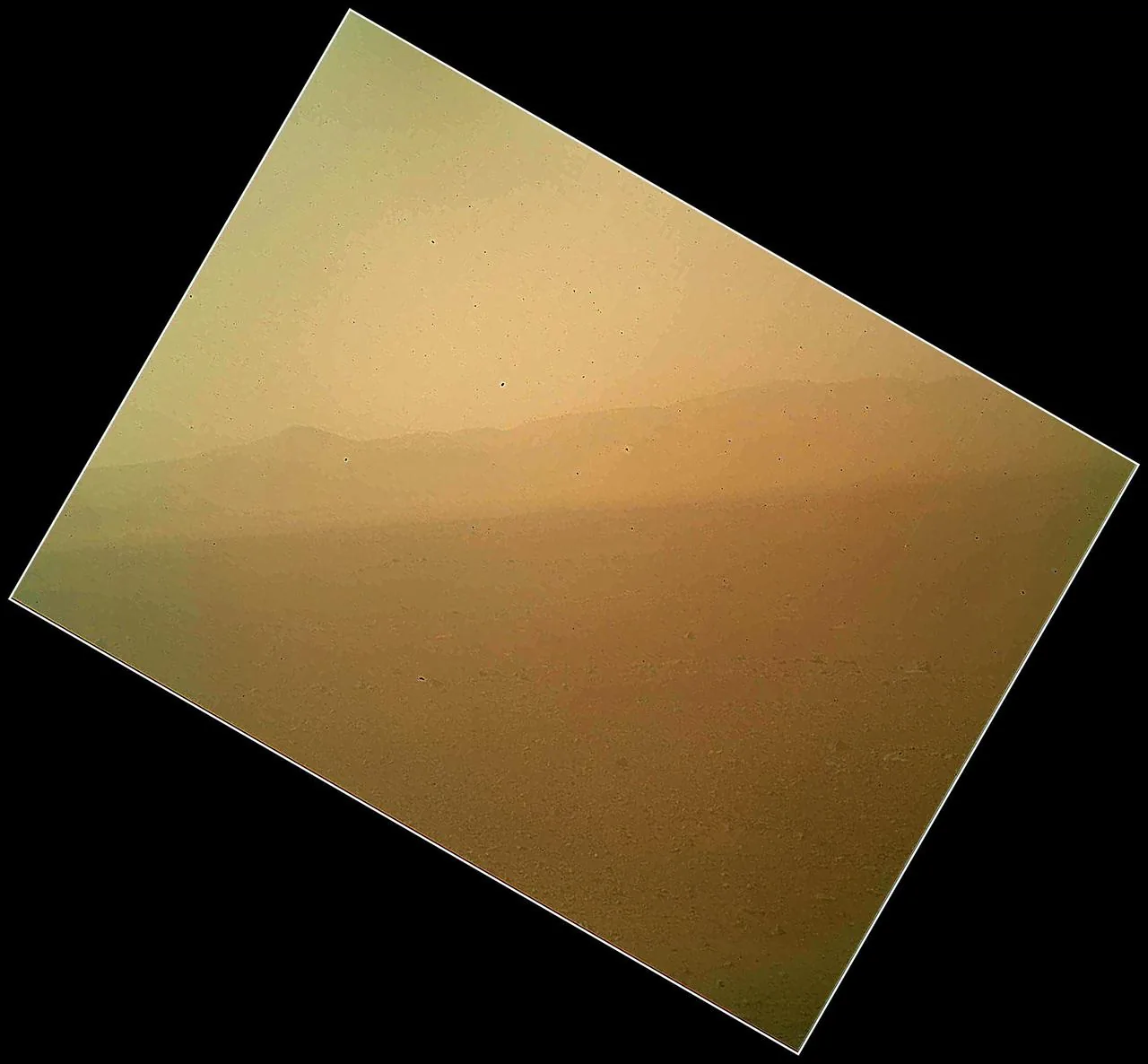
Scientists have proposed numerous approaches to warming and thickening Mars's atmosphere. Some are plausible with foreseeable technology. Others remain firmly theoretical.
Greenhouse gas factories. Perhaps the most frequently cited near-term approach involves manufacturing powerful greenhouse gases -- super-greenhouse gases like perfluorocarbons (PFCs) -- and releasing them into the Martian atmosphere. PFCs are thousands of times more potent than CO2 at trapping heat, and they persist in atmospheres for tens of thousands of years. Factories powered by nuclear or solar energy could theoretically produce enough PFCs to initiate measurable warming within decades.
A 2001 study by Christopher McKay and Robert Zubrin estimated that a warming of about 10 degrees Celsius could be achieved with PFC production on a scale comparable to Earth's current industrial output. This initial warming would begin sublimating the CO2 frozen in Mars's polar caps and regolith, creating a positive feedback loop as the released CO2 further thickens and warms the atmosphere.
Orbital mirrors. Enormous mirrors positioned in Mars orbit could focus additional sunlight onto the polar caps, accelerating CO2 sublimation. The mirrors would need to be hundreds of kilometers across, but because they would operate in the vacuum of space, they could be extremely thin -- essentially aluminized Mylar sheets. This is not buildable with today's launch capacity, but it does not require any unknown physics.
Asteroid impacts. Redirecting ammonia-rich asteroids from the outer solar system to impact Mars would serve a dual purpose: the kinetic energy of impact generates heat, and the ammonia (NH3) is a potent greenhouse gas that would persist in the atmosphere. This approach has the advantage of being a one-time operation per asteroid rather than requiring continuous industrial output, but the targeting and redirection of kilometer-scale asteroids remains far beyond current capability.
Importing volatiles. Mars may simply not have enough CO2 to create a thick atmosphere, even if every frozen reservoir is liberated. Some proposals involve importing nitrogen and other volatiles from Titan, comets, or the outer solar system. This is perhaps the most speculative approach, requiring interplanetary transport infrastructure that dwarfs anything currently imagined.
The CO2 Inventory Problem
Here is the uncomfortable truth that has dogged terraforming advocates in recent years. In 2018, a landmark study by Bruce Jakosky and Christopher Edwards, published in Nature Astronomy, assessed the total CO2 available on Mars -- in the polar caps, adsorbed in regolith, and locked in carbonate minerals. Their conclusion was sobering: even if every accessible CO2 reservoir on Mars were fully liberated, the resulting atmospheric pressure would be only about 1.5% to 7% of Earth's. That is not enough for terraforming. It is not even close.
This finding does not kill the terraforming concept, but it does mean that warming and releasing native CO2 alone will not suffice. A truly terraformed Mars would require importing vast quantities of atmospheric gases from elsewhere in the solar system, or relying almost entirely on manufactured greenhouse gases for warming while accepting a thinner-than-Earth atmosphere.
Some researchers have pushed back on Jakosky and Edwards's estimates, arguing that deep carbonate deposits and subsurface CO2 reservoirs may hold more gas than surface surveys have detected. Mars's geological history suggests it once had a much thicker atmosphere, and that carbon had to go somewhere. But until we drill deeply into Mars's crust, the CO2 inventory remains a significant open question.
Timescales: Thinking in Centuries
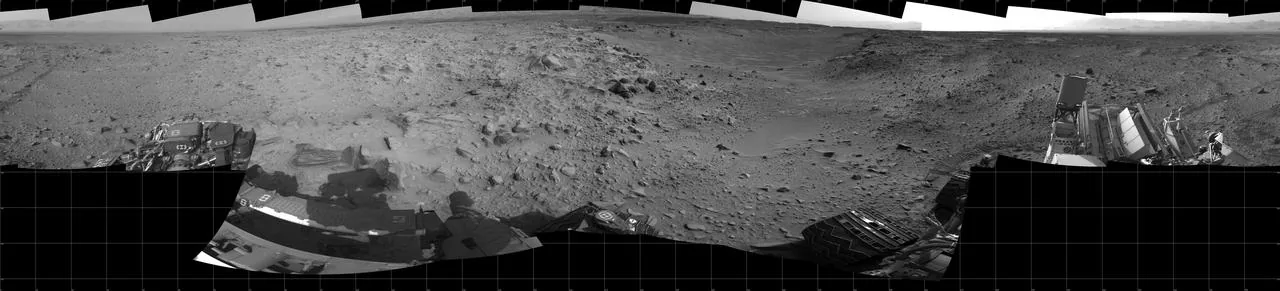
Even optimistic terraforming scenarios operate on timescales that dwarf human lifetimes. The initial warming phase -- raising temperatures enough to sublimate polar CO2 and create a positive feedback loop -- might take 50 to 100 years with aggressive greenhouse gas production. Thickening the atmosphere to breathable pressure could take centuries to millennia, depending on available CO2 reserves and gas import capabilities.
Creating a biosphere -- introducing photosynthetic organisms to generate oxygen, building soil ecosystems, establishing water cycles -- adds centuries more. Earth's own Great Oxidation Event, when photosynthetic cyanobacteria first saturated the atmosphere with oxygen, took hundreds of millions of years. We would presumably accelerate this with engineered organisms, but even so, turning a thin CO2 atmosphere into a breathable oxygen-nitrogen mix is a project measured in centuries at minimum.
The most honest timelines for full terraforming -- a Mars where you can walk outside in shirtsleeves and breathe the air -- range from 500 to 100,000 years, depending on the methods employed and the resources committed.
The Magnetosphere Question
Mars lost its global magnetic field roughly 4 billion years ago, and without it, the solar wind slowly strips atmospheric particles away. Any terraforming effort would need to address this ongoing atmospheric loss.
One creative proposal, published by NASA scientist Jim Green in 2017, suggested placing a powerful magnetic dipole at the Mars L1 Lagrange point (the gravitational balance point between Mars and the Sun). This artificial magnetosphere would deflect the solar wind before it reached Mars, protecting the atmosphere from stripping. Simulations suggested that such a shield could allow Mars's atmosphere to naturally thicken over time as outgassing from the interior accumulated without being lost to space.
The magnetic shield concept has the advantage of being a single, maintainable piece of infrastructure rather than a planet-wide modification. However, the power requirements and superconducting magnet technology needed are beyond current capabilities, though not beyond foreseeable developments in fusion power and high-temperature superconductors.
The Ethical Dimension
Terraforming Mars raises profound ethical questions that are surprisingly underexplored.
If Mars harbors any native life -- even microbial life in subsurface aquifers -- do we have the right to transform the planet in ways that might destroy those organisms? The field of planetary protection takes this seriously. If Mars life exists and shares a common ancestor with Earth life (via meteorite transfer), the ethical calculus is one thing. If Mars life arose independently -- a second genesis -- it would be arguably the most important scientific discovery in human history, and the case for preserving it in its native environment becomes enormously strong.
There are also questions about committing future generations to a centuries-long project they did not choose. Who decides to terraform Mars? What governance structures manage a project that spans dozens of generations? These are not idle philosophical puzzles; they are practical questions that would need answers before the first factory is built.
Paraterraforming: The Pragmatic Alternative
Given the immense timescales and uncertainties of full terraforming, many researchers advocate for paraterraforming as a more realistic near-term approach. Paraterraforming means creating habitable environments within enclosed structures rather than transforming the entire planet.
Domed cities, pressurized valleys, or even roofing over entire craters with transparent materials could create shirt-sleeve environments on Mars without modifying the global atmosphere. These enclosed habitats could maintain Earth-like pressure, temperature, and atmospheric composition while the planet outside remains unchanged.
Paraterraforming has several advantages. It is achievable with foreseeable technology. It can begin with the very first permanent settlements. It does not require solving the CO2 inventory problem. And it preserves the option of full terraforming later, without irrevocably committing to it now.
The enclosed city of Mars might be the reality for centuries before -- if ever -- the dome doors open to a breathable Martian sky.
The Dream Persists
Terraforming Mars is not a project for our generation, and possibly not for our century. It demands technologies we have not yet invented, resources we have not yet accessed, and patience we have not yet demonstrated. The CO2 inventory problem, the magnetosphere question, and the sheer timescales involved make it one of the most challenging engineering concepts ever seriously proposed.
But it is not impossible. Every individual component -- greenhouse gas production, orbital mirrors, magnetic shielding, engineered biospheres -- is grounded in known physics. The challenge is scale, not principle. And if human civilization survives and grows over the coming centuries, developing robust space industry and settling Mars under domes, the temptation to take the next step and open those domes to a living sky may prove irresistible.
Mars will not be terraformed because it is easy. It will be terraformed -- if it is terraformed at all -- because a species that learned to reshape one world decided it could learn to reshape another.