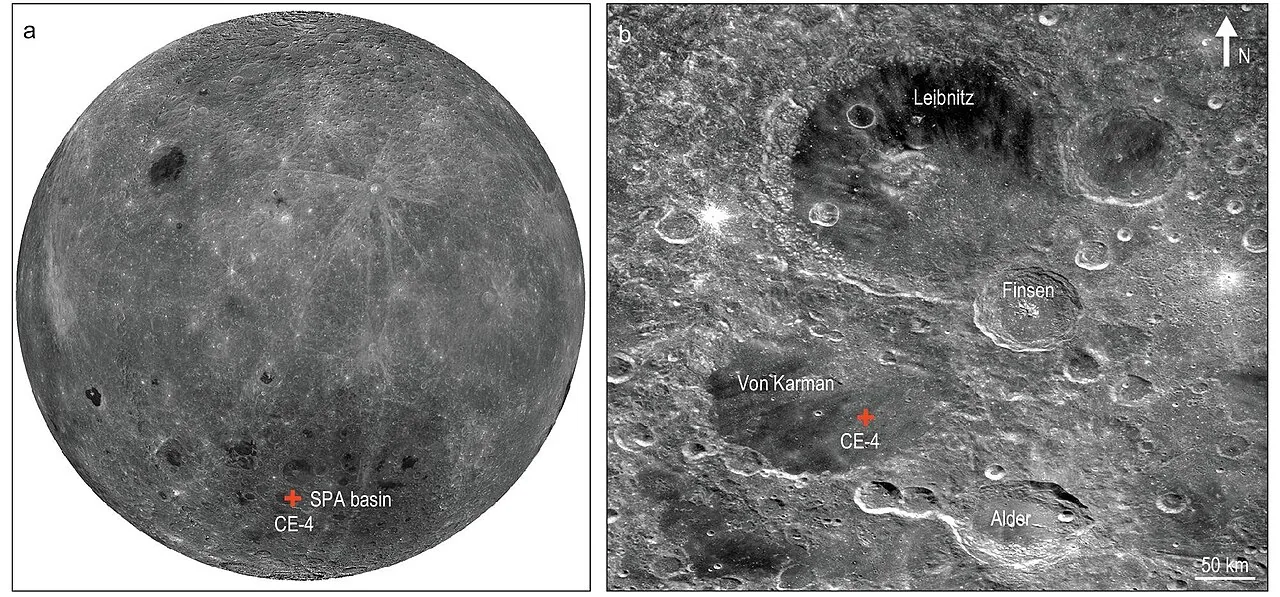
On January 3, 2019, a spacecraft that almost no Western newspaper had bothered to put on its front page did something no nation had ever accomplished. Chang'e 4, a Chinese robotic lander weighing roughly 1,200 kilograms, touched down in the Von Kármán crater on the far side of the Moon — the hemisphere humans cannot see from Earth, the hemisphere every previous soft-lander had avoided because radio signals cannot penetrate the lunar bulk. Minutes later, the Yutu-2 rover rolled onto regolith that had never before known the tracks of a machine built by human hands.
It was a moment that crystallized what the Chinese space program had quietly become: no longer an imitator, no longer a latecomer, but a genuine frontier-pusher operating at the absolute edge of what is technologically possible. From a scientist deported in disgrace from 1950s America to a modular space station orbiting overhead with a continuous taikonaut presence, China's journey to space superpower status is one of the great under-told stories of modern science and geopolitics.
This is Part 1 of a comprehensive two-part series on China's space industry. Part 1 traces the full arc of the state-led program — from the strategic weapons origins under Mao Zedong, through the Long March rocket family, the Shenzhou crewed missions, the Chang'e lunar campaign, the Tianwen-1 Mars triumph, and the Tiangong space station. Part 2 will examine China's private commercial space sector, reusable-rocket startups, satellite mega-constellations, and the rivalry with American New Space.
The Beginning: Qian Xuesen and the Two Bombs One Satellite Program (1956–1970)

Every national space program has a founding father. China's is unusual in that its founding father was given to it, unwillingly, by the United States.
Qian Xuesen, born in Hangzhou in 1911, arrived in the United States in 1935 on a Boxer Indemnity Scholarship. He earned a master's degree at the Massachusetts Institute of Technology and a PhD under the legendary aerodynamicist Theodore von Kármán at the California Institute of Technology. By the 1940s he was a tenured Caltech professor, a co-founder of the Jet Propulsion Laboratory, and a US Army colonel with top-secret clearance who helped interrogate captured Nazi rocket scientists at the end of World War II. He was, by any honest measure, one of the most important rocket engineers alive.
Then came the McCarthy era. In 1950, the FBI accused Qian of Communist Party sympathies, stripped him of his clearance, and placed him under house arrest for five years. In 1955, during a prisoner swap negotiated around the Korean War, the US deported him to the People's Republic of China. Undersecretary of the Navy Dan Kimball famously remarked of the decision: "It was the stupidest thing this country ever did. He was no more a Communist than I was, and we forced him to go."
Qian arrived in Beijing a national hero. Within weeks he was meeting with Premier Zhou Enlai. By 1956, on his recommendations, Mao Zedong approved the establishment of the Fifth Academy of the Ministry of National Defense — the seed from which every subsequent Chinese space institution would grow. The strategic goal was encapsulated in a phrase that would define a generation: liǎng dàn yī xīng (两弹一星), "Two Bombs, One Satellite." China would build an atomic bomb, a hydrogen bomb, and an orbital satellite, using them to guarantee sovereignty in a Cold War world that had humiliated the country for more than a century.

The atomic bomb was detonated on October 16, 1964, in the Lop Nur desert. The hydrogen bomb followed on June 17, 1967 — a mere 32 months after the first fission test, a pace unmatched by any other nuclear weapons state. But the satellite took longer. Qian's engineers had to build not only a spacecraft but the rocket to lift it, a tracking network to follow it, and the industrial base to produce both.
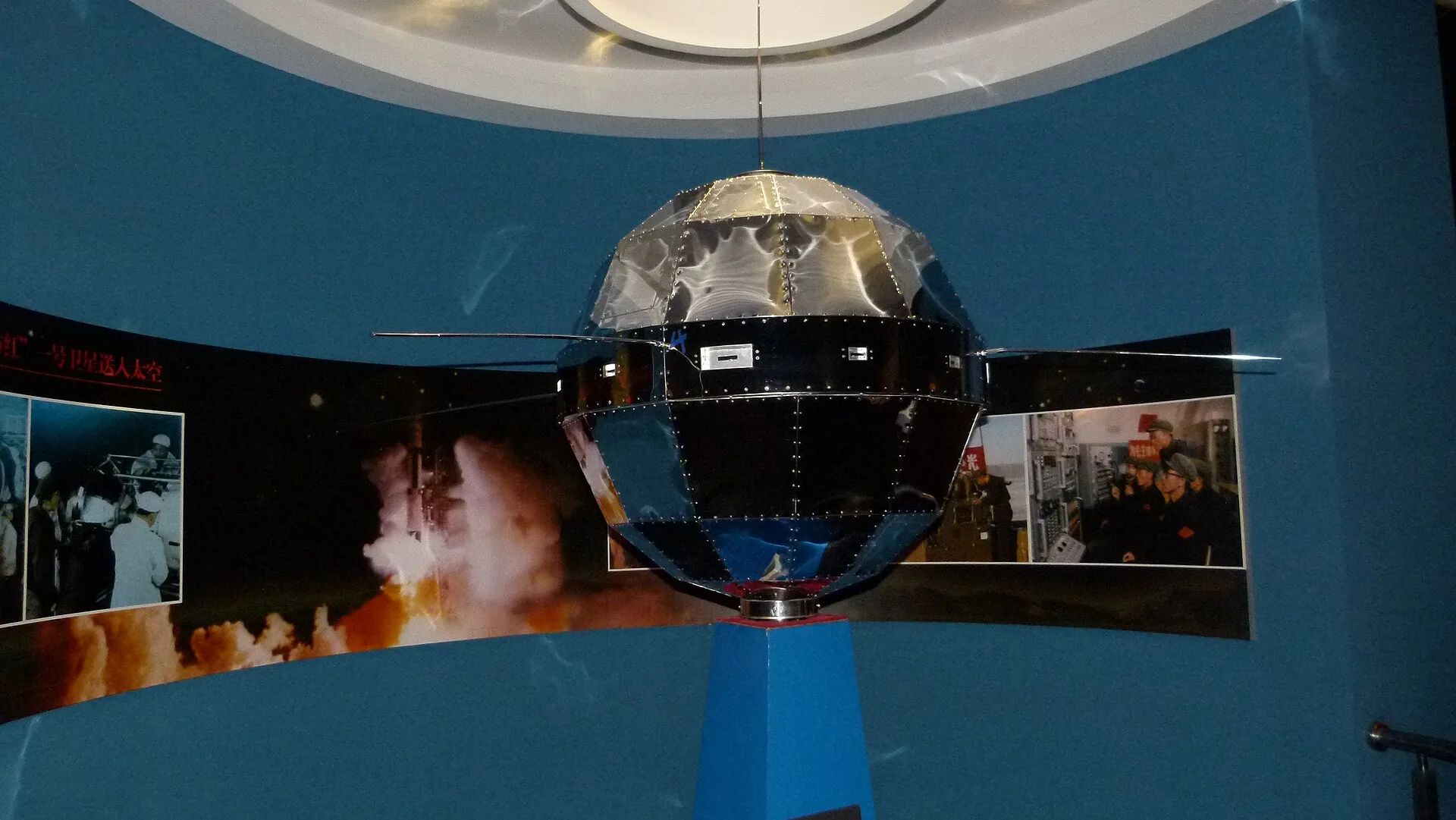
That rocket was the Long March 1 (Chang Zheng 1), a three-stage derivative of the Dongfeng-4 ballistic missile. The satellite was Dongfanghong-1 ("The East Is Red"), a 173-kilogram polyhedron of 72 facets, plated to reflect sunlight so it could be seen with the naked eye from the ground. On April 24, 1970, at 21:35 Beijing time, it lifted off from the Jiuquan Satellite Launch Center in the Gobi Desert. Forty minutes later, the People's Liberation Army confirmed that Dongfanghong-1 was in a 439-by-2,384-kilometer orbit, and that its onboard transmitter was broadcasting the melody of "The East Is Red," the de facto anthem of the Cultural Revolution, at 20.009 megahertz.
China had become the fifth country to reach orbit independently — after the Soviet Union, the United States, France, and Japan. Dongfanghong-1 was, at 173 kg, heavier than the first satellites of the preceding four nations combined. It continues to orbit Earth to this day, a silent monument in low Earth orbit to a program born of humiliation and forged in isolation.
The Long March Family: Building an Independent Launch Capability (1970–2000)
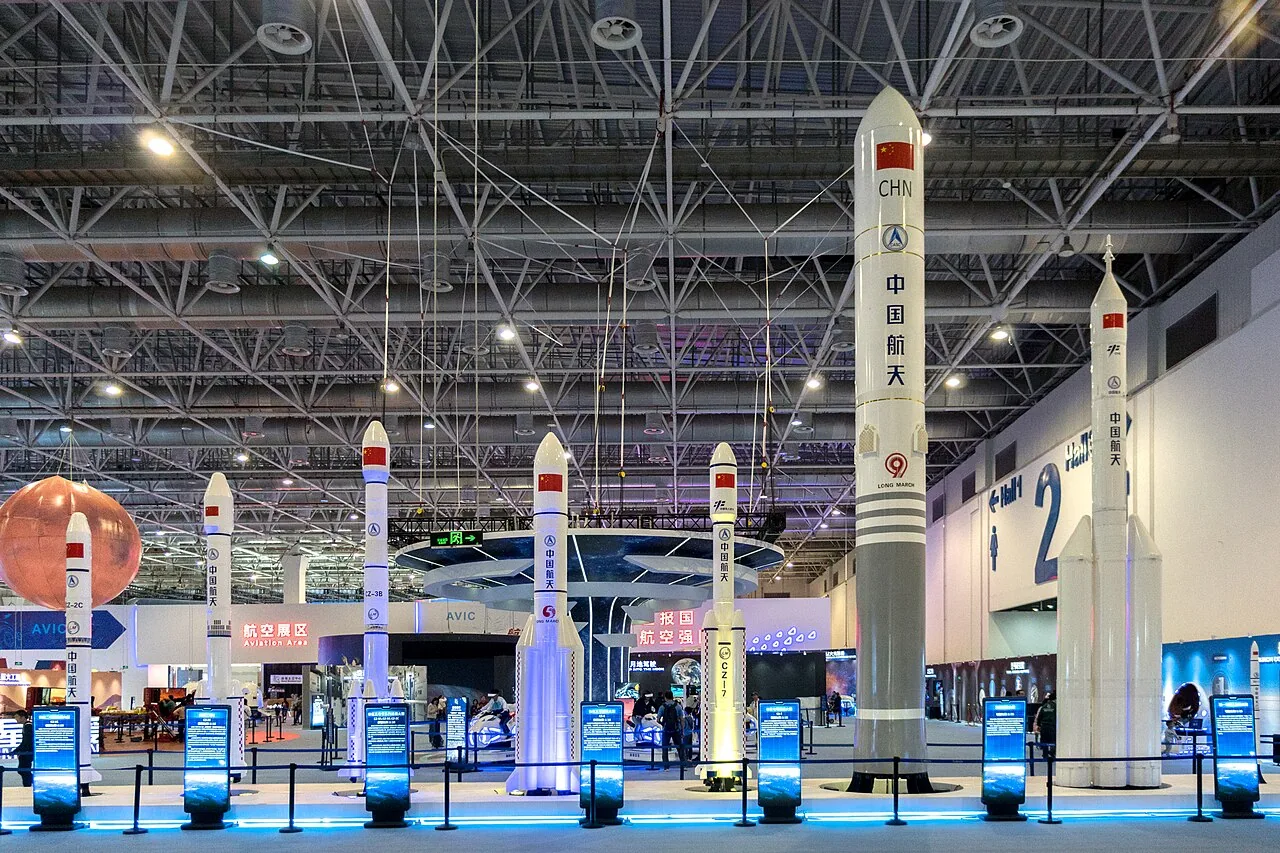
If Dongfanghong-1 proved China could reach orbit once, the next three decades were about proving it could do so reliably, frequently, and in service of both national and commercial objectives. The instrument of that ambition was the Long March rocket family — the most diverse and prolific lineage of launch vehicles ever developed by a single nation outside of the United States and the former Soviet Union.
The original Long March 1 was retired after just two successful flights. Its successors came thick and fast. The Long March 2 series, introduced in 1974, adapted the Dongfeng-5 intercontinental ballistic missile for orbital use and became the backbone of China's recoverable satellite program. The Long March 3, debuted in 1984, added a cryogenic hydrogen-oxygen third stage — a technology that only the United States, France, and Japan had previously mastered — and gave China the ability to place payloads into geostationary transfer orbit. The Long March 4, introduced in 1988, specialized in sun-synchronous orbits for Earth observation.
By the late 1980s, with Deng Xiaoping's reform and opening-up in full swing, the Chinese leadership recognized that Long March could earn hard currency. The Great Wall Industry Corporation was established as the program's commercial arm. Its first international contract came in 1990, when a Long March 3 placed AsiaSat 1 — a Hughes HS-376 communications satellite originally launched by the Space Shuttle Challenger's sister mission and recovered — into geosynchronous transfer orbit. A string of Hughes and Loral contracts followed, undercutting Western launch prices by 30 to 40 percent.
The commercial boom very nearly destroyed the program. On January 26, 1995, a Long March 2E carrying the Apstar-2 satellite exploded 50 seconds after liftoff from Xichang, scattering debris across the surrounding countryside. A little over a year later, on February 15, 1996, a Long March 3B carrying the $229 million Intelsat 708 satellite veered off course 22 seconds after launch and slammed into a hillside village. Chinese authorities initially reported six deaths; Western journalists who visited the site estimated significantly higher casualties, though the full toll has never been officially confirmed. Both failures were traced to guidance-system defects.
The investigation that followed produced more than engineering fixes. The 1999 Cox Report, commissioned by the US Congress, alleged that American satellite-makers had improperly shared failure-analysis data with Chinese engineers in violation of export controls. The Clinton administration responded by placing all commercial satellites on the State Department's Munitions List under ITAR. Overnight, American-built satellites and satellites containing American components were barred from Long March rockets. The lucrative Hughes-Loral partnership collapsed, and China's share of the global commercial launch market plummeted from 9 percent to essentially zero.
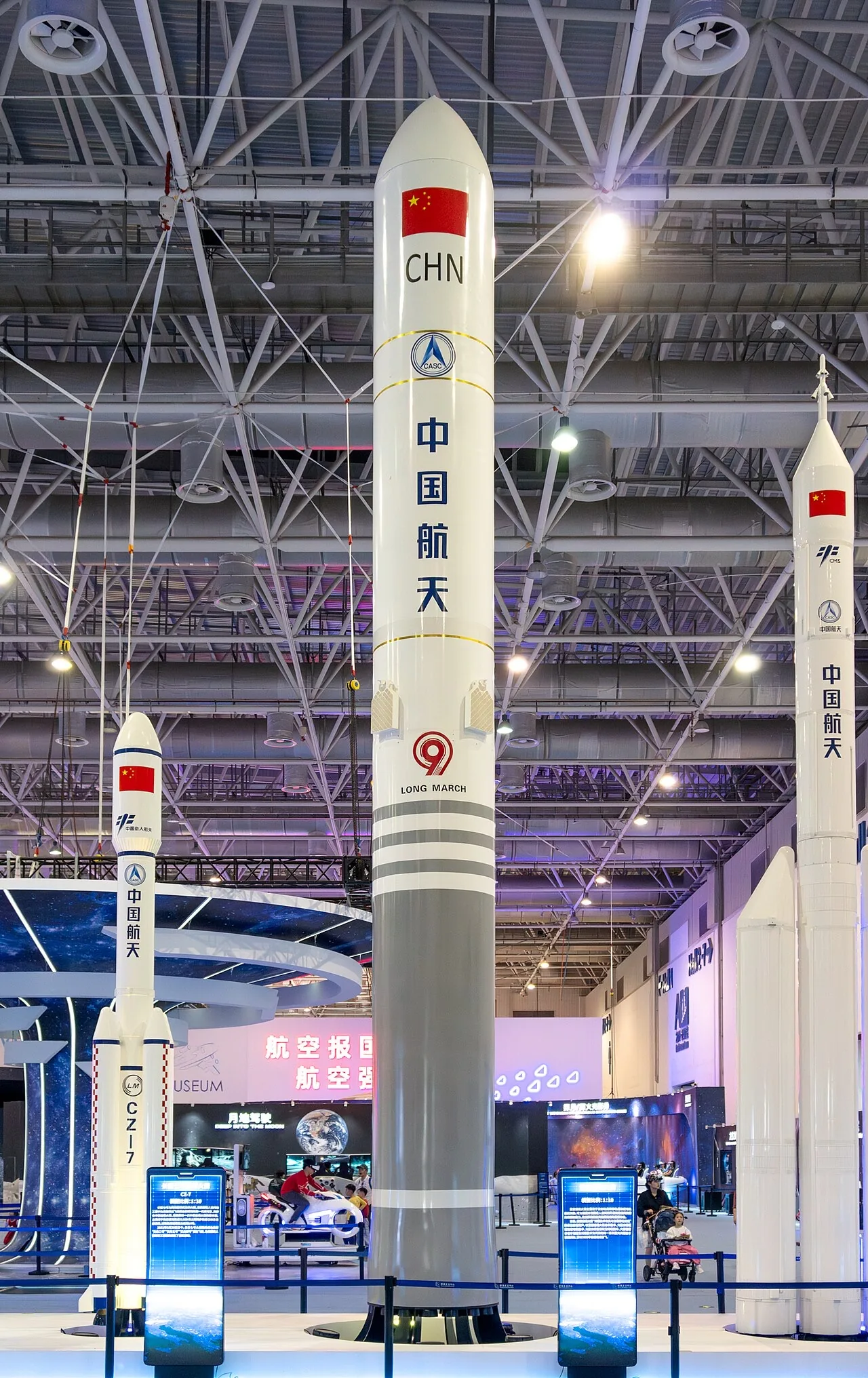
ITAR had a paradoxical effect. Shut out of the Western satellite market, the Chinese aerospace industry was forced to build everything itself — buses, payloads, ground systems, and ultimately an entire parallel ecosystem. By the time the Long March 5 heavy-lift rocket debuted in 2016, with a 25-tonne-to-low-Earth-orbit capacity rivaling the Delta IV Heavy, China was launching entirely Chinese-built satellites on entirely Chinese-built rockets from entirely Chinese-built launch pads. The Long March family has now flown more than 500 missions with a cumulative success rate exceeding 95 percent — a reliability record matched by only a handful of rocket families in the world.
Human Spaceflight: Shenzhou and China's First Taikonauts (1992–2013)
Mao had dreamed of Chinese cosmonauts as early as 1971, when Project 714 briefly selected 19 candidates for a planned Shuguang-1 capsule. The program collapsed in the chaos of the Cultural Revolution without a single flight. It took another two decades before the political and industrial prerequisites realigned.
On September 21, 1992, President Jiang Zemin signed the decision to proceed with Project 921 — the program that would finally put a Chinese citizen in orbit. The plan, audacious in its scope, was divided into three phases: send a taikonaut to low Earth orbit; develop rendezvous, docking, and extravehicular activity capabilities; and ultimately build a permanent space station. It was, in effect, a three-decade roadmap — and remarkably, the program would execute it within a year or two of the original schedule on each milestone.
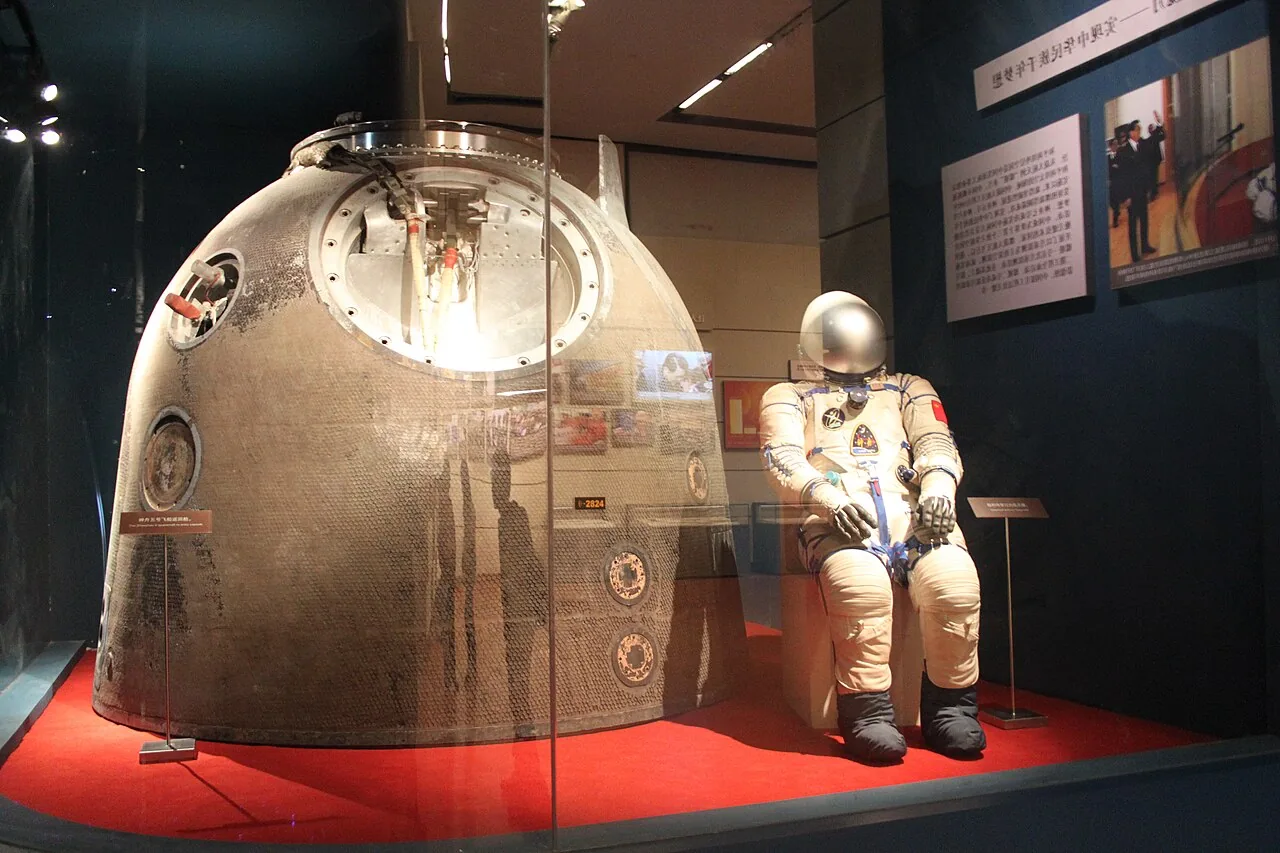
The crew vehicle was Shenzhou ("Divine Vessel"), outwardly similar to the Soviet Soyuz but larger, more capable, and almost entirely different in its internal engineering. Where Soyuz discarded its orbital module on reentry, Shenzhou's orbital module was designed to remain in orbit as a free-flying satellite after the crew returned home, doubling as a science platform. Four uncrewed test flights from 1999 through 2002 validated the system.
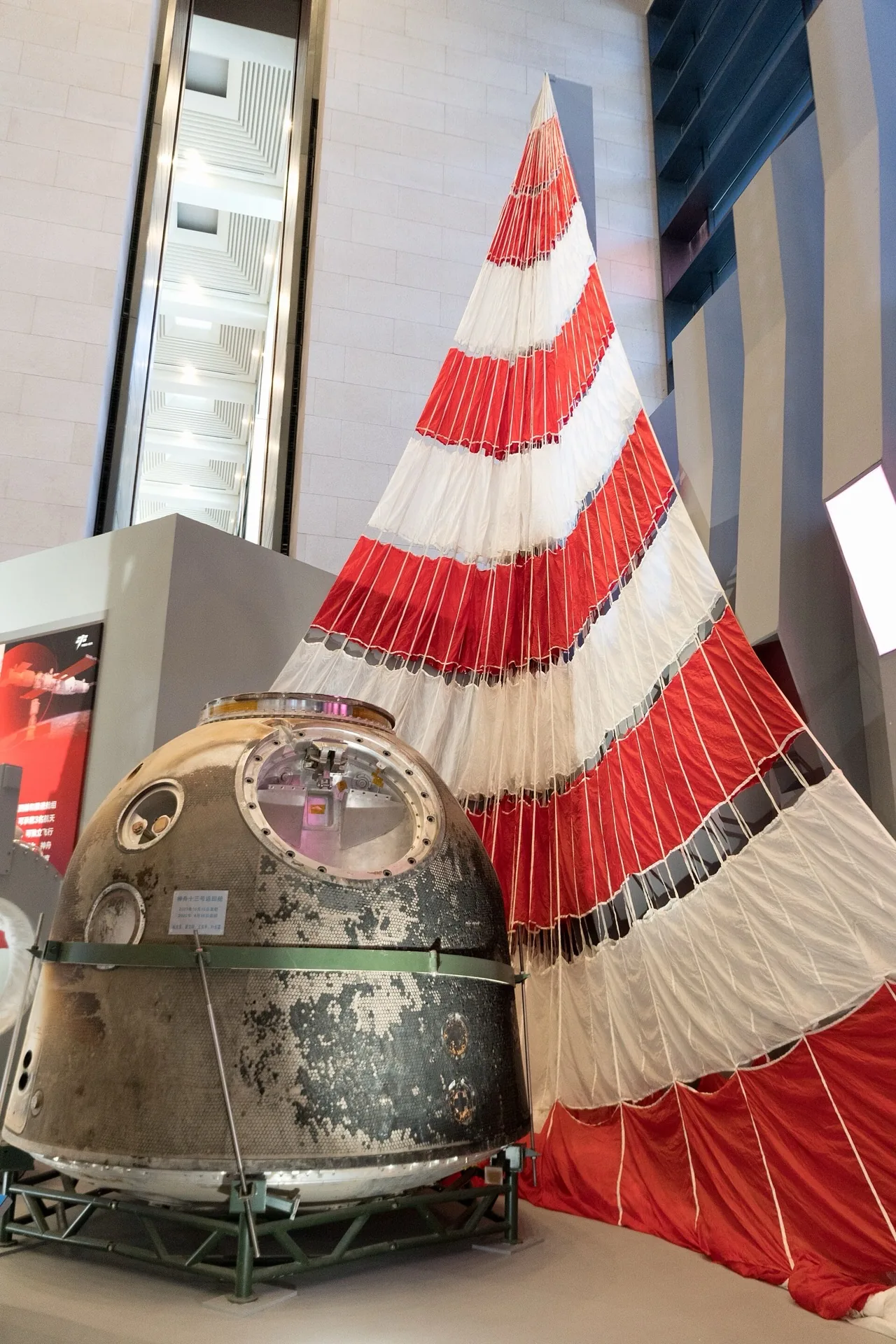
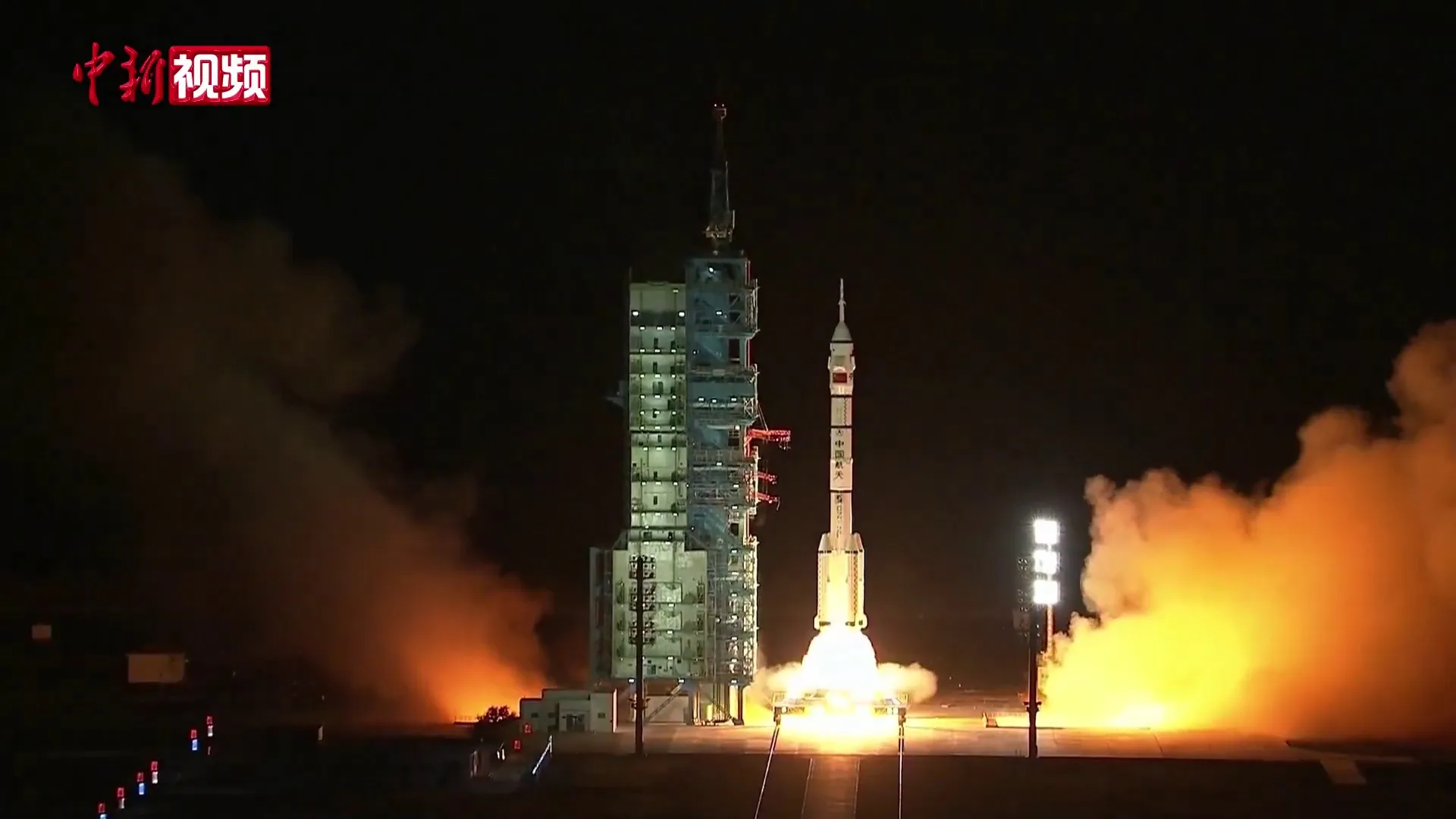
On October 15, 2003, at 09:00 Beijing time, Shenzhou 5 lifted off from Jiuquan atop a Long March 2F rocket carrying People's Liberation Army Air Force Lieutenant Colonel Yang Liwei, a 38-year-old fighter pilot from Liaoning Province. Twenty-one hours and 14 orbits later, he returned to Earth in Inner Mongolia. China had become the third nation — after the Soviet Union in 1961 and the United States in 1962 — to independently launch a human into orbit, a 42-year gap that reflected just how difficult crewed spaceflight really is.
Yang later recounted the launch vibration as violent enough that he briefly feared for the vehicle's integrity: "For a moment I thought I was going to die. The resonance was so severe that I could not see, the instrument panel was a blur. Then it passed, and I realized I was in space." The engineering issue — a pogo-oscillation resonance between the Long March 2F's core stage and the capsule at around 26 seconds into flight — was subsequently redesigned out of the vehicle.
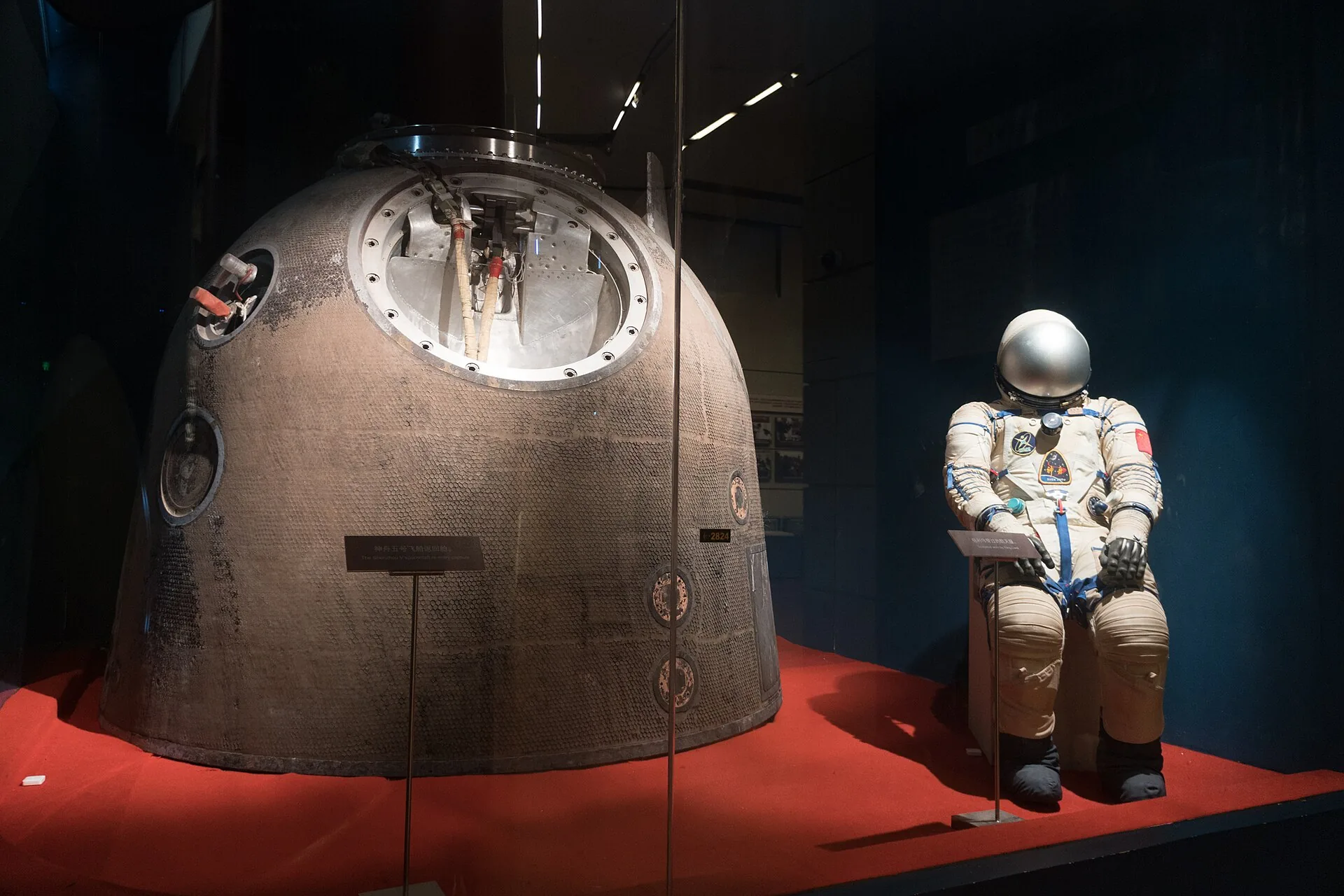
The milestones came rapidly after that. Shenzhou 6 (October 2005) carried two taikonauts for five days. Shenzhou 7 (September 2008) executed China's first spacewalk, with Zhai Zhigang emerging from the airlock and waving a Chinese flag on live television — a moment choreographed to coincide with the post-Beijing Olympics national-pride cycle. Shenzhou 9, in June 2012, delivered the first Chinese woman to orbit: Major Liu Yang, a 33-year-old transport pilot who had logged 1,680 flight hours. Shenzhou 10 in 2013 brought Wang Yaping, who delivered a live physics lecture from orbit to an estimated 60 million Chinese schoolchildren — the largest science class in human history.
By the end of 2013, China had also flown two prototype space-station modules: Tiangong-1, launched September 2011, which hosted two crewed missions before its orbit decayed and it reentered over the South Pacific in April 2018; and Tiangong-2, launched September 2016, which served as the testbed for the cargo resupply, propellant transfer, and long-duration life-support systems that would define the permanent station to come.
Reaching the Moon: The Chang'e Program (2007–2024)
Named after the Chinese goddess of the Moon, the Chang'e program is China's most elegant and arguably most scientifically significant line of robotic exploration. Where the Apollo program spent roughly $260 billion in 2020 dollars over 11 years to put twelve men on the Moon and return 382 kilograms of rock, Chang'e has, on a fraction of the budget, quietly rewritten the lunar geosciences textbook.
Chang'e 1 launched on October 24, 2007, from Xichang aboard a Long March 3A. Over 16 months in lunar orbit it produced the highest-resolution topographic map of the Moon available at the time, identified helium-3 abundances in the regolith, and was deliberately impacted into Mare Fecunditatis in March 2009. Chang'e 2, launched in 2010, surveyed the Sinus Iridum region in 7-meter resolution before departing lunar orbit entirely, flying to the Earth-Sun L2 Lagrange point, and then conducting a flyby of asteroid 4179 Toutatis in December 2012 — a maneuver that made China only the fourth entity to perform a close-range asteroid encounter.
On December 14, 2013, Chang'e 3 executed the first soft landing on the Moon since Luna 24 in 1976 — a 37-year dry spell for lunar soft-landings. Its Yutu ("Jade Rabbit") rover suffered a control-system failure after its second lunar night but continued transmitting science data for another 31 months. The mission's most important contribution was methodological: China demonstrated that its precision-landing and lunar-night survival architectures worked, paving the way for what came next.
What came next changed space history. On January 3, 2019, Chang'e 4 landed inside the Von Kármán crater, a 186-kilometer impact basin within the South Pole–Aitken Basin on the lunar far side. No spacecraft had ever made a soft landing on the far side before, for a simple reason: the Moon itself blocks radio contact with Earth. China had solved the problem six months earlier by placing the Queqiao ("Magpie Bridge") relay satellite at the Earth-Moon L2 point, from which it had a permanent line of sight to both the landing site and to ground stations. The Yutu-2 rover deployed from Chang'e 4 has now operated for more than seven years and has driven more than 1,600 meters across terrain that had been, until that afternoon, completely unexplored.
Chang'e 5, launched November 23, 2020, went further still. In a 23-day mission of astonishing technical choreography, it landed in the Mons Rümker region of Oceanus Procellarum, drilled and scooped 1.731 kilograms of regolith, launched an ascent module from the lunar surface, executed the first-ever autonomous lunar-orbit rendezvous and docking, and returned its sample capsule to Earth on December 17, 2020. It was the first lunar-sample return since the Soviet Luna 24 mission 44 years earlier. Analysis of the Chang'e 5 samples, released in peer-reviewed form in 2021 and 2022, dated the volcanic glass to roughly 2 billion years ago — extending the known period of lunar volcanism by approximately 800 million years and forcing a rewrite of mantle-thermal-evolution models.
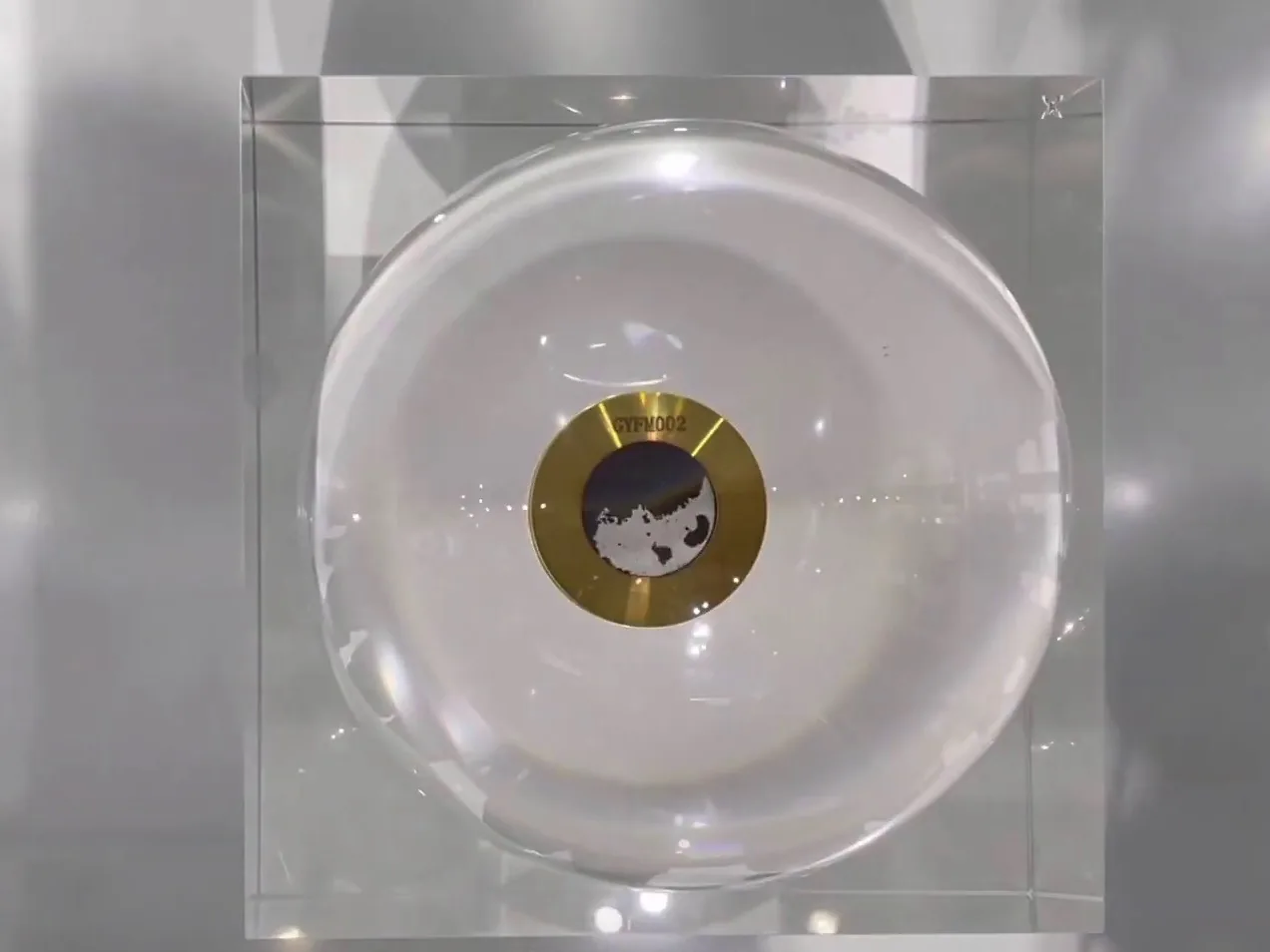
The program's crowning achievement, at least for the current phase, came with Chang'e 6. Launched on May 3, 2024, it became the first mission in history to return samples from the lunar far side — 1.935 kilograms collected from the Apollo crater within the South Pole–Aitken Basin, the oldest and deepest impact structure in the inner Solar System. Initial analyses, published starting in late 2024, are already producing surprises, including evidence of an older and drier farside mantle than any existing model predicted. A second relay satellite, Queqiao-2, launched in March 2024, enabled the mission. Chang'e 7 and Chang'e 8, scheduled for 2026 and 2028 respectively, will prospect for water ice at the lunar south pole and demonstrate in-situ resource utilization ahead of the planned International Lunar Research Station — China's crewed lunar base, a joint effort with Russia and an increasingly long list of partner states.
Conquering Mars: Tianwen-1 and Zhurong (2020–2022)
No nation had ever attempted to orbit, land, and rove Mars in a single mission on its first try. The United States had built up to Mars over decades: Mariner flybys, Viking landers, Pathfinder, Spirit and Opportunity, Curiosity, Perseverance — each a separate mission, each a separate incremental step. The Soviet Union had tried and failed at Mars more than a dozen times. The European Space Agency's Beagle 2 and Schiaparelli landers had both crashed. Japan's Nozomi orbiter had never reached Mars at all.
China's first independent Mars mission, Tianwen-1 ("Heavenly Questions," named after a poem by the 3rd-century BC poet Qu Yuan), attempted all three at once.
Tianwen-1 launched on July 23, 2020, from the Wenchang Spacecraft Launch Site on Hainan Island aboard a Long March 5 heavy-lift rocket — the most powerful launch vehicle in the active Chinese fleet, with a low-Earth-orbit capacity of 25 tonnes. The 5-tonne spacecraft entered Mars orbit on February 10, 2021. After three months of surface reconnaissance, the entry-descent-landing sequence began on May 14, 2021. The lander separated from the orbiter, endured roughly nine minutes of atmospheric braking — the so-called "nine minutes of terror" — and deployed its parachute, retrorockets, and finally its landing legs onto Utopia Planitia, the largest recognized impact basin in the solar system.
On May 22, 2021, the Zhurong rover — named after the god of fire in Chinese mythology, and bearing a top-mounted set of solar panels that unfolded like butterfly wings — rolled onto the Martian surface. China had, in a single mission and on a first attempt, become the second nation to successfully operate a rover on Mars. It was an achievement so statistically improbable that Western mission planners privately described it as either extraordinary engineering or extraordinary luck, or, more likely, both.
Zhurong was designed for a nominal 90-Martian-day mission. It operated for 357 sols, drove 1,921 meters, and returned more than 14 gigabytes of scientific data before entering a planned hibernation in May 2022 ahead of the Martian winter. Ground-penetrating radar data released in 2022 and 2023 revealed subsurface layered deposits at depths of 10 to 30 meters, interpreted by Chinese and international collaborators as evidence of multiple episodes of water-related activity over the past billion years — findings that have fed directly into current debates about Martian habitability windows. The rover did not re-awaken after its first winter, most likely due to dust accumulation on its solar panels, but its orbiter continues to return data to this day.

Tianwen-2, launched in May 2025, is a sample-return mission to the near-Earth asteroid 469219 Kamoʻoalewa. Tianwen-3, scheduled for launch in late 2028, aims to become the first-ever Mars sample-return mission — an objective over which NASA's troubled Mars Sample Return campaign has stalled repeatedly due to cost overruns. If current Chinese schedules hold, Beijing will return Martian regolith to Earth before Washington does.
Tiangong: China's Permanent Orbital Outpost (2021–Present)
The International Space Station, by law of the United States Congress, has never hosted a Chinese astronaut. The 2011 Wolf Amendment prohibits NASA from bilateral cooperation with Chinese government entities without specific FBI certification — a provision that has locked China out of virtually every major multilateral space science project. The response from Beijing, after decades of patient investment, was to build its own.
The Tianhe ("Harmony of Heaven") core module launched on April 29, 2021, aboard a Long March 5B from Wenchang. At 16.6 meters long, 4.2 meters in diameter, and 22.5 tonnes, it is the single largest spacecraft ever built in China. Over the next 18 months, it was joined by two laboratory modules: Wentian ("Quest for the Heavens") in July 2022 and Mengtian ("Dreaming of the Heavens") in October 2022. The three-module T-shaped configuration, completed on October 31, 2022, has an internal pressurized volume of roughly 122 cubic meters and a total mass of approximately 100 tonnes — about one-quarter the size of the ISS, but sized exactly for its intended crew of three on routine rotations and six during handovers.
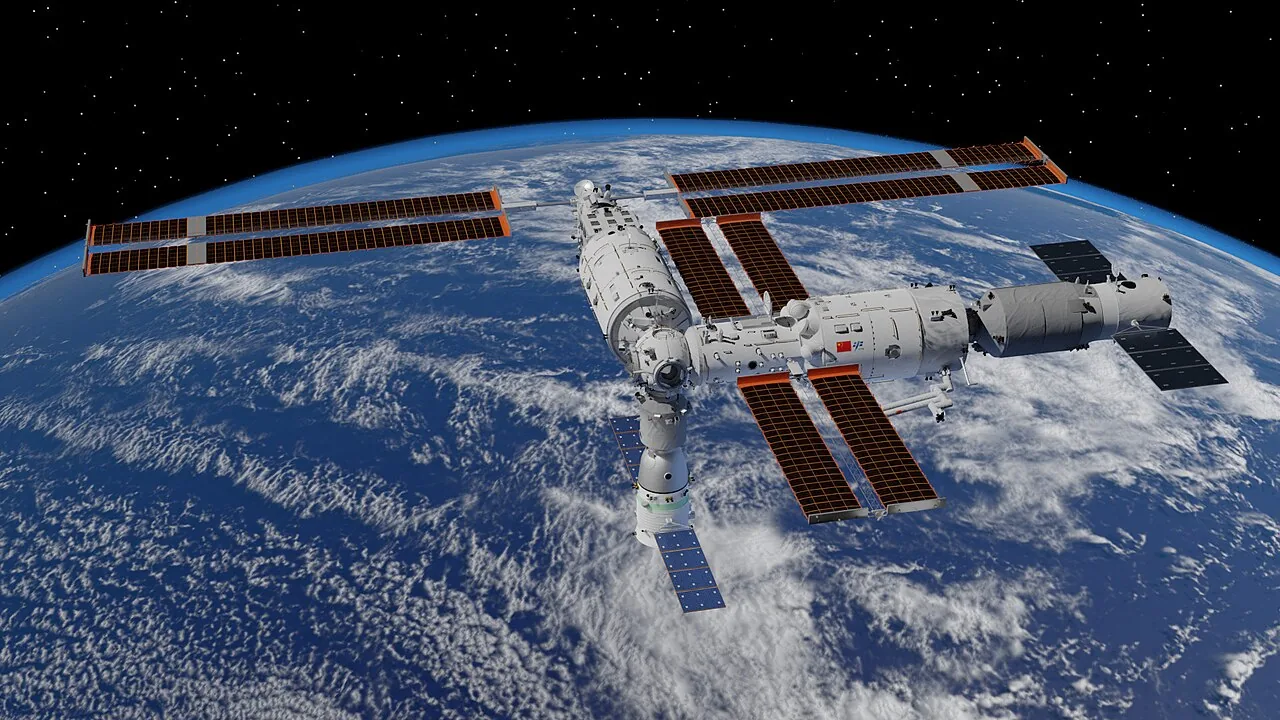
Continuous crewed occupation began with Shenzhou 12 in June 2021. Every subsequent Shenzhou mission — 13, 14, 15, 16, 17, 18, 19, 20, and counting — has delivered a fresh three-person rotation on a roughly six-month cadence, with handovers overlapping by a week. As of early 2026, Tiangong has hosted more than 25 taikonauts, including second flights for Wang Yaping (Shenzhou 13, the first Chinese woman to walk in space) and Liu Yang (Shenzhou 14). Three batches of taikonauts have been selected — the third batch, announced in October 2020, included for the first time civilian payload specialists alongside the traditional military test-pilot corps.
The station has hosted more than 1,000 scientific experiments across fields ranging from plasma physics and cold-atom interferometry to microbiology and materials science. In 2022, Chinese researchers announced the first successful germination of rice from seed to seed entirely in microgravity aboard Tiangong — a milestone with obvious implications for long-duration crewed missions. In 2023, the station hosted a world-first cold-atom clock experiment achieving a frequency stability of 2 × 10⁻¹⁸, which is to say approximately one second of drift per 16 billion years. In 2024, a Xuntian ("Survey the Heavens") co-orbital space telescope — China's functional analogue to Hubble, though with a 2.5-meter mirror and a field of view roughly 300 times larger — was scheduled to launch and enter a configuration in which it can autonomously dock with Tiangong for servicing and refueling, a capability Hubble never had.
A planned second phase will expand Tiangong to six modules, roughly 180 tonnes, and potentially to an international-partner configuration. The Chinese Manned Space Agency has already signed cooperation agreements with the European Space Agency, Russia, Pakistan, and several Belt-and-Road states, and has publicly invited experiments from every UN member state through the United Nations Office for Outer Space Affairs — a deliberate and pointed contrast to the Wolf-Amendment posture of the United States. The station is designed for a nominal 15-year operational life, meaning it is expected to outlive the ISS, whose retirement is currently scheduled for 2030 or 2031.
By the Numbers: China's Space Program Scale in 2025
The raw figures now tell the story better than any rhetoric.
In 2024, China conducted 68 successful orbital launches, second in the world behind only the United States, which logged 158 — a figure inflated by SpaceX's Starlink cadence. Russia managed 17. India, Japan, and ESA combined for fewer than 20. China's 2025 manifest targeted more than 100 orbital launches, including the first flights of several privately developed reusable boosters treated in Part 2.
China's annual civil-plus-military space spending is estimated at approximately $14 billion, making it the second-largest national space budget in the world behind NASA's $25.4 billion fiscal-year 2025 appropriation, and exceeding the combined budgets of ESA, JAXA, ISRO, and Roscosmos.
More than 600 operational Chinese satellites orbit Earth as of early 2026 — a number that includes the Beidou global navigation constellation (35 satellites providing positioning accuracy competitive with GPS), the Gaofen Earth-observation series, the Yaogan military reconnaissance fleet, and the early deployments of the Guowang and Qianfan ("Thousand Sails") broadband mega-constellations that are Beijing's answer to Starlink.
Four active launch centers support the program: Jiuquan in Inner Mongolia (the only pad cleared for crewed launches), Taiyuan in Shanxi (sun-synchronous and polar missions), Xichang in Sichuan (the workhorse for geostationary transfer orbits), and Wenchang on Hainan Island — the newest and southernmost, whose 19.6 °N latitude and coastal location allow sea-transport of the oversized Long March 5 stages that the inland sites cannot accept.
Perhaps the most telling metric is temporal. China went from Yang Liwei's Shenzhou 5 in October 2003 to continuous crew aboard Tiangong in June 2021 — just 18 years. The intensity of the last two decades — spanning a lunar far-side landing, a first-attempt Mars triple-play, and a modular crewed station — represents the fastest transition from spacefaring nation to space superpower in history.
It is a transition achieved, moreover, under the permanent handicaps of ITAR, the Wolf Amendment, and a Western export-control regime designed explicitly to prevent it.
Part 2 Coming Next
Part 1 has traced the arc of the state-led Chinese space program — the Qian Xuesen founding story, the Long March rockets, the Shenzhou taikonauts, the Chang'e Moon campaign, the Tianwen-1 Mars triumph, and the Tiangong station. But the story of Chinese space in the 2020s is no longer purely a state story.
Part 2 will examine the explosive growth of China's private commercial space sector — LandSpace, iSpace, Galactic Energy, Space Pioneer, and the reusable-booster race against SpaceX — along with the Guowang and Qianfan mega-constellations, the Chinese launch-cost revolution, the International Lunar Research Station plans with Russia, and the geopolitical chessboard on which all of this plays out. For a nation that was barred from orbit 60 years ago and from the ISS 15 years ago, the Moon and Mars are no longer the limits of ambition. They are the starting points.