China's space program has moved beyond the phase of catching up. It is now setting the pace. The China National Space Administration and its partner organizations have pulled off feats in the last two years that have left the global space community genuinely impressed -- and, in some cases, scrambling to keep up. From a world-first lunar sample return to a fully operational space station hosting rotating crews, China is not just participating in the new space age. It is helping define it.
Let's walk through the missions and milestones that have made 2023-2025 such a landmark period for Chinese space exploration.
Chang'e 6: The Far Side Sample Return That Made History
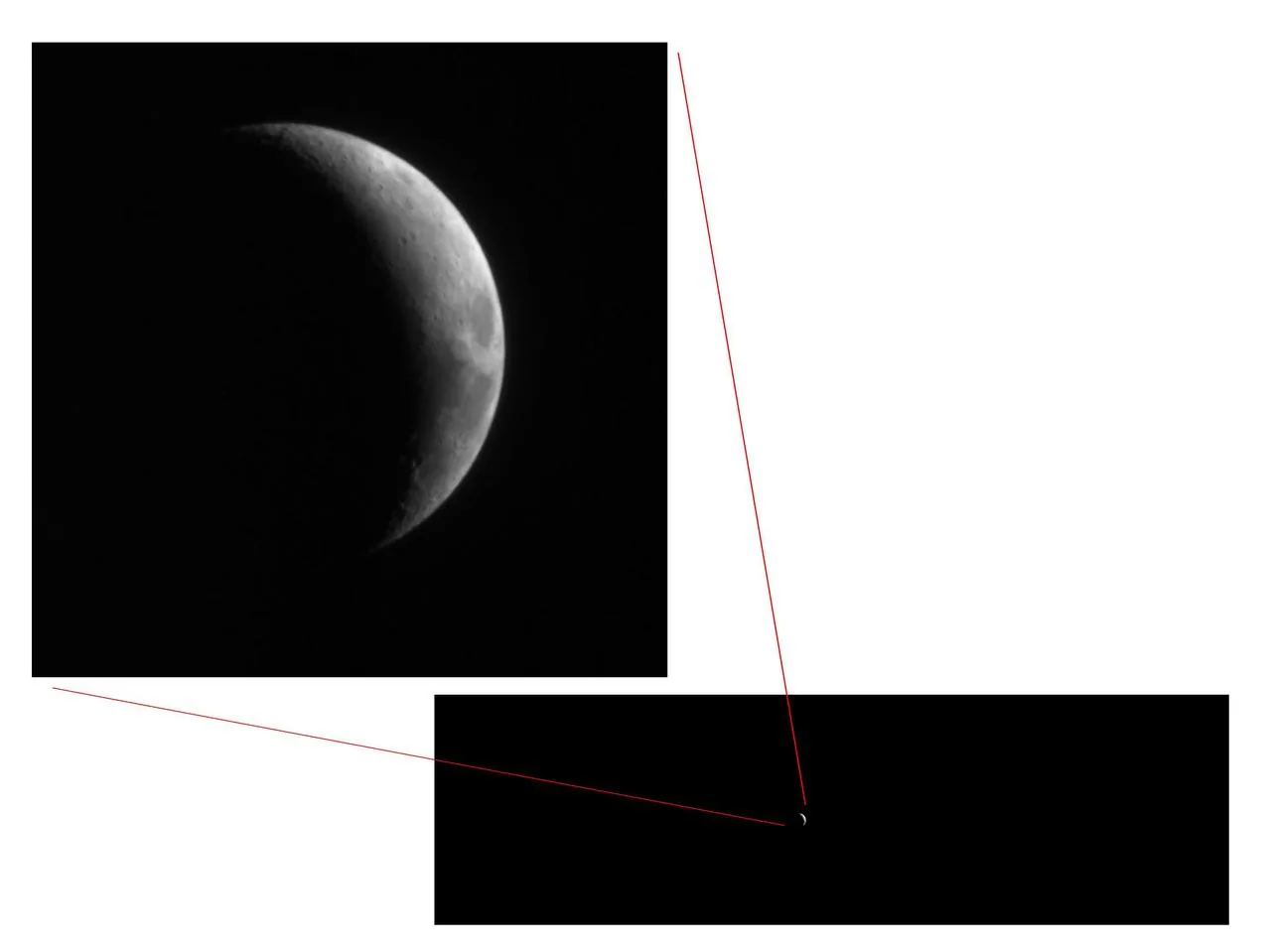
This is the big one. On June 25, 2024, the Chang'e 6 return capsule landed in Inner Mongolia carrying approximately 1,935 grams of lunar samples -- collected from the far side of the Moon. Let that sink in. No one had ever done this before. Not the United States, not the Soviet Union, not anyone. China achieved a genuine world first.
The mission launched on May 3, 2024, and landed in the South Pole-Aitken Basin, one of the oldest and largest impact structures in the entire solar system. This region of the lunar far side is of enormous scientific interest because it may expose material from the Moon's deep mantle, offering clues about the interior composition and early geological history of our nearest celestial neighbor.
The technical challenge of operating on the far side of the Moon is extraordinary. Radio signals cannot reach the far side directly from Earth, so China relied on the Queqiao-2 relay satellite, launched in March 2024, to maintain communications with the lander and ascent vehicle. The mission involved a lander, an ascent vehicle, an orbiter, and a return capsule -- a complex multi-stage architecture that required precise coordination across hundreds of thousands of kilometers of space.
The samples collected by Chang'e 6 are already being studied by Chinese scientists, and international researchers are eager for access. The far-side samples are expected to differ significantly from the near-side samples returned by the Apollo missions, the Soviet Luna missions, and China's own Chang'e 5 near-side sample return in 2020. This is new data from a place we have never sampled before, and it has the potential to rewrite chapters of lunar science.
For those of us who follow planetary science, Chang'e 6 was one of the most exciting missions of the decade. Period.
Tiangong: China's Orbital Home Is Open for Business

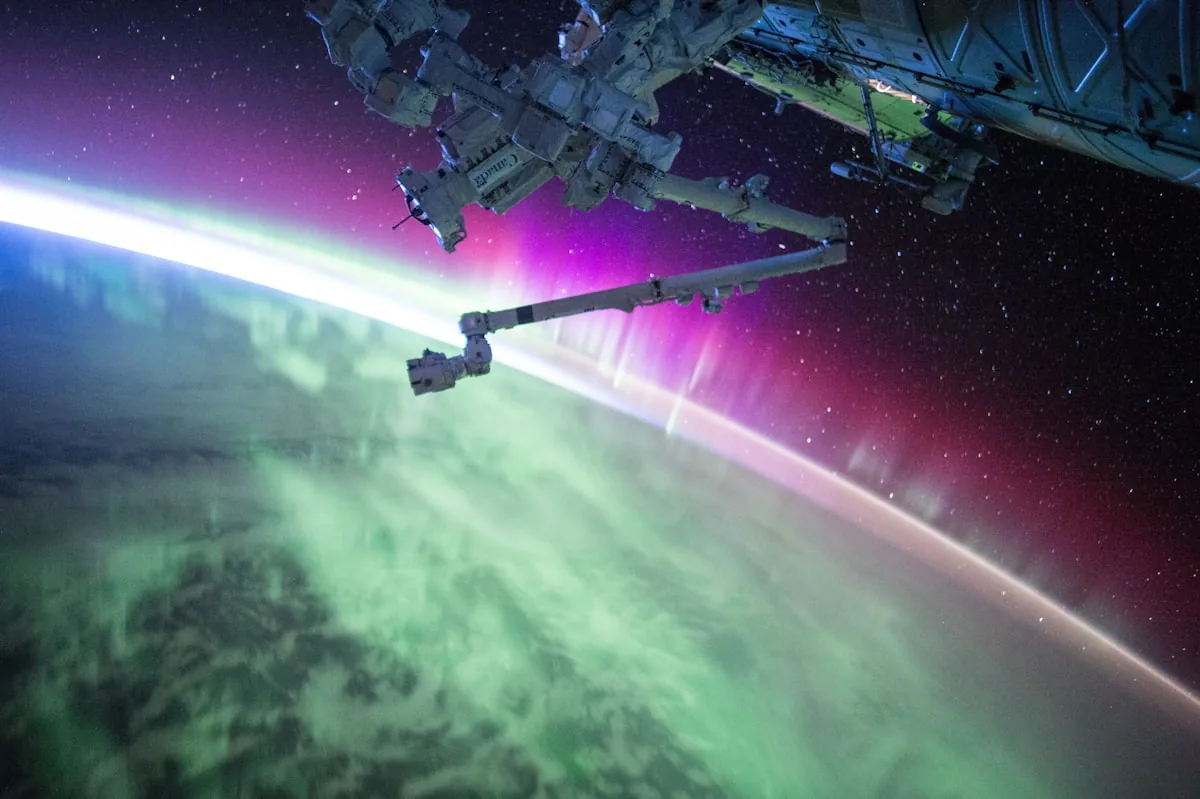
The Tiangong space station is now fully operational and supporting continuous crewed presence in low Earth orbit. The station, assembled through a series of launches in 2022-2023, consists of three main modules: the Tianhe core module, and the Wentian and Mengtian laboratory modules, along with visiting cargo and crew spacecraft.
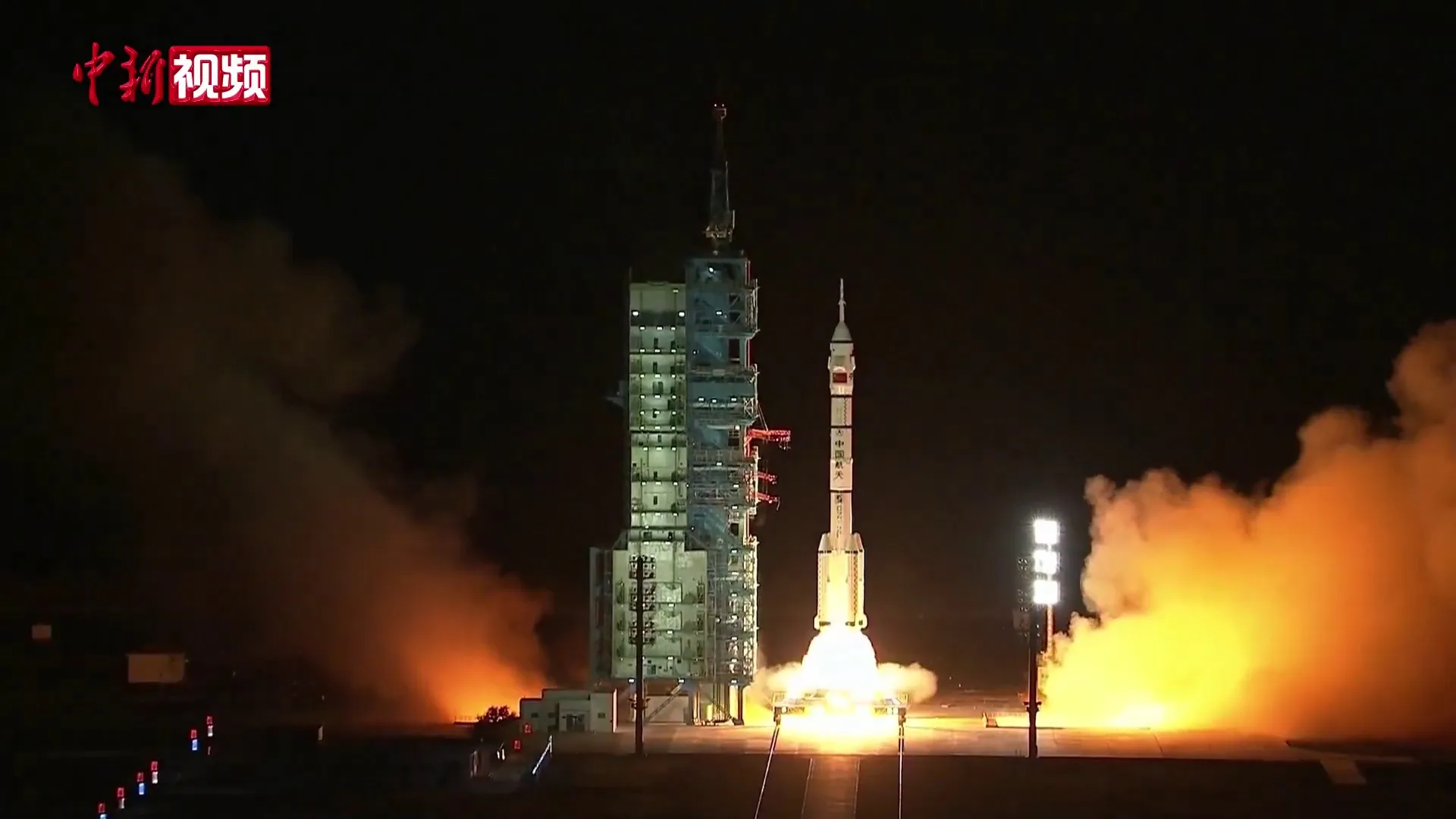
Throughout 2024, China executed smooth crew rotation missions using the Shenzhou crewed spacecraft. Shenzhou-18 launched in April 2024, carrying three taikonauts to Tiangong for a roughly six-month stay. Shenzhou-19 followed in October 2024, overlapping briefly with the Shenzhou-18 crew before the handover -- a demonstration of the operational maturity that comes from having a permanent orbital outpost.
The science program aboard Tiangong is expanding rapidly. Experiments span fluid physics, materials science, combustion science, life sciences, and fundamental physics. The station's Mengtian module includes an exposed experiment platform for studies that require direct exposure to the space environment. China has also opened Tiangong to international scientific payloads, with experiments from several countries and the United Nations Office for Outer Space Affairs (UNOOSA) either aboard or in the pipeline.
What is remarkable about Tiangong is the speed at which China went from having no space station to operating one full-time. The station is smaller than the ISS, but it is entirely Chinese-built, Chinese-operated, and Chinese-funded. When the ISS is eventually deorbited -- currently planned for around 2030 -- Tiangong may be the only operational space station in orbit, unless commercial stations come online in time. That prospect alone underscores how significant China's investment in crewed spaceflight has become.
Shenzhou Missions: A Steady Drumbeat of Human Spaceflight
China's crewed spaceflight cadence has become impressively routine. The Shenzhou-18 crew (Ye Guangfu, Li Cong, and Li Guangsu) and the Shenzhou-19 crew (Cai Xuzhe, Song Lingdong, and Wang Haoze -- notably including China's third female taikonaut) both conducted successful six-month stays aboard Tiangong. Their work included spacewalks for external maintenance and equipment installation, scientific experiments, and technology demonstrations.
The smooth handovers between Shenzhou crews represent a level of operational maturity that took other spacefaring nations decades to achieve. China is building institutional experience in long-duration human spaceflight at a rapid clip, and this experience will be essential for its more ambitious plans to come.
Tianwen-2: China's Next Interplanetary Leap

Looking ahead, one of the most anticipated Chinese missions is Tianwen-2, a near-Earth asteroid sample return mission currently planned for launch in the coming years. The target is the small near-Earth asteroid 2016 HO3 (also known as Kamo'oalewa), a quasi-satellite of Earth that may be a fragment of the Moon knocked loose by an ancient impact.
Tianwen-2 will rendezvous with 2016 HO3, collect surface samples, and return them to Earth. It will then use its remaining fuel to fly by a main-belt comet, studying this rare class of objects that exhibit properties of both asteroids and comets. If successful, Tianwen-2 will make China one of only a handful of nations to return samples from an asteroid -- alongside Japan (Hayabusa/Hayabusa2) and the United States (OSIRIS-REx).
The scientific value of sampling a potential lunar fragment orbiting near Earth is extraordinary. It could tell us about the Moon's history, the history of impacts in the Earth-Moon system, and the dynamics of small bodies in near-Earth space. This is clever, high-impact planetary science.
BeiDou and Earth Observation: The Infrastructure of a Space Power
While the headline missions get the most attention, China's space capabilities rest on a vast infrastructure of operational satellite systems. The BeiDou Navigation Satellite System (BDS) provides global positioning, navigation, and timing services that rival GPS, GLONASS, and Galileo. BeiDou serves billions of users and is integrated into transportation, agriculture, construction, and emergency services across China and many partner nations.
China's Earth observation satellite fleet continues to grow, with the Fengyun meteorological satellites, Gaofen high-resolution imaging satellites, and the Haiyang ocean observation satellites providing data for weather forecasting, disaster management, environmental monitoring, and resource surveying. The breadth and sophistication of these constellations reflect a national commitment to using space as a tool for economic development and governance.
The Longer View: Moon Base and Mars
China has announced plans for an International Lunar Research Station (ILRS), a permanent base on the Moon's surface that it envisions building in phases through the 2030s. Chang'e 7 and Chang'e 8, planned for the coming years, will lay the groundwork by conducting detailed south polar surveys and testing in-situ resource utilization technologies. China has invited international partners to participate, and several countries have signed cooperative agreements.
Further out, China is developing plans for a crewed Mars mission, potentially in the 2030s-2040s. The experience gained from Tiangong, from the Chang'e lunar program, and from the Tianwen Mars missions all feed into this long-term vision.
Why It Matters
It is easy to frame China's space achievements through the lens of competition. And yes, there is a competitive dimension -- the US-China dynamic in space is real and consequential. But for those of us who care about space exploration as a human endeavor, the more important point is this: the more capable actors we have exploring the solar system, the more we all learn, and the faster we all advance.
Chang'e 6 returned samples that will teach us things about the Moon that we simply could not learn any other way. Tiangong is conducting science in microgravity that benefits researchers worldwide. BeiDou provides navigation services to billions. These are contributions to human knowledge, regardless of the flag on the hardware.
China's space program is ambitious, well-funded, and executing on its plans with remarkable discipline. As space enthusiasts, we should be paying close attention -- not with anxiety, but with appreciation for what is possible when a nation commits to the stars.