Water is the thread that connects every great Mars discovery. It shaped the planet's geology, may have enabled the origin of life, and will determine whether humans can ever call Mars home. The story of water on Mars is a detective saga spanning decades of missions, and it is -- without exaggeration -- one of the most thrilling scientific narratives of our time.
Because here is the remarkable truth: Mars was once a wet world. And in some ways, it still is.
The Ancient Ocean Hypothesis
Billions of years ago, Mars was a fundamentally different planet. Evidence gathered by more than a dozen orbiters, landers, and rovers over the past 30 years paints a picture of early Mars that would be recognizable to anyone standing on Earth: a planet with a thicker atmosphere, warmer temperatures, and liquid water flowing freely across its surface.
The strongest evidence for an ancient Martian ocean comes from topography. NASA's Mars Global Surveyor, which mapped the planet in stunning detail beginning in 1997, revealed that the northern lowlands of Mars are remarkably flat and smooth -- exactly what you would expect from an ancient ocean floor. Two distinct shoreline features, dubbed Arabia and Deuteronilus, can be traced for thousands of kilometers around the northern basin at consistent elevations. These putative shorelines, first identified by researcher Timothy Parker in the early 1990s, enclose an area large enough to have held an ocean covering roughly one-third of the planet's surface.
In 2022, a team led by Benjamin Cardenas at Penn State published a study in the Journal of Geophysical Research analyzing topographic data from the northern lowlands. Their modeling showed that the rock formations in the region are consistent with erosion and sedimentation by a large body of water approximately 3.5 billion years ago. The estimated volume of this ancient ocean was about 156 million cubic kilometers -- roughly half the volume of Earth's Atlantic Ocean.
Three and a half billion years ago, Mars had beaches.
River Valleys and Lake Beds: The Surface Evidence
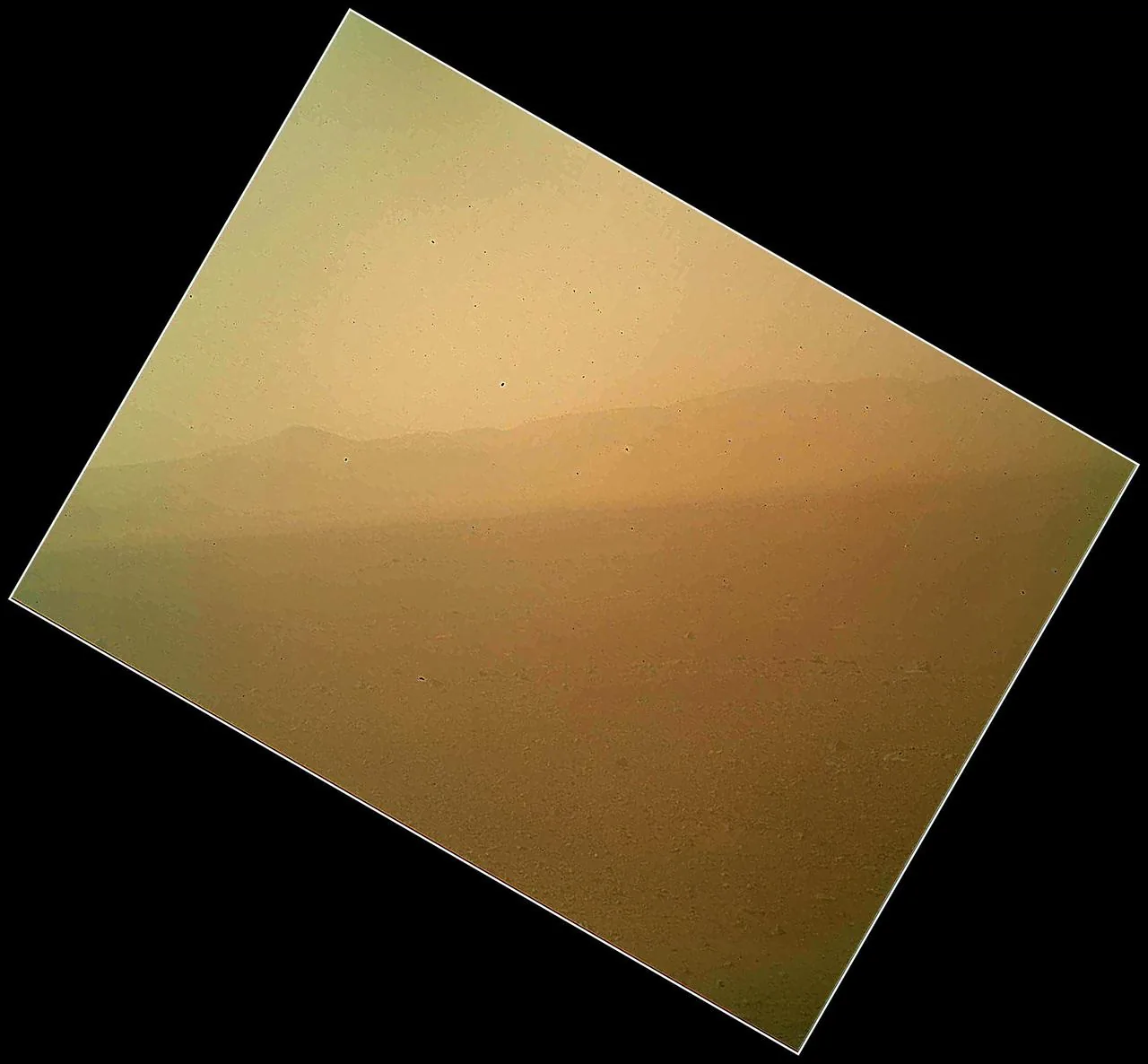
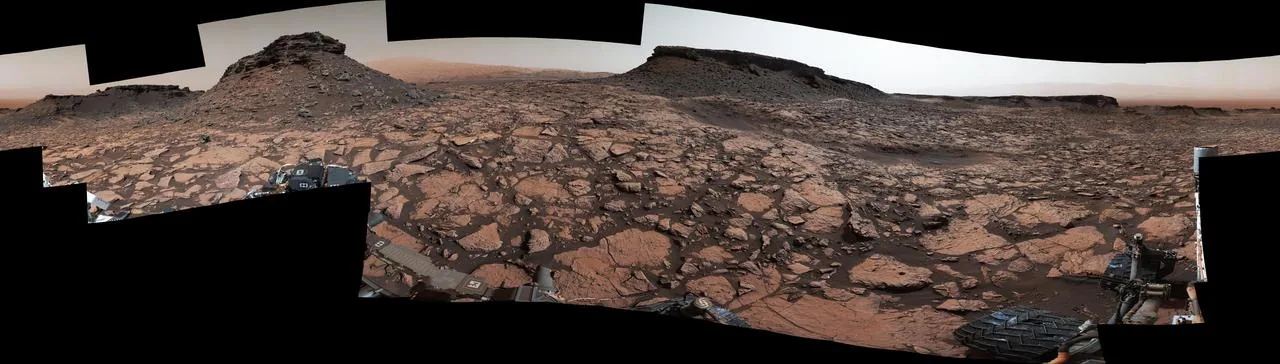
Even before scientists debated oceans, the evidence for rivers and lakes on Mars was overwhelming. Mars is crisscrossed by valley networks -- branching channel systems that look strikingly like river drainage basins on Earth. Over 10,000 valley networks have been mapped on the Martian surface, predominantly in the ancient southern highlands. These features date to the Noachian period (roughly 3.7 to 4.1 billion years ago) and are the clearest evidence that liquid water once flowed persistently on the surface.
Then there are the outflow channels -- enormous flood-carved valleys like Kasei Valles, which stretches over 3,000 kilometers and is up to 200 kilometers wide in places. These channels were carved by catastrophic floods that dwarfed anything in Earth's geological record. The volumes of water involved are almost incomprehensible: some estimates suggest individual flood events released more water than is contained in the Great Lakes.
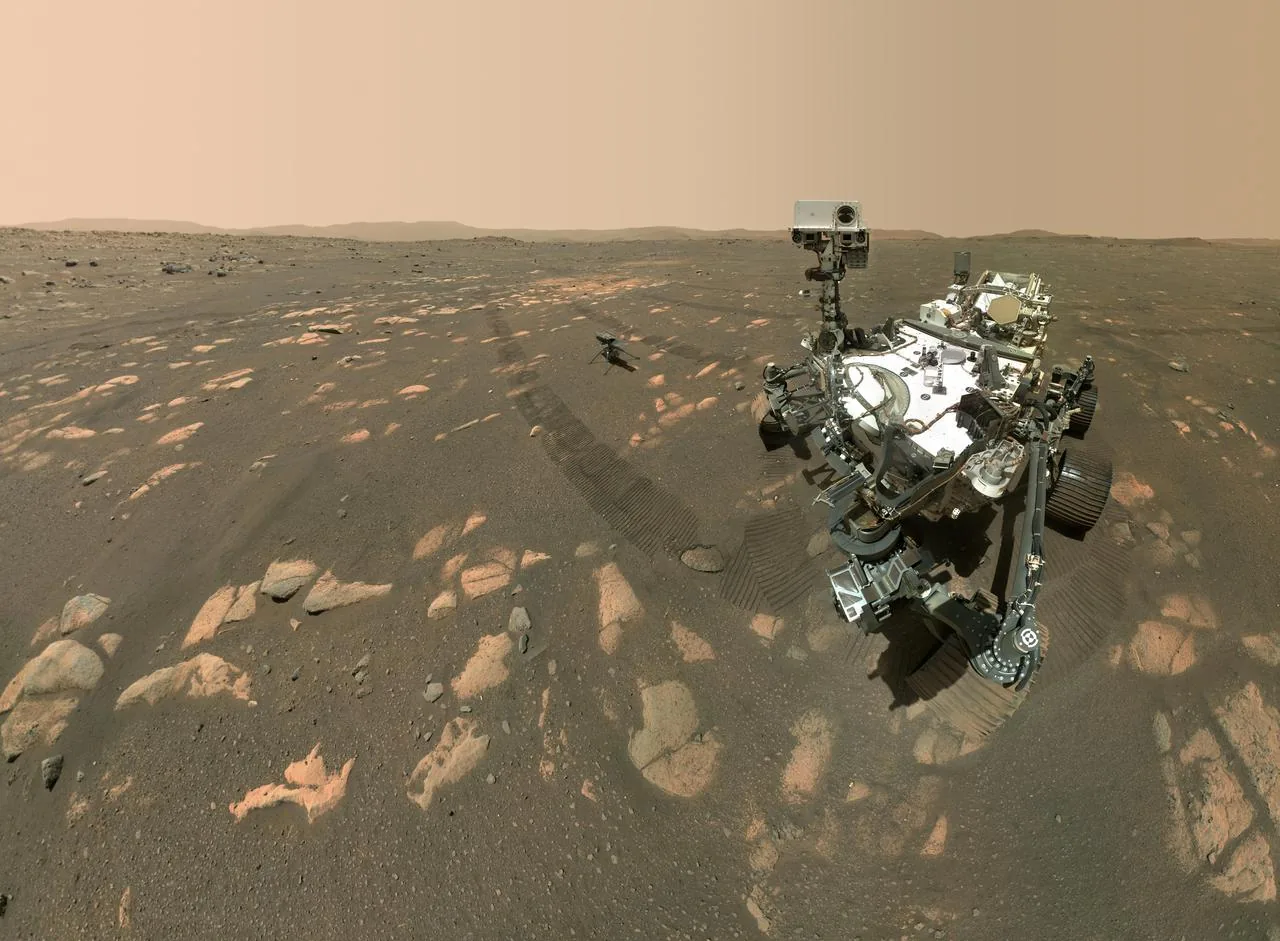
And then there is Jezero Crater, where Perseverance is right now exploring what was once a 50-kilometer-wide lake fed by at least two river channels. The delta deposit at the western edge of the crater -- a fan-shaped sedimentary structure -- is among the best-preserved ancient lake deposits on Mars. Perseverance has confirmed that the delta contains fine-grained mudstones and coarser sandstones layered in patterns that record the rise and fall of lake levels over extended periods.
The Polar Ice Caps: Water You Can See
Mars has visible water ice right now, today, at both poles. The north polar cap is primarily water ice, roughly 1,000 kilometers in diameter and up to 3 kilometers thick. It contains an estimated 1.6 million cubic kilometers of water ice -- enough to cover the entire planet in a layer of water about 11 meters deep if melted.
The south polar cap is more complex. Its surface is covered by a thin veneer of frozen carbon dioxide (dry ice), but beneath this CO2 layer sits a massive deposit of water ice. Radar sounding by the European Space Agency's Mars Express orbiter, using its MARSIS (Mars Advanced Radar for Subsurface and Ionosphere Sounding) instrument, has revealed that the south polar layered deposits contain enormous quantities of water ice extending to depths of 3.7 kilometers.
The polar caps also contain layered deposits that record Mars's climate history, much like ice cores on Earth. Alternating layers of ice and dust correspond to periodic changes in Mars's orbital parameters -- variations in axial tilt (obliquity) and orbital eccentricity that cycle over hundreds of thousands of years. These layers are a frozen archive of Martian climate spanning millions of years, waiting to be read.
Subsurface Ice: The Hidden Reservoir
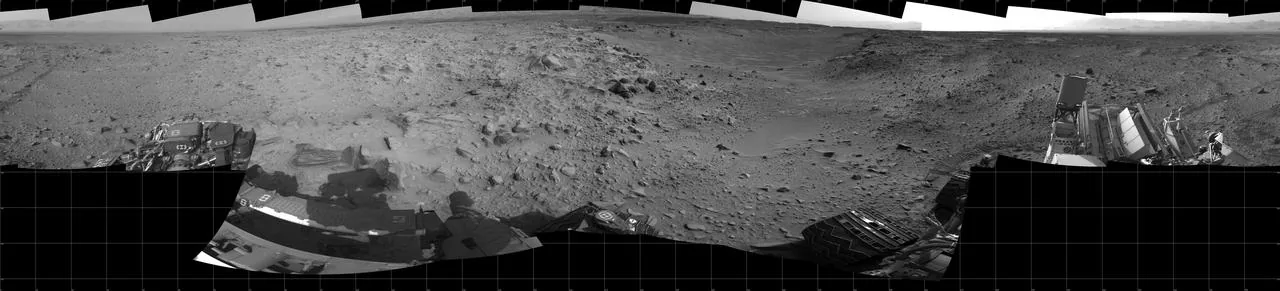
Perhaps the most exciting water discoveries of recent years have come from beneath the surface. Orbital radar has revealed that Mars harbors vast deposits of subsurface ice at surprisingly low latitudes -- far from the poles, in regions where future human missions might land.
NASA's Mars Reconnaissance Orbiter (MRO), using its SHARAD (Shallow Radar) instrument, has detected ice deposits in the Arcadia Planitia and Utopia Planitia regions at latitudes between 35 and 50 degrees north. Some of these deposits are within 1 to 2 meters of the surface and extend to depths of over 100 meters. The ice in Utopia Planitia alone is estimated to contain as much water as Lake Superior -- about 12,100 cubic kilometers.
In 2024, ESA's Mars Express team published updated MARSIS data suggesting the presence of extensive ice deposits in the Medusae Fossae Formation near the equator. If confirmed, these equatorial ice deposits would be transformative for human mission planning, as equatorial landing sites are energetically easier to reach from Earth orbit.
Fresh impact craters have provided dramatic visual confirmation of subsurface ice. When meteorites punch through the surface at mid-latitudes, they occasionally excavate bright white material that sublimates (transitions from solid to gas) over subsequent weeks -- behavior consistent with exposed water ice. NASA's MRO has documented several such impacts, with ice visible in craters as small as a few meters across.
The Liquid Water Question
The most controversial aspect of Mars water science is whether liquid water exists on Mars today. The surface conditions -- low atmospheric pressure and cold temperatures -- make stable liquid water essentially impossible on the surface. Water at Martian surface pressure would either freeze or boil away (sublimate) almost immediately.
However, three potential scenarios for present-day liquid water have been proposed:
Briny subsurface aquifers. In 2018, a team using MARSIS radar data reported detecting a zone of high radar reflectivity beneath the south polar cap that they interpreted as a subsurface lake of liquid water, roughly 20 kilometers across and located 1.5 kilometers below the surface. The water, if present, would be kept liquid by dissolved salts (perchlorates) that can depress the freezing point to as low as minus 70 degrees Celsius, combined with pressure and possible geothermal heat. Subsequent analyses have both supported and challenged this interpretation, and the debate remains active.
Recurring slope lineae (RSL). These are dark streaks that appear on steep slopes during warm seasons and fade in cooler periods. First identified in MRO images in 2011, they were initially interpreted as evidence of flowing briny water. However, more recent studies suggest they may be caused by dry granular flows -- essentially tiny landslides of dust and sand. The jury is still out, but the liquid water explanation has fallen somewhat out of favor.
Deliquescence. Certain salts in the Martian regolith (particularly calcium perchlorate) can absorb water vapor from the atmosphere and dissolve into a liquid solution. This process has been observed in laboratory experiments under Mars-like conditions. While the resulting liquid quantities are tiny -- thin films on soil grains -- they represent a mechanism by which transient liquid water could exist on Mars today.
Implications for Life
Every discovery about water on Mars feeds directly into the most compelling question: could Mars have supported life?
On Earth, life exists wherever there is liquid water -- in boiling hot springs, in subglacial Antarctic lakes, in rocks kilometers underground, in the most acidic and alkaline environments imaginable. If Mars had persistent surface water for hundreds of millions of years during the Noachian period, the conditions for the origin of life were present.
If subsurface liquid water exists on Mars today, it is not inconceivable that microbial life could persist there now, drawing energy from chemical reactions in the rock -- exactly as chemolithotrophic bacteria do in Earth's deep subsurface.
Implications for Colonization
For future human settlers, water on Mars is not merely a scientific curiosity. It is survival. Water means drinking water, irrigation for crops, oxygen for breathing (split from H2O by electrolysis), and hydrogen for rocket propellant.
The confirmed presence of accessible subsurface ice at mid-latitudes means that human Mars missions can plan to extract water locally rather than carrying it from Earth. A single Starship launch carrying mining and processing equipment could tap into ice deposits that contain billions of liters of water.
Mars's water is not gone. It migrated -- from the surface to the subsurface, from the equator to the poles, from liquid to ice. But it is there, vast quantities of it, waiting beneath the rust-red surface.
And that water, whether it once cradled ancient Martian microbes or will sustain future human pioneers, is one of the most precious resources in the solar system.